


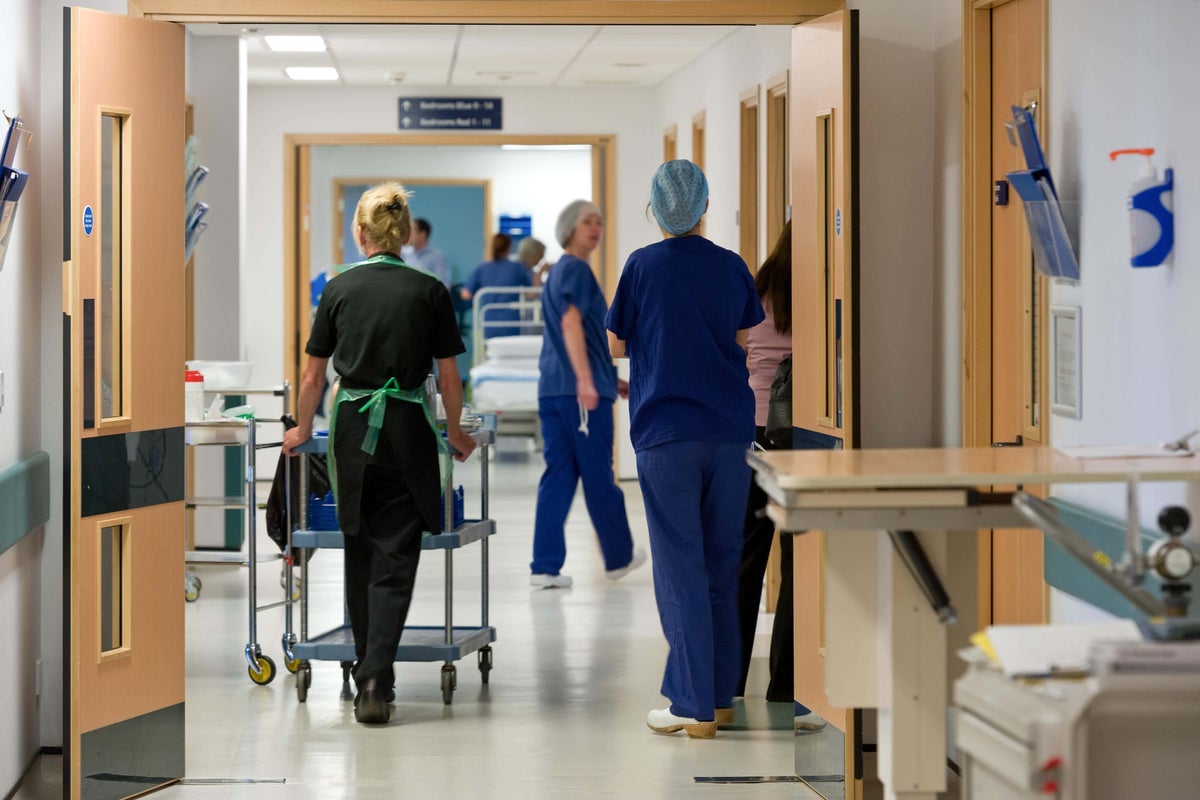
More than 2,200 patients were subjected to corridor care in A&E every day in May, new NHS data has revealed.
The figures have been revealed for the first time after the NHS pledge to publish data on corridor care in hospitals.
Any patient who spends 45 minutes or more in areas of emergency departments or wards deemed as clinically inappropriate – such as hallways or waiting rooms – are considered to have experienced corridor care, according to the NHS.
The first figures to be published show that, on average, 2,241 patients each day experienced corridor care in emergency departments last month, while a further 669 patients received care in similar settings elsewhere in hospital.
NHS analysis found that 20 trusts accounted for more than half of the cases of corridor care in emergency departments.
The NHS is now aiming to eliminate the “unacceptable” practice of treating patients in corridors in busy A&E departments.
It comes after reports of patients dying while waiting for care and diabetic patients left for hours without food.
Other sick patients have said they were left on broken beds in pitch-black corridors for 24 hours with no privacy, according to a review of patient care in emergency departments in December by the group Healthwatch England.
“Corridor care is unacceptable, undignified and has no place in our NHS,” health secretary James Murray said.
He said the new data aims to “shine a spotlight” on where the problems are greatest and stressed the “vast majority” of corridor care is in a small number of organisations.
“We have already deployed expert teams to help struggling trusts turn performance around. Ending corridor care for good will take time and different areas will need different solutions, but we are determined to eradicate this practice,” he added.
A&Es experienced their busiest month on record in May with 2,457,398 attendances – up 25,000 on the previous record set in March earlier this year.
The number of people waiting more than 12 hours in A&E departments in England from a decision to admit to actually being admitted stood at 50,212 in May, up from 47,750 in April. The figure reached a record 71,517 people in January.
The number waiting at least four hours from the decision to admit to admission stood at 128,590 last month, up from 122,616 in April.
Some 75.7 per cent of patients in England were seen within four hours in A&Es in May, down from 76.9 per cent in April.
The government and NHS England had set a target of March this year for 78 per cent of patients attending A&E to be admitted, discharged or transferred within four hours.
Meanwhile, the waiting list for routine hospital treatment in England has risen for the first time in six months.
An estimated 7.22 million treatments were waiting to be carried out at the end of April, relating to 6.11 million patients, NHS figures show.
This is up from 7.11 million treatments and 6.02 million patients at the end of March.
The increase means the size of the list has returned to where it stood in February, reversing the fall that took place in March.
“A&E staff bore the brunt of the heatwave in May, as the hot weather took its toll on the public,” Professor Francesca Swords, national medical director for the NHS explained.
“In the face of record demand during the recent heatwave, NHS staff rose to the challenge, ensuring that as many patients as possible were seen and treated in good time,” she said.
She added that corridor care is “totally unacceptable” and “should have no place in the NHS.”
This story is being updated.