


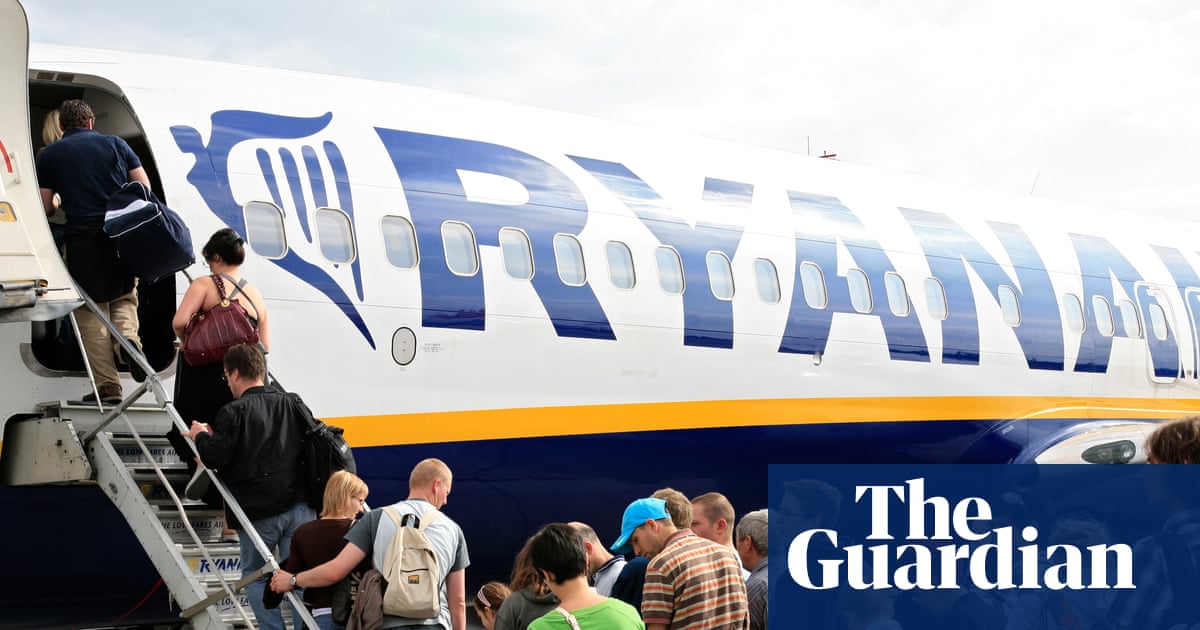
Ryanair investigated over charging parents to sit with their children
Budget airline describes inquiry as ‘bogus’ as watchdog says it is only large carrier flying from UK to impose charge
Europe’s biggest low-cost airline, Ryanair, is facing an investigation over the mandatory fee it charges a parent to sit with their child.
The Competition and Markets Authority (CMA) said the Irish carrier’s terms and conditions require at least one parent to sit with their children, including those with disabilities, and bills them about £8 a flight to do so.
The watchdog will investigate whether this is an unfair contract term under consumer law. It understands that Ryanair is the only large airline flying out of the UK to impose this charge.
Ryanair called it a “bogus investigation”, adding that it looked forward to “disproving these false CMA claims”.
The airline said that it does not charge any fee for children to sit beside their parent or accompanying adult. However, parents and guardians must pay a booking fee to be seated next to them.
The carrier’s rules state that at least one parent must sit with their children aged 2-11 when they fly, through a “mandatory family seat”. This fee is levied on both outbound and return flights.
Reserving one of these seats costs between €4.50 and €13.50, which is equivalent to £4-£12, and is typically £8 each way. The CMA has founded that this approach is used across most of Ryanair’s UK routes. For all other passengers, reserving a seat is optional.
The CMA is investigating whether Ryanair’s approach may mean parents are being charged for the airline to meet its child safety and disability‑related obligations as set out under aviation rules, to determine whether or not this practice is in line with consumer law.
Specifically, its investigation relates to whether Ryanair’s contract terms are “unfair”, meaning they put customers at an unfair disadvantage.
The law applies a fairness test that asks whether the wording tilts the balance of rights and responsibilities in the contract too much in favour of the business. Unfair terms are not legally binding on customers, and the CMA can take enforcement action to stop businesses using them.
Other airlines offer to seat children with a parent or guardian without charging adults for a seat reservation, or allocate seats together automatically during booking for free.
Hayley Fletcher, the CMA senior director of consumer protection, said: “Our investigation will consider Ryanair’s approach to family seat reservations and how the cost is presented to consumers to determine whether they comply with consumer law.
“For the past year, we’ve told businesses to ensure their customers are shown the total price upfront – those who don’t face the very real possibility of action from the CMA.”
Ryanair said its family seating policy “fully complies with all relevant laws and regulations and saves families money when travelling on the UK’s lowest fare airline”.
The airline said that “like all adults who select a reserved seat, adults travelling with children pay one reserved seat fee, but can select reserved seats beside them for up to four children on the same booking FREE OF CHARGE”.
Ryanair added: “This bogus CMA investigation is a failed effort by the Starmer government to pretend it cares about consumers when it has failed to abolish APD [air passenger duty] which would immediately deliver lower fares for all consumers and growth for the UK aviation, tourism and wider economy.”
As part of the investigation, the CMA will also examine whether the mandatory family seat fee is “dripped” during the booking process without full transparency. “Drip pricing”, when consumers are shown an initial price only to be hit with unavoidable hidden fees later in the process, was banned in 2024.
The CMA has just begun its investigation, and stressed that it had reached no conclusions about whether Ryanair had broken the law. It said the inquiry is part of its wider work to help ease cost of living pressures and protect vulnerable consumers.
Since its strengthened consumer powers came into force, which allow the watchdog to fine companies for breaches and secure refunds, the CMA has launched investigations into 15 businesses, across sectors including ticketing, gyms, homeware and online reviews.