


With viewers in the tens of millions, the 1980s gave us some of the most iconic sitcoms of all time. And now, a new book by author and film historian Robert Sellers – Still Laughing: How the Sitcom Kept Britain Smiling in the 80s – explores the decade that saw situation comedies averaging 12–13 million TV viewers – and sometimes approaching 20 million.
Guy Siner, who played Lieutenant Gruber, in ‘Allo ‘Allo! said: “That is a hallmark of being British, that we could have a good laugh and laugh at ourselves.” Yes Minister, which first aired in 1980, ran for three series and was a hit around the world. Paul Eddington, who played Jim Hacker, said whatever country he was in, he would be treated like a high-ranking member of the government and asked to make speeches.
Legendary comedy team David Croft and Jimmy Perry were still riding high with It Ain’t Half Hot Mum and Are You Being Served? as the 70s ended. When they pitched their new show, Hi-De-Hi! – set in a holiday camp – there was little enthusiasm. But the inspired casting of Paul Shane as comic Ted Bovis, Ruth Madoc as Gladys and Jeffrey Holland as Spike, drew millions to Hi-De-Hi! which ran for 58 episodes over eight series, from 1981.
 View 6 Images
British Actors Lennard Pearce; David Jason And Nicholas Lyndhurst Stars of the BBC TV comedy series ‘Only Fools and Horses’. (Image: Getty Images)
After the success of The Two Ronnies, Ronnie Barker made Open All Hours and Porridge. But Ronnie Corbett was struggling. Then, in 1981, he landed the role of Timothy – a put-upon son who lives with a domineering mother, played to perfection by Barbara Lott, in Sorry!
A big fan, the Prime Minister of Bahrain summoned Corbett was summoned to an audience and it turned out he’d seen every episode and could recite most of the plots. Arguably the most iconic UK sitcom of all time, Only Fools and Horses, emerged in September 1981.
John Sullivan based it on a Cockney wheeler dealer and market trader in south London, after a previous idea about a football club manager was rejected by the BBC, in case it clashed with their boxing sitcom Seconds Out. In Only Fools, David Jason’s Del Boy and Nicholas Lyndhurst’s Rodney were supported by some of the most memorable characters in sitcom history, including Trigger (Roger Lloyd-Pack), lorry driver Denzil (Paul Barber), Mickey Pearce (Patrick Murray), and pub landlord Mike (Kenneth MacDonald)
But the chemistry of the two main stars stole the show. Guest star Nick Stringer – whose character bought a car from Del Boy – said: “It was a nice, calm friendship, we know what we’re doing, we’re in charge here, let’s hit it on the button.” Critics hated Never The Twain (1981) with Windsor Davies and Donald Sinden, but audiences loved it and it ran for a decade.
 View 6 Images
‘Birds of a Feather’ – starring Linda Robson, Lesley Joseph and Pauline Quirke(Image: FremantleMedia Ltd/REX/Shutterstock)
‘What was amazing about Windsor,’ said Robin Kermode, who co-starred, ‘was that in the three years I worked with him on the show, I never saw him mistime a gag once. It was extraordinary.” Bob Larbey sent the idea of a middle-aged couple embarking on a relationship to LWT, who launched A Fine Romance in 1981.
Michael Williams was perfectly cast as Mike, a lifelong bachelor, but producers were having trouble casting his wife, until Judi Dench – Williams’ real-life wife – was suggested. After four series, Larbey decided to quit while they were ahead. John Birt, LWT’s Director of Programmes, disagreed, sending Larbey a note saying: “I hanker after another series”. Larbey’s reply was blunt: “I don’t”.
The first series of The Young Ones brought alternative comedy to the mainstream, achieving great ratings for BBC2, but only two series were ever planned. Paul Jackson, who championed the series, said: “They were adamant that if 12 episodes was good enough for John Cleese and Fawlty Towers, it was good enough for them.”
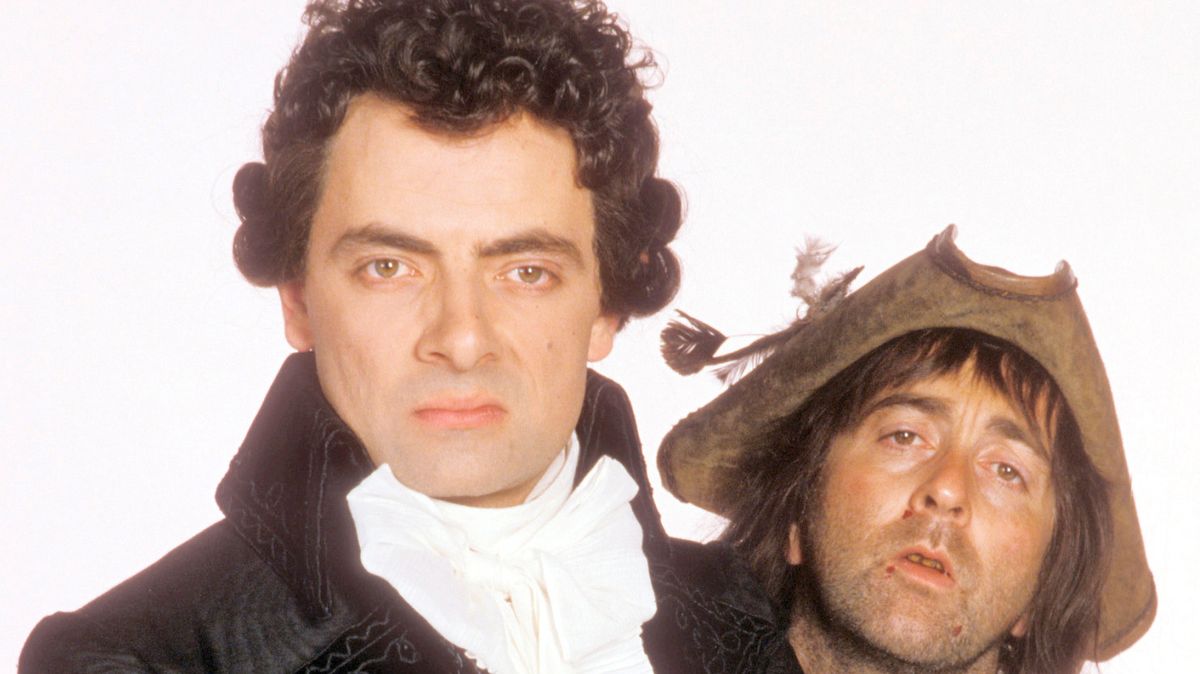
Blackadder look set to be canned after the first series – then Ben Elton came on board and changed everything. Elton said: “Let’s set it in Elizabethan England, where it’s derring-do, it’s sword play, it’s handsome devils and beautiful girls.”
 View 6 Images
Blackadder was almost cancelled after a single series(Image: We Love TV)
Comedy dynamite resulted, with stellar performances from Rowan Atkinson, Tony Robinson as Baldrick and regulars like Hugh Laurie and Miranda Richardson and incredible cameos from Tom Baker, Brian Blessed and Rik Mayall as Lord Flashheart. Director Mandie Fletcher said: “I literally couldn’t speak, I was laughing so much. He just did his own thing. He came in with such power that he blew his moustache off.”
A gentler, but equally popular sitcom was Just Good Friends, starring Paul Nicholas and Jan Francis (1983). John Sullivan wrote the series after being stung by criticism of his lack of female characters. His inspiration was a letter in a magazine about a woman who had been jilted by her fiance on her wedding day.
The series followed Penny and Vince and became a smash hit, attracting viewers with its ‘will they won’t they’ storyline. Letters flowed into Jan from women saying they were in the same situation, and from men asking how he could treat her like that.
‘Allo ‘Allo! ranks among the most successful ever BBC comedies, selling to more than 80 countries. The pilot went out over Christmas 1982, with the first full series following in 1984. There were early murmurings of potential controversy – was the world ready for the adventures of Rene, the French Resistance, and comedy Gestapo officers? But the show was a big hit on French TV and loved around the world.
 View 6 Images
Gorden Kaye & Carmen Silvera in ‘Allo ‘Allo!, December 1982(Image: Allstar/BBC)
In Brush Strokes (1986) Karl Howman played painter and decorator Jacko, a cheeky chappie with an eye for the ladies. After five series, 40 episodes and an iconic theme tune by Dexys Midnight Runners – Jonathan Powell, the Controller of BBC1, asked Karl if he wanted to do some more.
Karl felt the series had run its course. So did Jonathan, saying: “That character was going to find it difficult to age gracefully”. Desmond’s – launching in 1989 and running for 6 series – began with a bus journey through Peckham, south east London.
Writer Trix Worrell came up with the show after glancing out of the window at a West Indian barber’s shop The barbers had their noses pressed against the glass, eyeing up passing girls while their customers sat waiting – inspiring the classic comedy.
Red Dwarf came to producer Paul Jackson almost by accident. He said: “To me, it was The Odd Couple, which is why I loved it, and I knew it would work. It didn’t matter if it was on a spaceship. It was Walter Matthau and Jack Lemmon. Rimmer (Chris Barrie) is the prissy one and Lister (Craig Charles) is a slob.” Series one aired in 1988 and ran for eight series and 52 episodes until 1999.
 View 6 Images
Red Dwarf SCI FI TV comedy series with Danny John-Jules, Chloe Annett, Robert Llewellyn, Chris Barrie, and Craig Charles(Image: BBC)
Birds of a Feather began with a Christmas lunch, where writers Laurence Marks and Maurice Gran spotted two overdressed women whose husbands looked, as Maurice put it, ‘a bit tasty.’ Fantasising that they were gangsters’ molls, he told his writing partner, and Gran replied: “Linda and Pauline.”
So, Linda Robson and Pauline Quirke were cast as sisters whose husbands were sent to prison and Birds of a Feather became a massive BBC hit, attracting 15 million viewers after its 1989 launch. The decade closed with the last episode of Blackadder. Problems in the edit meant the closing shot needed to be changed.
It became one of the most iconic pieces of TV in sitcom history, as Capt Blackadder and his men go ‘over the top’ and the scene fades to a field of poppies. Producer John Lloyd said: “It looks like they fade into history, like ghosts, and out of the mud grow miraculously poppies.
Article continues below
“It was the cheapest shot you can possibly imagine, literally one still colour frame, and suddenly you’ve got one of the great moments in television.”
*Still Laughing:How the Sitcom Kept Britain Smiling in the 80s, by Robert Sellers, is published on July 23 by The History Press