


The Senate has approved legislation to allocate $70 billion to President Donald Trump’s immigration enforcement agencies, concluding weeks of delays and intense opposition stemming from an unrelated $1.776 billion settlement fund that threatened to derail the bill.
Senators voted 52-47 early Friday morning to pass the funding package, which will support Immigration and Customs Enforcement and Border Patrol for the next three years, covering the remainder of Trump’s term. This vote follows months of Democratic resistance to the funding. The bill now advances to the House of Representatives, where it is anticipated to be considered next week.
The final vote occurred just before 5 a.m., after Republicans narrowly thwarted multiple bipartisan attempts to incorporate language into the bill that would permanently prohibit Trump’s settlement fund. This fund is intended for allies who claim to have faced political persecution.
Republicans overcame the last significant hurdle overnight by defeating an amendment proposed by one of their own, Louisiana Senator Bill Cassidy. His amendment sought to redirect payments from the settlement to law enforcement officers injured during the January 6, 2021, attack on the Capitol by a mob of Trump supporters seeking to overturn his 2020 presidential election loss.
These amendments tested party unity, complicating what was expected to be a straightforward vote for Republicans keen to maintain focus on immigration enforcement during an election year. Instead, they spent nearly a full day debating whether to block the settlement fund, even after acting Attorney General Todd Blanche had indicated earlier in the week that it would not proceed.
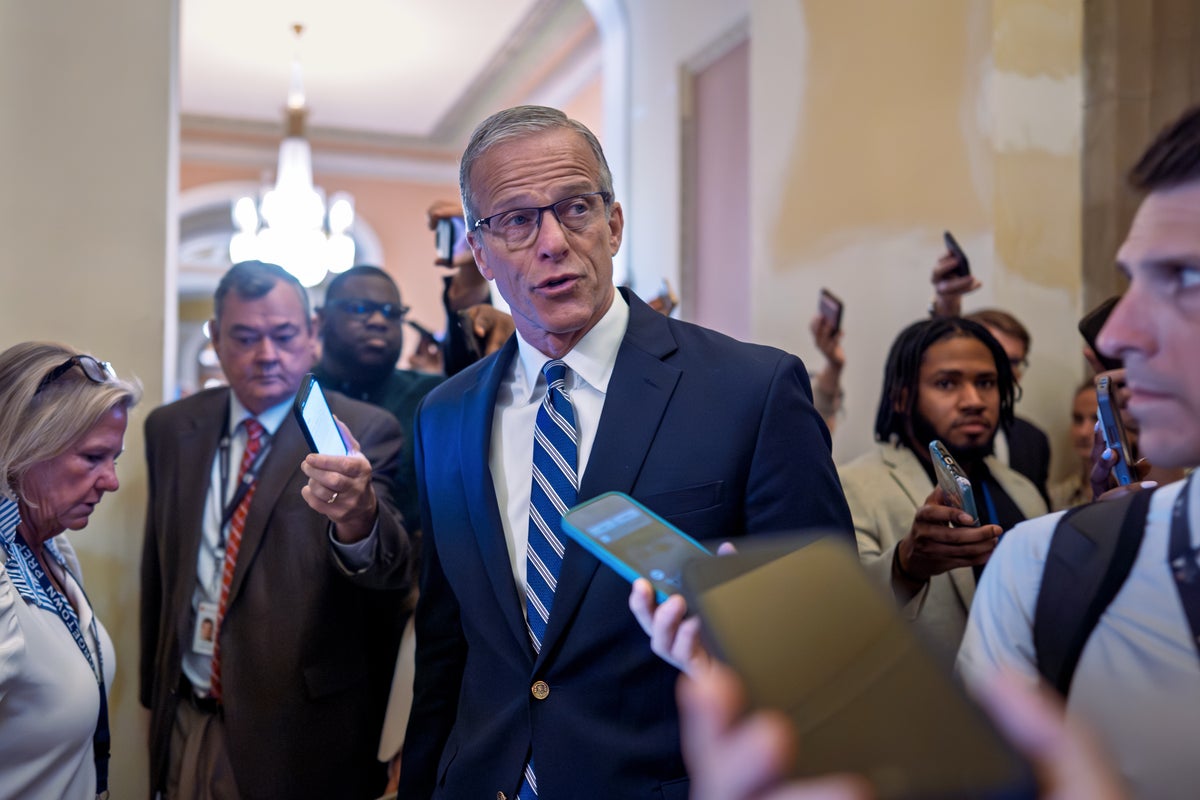
“This would have been done several hours ago if we weren’t having to deal with some of the issues around the fund,” Senate Majority Leader John Thune, a Republican from South Dakota, remarked shortly before midnight.
Thune himself has criticized the fund, which is part of a settlement resolving Trump’s lawsuit against the IRS over the leak of his tax returns and has angered many of his GOP colleagues. Despite his reservations, he has spent weeks urging Republican senators to keep the bill focused on funding for ICE and Border Patrol, advising against new provisions that could hinder its passage in the House.
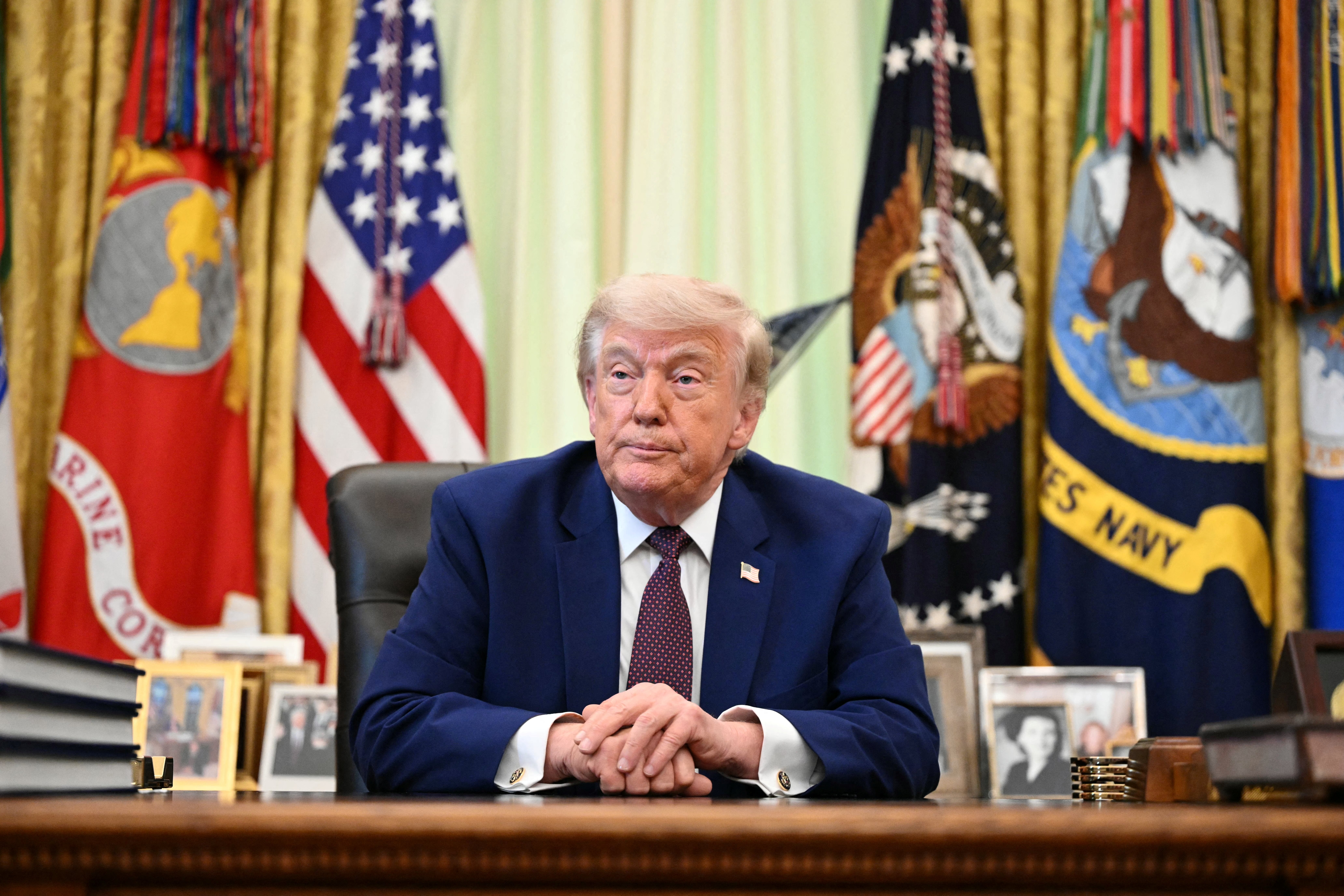
Nevertheless, a faction of Republican senators pressed throughout the day and into the night to legislatively block the fund’s payouts. This effort gained renewed urgency after Trump, who has recently been at odds with the Senate, cast fresh doubt on the fund’s future on Wednesday, telling reporters it is “very important” and stating, “I don’t know” whether it is dead or on hold.
The final 52-47 vote on the bill was largely along party lines, with Senator Lisa Murkowski of Alaska being the sole Republican to oppose it. Democratic Senator Michael Bennet of Colorado did not cast a vote.
Senators push back multiple attempts to ban settlement fund
The first vote on Thursday morning, a Democratic effort to ban the settlement fund, was held open for several hours while Cassidy and two other Republican senators decided whether to support it. The Democratic motion was narrowly defeated when Cassidy eventually voted against it and the two other senators — Jon Husted of Ohio and Dan Sullivan of Alaska, both of whom are up for reelection this year — voted for it.
The Senate then rejected a second amendment from Republican Sen. Thom Tillis of North Carolina that would also have banned the settlement fund but would have moved the money to a separate anti-fraud fund at the Department of Justice. Most Democrats voted against the amendment, guaranteeing its defeat, but more than 10 Republicans supported it.
Tillis said the fund is a political liability for the party.
“If Blanche says this is largely inoperative, why not use this moment to codify that?” Tillis said. “Otherwise, you’re exposing every one of our members who are in cycle to having to deal with this between today and Election Day, and that makes no sense for something that the DOJ says they’re not moving forward with.”
Cassidy’s amendment to compensate the injured police officers was a pointed rebuke, as payouts from Trump’s fund could have potentially gone to Trump supporters who beat police and attacked the Capitol on Jan. 6. Cassidy lost reelection last month after Trump endorsed a primary opponent.
He said that, despite Blanche’s comments, the fund is still part of an active settlement and “absolutely can be used.”
The Senate rejected several other Democratic efforts to try to block or limit the fund, including amendments to ban payments to Jan. 6 defendants who injured law enforcement officers.
Senate Minority Leader Chuck Schumer, D-N.Y., said Republicans are now “leaving taxpayers to rely on nothing more than a promise from Donald Trump’s personal fixer. That is not accountability. That is a permission slip.”
ICE and Border Patrol money has been delayed for months
Enactment of the bill to fund ICE and the Border Patrol would end the blockade by Democrats who demanded policy changes after the fatal shootings of two protesters by federal agents in January.
Senate Republicans used a complicated procedural maneuver to get around the filibuster and pass the budget legislation with no Democratic votes. But it took weeks to get the bill to the Senate floor as Republicans navigated various obstacles to passage created by Trump and the White House — including a $1 billion proposal for White House security and Trump’s ballroom that they eventually scrapped and the fierce bipartisan backlash to the settlement fund.
Democrats say any funding bill for the Department of Homeland Security should place restraints on federal immigration authorities, including better identification for federal officers and more use of judicial warrants, among other asks.
After federal agents shot Renee Good and Alex Pretti in Minneapolis, Trump agreed to a Democratic request that the Homeland Security bill be separated from a larger spending measure that became law. But bipartisan negotiations went nowhere, and the department funding lapsed in mid-February with no agreement on changes to the Trump administration’s immigration enforcement tactics.
Congress eventually funded the rest of DHS at the end of April with Democratic support, but ICE and Border Patrol have remained without regular funding.