


A plane has crashed in Croatia, killing at least four people.
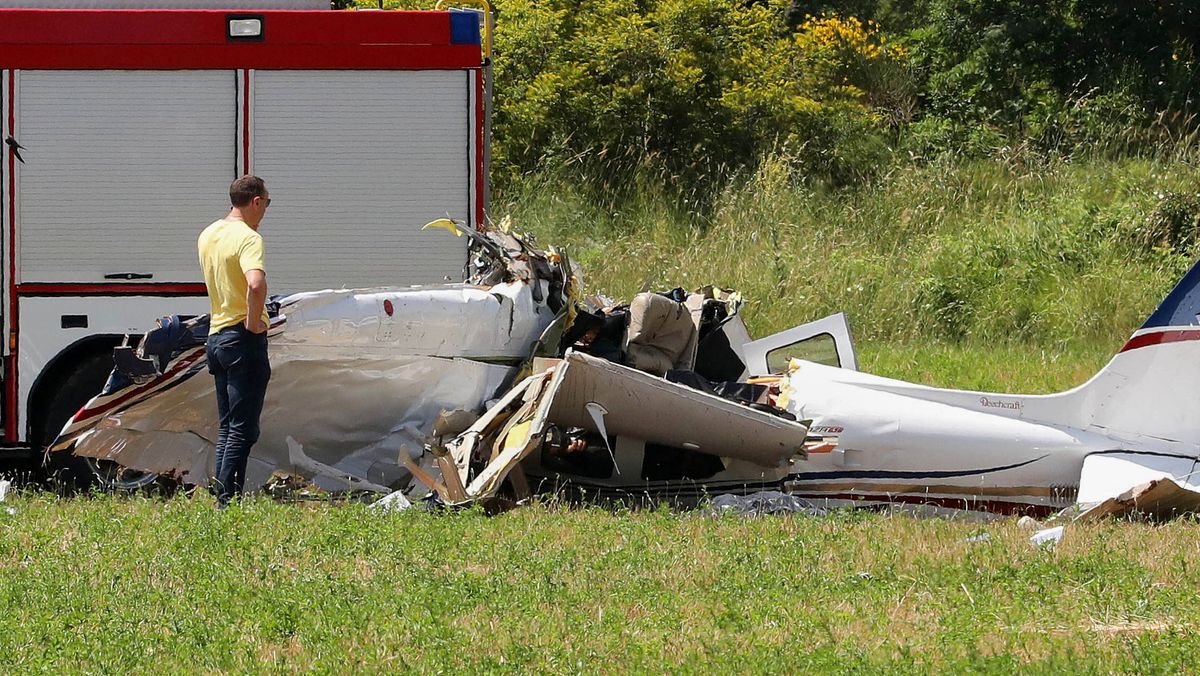
The aircraft went down near Medulin, a town on the Istria peninsula, a police statement said, with images from the scene showing the wreckage of the small plane in a field with emergency services.
The official HINA news agency reported that it was a German plane that took off from Austria and was due to land in Medulin.
The crash occurred at around 11.20am (0920GMT) in the Campanoz area, between Kastijun and Medulin, near the Medulin airport and there are unconfirmed reports that there may have been two more people on board along with the four people who are known to have died.
 View 2 Images
An investigation team at the scene(Image: AFP via Getty Images)
Local pilot Nijaz Delic told the Index news portal that the plane “spiralled (in the air) and crashed into the ground.” It was unknown how many people were on the aircraft and no other details were immediately available.
“I don’t know how the accident happened. For reasons currently unknown, the pilot (…) was supposed to land at the sports airport in Medulin, made a spiral above the Kaštijun landfill and then crashed into the ground. That’s the only information we have,” stated Mr Delic.
The plane is reported to have been Bonanza G36 plane with an investigation underway into why it crashed.
Aviation expert Zeljko Marusic told Croatian news outlet Glas Istre that a spiral dive is “one of the most dangerous conditions” at low altitude as the “speed, structural loads and rate of altitude loss increase simultaneously.”
Unlike in a classic spin, a spiral dive leaves the aircraft usually uncontrollable and a key element of the investigation will be into how the plane got into this position.
Mr Marusic continued: “In general aviation, a spiral dive rarely occurs without a previous cause. It is most often preceded by a certain disruption in flight – a technical problem, loss of spatial orientation, wrong estimation of speed, an attempt to correct the path at low altitude or a sudden reaction to an unexpected situation.
“In the case of smaller aircraft, the last minutes of the flight are particularly critical when the pilot has the least time to react and the smallest safety margin of height.”
Article continues below