


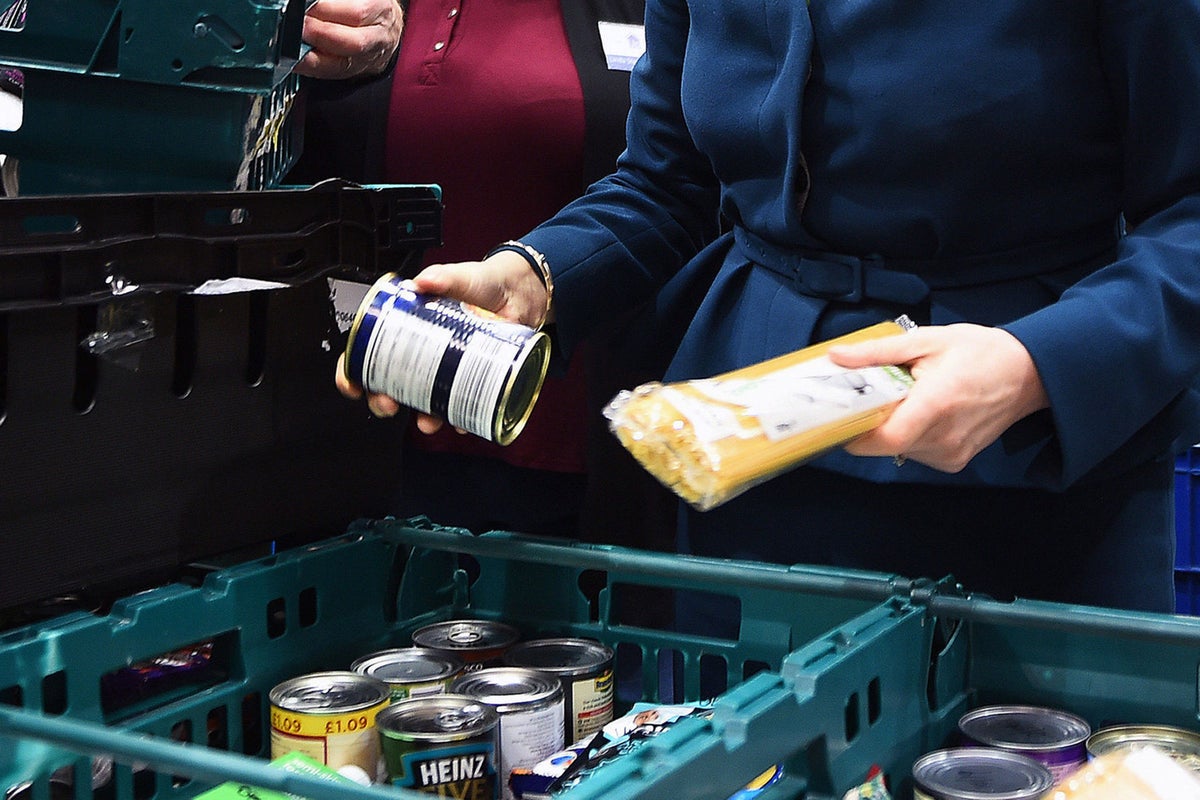
Millions of parents in the UK are facing rising difficulty in feeding their children as a new survey reveals the new scale of hunger hardship.
Almost half (44 per cent) of the nation’s 17 million parents are finding it harder today than five years ago to feed their children, the survey from the Social Market Foundation (SMF) reveals.
The poll of 2,500 parents, conducted by Opinium, also showed that 1 in 10 parents (9 per cent) say their children are often or always not able to eat enough due to a lack of food.
The findings show that “further action” is needed, the SMF writes in a report sponsored by Deliveroo, calling on the government to go further in urgently tackling the issue of child hunger.
In December, the government launched its Child Poverty Strategy, revealing a 10-year plan to reduce poverty levels. Around 4 million children are currently living in poverty in the UK according to statistics from the Child Poverty Action Group (CPAG).
The headline measure in the strategy was bringing the two-child benefit cap to an end in April. The Conservative-era policy prevented parents from claiming universal credit or tax credit for their third child and beyond. An estimated 450,000 children will be lifted out of poverty after its removal.
Other measures included in the Labour child poverty strategy are expanding free schools meals and childcare support, as well as ending the unlawful use of bed and breakfast accommodation for families. The government estimates it will lift over half a million children out of poverty through the changes.
However, projections by the Department for Work and Pensions (DWP) reveal that this will still leave an estimated 4.2 million children will be in relative low income in the final year of parliament, down from the current 4.7 million.
In its report, the SMF recommends the government continue to expand food support policies by strengthening free school meal provision, including introducing a national enrolment opt-out system for them. It also calls for tax incentives for food donation, similar to schemes in some EU countries.
The findings also point to a growing struggle amongst parents to ensure they are able to provide their children with healthy diets. The SMF survey found that 10 per cent reported being unable to feed their child a balanced meal, and 15 per cent said they relied on only a few low-cost foods.
Jake Shepherd, Senior Researcher at Social Market Foundation, said: “Few issues deserve greater urgency than hungry children. While the government has taken important steps to address the challenge in recent years, including expanding free school meals and publishing its landmark Child Poverty Strategy, our findings show that family food insecurity is so widespread that further action is likely needed.
“The most effective way to reduce child food insecurity is increasing the amount of money families have in their pockets. This means ensuring households can afford the basics through strong social security and adequate incomes, as well as through new policies that help keep food accessible. While the current fiscal climate is challenging, there is scope for a more ambitious response.”
The government was approached for comment.