


Nvidia announces RTX Spark as ‘the most efficient PC chip ever built’
Nvidia enters the consumer laptop realm.
Nvidia enters the consumer laptop realm.
by Jun 1, 2026, 4:28 AM UTC Image: Nvidia
 Sean Hollister is a senior editor and founding member of The Verge who covers gadgets, games, and toys. He spent 15 years editing the likes of CNET, Gizmodo, and Engadget.
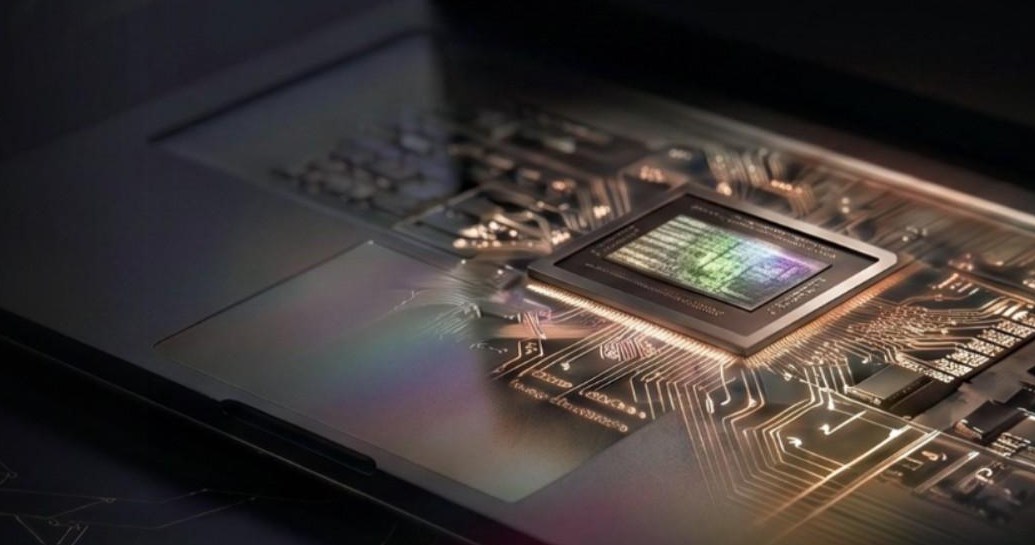
This fall, Nvidia will officially become a consumer PC chipmaker like Intel, AMD, Apple, and Qualcomm, putting a complete computing chip — not just graphics — into the very heart of laptops and mini-PCs. After many months of leaks, it’s finally announcing the RTX Spark, the first in a family of chips that will meet or beat the most powerful thin-and-light Windows machines ever, it claims.

“This is the most efficient PC chip ever built,” says Nvidia senior director of product management Mark Aevermann — without sharing so much as a single statistic or chart to back that up.
The RTX Spark is effectively the same GB10 chip that’s in the DGX Spark, the tiny “personal AI supercomputer” that Nvidia released last year, only now it’s a family of chips instead of just one. The flagship version appears to be spec-to-spec identical with 20 CPU cores, 6,144 GPU cores and 128GB of LPDDR5X memory.

But Nvidia says there’ll be lesser versions later, targeting lower prices, and with as little as 16GB of RAM.
Like Apple and Qualcomm’s chips, this Nvidia chip is Arm-based silicon, meaning legacy Windows software made for Intel and AMD’s x86 processors needs to run through an emulation layer to work. That can mean lower performance. But Microsoft has now spent years getting Windows and its Prism emulator ready for Qualcomm and now Nvidia chips, and Nvidia claims its own graphics and AI chops will take the idea further than ever before.
With the power of the RTX Spark, Nvidia boasts, you can render a 90GB 3D scene, edit 12K resolution video, or play the graphically intensive Indiana Jones and the Great Circle at a smooth 100fps at 1440p resolution — all in a 14mm thick laptop without a power cord plugged in.

And with up to 128GB of unified memory, tied with AMD’s previous gen Strix Halo parts, an RTX Spark laptop or desktop can also host 120-billion-parameter AI agents, something that Microsoft is seemingly excited about for Windows. At Microsoft’s Build conference this week, it’ll be showing off “new Windows security and containment primitives” that, along with Nvidia’s OpenShell runtime, “allows personal agents to run safely and under full user control.”
Nvidia claims this adds up to “a new personal computing paradigm where AI is the UX” and “users no longer need to master complicated app UIs” because you’ll just talk to your PC instead of needing to use mouse and keyboard.

Nvidia suggested that, for example, a esports streamer could get their PC to automatically turn off their lights, mute their microphone, and change their broadcasting mode when they want to step away and grab dinner. A designer could use Adobe to automatically turn a sketch into a full image, render a 3D model of it, then create a AI video just by asking. A software developer can automatically monitor their GitHub project and autonomously fix QA issues, with the AI agent taking over the laptop’s keyboard and mouse cursor to do “repetitive and boring” tasks.
Nvidia says that with the RTX Spark’s local AI chops, your data stays private and you won’t be burning through tokens to do AI things.
I’m not convinced Nvidia has pieced together the Star Trek computer just yet, but it does seem like the company has a lot of partners on board. Almost every major laptop vendor is accounted for, with eight specific laptops already confirmed for this fall:

One of those is from Microsoft, which is putting the Nvidia RTX Spark in a new laptop that Surface boss Andrew Hill tells us is “the most powerful thing we’ve ever made.” It’s called the Surface Laptop Ultra:
 Image: Microsoft
Those machines are apparently just the start. Aevermann says Nvidia’s partners are already working on over 30 laptops and over 10 desktops, with Acer, Asus, Dell, Gigabyte, HP, MSI, and Lenovo all on board for the latter.
“RTX Spark is going to be a family of products that are going to attack a lot of different price points,” Aevermann promises. “The overall market opportunity that we see is quite large.”
 Image: Nvidia
And between Microsoft and Nvidia’s wrangling efforts, lots of Windows developers are also on board with Arm.
The company points out that “Blender, DaVinci Resolve, Maxon Cinema4D, Maxon Redshift, Topaz Photo, CapCut, Cubase, Bitwig Studio, Affinity by Canva and more all run natively on Arm today, as do the audio, video, MIDI, and control peripherals they require.“
Adobe is on board, with special optimizations for Premiere and Photoshop that take advantage of Nvidia’s new chip.
Even games with anti-cheat that thumbed their nose at Linux and the Steam Deck are now supporting Windows on Arm, too. Microsoft writes that Riot Games is now bringing both League of Legends and Valorant to Windows on Arm. Krafton is bringing PUBG, and Nvidia tells us it’s working with more developers who use Easy Anti-Cheat, BattlEye and Denuvo. (Epic’s Fortnite already came to Windows on Arm last November after an announcement last March.)
Aevermann says “all the top games will run on RTX Spark and provide a great experience.” That’s a pretty high bar to meet!
Here are some more developers Nvidia says it’s working with:
 Image: Nvidia
There are still many open questions, of course. Neither Nvidia nor Microsoft gave us a clear idea of how much these computers might cost, save that the first batch this fall is “targeting the more premium price points in the market.”
On “all-day battery life,” Aevermann would only say that we should “expect it to be much better than anything you’ve seen before on RTX laptops” and that “you won’t need a charger” if you’re not pushing heavy workloads. The chip scales down to “low, low single-digit” wattage and goes as high as 80 watts, he says. The latter means they could theoretically drain bigger laptop batteries in around an hour at full bore.
On performance, Nvidia didn’t have a single statistic or chart to share, and Aevermann wouldn’t answer questions about how the RTX Spark family stacks up to chips from Intel, AMD, Apple, and Qualcomm, saying Nvidia will have more to share closer to launch. But he does say that depending on the application, it has roughly the graphical power of an RTX 5070 mobile GPU, and that we should expect the CPU portion to be “competitive with anything else out there in the Windows space.”
Nvidia also wouldn’t say whether these chips, made on the TSMC 3 process in partnership with MediaTek, are being manufactured in the US or abroad. That got a no comment.
Nvidia also wouldn’t comment on whether it plans to offer Linux driver support for the RTX Spark, as it’s currently focused on Windows. It wouldn’t comment on putting the Spark in gaming handhelds, like AMD did with its powerful Strix Halo.
But it did answer a question that no, the RTX Spark won’t be paired with additional discrete GPUs — which may limit its potential in desktops beyond the miniature ones, the same way Apple’s Mac Pro became limited when its Arm-based chips broke compatibility with discrete GPUs.
Maybe it doesn’t matter that Nvidia isn’t sharing proof to back up its claims. Back in 2020, Apple didn’t share any proof when it announced Apple Silicon. But when the M1 arrived, it upended our concept of laptop performance overnight.
Follow topics and authors from this story to see more like this in your personalized homepage feed and to receive email updates.