


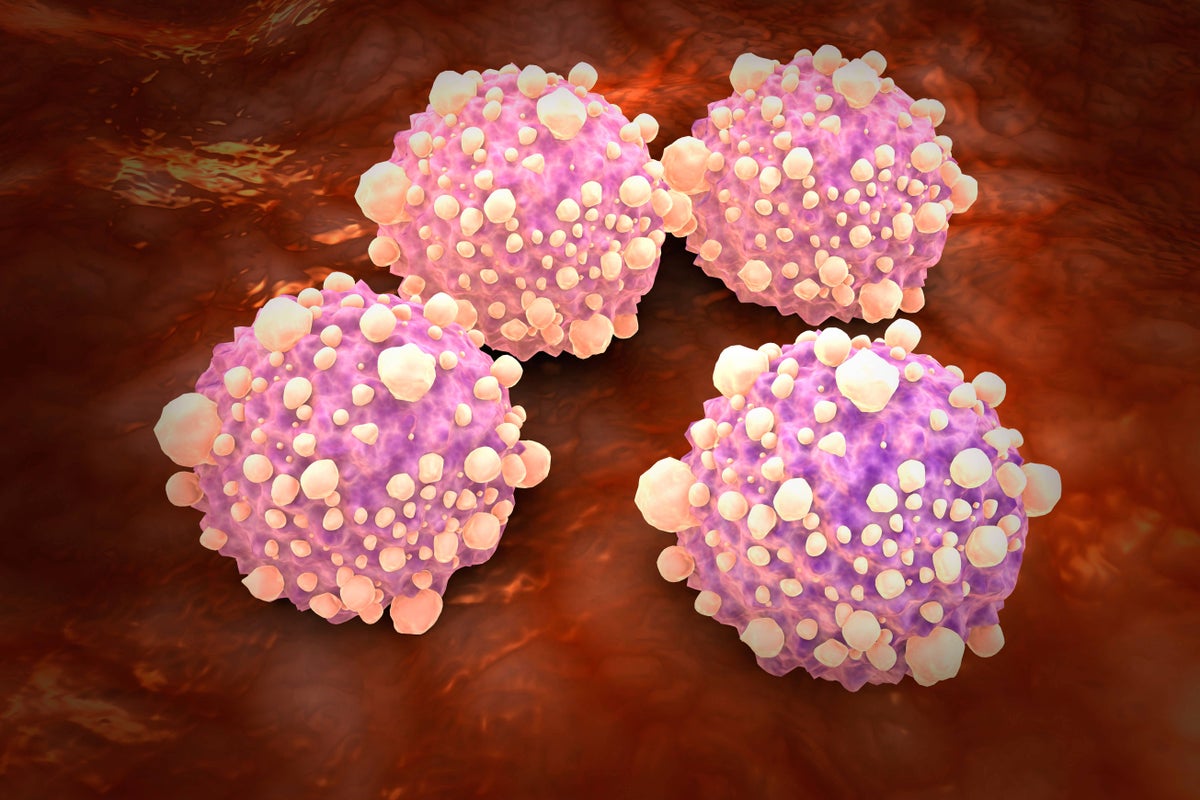
A new once-daily pill almost doubled the survival time for patients battling an aggressive and advanced form of pancreatic cancer when compared to chemotherapy in a recent trial.
Experts are hailing the drug, daraxonrasib, as “landscape-changing” for those affected by the disease, noting its additional benefit of causing fewer side effects.
Daraxonrasib works by targeting the mutated KRAS gene, which is found in more than 90 per cent of pancreatic tumours and continuously signals cancer cells to grow. By shutting this off, the drug prevents the tumours from spreading further.
Pancreatic Cancer UK has described new treatments targeting this gene variant as “some of the most exciting developments” in a very long time, and called for clinical trials in the UK.
The trial, being presented at the American Society of Clinical Oncology annual meeting in Chicago, involved 500 patients in North America, Europe, and Asia.
All participants had advanced pancreatic cancer that had metastasised to other organs, had received previous treatment, and were still capable of performing most of their daily activities.
Some 248 patients were given daraxonrasib and 252 were given chemotherapy.
 open image in gallery
Most had tumours with specific mutations of the KRAS gene.
During a follow-up period, the median survival time for patients on daraxonrasib was 13.2 months compared to 6.6 months among those on chemotherapy.
The median time spent without the disease progressing was 7.3 months in the daraxonrasib and 7.2 months in the chemotherapy group.
Daraxonrasib also caused fewer serious side effects, according to the study.
Severe side-effects were experienced by 43.6 per cent of patients on daraxonrasib compared to 57.5 per cent on chemotherapy.
Just 1.2 per cent of people in the daraxonrasib group stopped treatment because of side-effects compared to 11.2 per cent of the chemotherapy group.
Rachna Shroff, chief of the division of haematology/oncology at the University of Arizona Cancer Centre and an Asco expert in gastrointestinal cancers, said: “These results are landscape-changing for metastatic pancreatic cancer patients with a KRAS mutation.
“We are seeing unprecedented survival and efficacy in second-line treatment with an expected safety profile. The RAS revolution is here, and this study is proof of principle that targeting KRAS in pancreatic cancer is feasible and effective.”
Main symptoms of pancreatic cancer
NHS
Symptoms of pancreatic cancer can include:
- the whites of your eyes or your skin turn yellow (jaundice), and you may also have itchy skin, darker pee and paler poo than usual
- loss of appetite or losing weight without trying to
- feeling tired or having no energy
- a high temperature, or feeling hot, cold or shivery
Other symptoms can affect your digestion, such as:
- feeling or being sick
- diarrhoea or constipation, or other changes in your poo
- pain at the top part of your tummy and your back, which may feel worse when you’re eating or lying down and better when you lean forward
- symptoms of indigestion, such as feeling bloated
Reacting to the findings, Anna Jewell, director of services, research and innovation at Pancreatic Cancer UK, said: “These new treatments targeting KRAS mutations are some of the most exciting developments we have seen in pancreatic cancer for a very long time.
“KRAS mutations are found in over 90 per cent of all pancreatic tumours and are responsible for driving the rapid growth of this devastating disease.
“By blocking the activity of KRAS mutations, this drug, daraxonrasib, has been shown to improve survival in people with advanced pancreatic cancer. Patients were given months more precious time with their loved ones.
“Crucially, these results suggest that daraxonrasib is able to keep the cancer under control for longer.
“There are now several KRAS inhibitor drugs in clinical trials around the world, which are showing promising results.
“We now need to ensure that these clinical trials are available in the UK, and that crucially these new treatment types are fast-tracked for approval – as recognised in the National Cancer Plan.”
There are around 11,500 cases of pancreatic cancer diagnosed in the UK each year and around 10,200 deaths.
Ms Jewell said: “Tragically, half of all people with pancreatic cancer die within just three months of their diagnosis.
“More time with those we love most is truly priceless. We must do everything possible to ensure the most promising new treatments are available here in the UK.”