


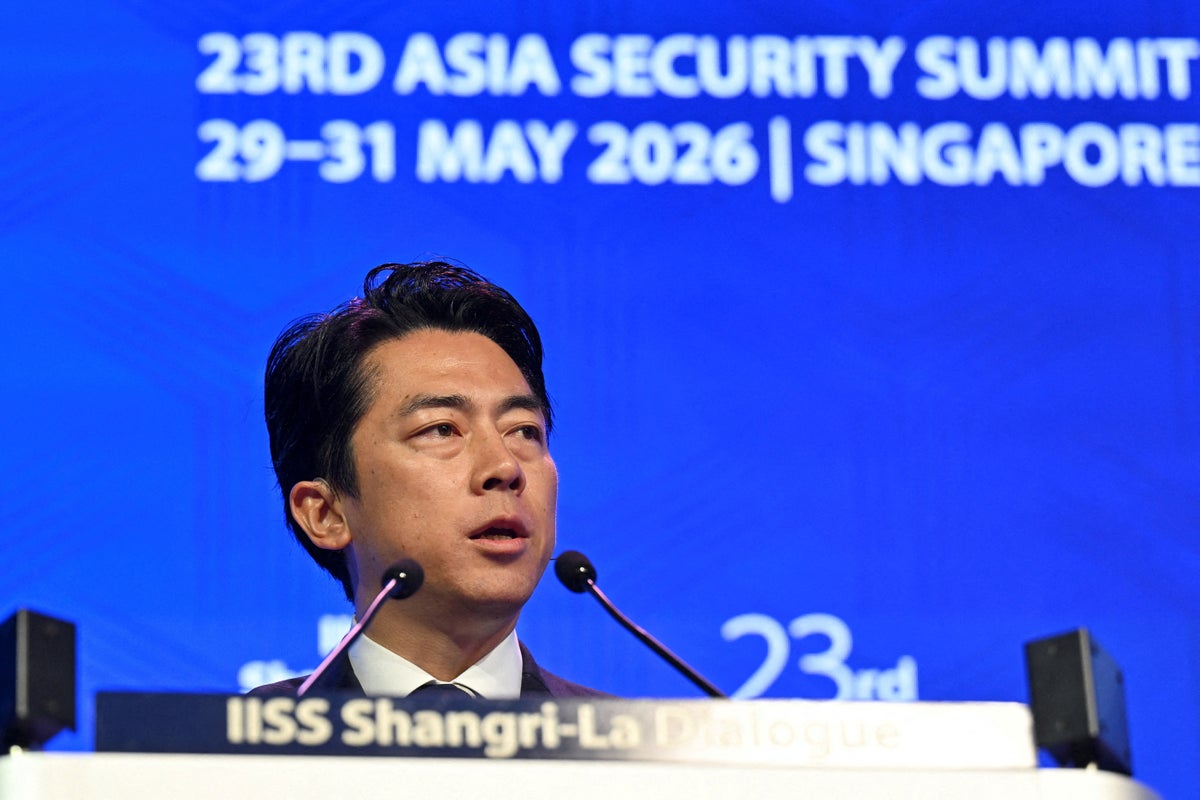
Japanese defence minister Shinjiro Koizumi on Sunday rejected Chinese allegations of “new militarism” and instead accused the neighbour of rapidly expanding its military “without sufficient transparency”.
Speaking at the Shangri-La Dialogue in Singapore, Mr Koizumi defended Japan’s military build-up under prime minister Sanae Takaichi and said China’s military activities and external posture were “matters of serious concern for Japan and the international community”.
“Some of you may have heard the term ‘new militarism’, but nothing could be further from the truth,” he said during a plenary session on regional tensions.
“Think about it. There is a country that has a huge arsenal of nuclear weapons and strategic bombers,” he added, referring to China without naming it. “Japan has neither of such weapons. And yet Japan is labelled ‘new militarism’. Isn’t it strange?”
Mr Koizumi said Japan’s conduct since the second world war “speaks for itself” and that its “path as a peace-loving nation has been valued by the region and by the international community”.
Beijing has repeatedly criticised Tokyo’s growing defence spending and military moves. This month, China’s foreign ministry urged Asia-Pacific countries to “jointly resist the reckless actions of Japan’s neo-militarism”, according to Xinhua news agency.
Later, the Chinese defence ministry criticised Japan for increasing defence spending, easing restrictions on lethal weapons exports and pushing to revise its pacifist constitution, warning that “the gray rhino of a remilitarised Japan is gathering speed”.
The Shangri-La Dialogue, organised annually in Singapore by the London-based International Institute for Strategic Studies, brings together defence officials, diplomats, and military leaders from around 45 countries.
 open image in gallery
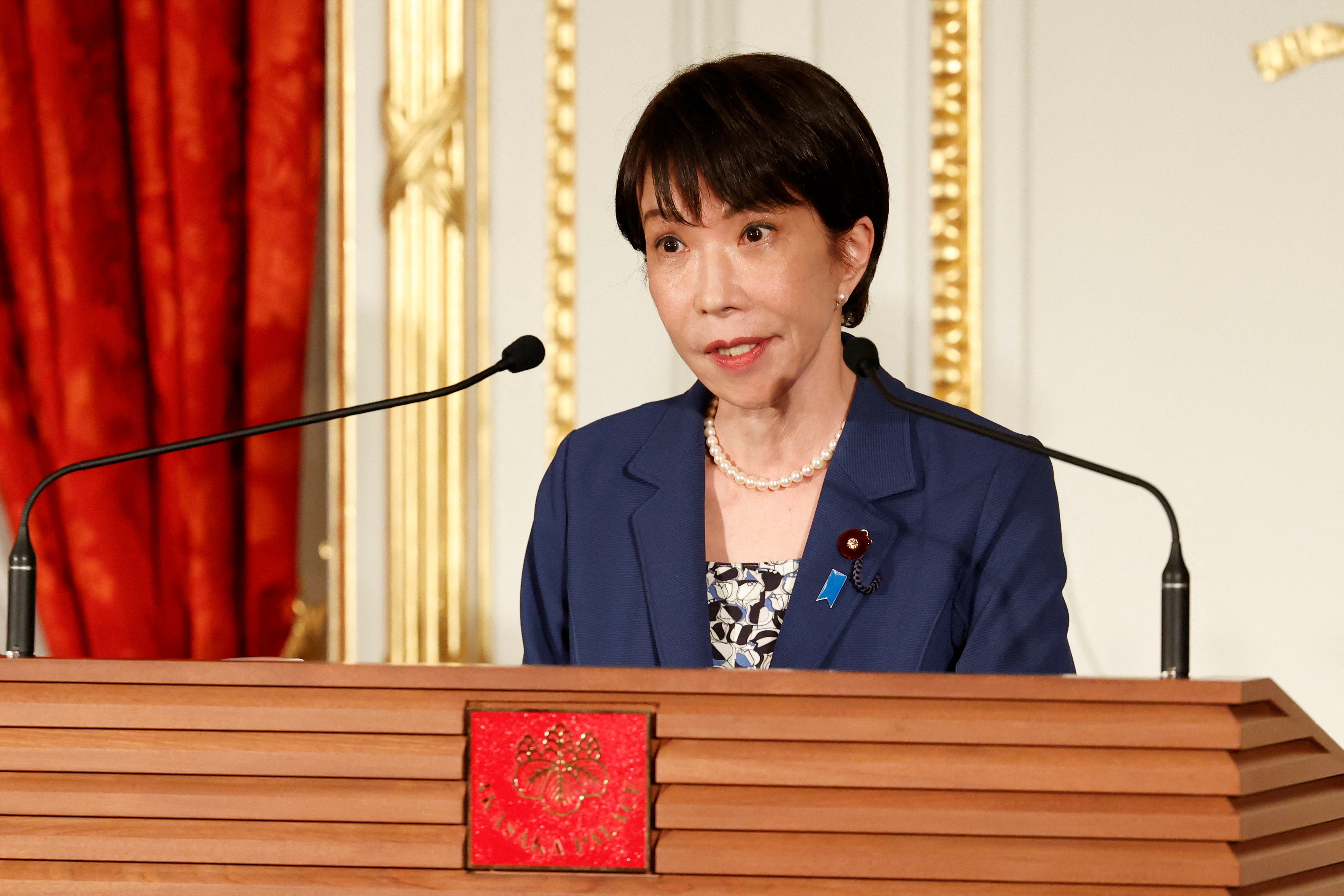
Bilateral relations between China and Japan have deteriorated since November, when Ms Takaichi said a Chinese attack on Taiwan could constitute a “survival-threatening situation” for Japan and potentially justify a military response.
China regards Taiwan as its sovereign territory and doesn’t rule out using force to take control of the island.
At the Shangri-La Dialogue, Chinese officials directly challenged Japan over its wartime history and military ambitions. Major General Meng Xiangqing, who led China’s delegation to the forum, said he “deeply doubted whether a country that has not thoroughly eradicated the toxic legacy of militarism is qualified to talk extensively about defence cooperation on international occasions”.
He also questioned whether Japan could “win the trust of the international community, especially the Asian countries it once invaded”, referring to its military aggression and occupation of several nations, including China, Korea, Indonesia, and the Philippines.
Disputes over Tokyo’s wartime conduct and apologies for atrocities committed by the Imperial Japanese Army have remained a major source of tension between China and Japan for decades.
During a question-and-answer session after Mr Koizumi’s speech, another Chinese delegate, Shen Zhixiong, asked whether Japan would apologise to China, Korea and Southeast Asian countries for wartime aggression, according to The Straits Times.
Mr Koizumi didn’t directly answer the question and repeated his criticism of China’s defence policies.
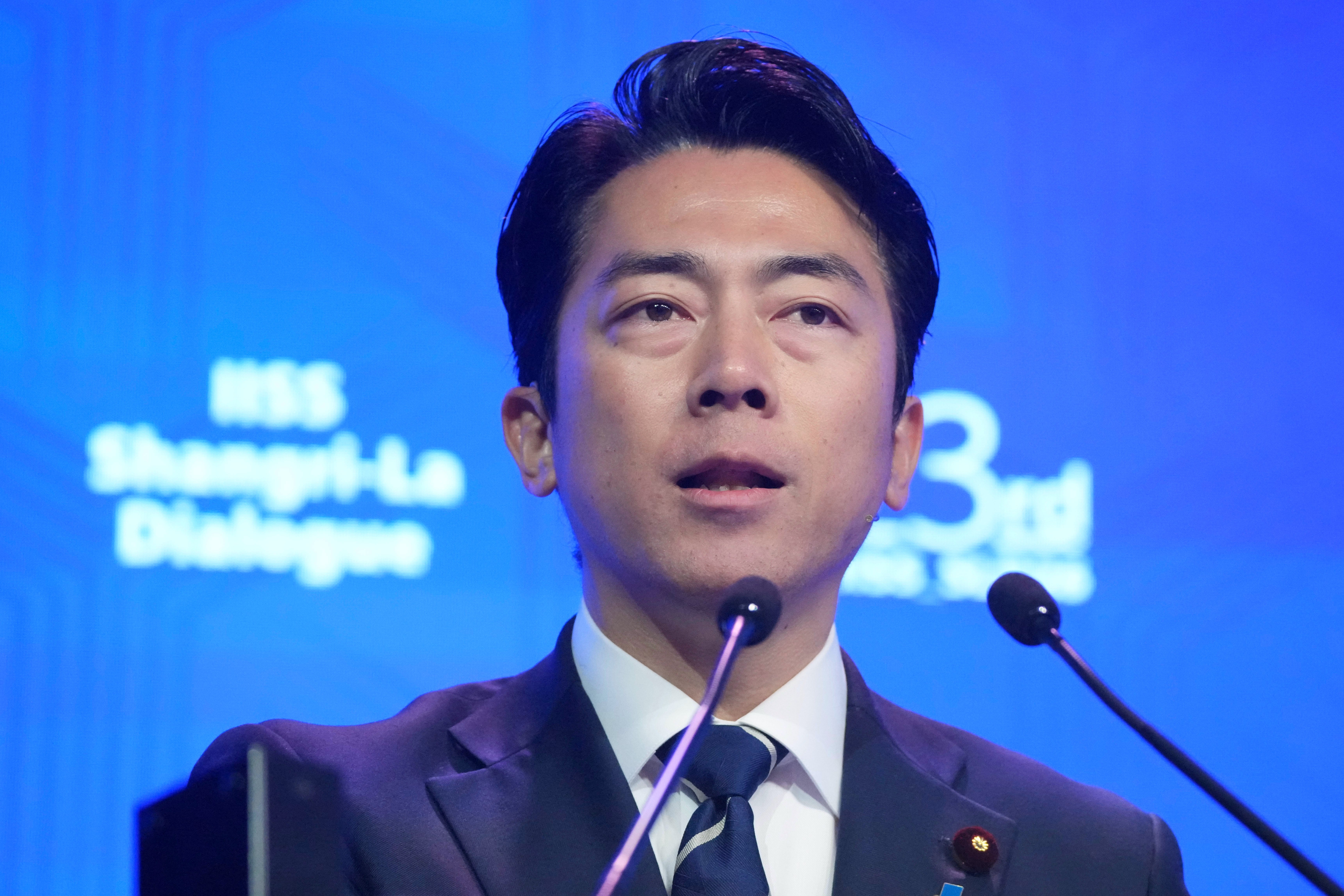
“China continues to increase its defence spending at a high level and is rapidly expanding its military capabilities across a broad range of areas without sufficient transparency. China’s external approach and military activities are matters of serious concern for Japan and the international community,” he said.
 open image in gallery
Japan has increased its defence budget for 12 consecutive years. The Takaichi government approved a record defence budget of over 9 trillion yen (£42bn) for 2026 as it moved towards a target of spending 2 per cent of its GDP on defence.
Ms Takaichi is pushing to revise Article 9 of Japan’s post-war constitution, which renounces war and prohibits the country from maintaining armed forces for combat purposes.
Mr Koizumi said Japan would continue strengthening its military capabilities “with a high degree of transparency” and framed the changes as a response to regional security threats like cyberwarfare, artificial intelligence, and tensions in the Indo-Pacific.
“It is only natural that every country is working to update its own defence capabilities in order to respond to these new challenges,” he said.
He outlined plans to deepen defence cooperation with Australia, the Philippines, Indonesia, and New Zealand.
China’s defence minister, Dong Jun, did not attend the forum for the second consecutive year, with Beijing instead sending a delegation of military scholars and officials.
Mr Koizumi said he was “feeling sad” that he could not meet his Chinese counterpart at the forum but insisted that Japan remained open to talks.
“Differences in perception and friction do arise between nations,” he said. “What’s needed is direct and candid dialogue. Japan’s door to dialogue is always open.”