


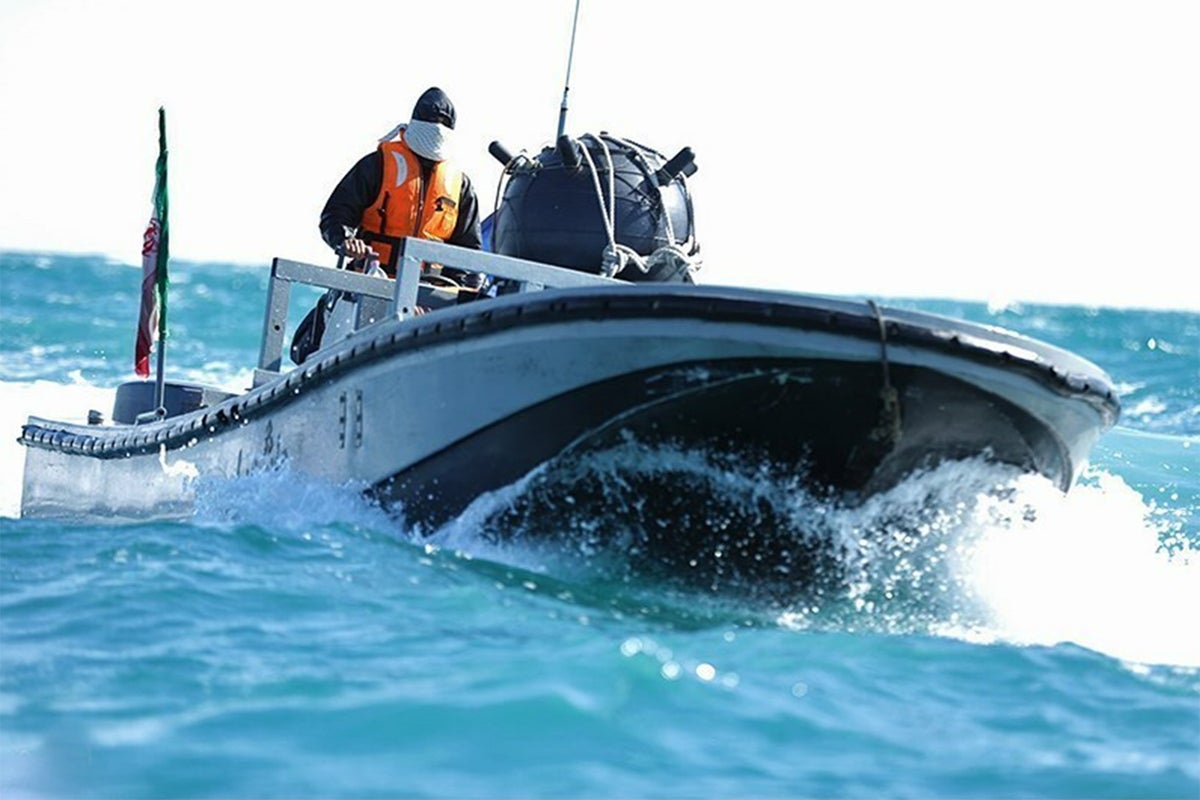
The United States renewed attacks against Iran on Monday, targeting missile launch sites and boats they claimed were trying to lay mines in the Strait of Hormuz.
US Centcom spokesperson Captain Tim Hawkins said the military “eliminated” two Islamic Revolutionary Guards Corps boats seen setting mines in the strait, and also took out a surface-to-air missile site in Bandar Abbas.
The military cast the strikes as defensive actions designed to “protect our troops from threats posed by Iranian forces” and US secretary of state Marco Rubio said the Strait has to be open “one way or the other”.
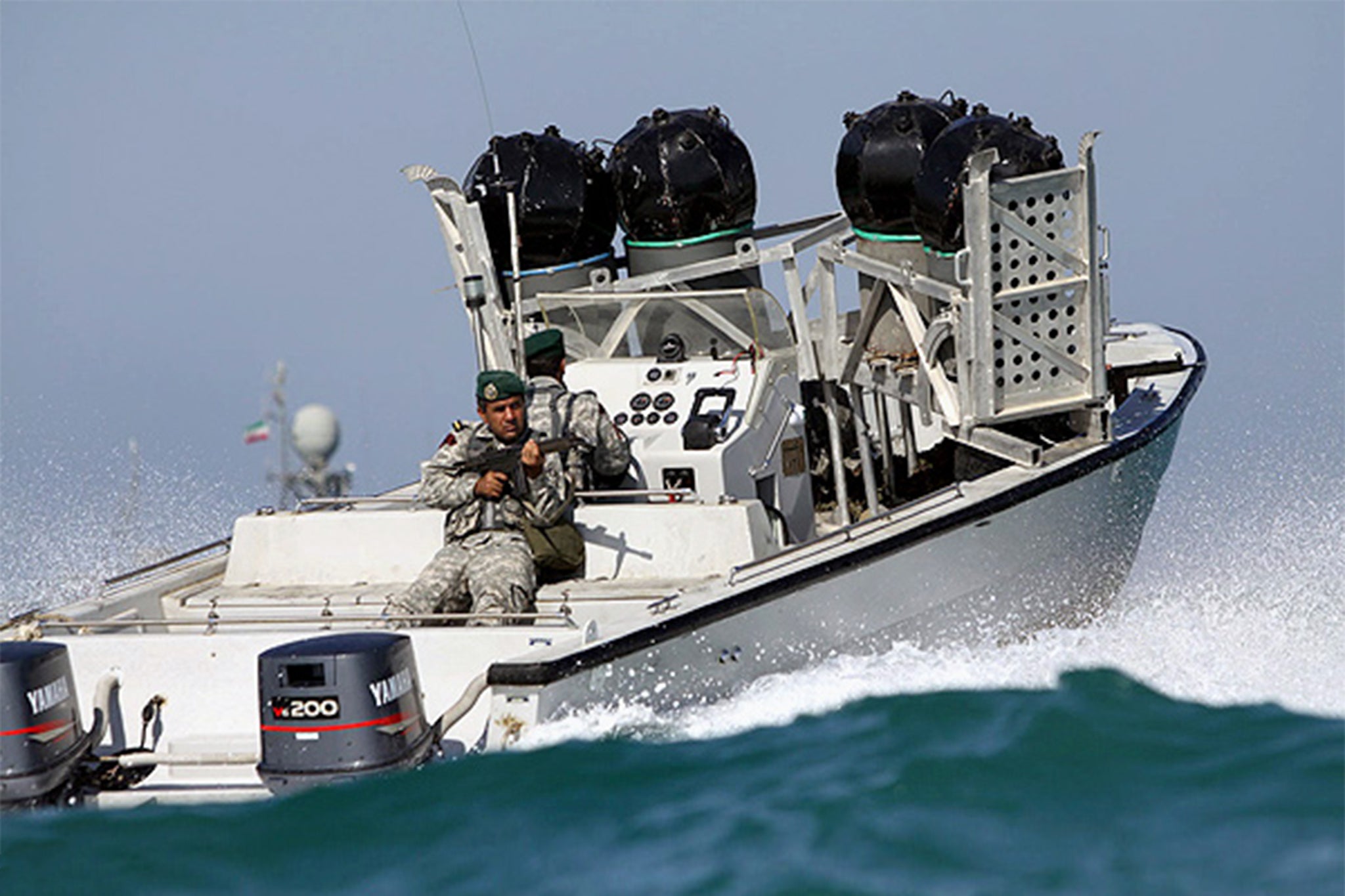
Iran has deployed small surface vessels to lay mines across parts of the Strait of Hormuz in a bid to control traffic through the vital waterway, which usually handles around a fifth of global oil and liquified natural gas trade, since the war erupted on 28 February.
US officials told the New York Times last month that Iran was unable to reopen the Strait because it cannot locate all of its mines and lacks the capability to remove them, posing a lingering threat to some 700 ships still stranded in the Gulf after three months.
Hundreds of British sailors are now stationed off the coast of Gibraltar, aboard the RFA Lyme Bay, still waiting to be deployed for a mine-clearing mission to the Strait of Hormuz in doubt.
Cmdr. Gemma Britton, in charge of the Navy’s Mine and Threat Exploitation Group, told AP that Iran could still have a “huge” variety of mines littered across the strait today. Mines could be rocket-propelled, cabled or sit on the seabed and be triggered by sound, movement or light, she said.
The priority, she said, will be to clear a transit lane in the strait to allow the trapped ships to leave. A lane flowing in the opposite direction will then be cleared, allowing ships to enter, but added that clearing the entire strait could take months or years.
Below, The Independent looks at Iran’s mine collection and how it is being used in the war.
What are the mines?
 open image in gallery
Iran has a stockpile of at least 2,000 Soviet, Western and Iranian made drifting and moored contact mines, according to experts at the Strauss Center. It is also said to have maintained a substantial collection of newer, more advanced, bottom and rising mines from Russia, China and North Korea.
Compared to other weapons, mines are inexpensive. The Strauss Center estimates that a simple contact mine can cost as little as $1,500 (£1,123.07).
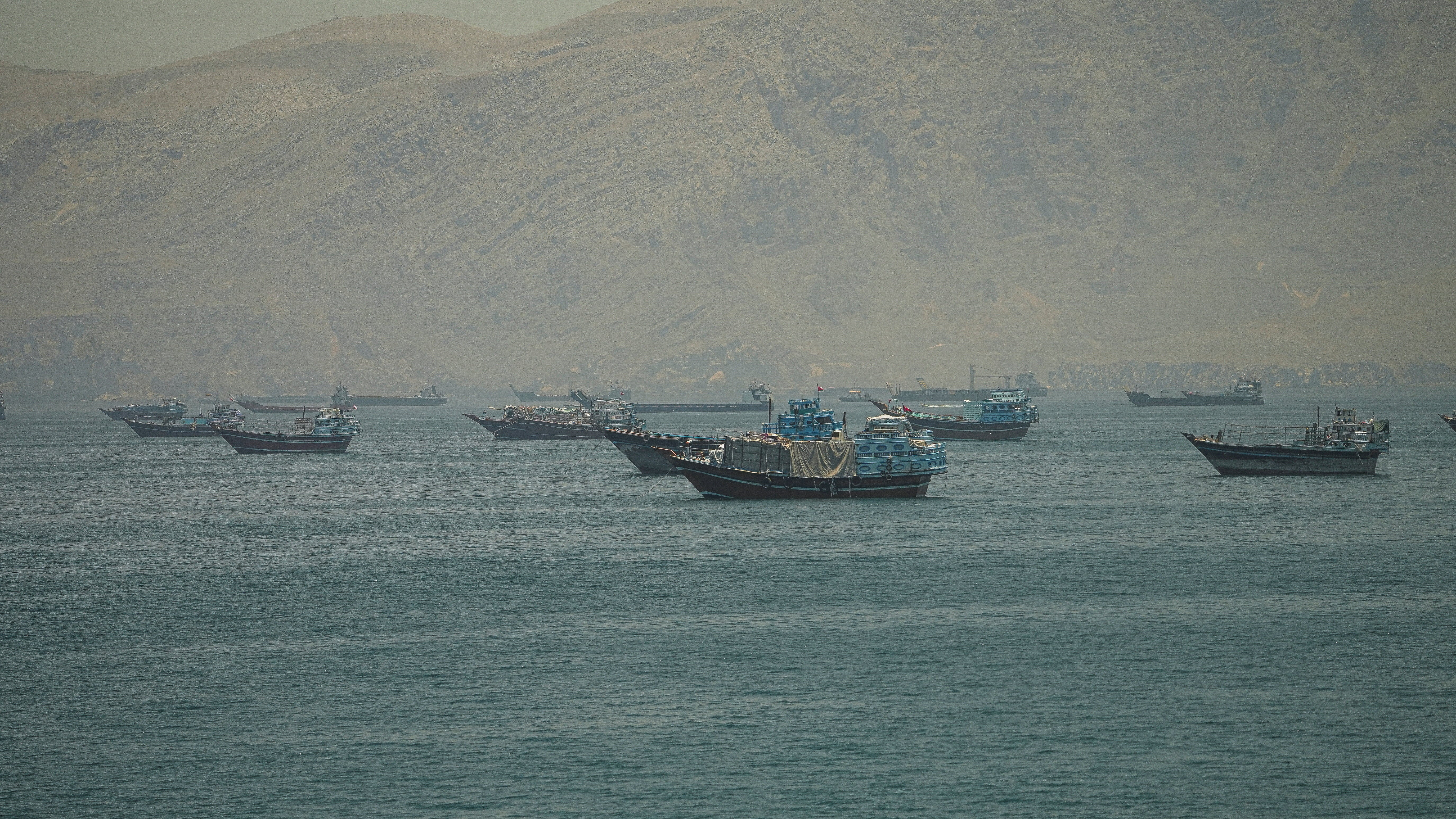
Iran primarily sets mines using frogmen on small boats that resemble ordinary fishing vessels, an informal maritime militia of dinghies that is virtually impossible to identify and eliminate, according to theWall Street Journal.
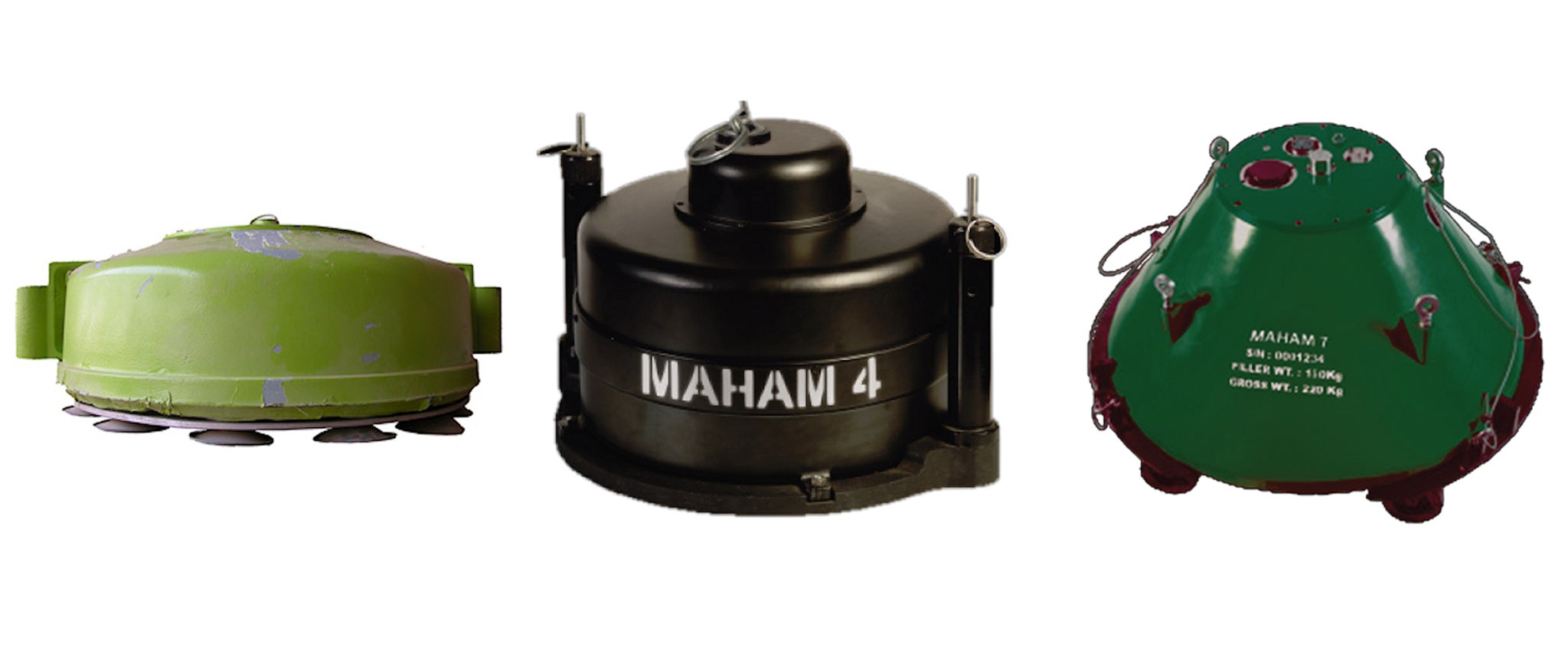
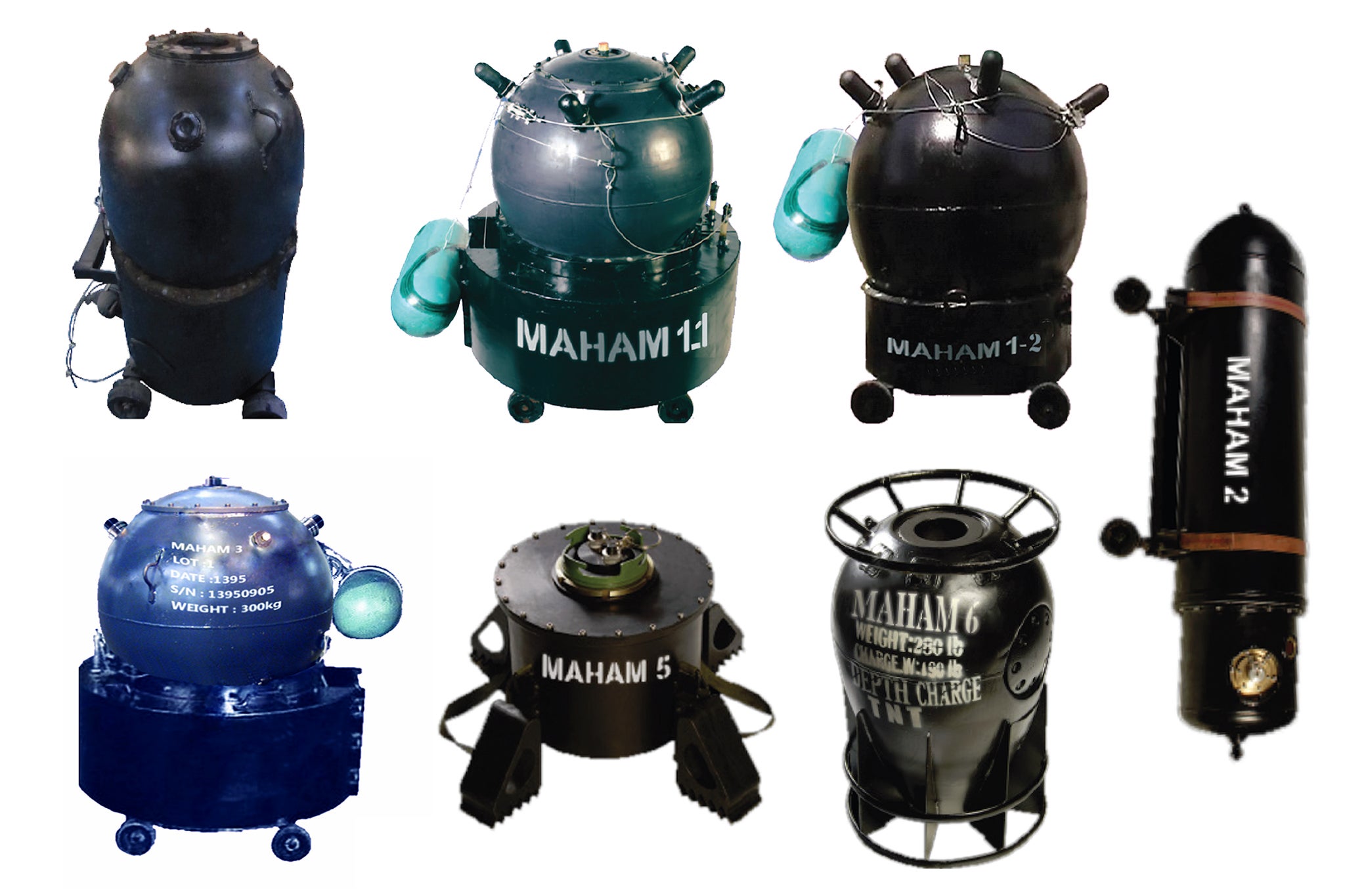
Iranian Maham mines form a substantial part of the country’s artillery. They include a range of sea mines that can be released in the water and triggered in a number of different ways, as well as limpets that attach to parts of ships.
 open image in gallery
The advanced Maham-2 mine can be deployed onto the seabed, at a depth of 10-50m, to destroy submarines and surface level vessels. They have a 350kg explosive charge with magnetic and acoustic sensors, according to Collective Awareness to UXO (CATUXO).
Meanwhile, the Sadaf-02 sea mine is designed to sit just below the waterline and detonate at around 114kg of explosives, after contact with a passing ship.
One of the limpet mines, the Maham 4, attaches to various ship platforms via a frogman, attaching with a nail gun or magnet. It operates at between one and 40m, and runs on a timer, adjustable between 10 minutes and six hours for a large explosion.
 open image in gallery
What damage do the mines do?
The primary aim of sea mines is to damage ships and submarines. They use underwater explosions to generate enough force to breach hulls and sink vessels.
Iran has a vast array of sea mines, capable of causing different levels of damage, depending on how they are deployed, and how much explosives they contain.
Seabed mines, embedded deep below the surface, are detonated when the pressure differential between an expanding gas bubble and the water quickly creates a void or hole. The gas bubble shoots rapidly upward and the initial explosion creates damaging shock waves.
Meanwhile, limpets are detonated when ships trigger mines by contact or via the ship noise and magnetic signals.
How can the mines be removed?
Autonomous systems can scan the seabed and the water with sonar to locate mines in about half the time it takes for a crewed vessel to enter and map potential dangers.
 open image in gallery
Sea drones equipped with sonar produce a picture of objects under the water, from fishing traps to pipelines. The picture is used to identify mines that can be explored with advanced acoustic systems and cameras, Cmdr. Britton said.
Some of the systems on the RFA Lyme Bay can be loaded onto a smaller vessel that can be launched and piloted autonomously from the ship, which acts as a mother ship, waiting outside any potential minefield. That reduces the number of people needed to enter, she said.
Once a mine has been located, a diver with explosives normally places a charge on the mine before swimming away to detonate it. But RFA Lyme Bay is trialing a remotely operated vehicle that dives and drops a charge by a mine before setting it off, Britton said.