



in Romania
Romania is now entering a potentially lengthy period of political negotiations after the no-confidence motion.
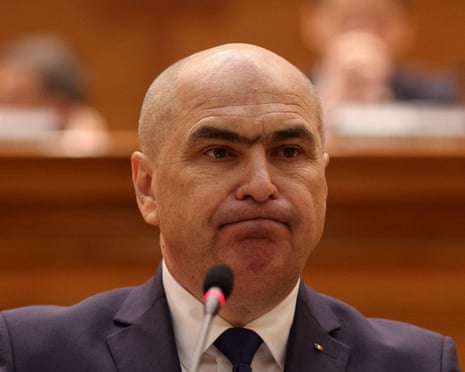
The process of forming a new government involves presidential consultations, the president nominating a prime minister and a parliamentary confidence vote. It could take weeks, or even longer if no stable majority can be assembled. The current government will fulfil caretaker responsibilities until those decisions are made.
President Nicuşor Dan, who returned from the European Political Community summit in Yerevan, will begin consultations with parties to appoint a new prime minister.
The path to a stable majority is far from clear. The Social Democrats, the far-right AUR, non-affiliated MPs and other smaller parties have not signalled any willingness to come together and form a coherent government, even though they voted for the motion together.
President Dan has been categorical that the far-right AUR will play no role in any future government and gave firm assurances that Romania will maintain its pro-western direction.
The most plausible scenario is a rebuilt coalition involving the same pro-European parties – the Liberals (PNL), Save Romania Union (USR) and the Hungarian minority party UDMR – either under a new Liberal prime minister or a technocrat figure nominated by Dan to hold the coalition together.
This significantly narrows the coalition arithmetic, as AUR, which partnered with the Social Democrats to bring down the government, currently leads in opinion polls with around 37% support.
The political turmoil is already being felt in financial markets. Since the crisis erupted the Romanian leu has depreciated against the euro, which reached a historical high of 5.21 lei.
Romania must complete critical EU-mandated reforms by August to unlock around €11.4bn in recovery funds, many of which were overseen by the very ministries the Social Democrats have now abandoned.
Ilie Bolojan also departs as a polarising prime minister. He succeeded in reducing the country’s budget deficit from 9.3% to 7.9%. It was a significant achievement for a country that holds the largest fiscal gap in the European Union, but the medicine proved deeply unpopular.
His reform programme leaned heavily on cuts to education, culture and social spending, while also raising VAT, measures that disproportionately affected ordinary Romanians already squeezed by high inflation.