




The one change that worked: I struggled to get any work done – until I bought a kitchen timer
After years of procrastination, even the most trivial task felt like climbing a mountain. Then I discovered the pomodoro technique – and how much I could achieve in just 25 minutes
Long before I knew what a 9 to 5 was, I struggled to get things done. When I was a child, I avoided showers for as long as possible and put off brushing my waist-length hair. My mum ended up cutting it into a bob to help me manage it.
During my degree, this tendency to procrastinate meant I was regularly pulling all-nighters in the library, writing 3,000-word essays in single evenings, fuelled by energy drinks and snacks. I told myself that I worked better under pressure – and in a way I did, since it always got done. But the relief of submitting work was always overshadowed by the same question – why had I put myself through that again?

Procrastination, cramming and late nights are normal at university. But once you graduate, the grace period expires and you’re expected to keep up with everyone else. Although I’m now in my late 20s and more functional than my 18-year-old self, I still struggle to start tasks. The most mundane things – sending an email, doing laundry, even replying to messages – feel like scaling a huge mountain. No one sees the time spent thinking about what needs to be done, writing it down, avoiding it, then rushing to get everything finished at once.
I asked people for advice on how to beat procrastination. Some swore by time blocking, a productivity technique where you divide your day into task-specific time slots. But the colour-coded squares on my calendar meant nothing – time would come and go with little pressure to get things done. It was the same with to-do lists – writing stuff down helps, but starting is a different story. Living in a typical London rental with no living room makes working from home as a journalist a challenge, so I would go to cafes to write. It was a welcome change of routine, but the coffees added up, and I didn’t want to depend on leaving my house to get things done.
A few months ago, when I decided to go freelance, I knew I needed to switch to a foolproof method. I’d known about the pomodoro technique for a while. Developed by Francesco Cirillo in the 1980s, it involves working in 25-minute intervals followed by a five-minute break. He named the method – pomodoro being Italian for tomato – after the tomato-shaped kitchen timer he used. Wanting to take ownership of my workflow, I bought the tomato timer that had been saved in my online shopping basket for a few years.
The first time I wound it up, I sat down to write an email that had been on my to-do list for two weeks. Normally, I would start writing, get distracted halfway and then begin another task. Using the timer, it took three minutes by the time I hit send. I’ve also booked appointments and blasted replies to text messages.
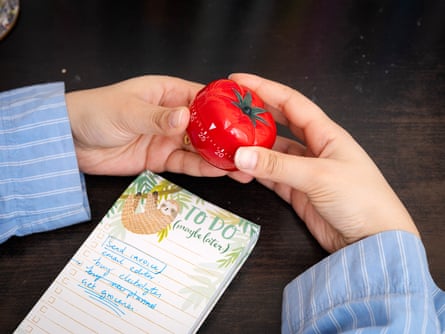
It felt as if something clicked in my brain. I realised how much I depended on feeling in the right mood to start something. The timer sidestepped that entirely, and took emotion out of the act. It was liberating. It has turned time into something I can almost see, hear and touch. Every time I wind it up, the soft ticking reminds me I must focus. Unlike a clock, each tick on the timer feels intentional because I decide when to start it.
It’s also given me back my evenings. Before, my work would spill into the night. My housemates knew me as a night owl because of how often I used to work past 9pm – the result of avoiding tasks during the day. Although I still work late sometimes, it doesn’t happen as often.
More than that, it’s changed how I think about starting tasks. Everyone has small pockets of time during the day, but a few minutes here and there never felt long enough to do anything. But it is, I’ve realised. Working in microbursts has eased my mental load and made starting things less daunting.
I’m not perfect, and I have off days. But when things feel overwhelming, I can rely on my tomato timer to push me into action.