


In one of the most harrowing tragedies ever recorded, five men were essentially boiled alive from the inside out following a split-second error 1,000 feet below the ocean’s surface.
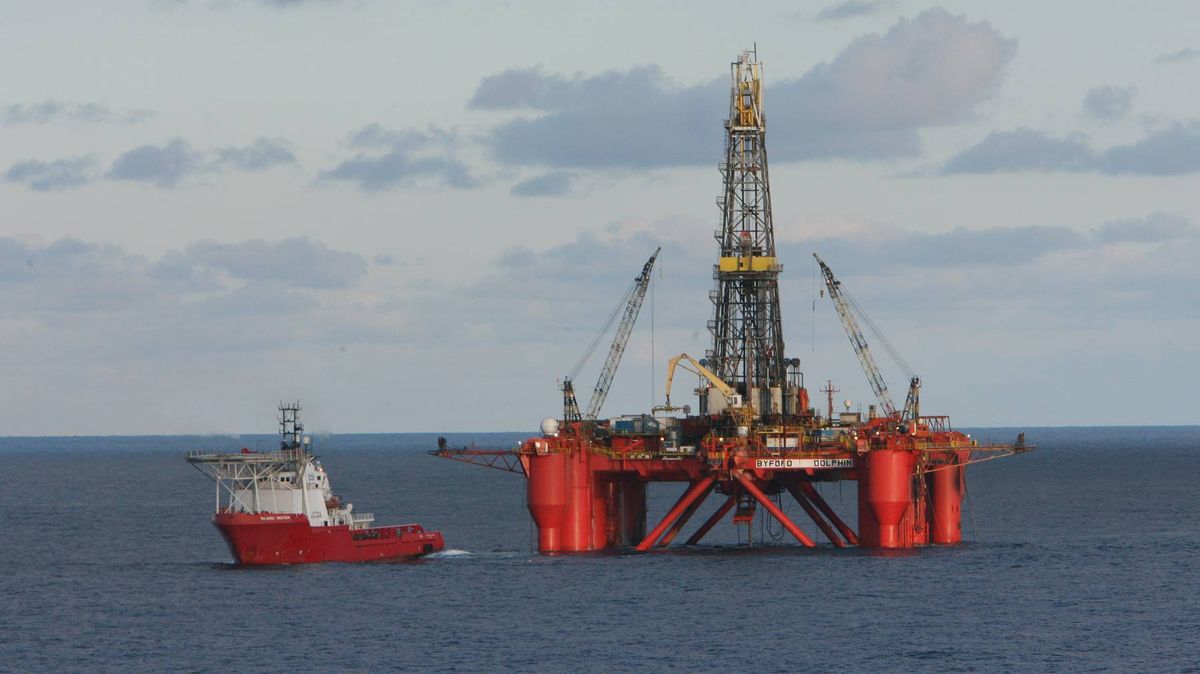
In 1983, the Byford Dolphin, a semi-submersible oil drilling rig, was conducting operations at multiple sites throughout the North Sea.
The installation had earned a sinister reputation for mishaps, with the most catastrophic event involving ruptured organs, boiling blood, and one man killed by a diving chamber.
A team of four British and Norwegian divers – Edwin Arthur Coward, 35, Roy P. Lucas, 38, Bjørn Giæver Bergersen, 29, and Truls Hellevik, 34 – along with tenders William Crammond, 32, and Martin Saunders, 30, assembled to undertake a deep-sea diving task on the platform.
For secure deep-sea operations, the divers required confinement within a series of compression chambers during a 28-day period.
These extremely sensitive chambers prevent nitrogen accumulating in the bloodstream, according to Lad Bible.
 View 3 Images
The Byford Dolphin oil rig disaster led to the death of five men(Image: Reuters)
The pressurised living quarters were reached through a diving bell, a ring-shaped vessel, which stayed sealed from other areas of the underwater structure.
This method was known as saturation diving – it enabled divers to stay underwater for extended durations while avoiding the excruciating and often lethal build-up of nitrogen during ascent.
Ascending to the water’s surface causes nitrogen and helium to dissolve into divers’ bloodstreams, which can prove fatal.
This is precisely why divers inside the chambers breathe a meticulously measured mixture of gases — typically helium and oxygen, adjusted according to the depth of the dive.
Should a diver ascend too quickly, the abrupt drop in pressure can trigger decompression sickness.
On the ill-fated day of 5 November 1983, Bergersen and Hellevik were returning to the chamber via the diving bell, assisted by tenders Crammond and Saunders.
 View 3 Images
A diagram of what happened in the tragedy
For a safe transfer between chambers, the diving bell needed to be properly sealed to prevent the bends.
However, a devastating mechanical fault caused the bell to detach just moments before Hellevik could secure the chamber door.
The crew chambers should have remained pressurised at nine atmospheres, but instead plummeted to one in a matter of milliseconds.
Crammond was killed after being struck by the errant diving bell, while the four divers perished instantly as nitrogen in their bloodstream turned to bubbles, effectively causing them to boil from within.
Article continues below
Hellevik was forced through a 60cm opening, with the immense pressure causing his internal organs to be expelled from his body.
Saunders was the sole survivor of the devastating incident, having sustained collapsed lungs, spinal fractures and a broken neck.
A formal inquiry concluded that human error was responsible for the deaths. The incident remains an enigma as its precise cause is still uncertain, yet it underscored the pressing need for improvements to diving safety procedures.