


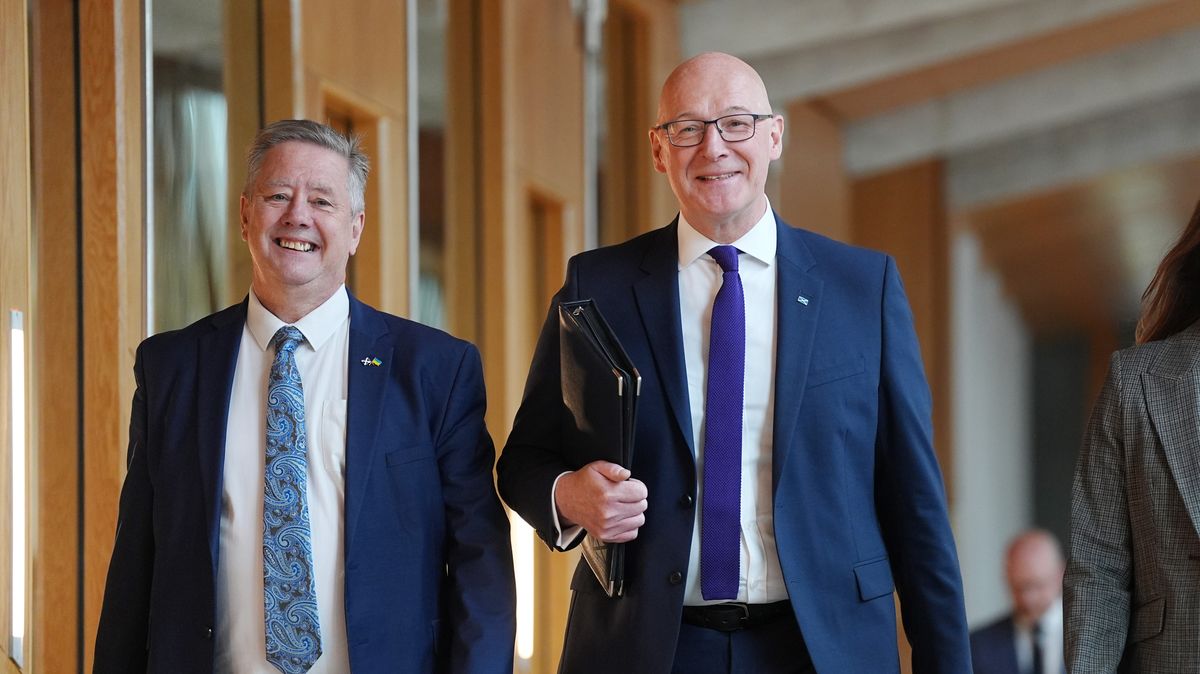
Back in March, when John Swinney launched the SNP’s 2026 election campaign at the recently reopened Citizens Theatre in Glasgow, I asked him a simple question: if his party was reelected, would he serve a full five-year term as First Minister?
The answer was a straightforward “yes” – followed by a bold prediction Scotland would already have declared independence by the time the next Holyrood election rolls around in 2031.
We can charitably write-off Swinney’s second point as the kind of thing all SNP politicians like to say in public speeches. But what about the first? Does he really intend to fight another gruelling election campaign?
As the First Minister, it would only be fair to take Swinney at his word. But all political leaders have a habit of changing their minds, depending on events.
The next five years look far from plain sailing for a minority SNP Government. Lacking a majority, every piece of legislation and annual Budget will require support from other parties.
Swinney has been here before many times and knows how to make deals. For example, he can always rely on support from the Scottish Greens when it comes to popular policies like capping bus fares at £2.
But grappling with unpopular issues like spending cuts could be more difficult. Before the election, the Scottish Government committed to cutting 11,000 public sector jobs to save the taxpayer approximately £1.5 billion.
Ministers have also warned some of those redundancies may need to become compulsory – despite a 17-year policy against mandatory job cuts being in place.
Even those cuts won’t be enough to plug an estimated £5 billion spending blackhole.
This is a mess of the SNP’s own making. It has repeatedly agreed generous above-inflation public sector pay deals, and extended eligibility for certain benefits, without fully explaining how they would be paid for in the medium-to-long term.
In a booming economy, this would be less of an issue. But Scots only need to look at the average high street to see how many businesses are closing down. Consumer confidence is low and the employment market has tightened considerably.
The number of working age Scots who are economically inactive is climbing every year. That means less income tax coming in, among other issues.
It’s unlikely the Greens would ever agree to a Scottish Government Budget that includes either cuts to welfare spending or the prospect of compulsory redundancies in the public sector. The environmentalists would instead demand even higher taxes on the wealthiest Scots.
In short, hard choices must be made about spending. And opposition parties will be in no mood to make life easy for a Government they view as having ducked difficult decisions at every turn.
On top of that, Swinney must manage his own party. After being formally sworn in as First Minister at the Court of Session in Edinburgh today, the SNP leader will head to Bute House to reshuffle his Cabinet.
The plum position of Deputy First Minister is among the jobs up for grabs after Kate Forbes chose to stand down as an MSP last month. If this goes to Mairi McAllan, it could be a clear indication this is who Swinney views as his obvious successor.
 View 2 Images
Housing Secretary Màiri McAllan (Image: Daily Record)
If instead the job goes to a more experienced minister, like Angela Constance, it could be a sign the FM views a rocky road ahead and wants his most capable operators closely guarding him.
But there is a desperate need to develop new talent at the top of Government.
With the exception of the brief spell Humza Yousaf spent in charge, the SNP leadership has been dominated by just three people for 35 years. This is not sustainable and Swinney knows it.
Sooner or later he’s going to enjoy a well-earned retirement and hand over to a new generation of Nationalists who don’t know what it’s like to struggle. There have been dismal SNP performances at the 2017 and 2024 UK elections, but the cohort of Nat MSPs returned to Holyrood in 2021 and 2026 only know success when it comes to Scotland.
Article continues below
Swinney must steer a minority government through choppy economic waters, all the while keeping his less experienced crew content.
It would be no surprise if he jumps into a life boat after a few years of this Parliament.