


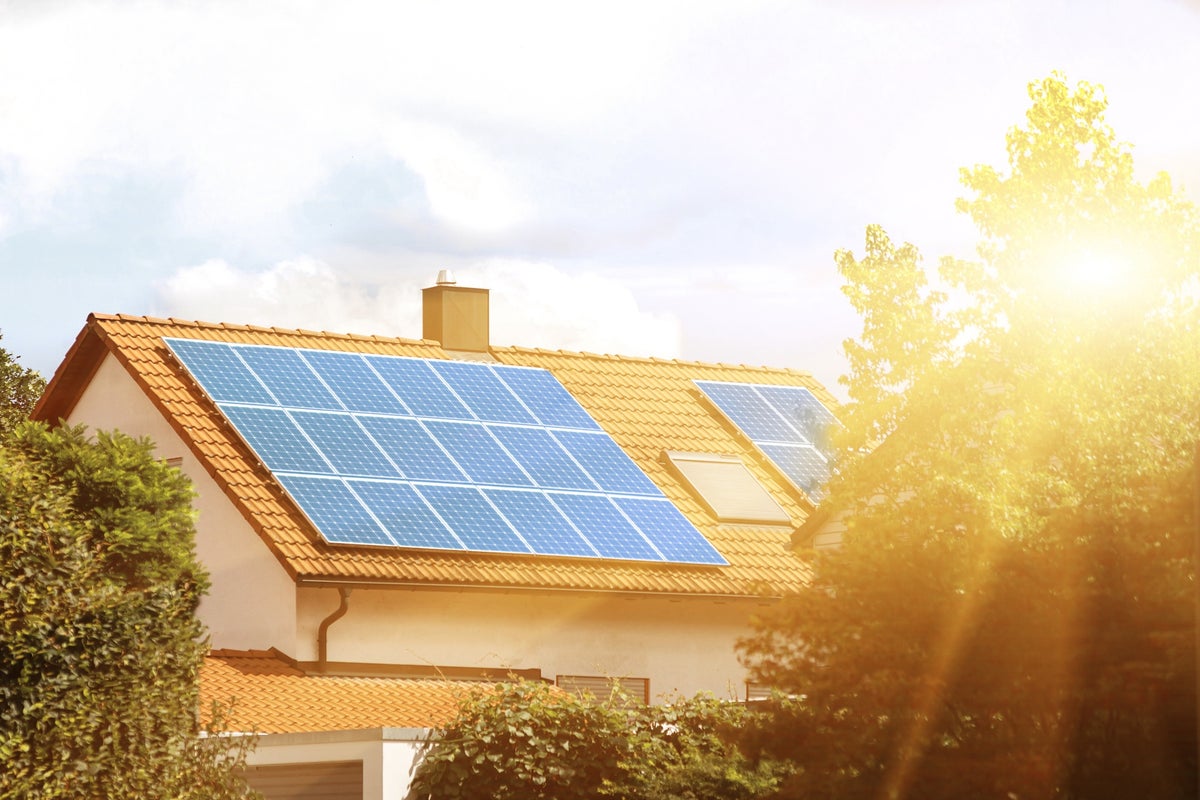
When the sun is shining, your solar panels could be generating much more electricity than your home needs at that moment. The question is what happens to the excess.
If you have a battery, it can be stored for later. If you have an export tariff, you may be able to sell it back to the grid. But one of the simplest ways to get more value from your solar panels is to use more of the electricity yourself while it is being generated.
If you can do this, the savings can be significant. Phil Steele, future technologies evangelist at Octopus Energy, says the exact benefit depends on the size of your solar panel system and how much electricity your household consumes – but in the UK a typical home could potentially save more than 40 per cent on its annual electricity bill with solar panels, particularly when paired with a battery.
From changing when you run the dishwasher to charging an electric car, a few adjustments to your routine can help you make the most of particularly sunny days so that you start getting more from your solar panels.
Get a quote for solar panels on your home
Use our comparison tool to find free quotes from leading UK solar panel installers.
Use electricity when your panels are generating
Solar panels generate electricity whenever there’s sufficient daylight, but production typically rises through the morning before falling again later in the day.
That means it can make sense to move electricity-intensive jobs you were going to do anyway into periods when your panels are producing plenty of power.
Running the washing machine or dishwasher during the day rather than in the evening, for example, could allow more of the electricity they consume to come directly from your solar panels rather than the grid.
Timers, smart plugs and connected appliances can make this easier, particularly if nobody is at home during the day.
But there’s little benefit in simply consuming more electricity just because it happens to be sunny. Electricity exported to the grid can have a value too, so the aim is to shift necessary consumption rather than invent new uses for your solar generation.
Use the sun to heat your water
Hot water can provide another opportunity to make use of excess solar generation. Steele schedules his own heat pump to produce hot water during the middle of the day.
“I’ve got our heat pump scheduled to do hot water from midday till 3pm,” he says. On a sunny day when The Independent spoke to him, his solar panels were generating 3.6kW, with around 3kW being used by the heat pump.
“So 3kW is producing free hot water for me effectively at the moment,” Steele says.
What’s more, households with a hot-water cylinder may also be able to use a solar diverter, which sends surplus solar electricity to an immersion heater rather than exporting it.
The principle in both cases here is similar: use surplus electricity to heat water now that can be used later.
Charge your EV when the sun is shining
An electric car can also provide somewhere for surplus solar power to go.
Simply charging an EV during daylight hours can increase the proportion of home-generated electricity that you use yourself, while some compatible chargers and energy-management systems can adjust charging according to how much surplus solar electricity is available.
Steele says his own system allows him to choose whether solar generation goes towards his home battery or his car.
“We can prioritise the car being charged from the solar rather than the home battery if I wanted to because it’s all integrated,” he says.
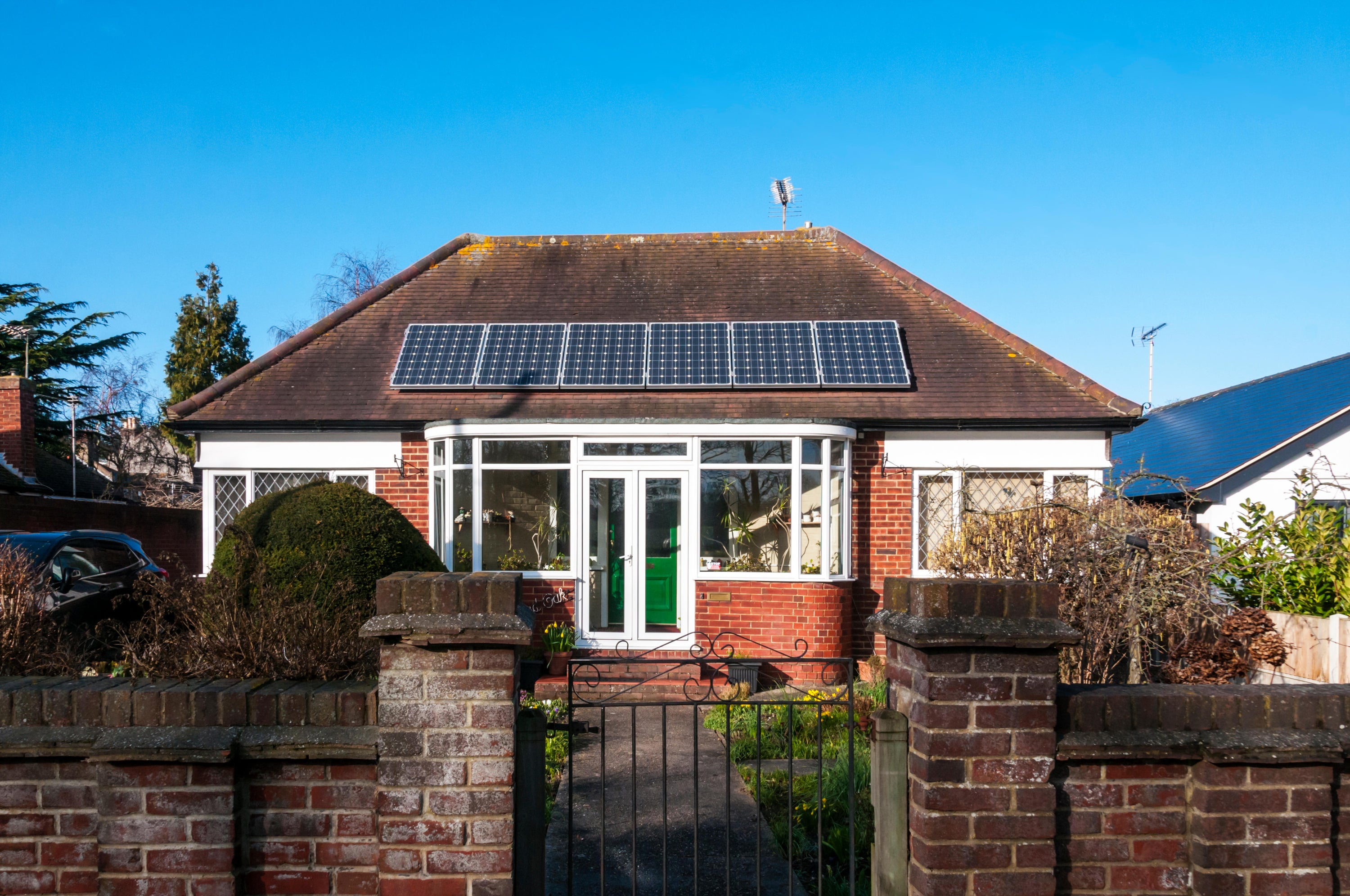
Exactly how much of an EV’s charging can be covered by rooftop solar will depend on the size of the solar array, how much electricity it’s producing and whether the vehicle is at home during daylight hours.
 open image in gallery
Store excess solar electricity for later
One limitation of rooftop solar is that homes often produce the most electricity when household demand is relatively low.
A home battery can bridge that gap by storing surplus generation during the day and supplying it later, when the panels are producing less or nothing at all.
“The moment you’ve got solar, you’re obviously generating your own energy and you are storing any excess energy,” Steele says. “I much prefer it when batteries are paired with solar for that reason because you’re storing your own energy to then use later on.”
Steele’s own home demonstrates how this can work on a particularly sunny day, explaining that his 10kWh battery had already reached full charge during the morning.
“I’m going to run the house off-grid overnight until tomorrow because it’s in this sunny weather,” he said.
A battery won’t necessarily make financial sense for every household, though. Its value will depend on factors such as the cost and capacity of the battery, the size of your solar system, your home’s electricity consumption and the tariffs you’re using.
Check your solar monitoring app
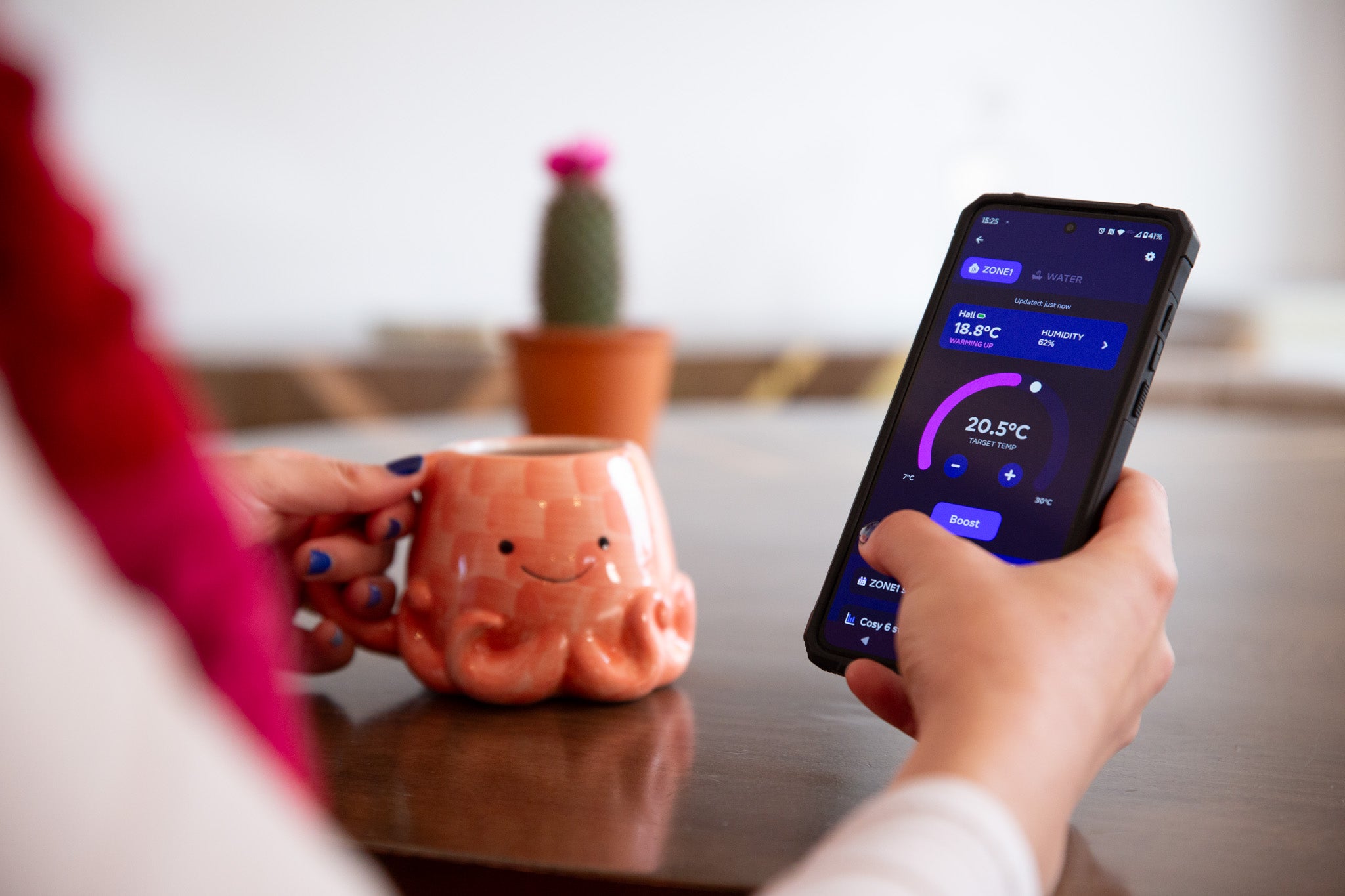
You don’t necessarily need to guess when your panels are generating the most electricity. Many solar inverter and battery systems provide an app or online dashboard showing generation, household electricity consumption and, depending on the setup, how much electricity is being imported, exported or stored.
Checking this can help you understand your own system rather than relying on a fixed rule about when to use electricity. And generation can change surprisingly quickly when the conditions change.
“I’ve stood and watched the real-time solar generation of a large solar system,” Steele says. On a partly cloudy day, he saw its output “swinging between half its generation and its full generation within a minute as a cloud went over.”
Watching your own generation over several days can help reveal when your particular roof tends to produce the most power and how changes in cloud cover affect it.
 open image in gallery
Don’t forget about exporting electricity
Using as much solar electricity as possible yourself isn’t always automatically the most profitable option.
If you receive payment for exporting electricity to the grid, every kilowatt-hour you use yourself is also one you aren’t exporting.
The calculation therefore depends partly on the difference between what you pay to import electricity and what you receive for exporting it.
For most households, the sensible approach isn’t to waste electricity simply because it’s being generated, but to shift consumption that would otherwise happen later in the day.
Keep an eye on how your panels are performing
Sunny days are also a useful opportunity to check that your solar panels are performing roughly as they’re expected to.
If generation appears unusually low compared with similar conditions in the past, it may be worth investigating whether shading, debris or a problem with the system is affecting its performance.
Trees and other vegetation can grow enough over time to create shading that wasn’t present when you first had the system installed. Also, heavy dirt or bird fouling can also reduce the light reaching the panels.
But that doesn’t mean you should climb onto the roof to clean your solar panels yourself. If the panels appear to need cleaning or inspecting, using a suitably qualified professional is the safer approach.
Make the sunshine work harder
You can’t make your solar panels generate more sunshine, but you can decide what happens to the electricity they produce.
Running flexible appliances during periods of high generation, heating water, charging an EV and storing spare electricity in a battery can all increase the amount of solar energy your household uses itself.
A simple way to think about a sunny day’s generation is to use what you need, store what you can and export the rest.