


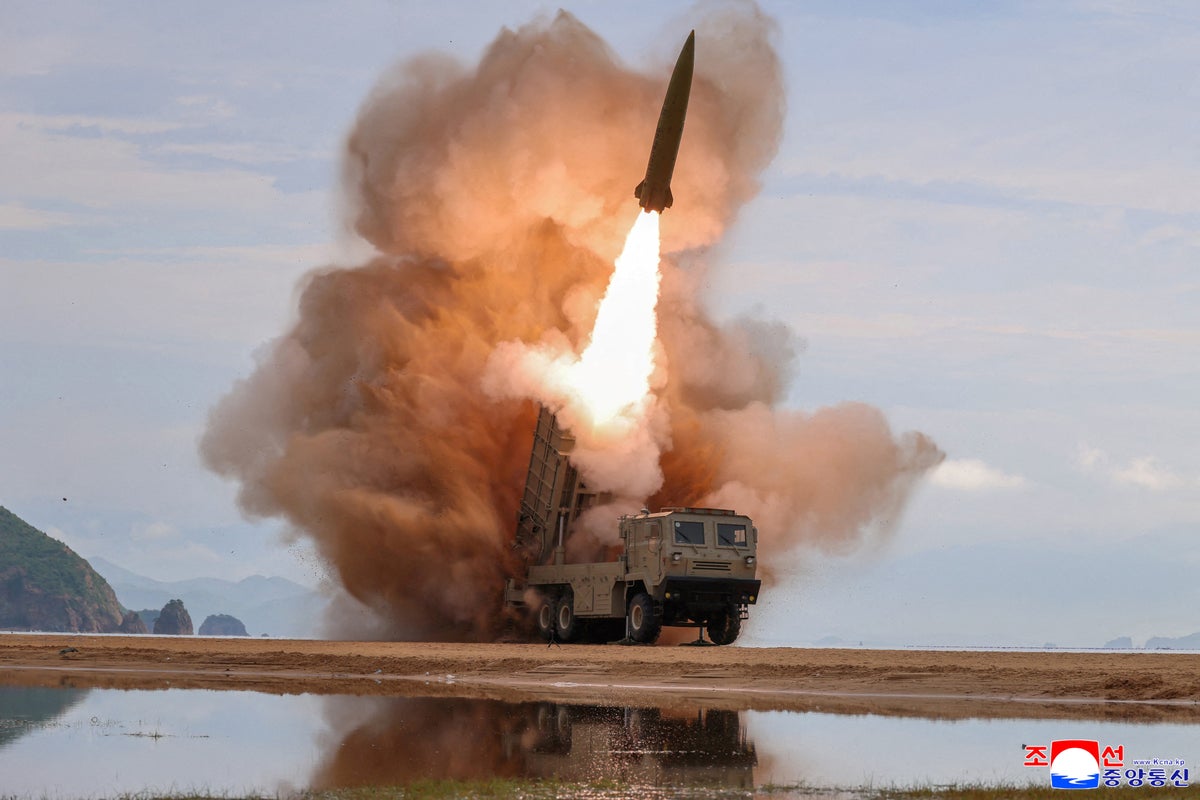
North Korea said on Monday that its launch of several missiles on Saturday was part of a live-fire drill involving long-range artillery and missile units, according to state media.
The “joint firepower attack drill” involved five army units and tested several weapon systems, including attack drones, tactical cruise missiles, tactical ballistic missiles, and large-calibre multiple rocket launchers, Korean Central News Agency (KCNA) said.
The drill would boost the morale of the troops and improve their capabilities to “completely collapse the enemy” whenever ordered, KCNA said, citing an artillery director.
 open image in gallery
North Korean Marshal Pak Jong Chon said the drill would “improve the level of specialisation to bring down the enemy’s armed forces organizationally and structurally once an order is issued.”
He added that the weapons systems mobilized demonstrated “the huge destructive power of concentrated fire,” according to KCNA.
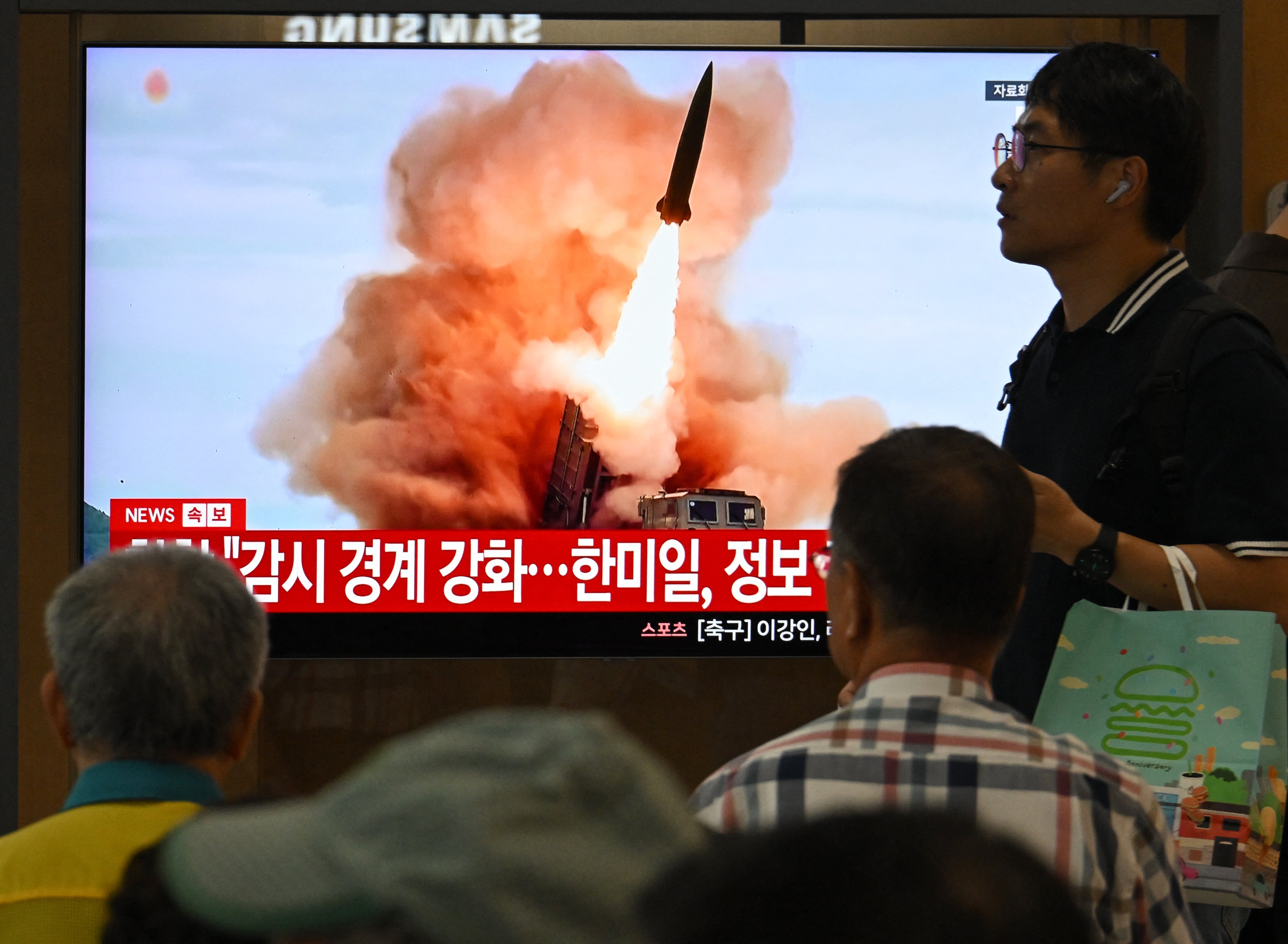
South Korea’s Joint Chiefs of Staff said on Saturday that North Korea fired several short-range ballistic missiles, which flew about 250km toward the sea off its east coast.
The launch came a day after South Korea, the US and Japan wrapped up the five-day trilateral Freedom Edge exercise focused on countering North Korean threats.
KCNA’s report came two days after the launch, believed to be the 13th known ballistic missile launch event this year.
North Korean state media had remained silent on several previous recent missile tests reported by South Korea.
“This was not a test of a single weapon system but a demonstration of an integrated strike network,” said Lim Eul-chul, a professor at Kyungnam University’s Institute for Far Eastern Studies in Seoul.
 open image in gallery
North Korea appeared to be showcasing its ability to coordinate drones, cruise missiles, ballistic missiles and rocket artillery through a unified command-and-control system, Mr Lim said.
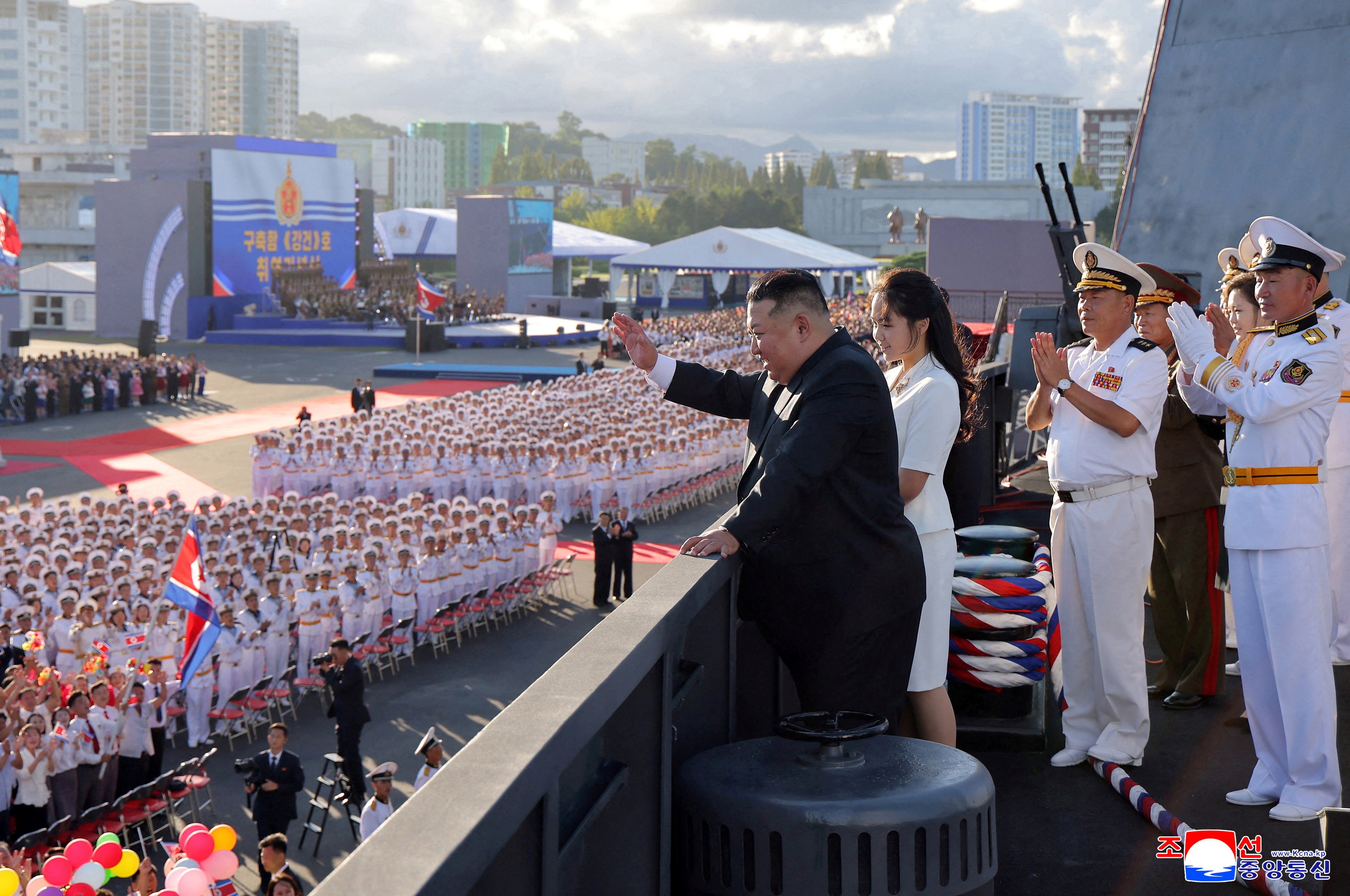
The absence of leader Kim Jong Un and the delayed report suggested Pyongyang sought to present the event as a “technical and practical military exercise” while calibrating tensions, Mr Lim said.
“North Korea is also collecting operational data for actual deployment and demonstrating tactics aimed at saturating South Korean and US missile defences through simultaneous attacks by weapons with different flight characteristics.”