


Why PDP stayed away from opposition coalition – N’ Central Legal Adviser, Issa
September 13, 2026 12:00 am

Issa
By Dare Akogun
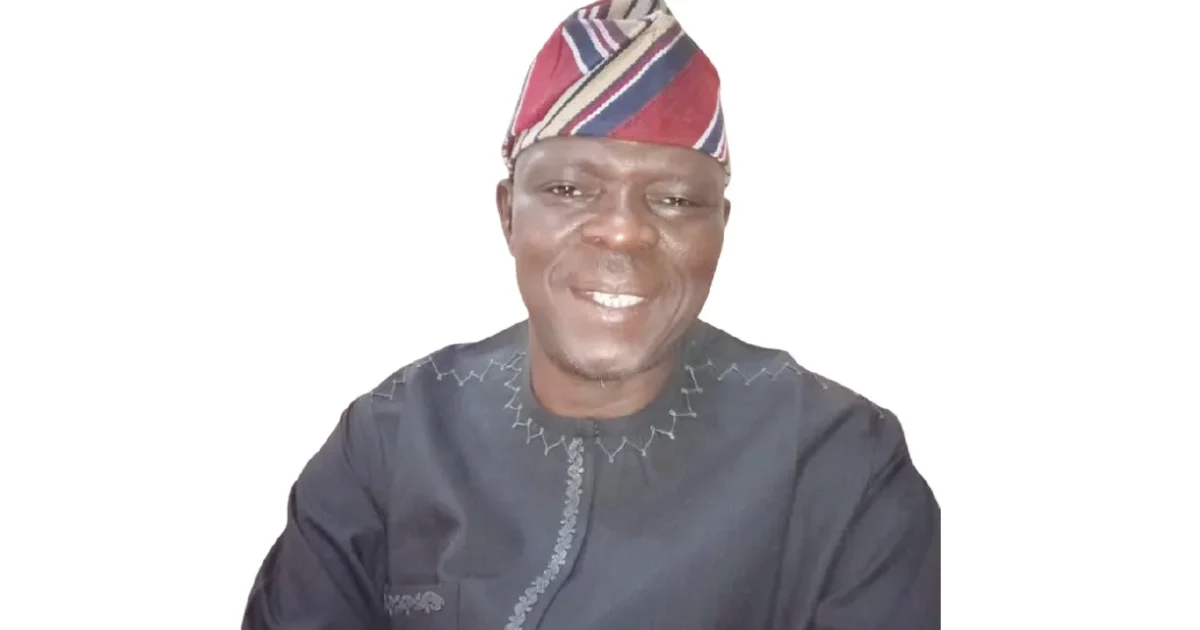
In this interview with DARE AKOGUN, the North Central Zonal Legal Adviser of the Peoples Democratic Party, Abubakar Issa, explains why the PDP stayed away from the G100 summit and outlines the party’s position on the 2027 general elections
Why did PDP refuse to participate in the G100 summit, a platform seeking to bring the opposition party together?
Our position is very clear. The PDP has its own internal issues to resolve before entering into any external alliance. We cannot be talking about an alliance with other political parties when we have not properly settled our own house. The first responsibility is to build a formidable PDP that can carry everybody along. After achieving that, the party can sit with other political parties and discuss whether there is a need for an external alliance.
What does PDP think about the coalition?
Under the Constitution, people have the right to come together and associate for a common purpose. Section 40 guarantees the right to peaceful assembly and association. So, there is nothing wrong with individuals coming together as a movement or pressure group. But the situation becomes different when political parties are brought into such an arrangement.
Section 221 of the Constitution is clear about the role of political parties in the electoral process. A pressure group is different from a political party. You cannot simply collapse the identity and constitutional responsibilities of political parties into a pressure group and expect that arrangement to automatically produce an electoral outcome.
The question that should be asked is: How will such an arrangement operate within the constitutional and electoral framework?
For instance, if the coalition says it will endorse one political party to produce a presidential candidate, how will that be achieved? That is where the legal and political complications begin. The parties have their constitutions, structures, delegates, and procedures for producing candidates. So, there must be clarity on how a coalition intends to operate without violating those established structures.
There are currently two PDP factions being referred to: one invited to G100 summit and another recognised by INEC that is backing the ‘National Rainbow Coalition’ for President Tinubu. Which one do you represent?
As far as the legal structure of the party is concerned, there is no officially recognised second PDP. There are individuals within the party who are protesting against the leadership and who disagree with certain decisions. That is normal in politics. You do not have to agree with everything your party leadership does.
But disagreement with the leadership does not automatically create another political party. Those who disagree can express their grievances, challenge decisions through the appropriate party mechanisms or seek judicial intervention where necessary. They can also act as individuals, but they cannot simply assume the powers of the political party.
That distinction is very important because we are approaching an election year. The electorate need to know who has the authority to speak on behalf of a political party.
The reality is that PDP is not completely insulated from the coalition discussions.
Some members are already moving towards the G100 arrangement, some are skeptical, while others believe the party should concentrate on producing its own candidate first. That is why I said it is not possible at this point to say everybody in the PDP is moving in one direction.
However, there is a difference between an individual member of the PDP participating in political discussions and the PDP, as a political party, formally entering an alliance. The party has not taken a final position on abandoning its own presidential platform for another platform.
If, eventually, the party resolves its internal problems and decides that an alliance is in its interest, it can negotiate with other parties. But that decision has to come through the appropriate party structures.
G100 says opposition parties must unite to defeat APC. Do you agree?
I agree with the fundamental argument that the opposition needs to work together if it wants to defeat the ruling party. The economic situation is difficult. Nigerians are facing hardship, insecurity, and a high cost of living. There is significant dissatisfaction with government policies.
But we must also remember what happened in 2023. Three major political forces effectively divided the opposition vote, and the APC emerged victorious. If the opposition does not manage itself properly this time, we may end up with a similar situation.
Today, the APC has a very strong political structure across the country. It has governors, lawmakers, and other political structures working for it. The question is whether those structures will remain as strong as they are when the 2027 election arrives. That is what the opposition should be watching.
For the opposition, therefore, coalition-building is important. But how that coalition will be achieved is the difficult part.
There is certainly a risk. With the ADC, SDP, Accord and other political platforms pursuing different arrangements, there could be multiple opposition centres.
If the opposition ends up with several presidential candidates drawing from essentially the same pool of voters, the APC could benefit. That was one of the major lessons of 2023.
However, we should also recognise that the electorate is not owned by political parties. Nigerians can decide to vote for a candidate regardless of the party structures. The political environment in 2027 will be determined by what the people think about the economy, insecurity, unemployment and the general direction of the country.
If PDP stays outside G100, can the coalition realistically defeat APC without the party?
It would be difficult to completely discount the PDP because it remains one of the major political parties in Nigeria. But it is also difficult to say today that only the PDP can produce the force capable of defeating the APC.
Politics is about numbers, structures, candidates, resources and the mood of the electorate. A coalition that brings together several political parties and influential political figures could become a serious force.
But the coalition must be properly organised. You cannot simply gather political parties and announce that there will be one candidate without addressing the legal and political questions surrounding the process.
There are also questions about the interests of the individual parties, who will produce the candidate, how delegates will be selected, how campaign structures will be shared and what happens to the coalition after the election. These are not small questions.
Beyond the question of a single presidential candidate, G100 is also proposing a government of national competence. What is your view of that proposal?
That proposal raises important constitutional and political questions. If people are talking about a four-year transition government, they must explain the constitutional basis for that arrangement. The President is elected for a constitutionally prescribed term. You cannot simply create another political arrangement outside the Constitution and call it a transition government without addressing the constitutional implications.
There is also the question of the mandate given by voters. If a presidential candidate is elected for a constitutionally recognised term, what happens if the political coalition that produced that candidate has agreed in advance that the administration will last only four years?
These are issues lawyers and political actors must interrogate carefully. The desire for a Government of National Competence may be politically attractive, but political attractiveness is not the same thing as constitutional validity.
If G100 eventually produces a consensus presidential candidate, will PDP support that candidate or contest the election independently?
It is too early to answer that question because the PDP has not taken such a decision. If the G100 succeeds in producing a candidate, the PDP will have to look at the political reality at that time.
But the PDP’s current position is that it wants to become a formidable political party first.
After that, it can consider whether an external alliance is necessary. Politics is negotiation. Nothing is impossible. If the interests of the PDP and another coalition eventually align, there could be an agreement. If they do not align, the PDP could decide to contest independently.
The important thing is that the decision must be made through the proper party structures and in the party’s interest. The opposition should learn from 2023. If they fail to manage their differences, they may again divide the votes and make victory easier for the APC. But if they succeed in putting their house in order, develop credible candidates and present a convincing alternative to Nigerians, the 2027 election could be very different.
If PDP is not joining G100 for now, what is its strategy for defeating APC in 2027?
The PDP is a political party with its own structures, constitution and electoral objectives. It has not said that it will abandon those structures. The immediate objective should be to strengthen the party. After that, there can be discussions with other parties. We should not forget that politics is dynamic. A position taken today can change tomorrow because negotiations are still ongoing.
For now, the PDP has its own political process and its own presidential ambitions. Whether it eventually decides to participate in a broader coalition will depend on negotiations and the interests of the party.
The PDP needs to present a credible alternative. Nigerians are experiencing serious hardship. The cost of living is high, and insecurity remains a major concern. The Federal Government’s policies are being criticised by many Nigerians because people feel the policies do not have enough human consideration.
But opposition parties cannot win simply by telling Nigerians that the government is bad. They must tell the people what they will do differently. The PDP needs to come forward with a clear economic programme, a credible security strategy and policies that directly address the suffering of ordinary Nigerians.
The party must also convince Nigerians that it has learnt from its own mistakes. Party politics alone will not win the election. If the APC says the President is doing well, and Nigerians agree, then they will vote for the APC. That is democracy. But if Nigerians believe that the country is not in safe hands and decide to vote against the government, that is also democracy.
The opposition’s job is therefore to provide a credible alternative and allow Nigerians to make the choice.
All rights reserved. This material, and other digital content on this website, may not be reproduced, published, broadcast, rewritten or redistributed in whole or in part without prior express written permission from PUNCH.
Contact: [email protected]