


 Image source, Remco van Schellen
ByDominic CascianiHome and legal Correspondent
Home Secretary Shabana Mahmood has told police chiefs that lessons must be learned from how they handled last weekend’s anti-migrant protests in Dover and Portsmouth – saying she expects officers to use all powers necessary.
In a meeting on Thursday she asked for reassurance that plans were in place for the police to move quickly and effectively in dealing with far-right groups seeking to intimidate communities.
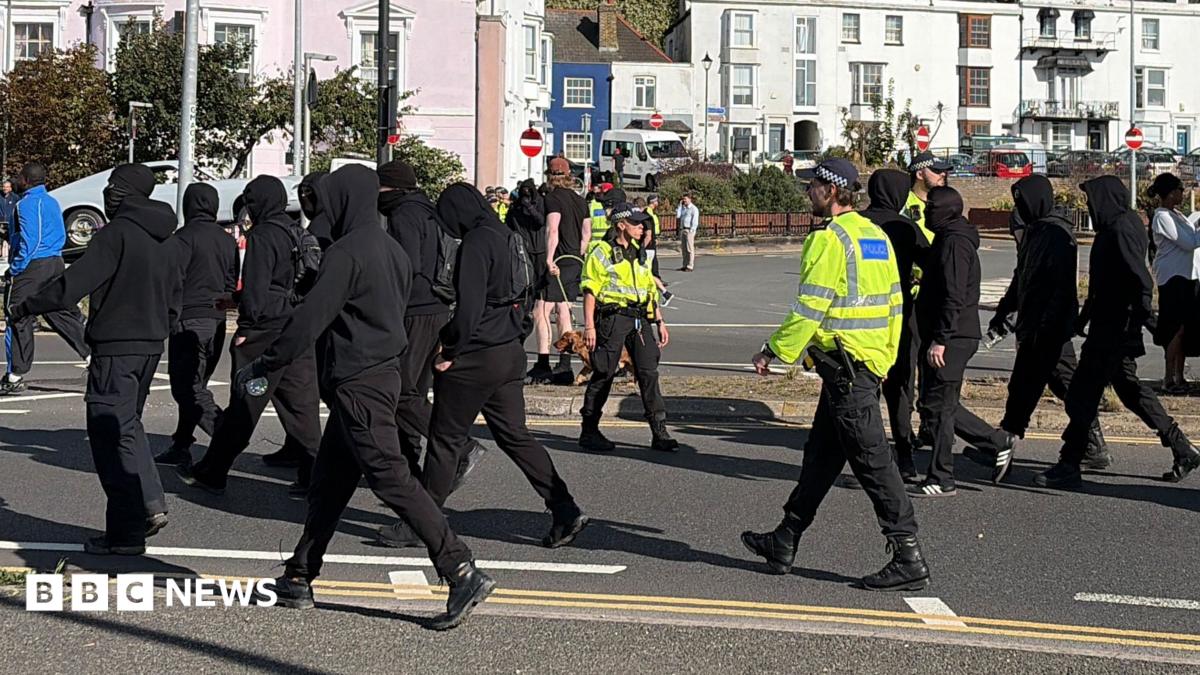
It comes after masked activists brought Dover to a standstill on Saturday and in a protest on Sunday in Portsmouth about 200 people tried to block migrants being driven away for processing.
In a summary of the meeting, the Home Office said the protests brought “unacceptable disorder”.
“These scenes have caused disruption for people and, given that people are dressed in black wearing balaclavas, there is a fear factor and obvious malign intent being communicated to our residents,” the Home Secretary said.
“This makes it different from other protests, so we need to make sure we are learning lessons.”
The BBC understands that police chiefs are now actively considering using recently-granted powers to completely ban face coverings in specific areas, in light of that demonstration.
Saturday’s protest was followed 24 hours later with another in which men blocked the only road out of Langstone Harbour, near Portsmouth, after the RNLI had brought ashore 120 migrants.
It’s unclear at this stage whether further such protests will go ahead – but in some areas of England local groups that have associated themselves with the Patriot Platform umbrella group have called for more demonstrations.
The meeting discussed the emergence of Patriot Platform with ministers believing the group aims to intimidate communities.
Mahmood is said to have told police chiefs to make better use of intelligence to make sure they had better plans in place ahead of this weekend.
That call came after Kent Police had earlier admitted it had been made aware of a potential demonstration in Dover but had not “fully assessed” the warning before the town’s nationally critical port road was brought to a standstill.
During the meeting, Mahmood is said to have made clear the government expected police to make full use of powers and to deal robustly with any criminal offences.
Speaking after the meeting, Deputy Chief Constable Andy Mariner, the National Police Chiefs Council lead for public order, said forces were “continually assessing and preparing for protests and any potential impact on public safety”.
This includes working closely with “local forces, specialist teams, communities and partners” to ensure support is available when needed.
He added: “Our priority is to keep people safe, maintain public order and support the right to peaceful and lawful protest. While people are entitled to express their views, anyone committing criminal offences can and should expect police action.”
Major changes to protest law in the last three years mean officers can now intervene more quickly to end demonstrations that block critical national infrastructure, such as roads to ports.
They can also designate an entire area a face mask-free zone for the duration of a protest.
It’s that second power that police chiefs are now considering using.
Police chiefs also say they have initiated an “enhanced and co-ordinated” approach to gathering as much intelligence as possible in the days ahead.


