


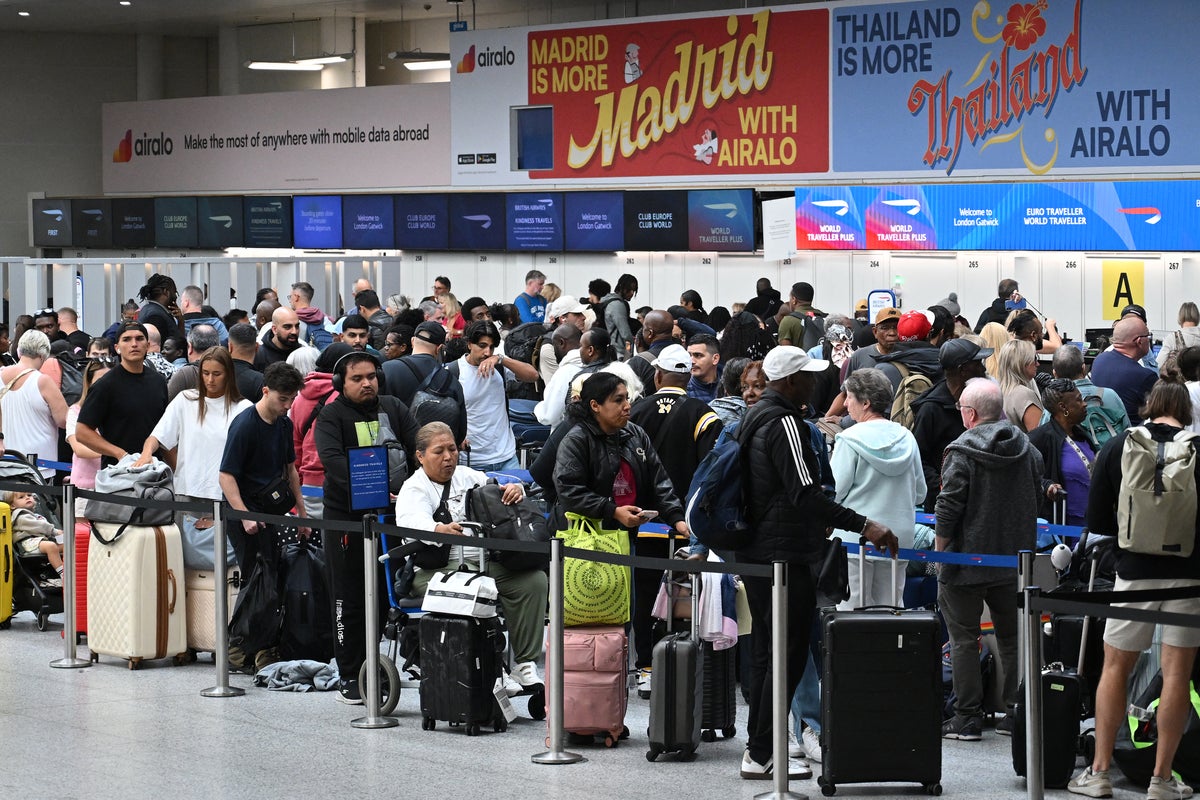
Holidays destroyed. Business meetings missed. Passengers sleeping on the floor with no word as to when they might finally board a flight. If the casual observer were looking for yet another example of “broken Britain”, then the collapse of the air traffic control system offers proof aplenty.
More than two thousand flights in and out of UK airports have been lost, and counting. The busiest have been hit hardest. The overwhelming impression is not only one of massive technical failure, but one where the authorities – NATS Holdings, the transport department and the airlines (part owners of NATS) – have themselves lost control of the situation and are out of their depth.
This should not be happening in a G7 nation that still boasts major hubs and some of the busiest terminals in the world. The dire economic and safety implications of such a fiasco are obvious.
All the indications presently are that it is not the result of a cyberattack by some hostile foreign power. It is more embarrassing even than that. It would seem that this is a wholly British debacle. That something very similar has befallen the ageing national air traffic control system before, and yet, evidently, no robust remedy has been found, hardly inspires confidence among travellers about the ability of NATS management to “learn lessons”, as the dismal bureaucratic phrase goes.
Heidi Alexander, transport secretary and, so far, survivor of the Starmer regime, knows better than most the political damage that such continued incidents of this kind can do to a government, even if it is not directly the fault of ministers. It is, in any case, incumbent on her to urgently find answers to the questions to which the public deserves answers, and as soon as the immediate crisis passes.
When she has found these, then she should issue a report on them and, in the spirit of the more pro-active, interventionist style of the Burnham administration, do something to give the public reassurance that the problems are being solved.
Thus, she will need to identify where the IT systems have failed – and why. If it’s part of a pattern, as it seems to be, and happens because the infrastructure is so old and unreliable, then there must be a plan to fix and update it. That begs some awkward questions about funding, and still more fundamental ones about the structure of NATS.
As a semi-privatised outfit, with stakes owned by staff, a consortium of airlines and 49 per cent controlled by the state (with a veto over ownership changes), it needs to be clear that this is compatible with raising the funds required to maintain such a critical segment of the national infrastructure. A situation where the IT is so fragile that it can fall over without anyone from Moscow, Tehran or Beijing needing to lift a finger cannot be tolerated, for obvious paramount reasons of national security and public safety.
As has become clear in the case of the water industry, the railways and, arguably, other utilities and services, it may well be that even semi-privatisation is not serving public need and the national interest. In such a circumstance, dismissing any or all of the bosses at NATS is nowhere near enough to restore confidence. If a change in the structure and ownership of NATS is necessary to ensure the safety and security of the airways, then that should be undertaken.
That doesn’t necessarily mean nationalisation, which would be costly and not in itself a guarantee of adequate funding from the Treasury. Indeed, one of the reasons why much of the national infrastructure is so degraded is down to severe underinvestment during decades of nationalisation, state control and lack of competition. In recent years, we have seen, on the rail network and the roads, how governments of all parties have found it expedient to cancel or postpone infrastructure schemes when there are more pressing politically driven demands on the public purse.
For the moment, the chief executive of NATS, Martin Rolfe, is still in his job, his £1.4m in emoluments secure, albeit having had to defend himself to ministers. Ms Alexander has given him a week to undertake a full investigation into what happened. Quite right – but that exercise has to take account of the broader context and what seems to be the awesome challenge of modernising British air traffic control to be internationally competitive, safe and resistant to cyberattack.
Ms Alexander and the government are ultimately responsible for that – and it will likely take time and money to achieve it. It will be a turbulent journey.