



ByMarco Silva, Benedict Garman and Adam DurbinBBC Verify
An RNLI volunteer who was targeted with abuse online after being wrongly identified as having helped small boat migrants reach land in Portsmouth has told BBC Verify he is not a “traitor”.
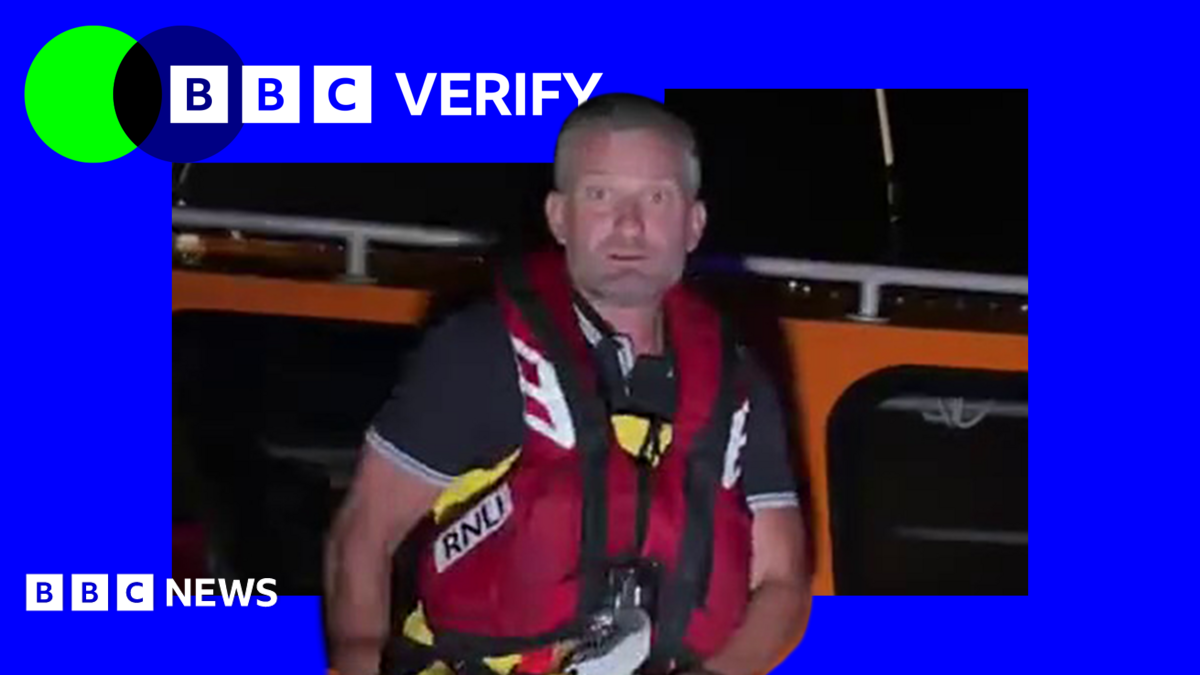
Neil and his colleagues were filmed wearing their lifesaving gear on a lifeboat by anti-migrant activists near the harbour on Sunday night, after hundreds of protesters descended on the area and shut down roads in response to dozens of asylum seekers being brought to shore.
The lifeboat crew’s images were later used in posts accusing them of assisting what some users on X described as “an invasion”, several of which also called for them to be “named and shamed”.
These posts, which were collectively viewed at least two million times, also incorrectly claimed Neil and another colleague were two entirely different RNLI crew members whose names were available online.
Lifeboat volunteer branded ‘traitor’ after anti-migrant protests
Neil, whose face was visible in the video, told BBC Verify that the RNLI vessel was in the area to illuminate the beach “purely for the safety of the protesters” who had entered the sea. “I am not a traitor,” he added.
Replies to the most widely shared posts featured wide-ranging abuse, including suggestions they should be refused service at pubs and to track down their families.
At least one post has since been removed for violating X’s rules. The platform has been approached for comment.
Neil has been an RNLI volunteer for over a decade and said that despite the abuse he was undeterred and would continue to head out to rescue people when needed.
“I’ll be back on the boat when the pager goes off,” he said, adding: “It’d just be nice for those people who call me a traitor to know that I’m not a traitor. I’m just a volunteer crew.”
BBC Verify is not sharing the full names of anyone mentioned in the posts, or the RNLI crews they volunteer with, to protect their identities.
 Image source, PA Media
Neil told BBC Verify his lifeboat was in the area as a safeguard after some protesters entered the sea
Sunday’s anti-migrant protest broke out after a small boat crossed the English Channel by an unusually long route from the Bay of Seine in France.
Migrant boats normally launch from Calais, or nearby areas in France and Belgium, and are usually taken to Dover when intercepted, but this boat was taken to Eastney port in Langstone, after it was refused by both Portsmouth harbour and Southampton Port.
This led to hundreds of protesters blocking nearby roads in an attempt to prevent buses carrying the migrants from leaving.
This protest followed a similar demonstration in Dover on Saturday, where hundreds of masked “stop the boats” activists gathered in the streets and shut down the port for hours.
On Tuesday, RNLI chief executive Peter Sparkes described the online and physical abuse faced by its volunteers as “wholly unacceptable in a civilised society”, adding that the charity and “our crews strive only to prevent people like you and me from drowning at sea”.
Sparkes also cited data from the charity which showed only 109 of 9,058 RNLI lifeboat launches last year were for people “in distress in the Channel” – 1.2% of its total rescue work. He added around 95% of small boats were intercepted by the UK Border Force.
Asked about the online abuse in Parliament on Tuesday, Digital Secretary Lisa Nandy told MPs she had spoken with tech companies about how the names, addresses and photographs of RNLI staff and volunteers were reportedly shared online.
Nandy also said that both she and the government are “concerned” about the risks posed to adults and children from doxxing – the term used to describe people whose private information has been shared online without their consent.
Dr Anna Tippett, a criminologist and cyber-vigilantism researcher at the University of Hertfordshire, told BBC Verify doxxing can create a “profound sense of vulnerability”, as the “boundary between online abuse and potential offline harm becomes increasingly difficult to judge”.
She added it is “particularly concerning when those targeted are volunteers”, as concerns they or their families could be identified, threatened or abused “could discourage others from taking on these kinds of public-facing voluntary roles”.

What do you want BBC Verify to investigate?