


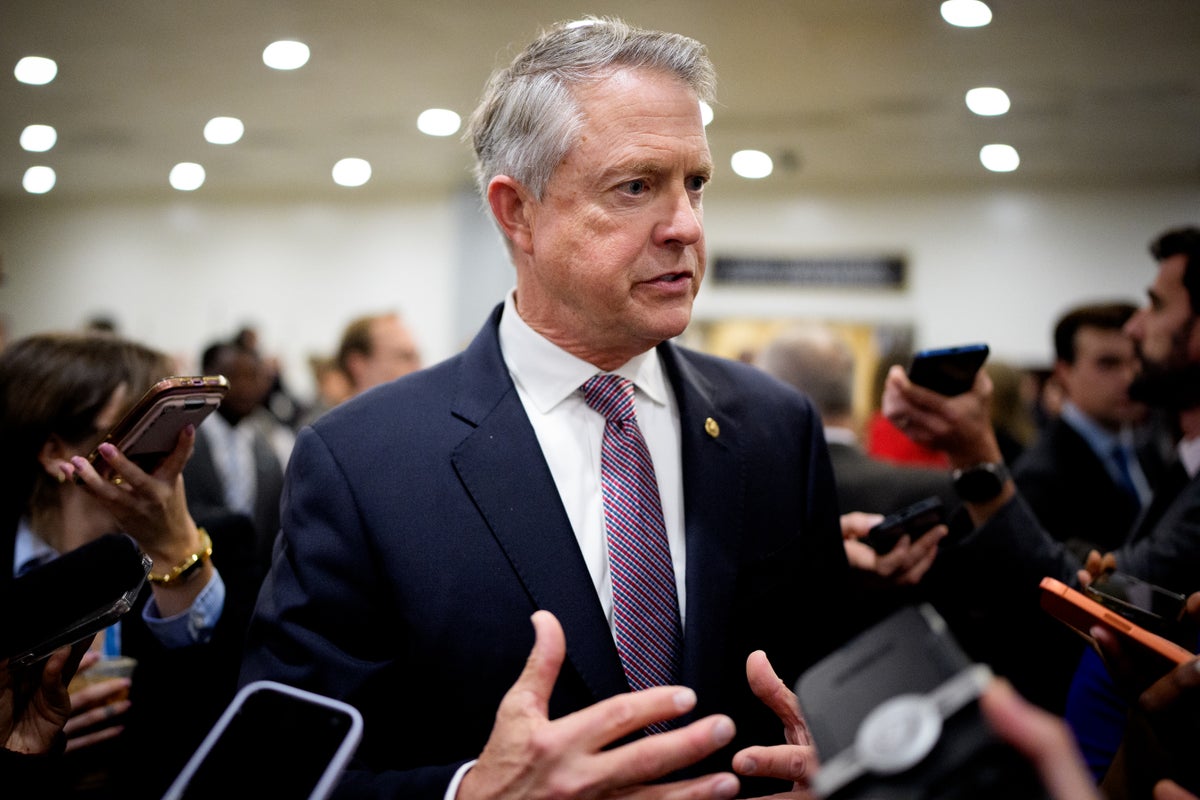
Kansas Republican Senator Roger Marshall filed debt-collection lawsuits against more than 700 former patients during his career as an obstetrician-gynecologist, leading to the arrest of 81 people for missed court appearances, according to a new report.
Marshall, who is running for reelection this fall, practiced medicine for more than 25 years before winning a seat in Congress in 2016. According to a New York Times analysis of Kansas court records, the collection actions occurred in cases brought under Marshall’s name or through Heartland Regional OBGYN, a practice he owned or co-owned from 1998 to 2019. The collection efforts included bank account garnishments, wage garnishments and an 18 percent annual interest rate written into patient contracts.
In response to detailed questions from The New York Times, Marshall spokeswoman Payton Fuller defended the practice’s operations.
“Judges issue warrants when people repeatedly miss court dates, not doctors,” Fuller wrote in a statement. Fuller added that Marshall provided care regardless of a patient’s financial situation, and that his former hospital “provided millions in uncompensated care” and “used the exact same billing and outside collection procedures as every other business or hospital in Kansas.”
“Sixty days before an election, The New York Times has decided that a rural doctor keeping the hospital’s lights on is some kind of scandal. Kansans know better,” Fuller told the publication.
 open image in gallery
The Independent has contacted Marshall’s office for comment.
Lawsuits reviewed by The New York Times involved outstanding balances ranging from $101 to several thousand dollars, primarily in rural Barton County. The newspaper interviewed eight affected patients, including some who lacked insurance and others facing out-of-pocket balances after insurance coverage.
Meischa Zimmerman told the outlet she was arrested three times — in 2011, 2013 and 2016 — over an unpaid $3,596 bill stemming from a 2009 delivery. During her first arrest, she was eight months pregnant and at home with her 2-year-old child.
“I asked them quietly: Can you not handcuff me in front of my daughter?” Zimmerman said. “I explained to my daughter I was going for a ride.”
Zimmerman said she missed her initial Medicaid application appointment because she went into labor the night before. Marshall sued her five months later.
“I had to choose whether I’d pay my electricity or pay $50 to a doctor who didn’t need it,” Zimmerman said, noting that her debt grew to more than $7,000 due to interest.
 open image in gallery
In another instance, Joe Vasquez, 68, said that he and his wife were arrested over Easter weekend in 2007 regarding an unpaid $4,561 bill from an emergency procedure three years prior. Vasquez was on disability and his wife worked at a manufacturing plant at the time. The couple spent two days in custody before their son borrowed funds for bond.
“We had no money to pay,” Vasquez said.
Vasquez added that he had recently undergone surgery and had fresh stitches when officers arrived.
“It was just me in that itty-bitty room,” Vasquez said. Court records show Marshall’s firm formally released the judgment against the Vasquezes in 2015.
Attorney Steven Johnson, who represented Marshall in collection proceedings, said that Marshall set the 18 percent interest rate in patient contracts but was not involved in individual litigation decisions. Johnson defended the practice of requesting arrest warrants when defendants fail to appear.
“If defendants were allowed to appear only when they wanted to without any consequences the court would get no business done,” Johnson told The New York Times in a text message, adding that Marshall was “no different” than other clients using legal remedies for unpaid bills.
 open image in gallery
Legal and economic experts consulted by the publication noted that while medical debt litigation has grown as deductibles rise, warrants and garnishments remain rare.
“There is a lot of variation,” Barak Richman, co-director of the health law program at George Washington University, said. “There are a lot that do bring lawsuits but also a whole lot that don’t. It’s not because they’re in a different position, they’ve just decided they’re not going to do it.”
Richman added that garnishments and arrests were “definitely on the extreme side.”
Neale Mahoney, an economist at Stanford University, said that research showed lawsuits against patients occurred in about 1.7 percent of hospital stays.
“It’s not surprising there are outliers but this does seem to be an extreme case,” Mahoney said.
Marshall’s financial disclosures show he earned approximately $780,000 in 2015 from his practice and Great Bend Regional Medical Center, a facility he co-founded in 1998. Court records show the hospital also filed hundreds of patient lawsuits during his tenure as board chair and co-owner. Several of those lawsuits and collection actions continued after Marshall entered Congress in 2017.
Marshall previously leveraged his medical background while serving in the House of Representatives during efforts to repeal the Affordable Care Act, stating at the time, “I may be the only physician in Congress to help run a hospital.”
In July 2025, Marshall introduced legislation that would prohibit hospitals from suing patients if they did not publicly post their medical prices.