


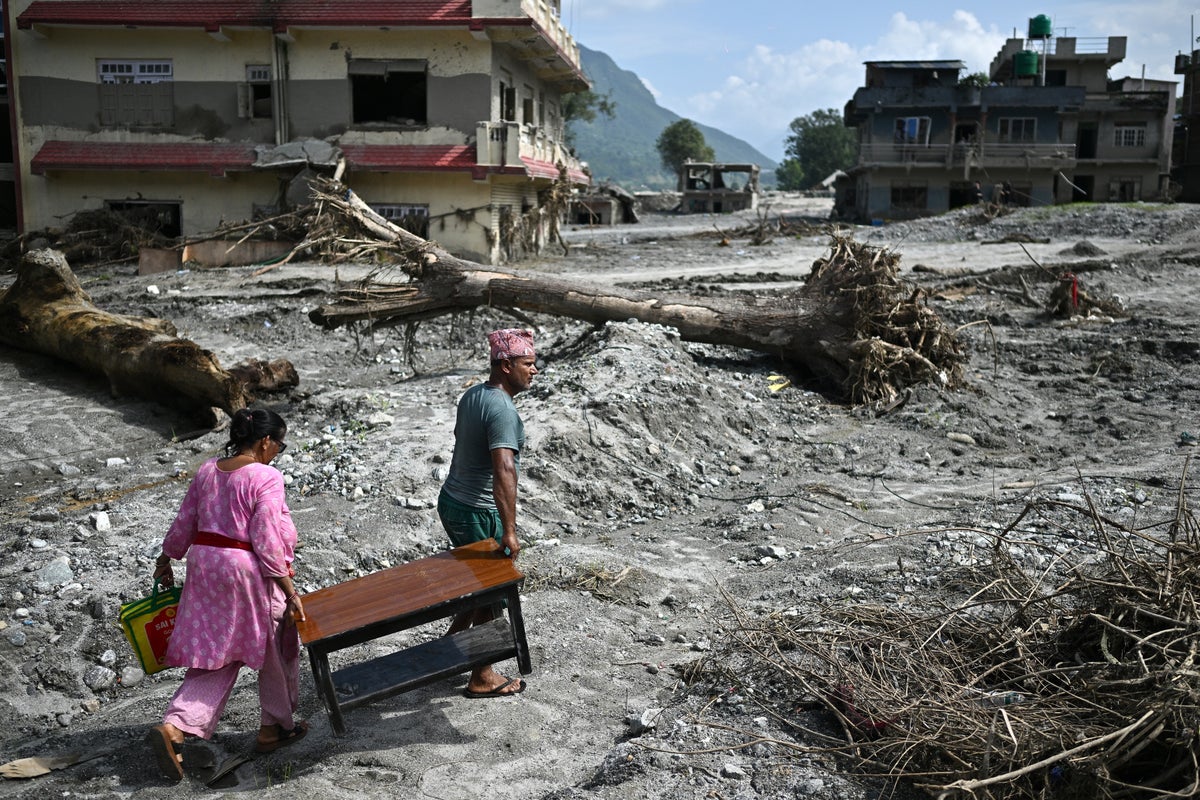
Relatives of workers trapped in hydropower project tunnels since the catastrophic flash floods in Nepal have expressed frustration at the alleged delay in rescue even as thousands of people remain missing in the country.
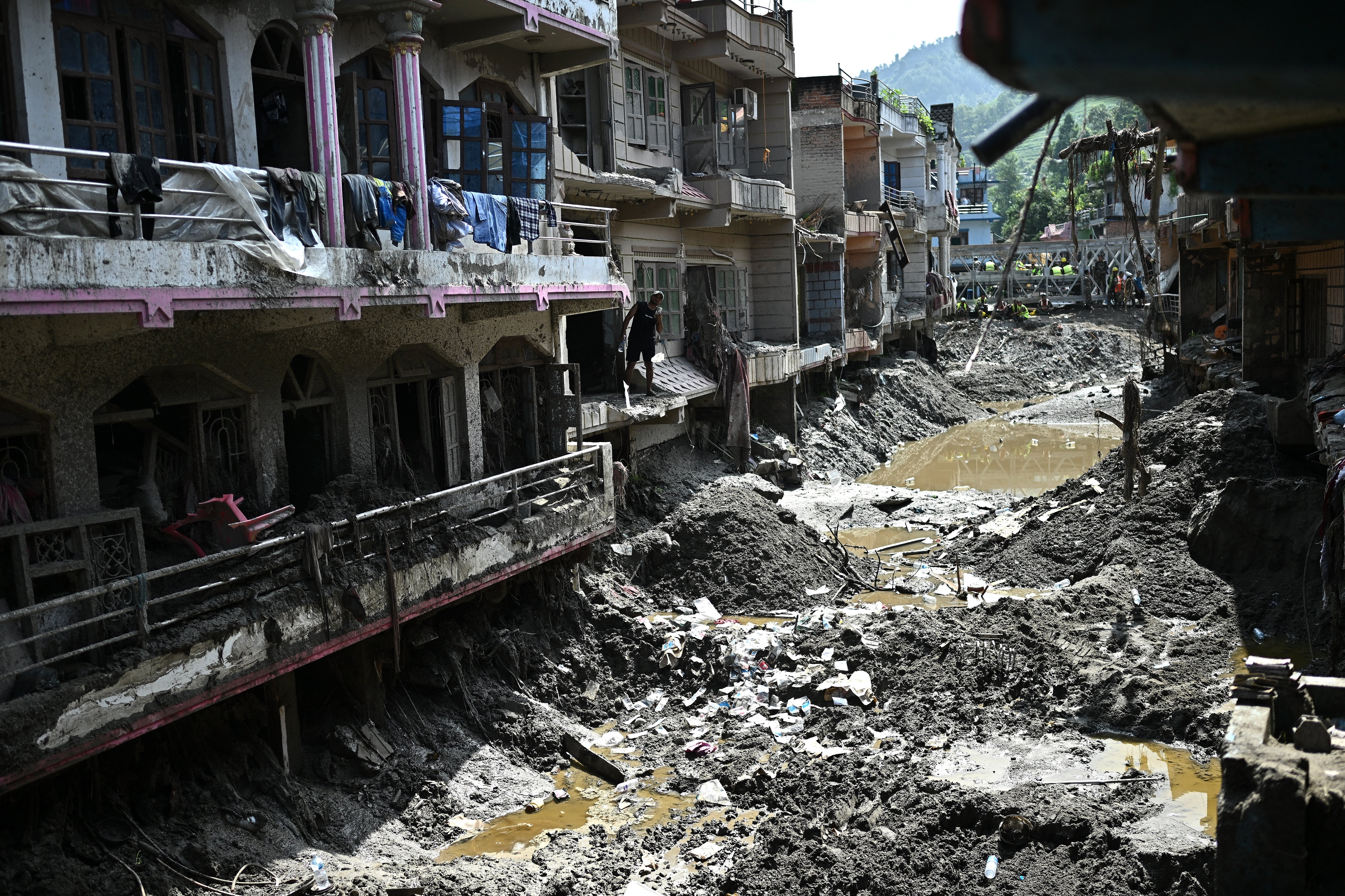
The floods killed at least 1,399 people and left more than 5,400, including foreign nationals, missing in Nepal and Tibet. The 26 August floods, triggered by a glacier collapse, tore through villages and towns, causing widespread devastation. The floods buried the entrances to tunnels of at least 12 hydropower projects, trapping workers inside.
But, with each day passing, people searching for their loved ones are becoming increasingly frustrated with the army-led search and rescue operation.
In the capital Kathmandu, some 50 people protested on Monday, demanding the government expedite rescue work.
“My husband might still be alive inside, trapped. He could be saved. Why is the army not prioritising the rescues inside the tunnel?” Sumana Shreshta Amatya told The Straits Times.
Her husband, Sumesh Amatya, was a senior geologist at the Trishuli hydropower plant.
“It’s the 13th day since the floods, it’s the day when Hindus do the final funeral rites for our loved ones,” she said.
 open image in gallery
Mahesh Prasad Shrestha held a photograph of his brother Niraj Shrestha, a 52-year-old engineer who worked at the same project site.
He told the Associated Press that authorities only sent a small excavator by helicopter on the sixth or seventh day after the disaster.
“They should have ordered big helicopters from places like China or India to fly in equipment.”
Some 140 families desperately searching for their relatives working by the Trishuli river have formed a group to coordinate search and rescue, share information and advise each other on how to file missing person complaints.
The families rued the army was deploying small equipment and teams to the Trishuli 3B hydropower plant, while sending more manpower and machinery to other affected power plants.
Around 121 of a total 900 people missing from hydroelectric projects could be trapped in tunnels, army rescuers said on Monday. The rest may have been working elsewhere at the power plants but not inside the vast network of tunnels.
Rescuers are focusing on three hydropower project tunnels where they believe dozens of workers may be trapped, authorities said on Tuesday.
“Our search operation is focused on finding survivors, including in tunnels. Our bigger focus is on the Chilime hydroelectric project, where we believe people are trapped, because there was a canteen, residency and arrangements for food,” Dharma Raj Upreti, the chief of the disaster authority, said.
Teams were also focused on tunnels of the Upper Trishuli 3A and 3B projects, which are interconnected by a tunnel.
“Oxygen has been supplied to these tunnels through pipes and we have sent new equipment needed for the operation,” Mr Upreti said.
 open image in gallery
Nepal’s prime minister Balendra Shah vowed that there would be no let-up in rescue work. “We know our responsibility and its sensitivity. We’re translating the humanitarian spirit of the Nepali people into practice through the search and rescue operation,” he said in a social media post on Monday.
In recent days, search teams have rescued a Chinese national from a tunnel, two hydropower workers from another tunnel, and a Nepali woman from her buried house.
The government estimates the floods have caused $2.56bn in damage, a staggering bill for a country with a total budget of $14 billion for the current fiscal year.
Nepal held a day of mourning on Monday to remember those killed in the flash floods as families concluded mourning rituals. Several people whose relatives remained missing performed symbolic funerals. Cremation is an important final rite in Hindu tradition and performing the ceremony even without the bodies of their loved ones provide some families a sense of spiritual release.