


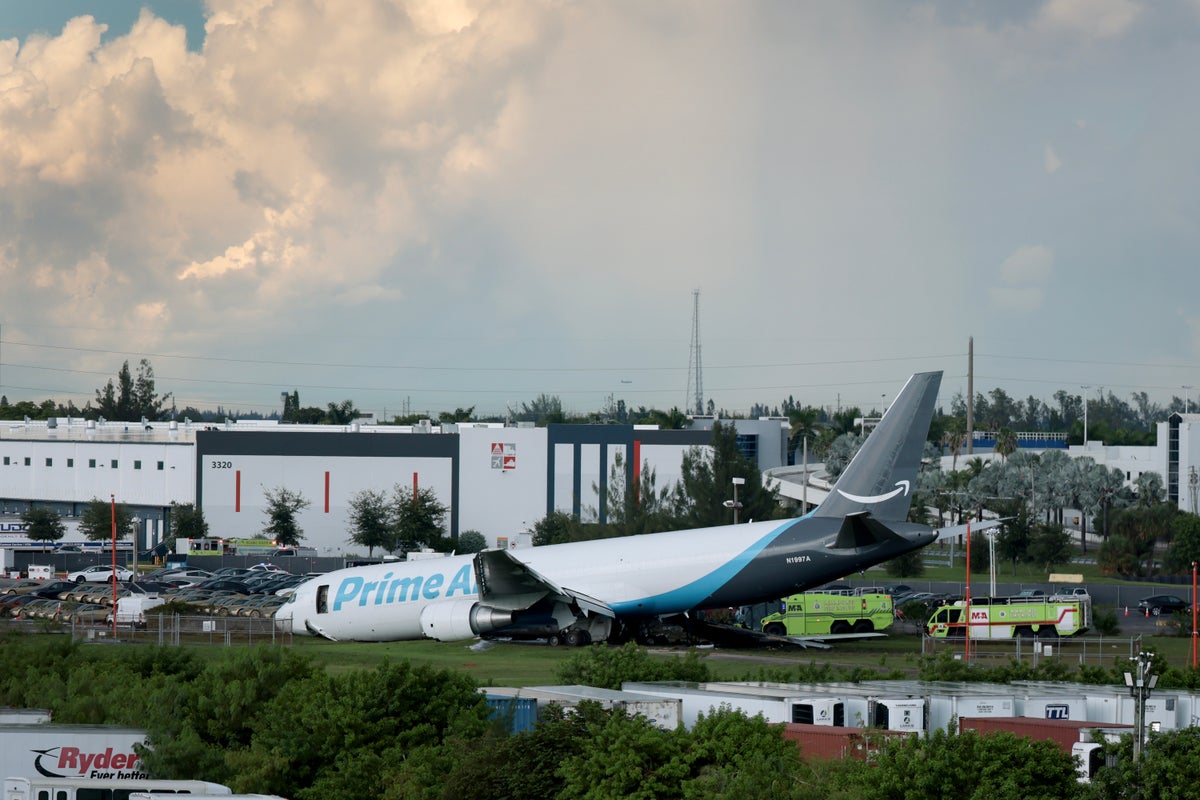
Federal authorities investigating the fatal crash of an Amazon cargo plane at Miami International Airport are expected to center their inquiry on a critical phase of the landing: whether the plane made contact with the runway too late to come to a safe halt before plowing off the tarmac and into surrounding vehicles, killing at least five people.
Video footage of the landing on Sunday appears to show the Boeing 767 remaining airborne far down the airstrip before touching down.
Aviation analysts noted that inquiry teams will aim to pinpoint the precise touchdown spot and evaluate why the flight crew did not abort the descent to execute a go-around if the aircraft overshot the standard touchdown area.
 open image in gallery
Additional factors under review include the jet’s speed, braking performance, wind and weather patterns, and mechanical integrity. A specialized team from the National Transportation Safety Board, headed by Chairwoman Jennifer Homendy, has arrived in Miami, where she is scheduled to deliver the agency’s initial press update on Monday.
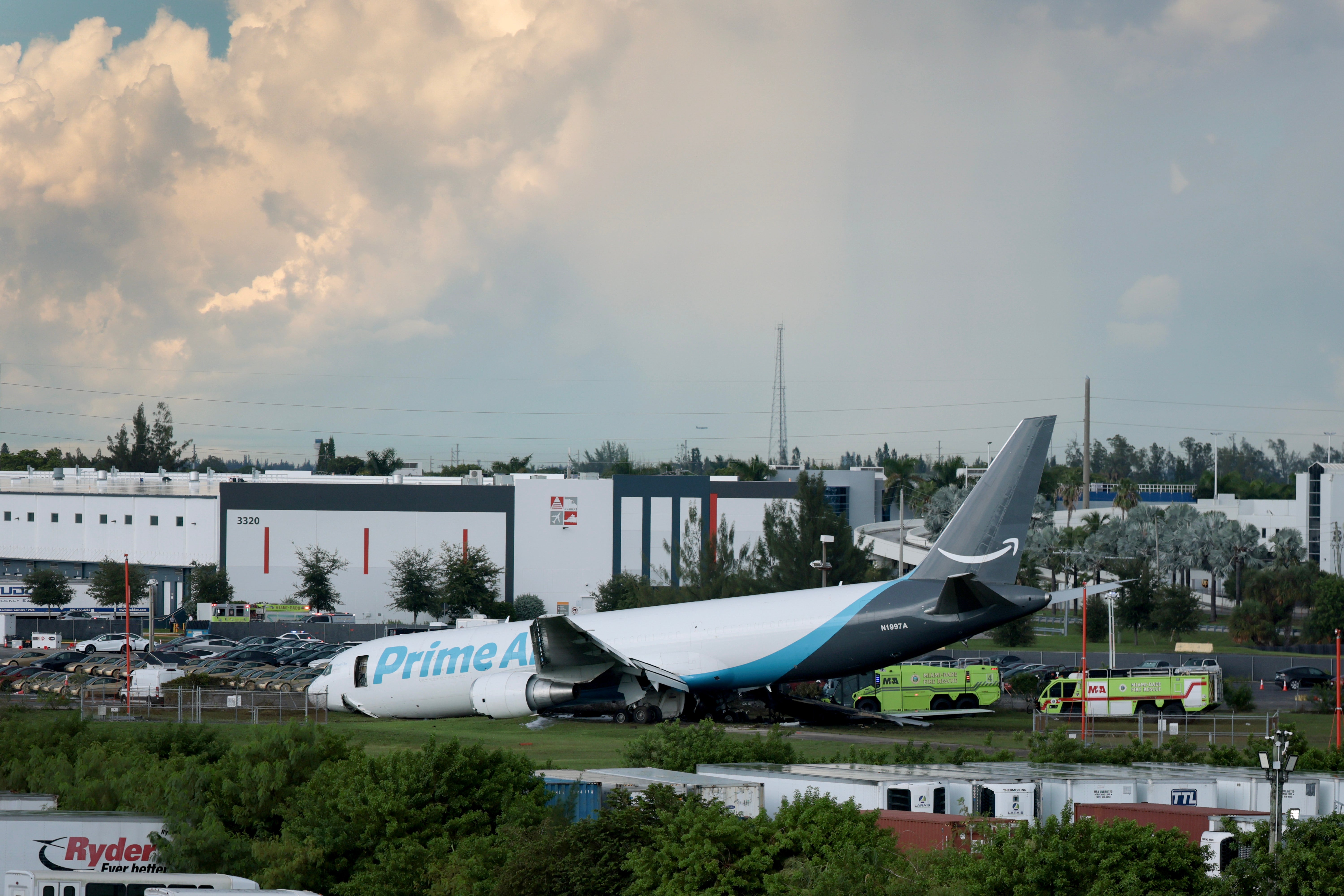
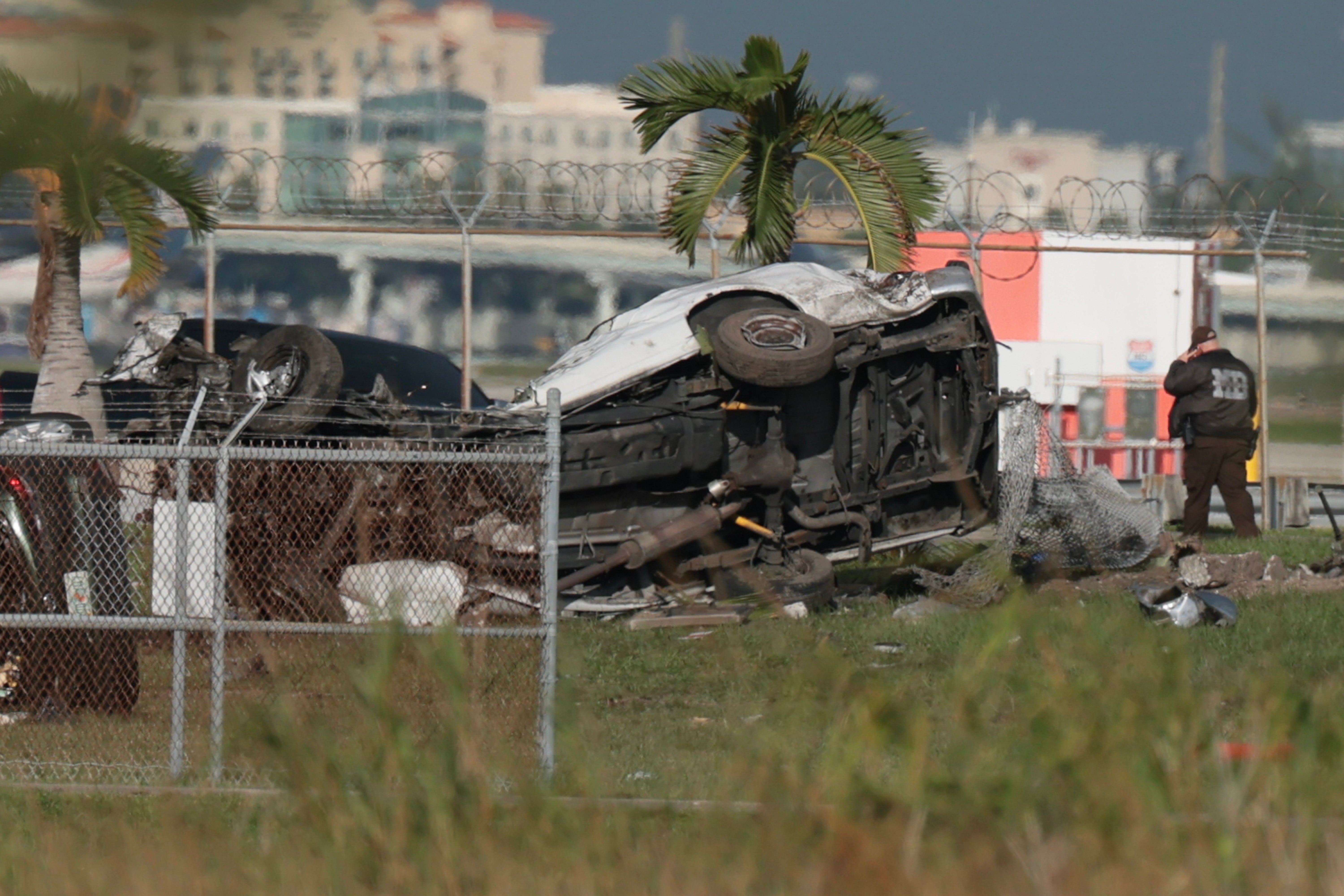
Arriving from San Juan, Puerto Rico, the cargo plane went past the end of the runway at approximately 2 p.m. Sunday, traveling across a perimeter road serving local businesses and warehouse employees. Authorities confirmed that five individuals were killed, three suffered critical injuries, and two more required treatment in hospital for minor injuries.
Dense black smoke poured into the air as the impact pinned the pilot and copilot inside the flight deck while trapping occupants in nearby motor vehicles, according to Miami-Dade Fire Rescue Chief Ray Jadallah.
 open image in gallery
Emergency responders were also forced to free a person trapped beneath an automobile. Officials have not confirmed whether the flight crew members were among those killed.
Standard landing procedures dictate that an aircraft touch down within the initial 3,000 feet (914 meters) of a runway. Aviation safety specialist Steve Arroyo explained that if the freighter exceeded that threshold, the pilots ought to have called off the attempt and circled back for a second approach.
Former Transportation Department Inspector General Mary Schiavo, also a pilot, observed that online recordings show the Amazon jet floating for an extended period over the runway without pitching its nose up to force the primary landing gear to make ground contact.
 open image in gallery
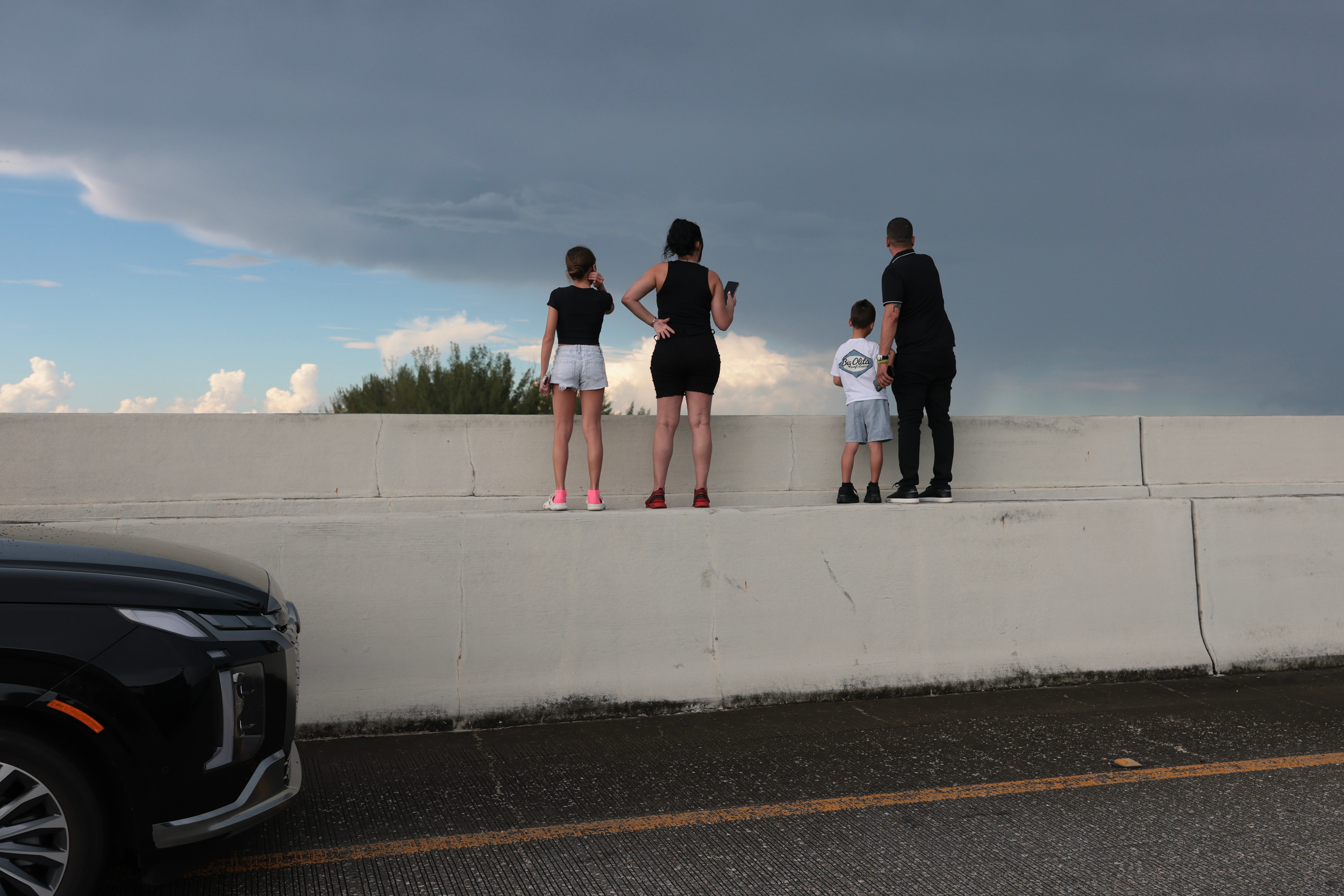
Although rain was absent at the time of the incident, heavy storm clouds were present, along with reports of high winds. Schiavo pointed out that a tailwind could have caused the plane to float farther down the tarmac before settling.
“A tail wind would certainly add to your troubles if you’ve already given up a good chunk of the runway by not touching down and landing right away,” Schiavo said.
Miami International Airport lacks engineered arresting systems, which the Federal Aviation Administration states are active at over 120 airports across the country to halt aircraft that overrun runways.
According to the FAA, these energy-absorbing beds of crushable material installed at runway ends have helped save at least 497 lives during past overrun events.
 open image in gallery
All flight operations at the major aviation hub were suspended for much of the afternoon following the disaster. Around 200 emergency workers were deployed to the scene, where they encountered intense flames and smoke from a complex fire in the engine area.
Specialized airport fire tenders sprayed foam to douse the blaze, while response teams continued addressing an ongoing aircraft fuel leak hours afterward.
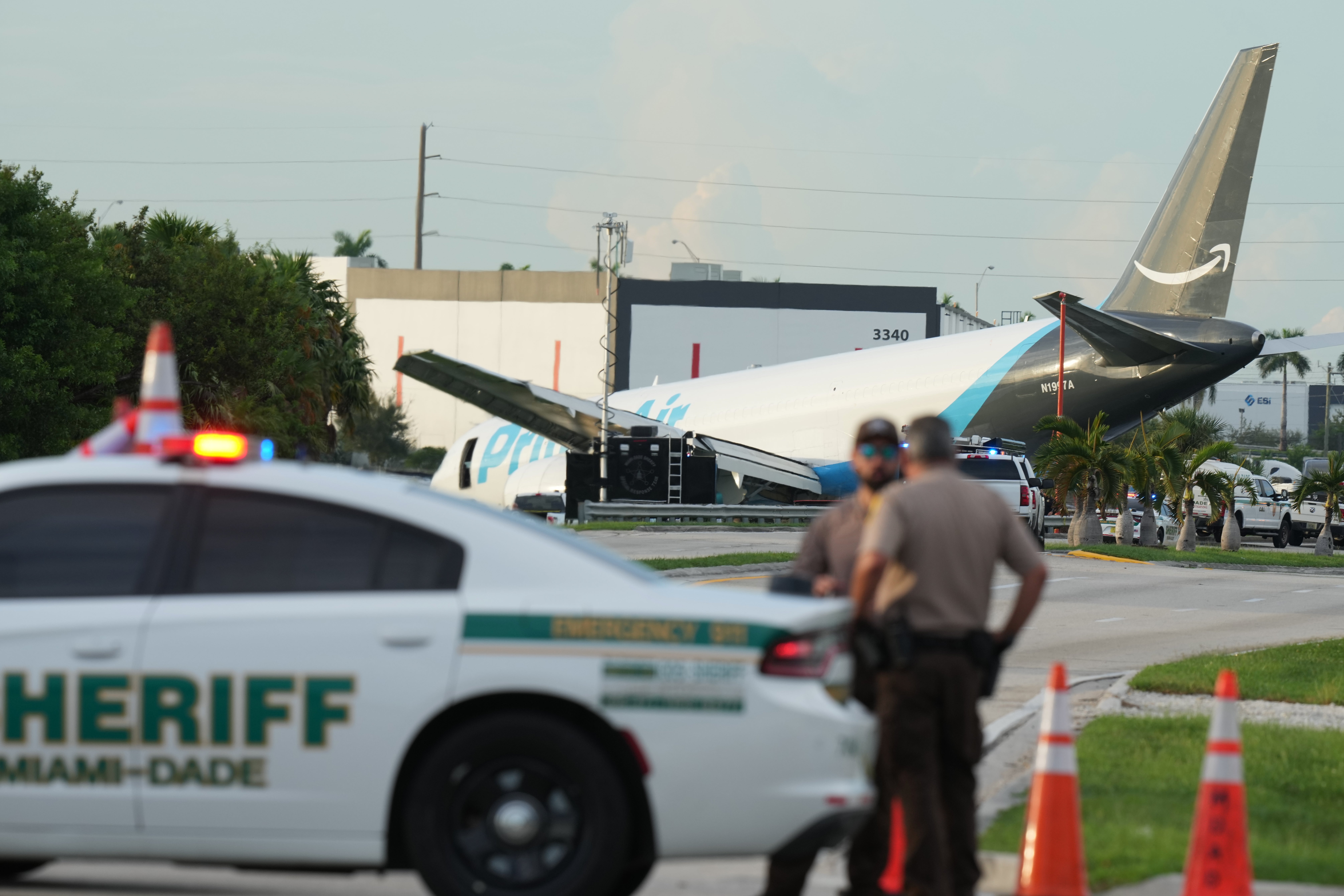
Photographic evidence showed the Prime Air plane came to a standstill alongside a street adjacent to two tractor-trailers. Despite the fire damage, the jet’s fuselage remained largely coherent while resting directly on its underbelly.
North Carolina-based cargo operator 21 Air had been flying the aircraft. Data from flight-tracking service Flightradar24 indicates the 32-year-old Boeing 767 initially served as a commercial passenger airliner for various carriers for more than 20 years before its freighter conversion in 2015.
According to Schiavo, federal investigators will also scrutinize the jet’s maintenance records, particularly given its history of international ownership, including a period under a Russian firm.
Tracking portal FlightAware reported that over 160 flights were canceled and nearly 325 were delayed by late Sunday evening. Authorities at Orlando International Airport, situated roughly 200 miles (320 km) north of Miami, confirmed that multiple inbound flights were redirected to their facility.
Amazon released a statement promising full cooperation with investigating agencies.
“We’re heartbroken to learn that five people lost their lives in today’s incident at Miami International Airport,” the company said. “Our deepest sympathies go out to the families, loved ones, and all those affected by this devastating loss.”
The disaster comes after a UPS cargo aircraft crashed last year when an engine failed during takeoff acceleration at Muhammad Ali International Airport in Louisville, resulting in the deaths of three flight crew members and 12 individuals on the ground, alongside 23 injuries.