


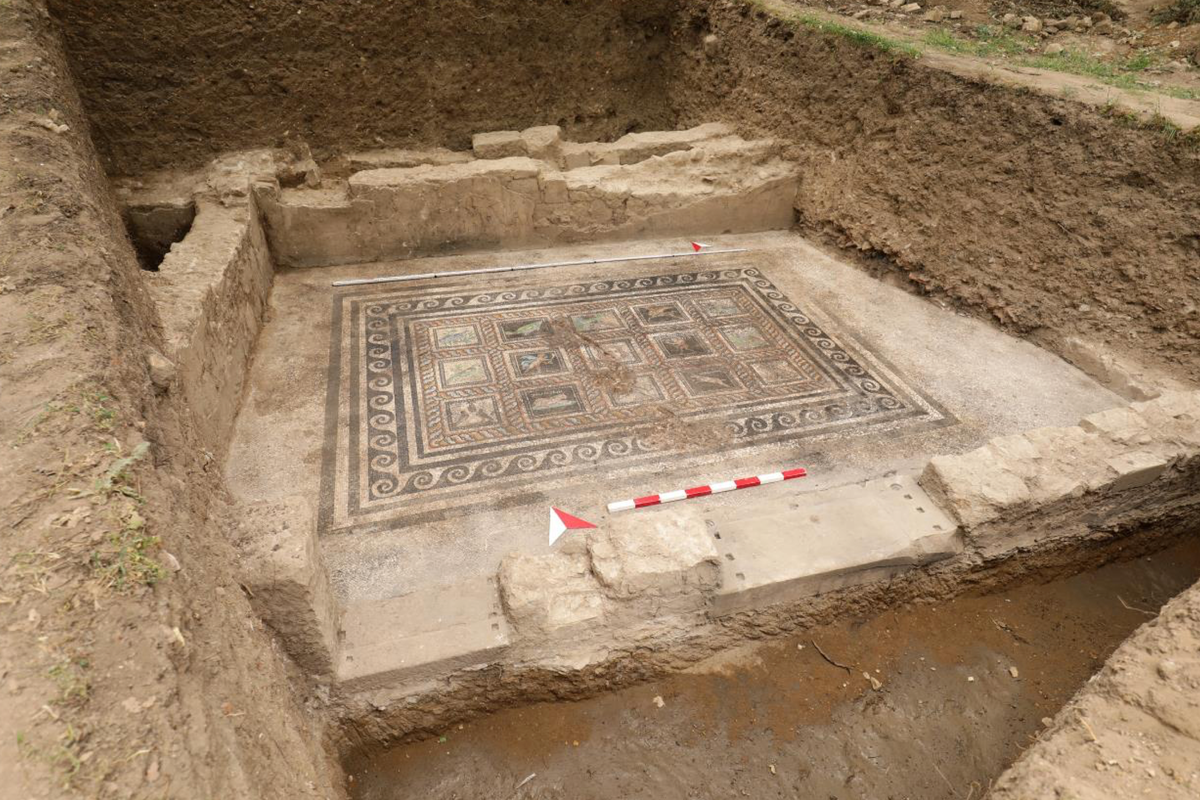
Unique mosaic engravings unearthed at the ruins of a Roman-era villa in Turkey could be memorialising its rich owner’s beloved pet dog “Ocean” and cat “Emerald”, archaeologists say.
The colourful mosaic, portraying over a dozen mythological and living animals, was uncovered during recent excavations at the ancient city of Adramytteion on Turkey’s Aegean coast.
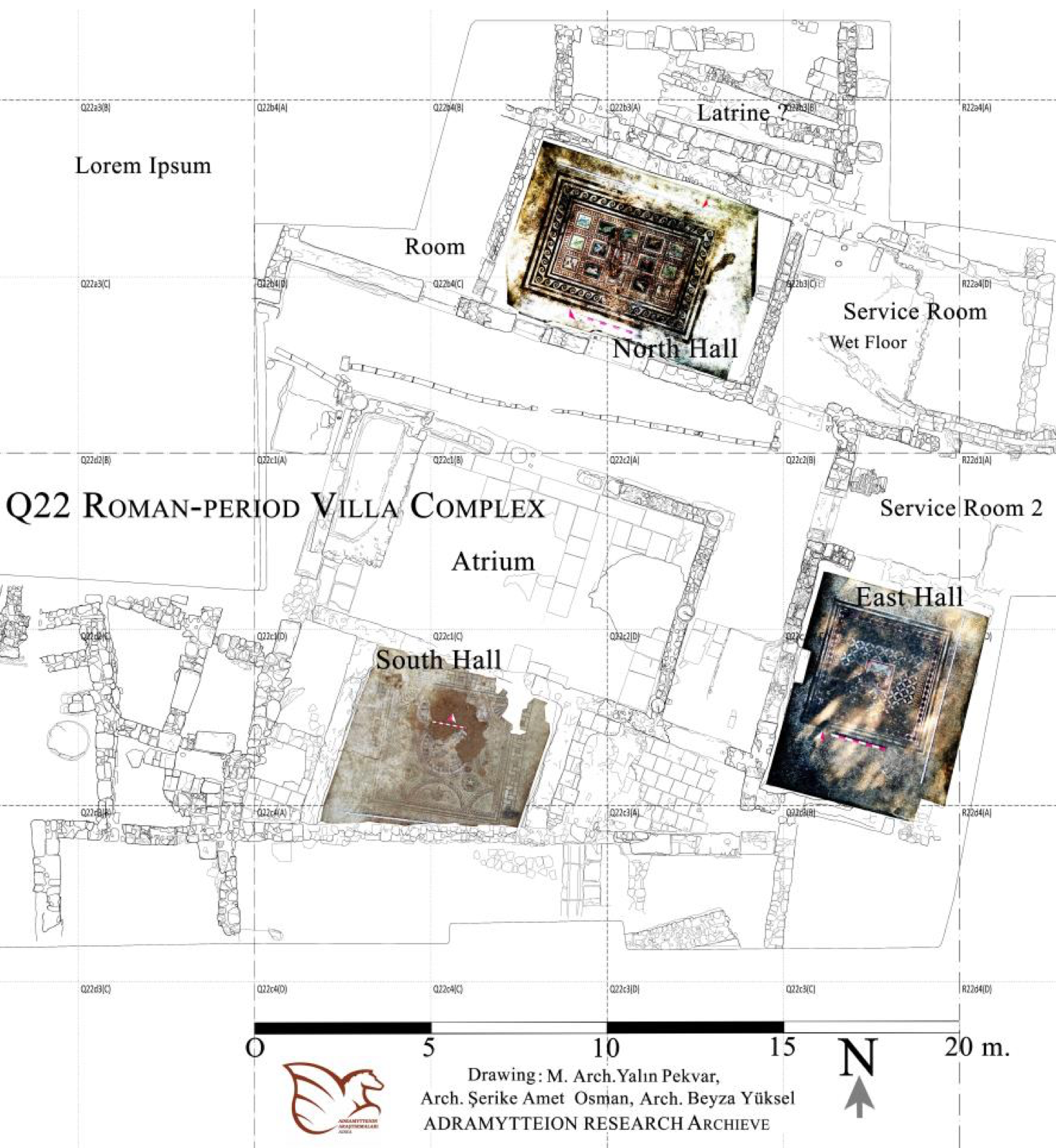
It was found in the main reception area of the villa dated to the late second to third centuries AD.
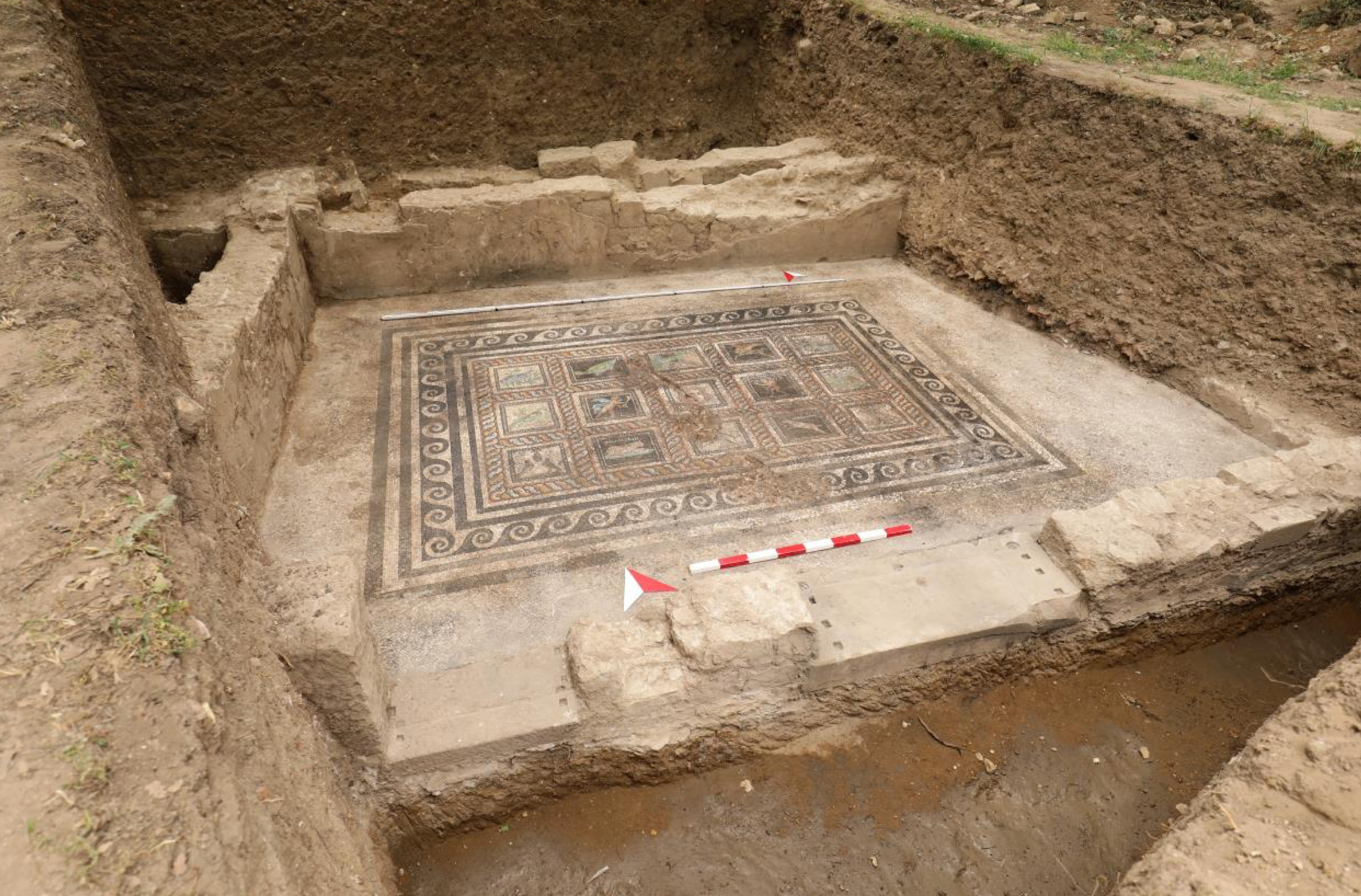
The elaborate mosaic measuring about 5 metres by 3.6m (16.4ft by 11.8ft) is located in the middle of the main “North Hall,” and would have greeted visitors arriving at the villa, according to a forthcoming study to be published in the Journal of Mosaic Research.
 open image in gallery
Ancient artists who made the mosaic used a “rich polychrome palette” that included “red, orange, black, white, blue, green, yellow, and burgundy tesserae”, according to the study.
The mosaic features 15 panels arranged in three rows, depicting birds, fish, and felines, as well as what seem to be depictions of Medusa and Pegasus.
“The figural repertoire varied, combining animal imagery, particularly birds, together with emblematic and mythological elements, including a winged horse, a pygmy figure, a Medusa head, and representations of domesticated and wild animals, as well as a fish,” archaeologist and study author Hüseyin Murat Özgen wrote.
Such elaborate mosaics made from costly materials like marble and colored glass were often put on display by wealthy Romans to project their high social standing.
They were often placed in entryways, reception rooms, and dining areas of villas and spaces owned by rich Romans to project their taste in art.
 open image in gallery
One of the creatures depicted in the Adramytteion villa mosaic is a pale cat seated on a blue-green cushion with the Greek letters “ΖΜΑΡΑΓΔΙΝ” engraved underneath, meaning “emerald”.
There is also a mosaic panel depicting a running or leaping dog with the Greek letters “ΩΚΕΑΝΟΣ”, meaning “Ocean”, inscribed underneath.
The pale cat would have been the first panel a person entering the reception room would have noticed to their left.
On the right side, a person entering the room would have likely first noticed the mosaic panel depicting the leaping dog.
Both these panels stand out as they are the only animal depictions bearing names.
The imagery used in the mosaic is a particularly common repertoire for North Africa, researchers say.
They suspect the dog’s name could be inspired by Adramytteion being an ancient harbour city.
The cat’s name may hint at the villa owner’s link to Roman Egypt, where emeralds were mined in antiquity, Dr Özgen told Live Science.