


Robotaxis enter their villain era
Road Rage is a new short film in production that casts a murderous autonomous car as the bad guy — and taps into everything people already fear about AI on the road.
by Sep 5, 2026, 11:00 AM UTC Image: Cath Virginia / The Verge, Getty Images
Robotaxis enter their villain era
Road Rage is a new short film in production that casts a murderous autonomous car as the bad guy — and taps into everything people already fear about AI on the road.
by Sep 5, 2026, 11:00 AM UTC
It’s Bullitt meets Christine meets Waymo.
A new short film imagines a San Francisco car chase where the other driver isn’t human — and the car may be trying to kill you. That a robotaxi can now be cast as the villain with almost no explanation says something about the present moment. Autonomous cars have gone from sci-fi curiosities to fixtures in some American cities, where they’ve become stand-ins for anxieties about AI job displacement, Big Tech surveillance, and machines making decisions once left to humans.
Road Rage, the planned short film awaiting $40,000 on Kickstarter to fund production, leans into all of it. The film pits Joa, a ridehail driver in a manual-transmission car, against Roboride, an autonomous vehicle that takes a minor road-rage incident very personally, according to a synopsis by its director, Romain Thomassin. Roboride lightly clips Joa’s mirror. Joa gives it the finger. The car decides to kill him.
“It’s analog versus artificial,” Thomassin told The Verge.
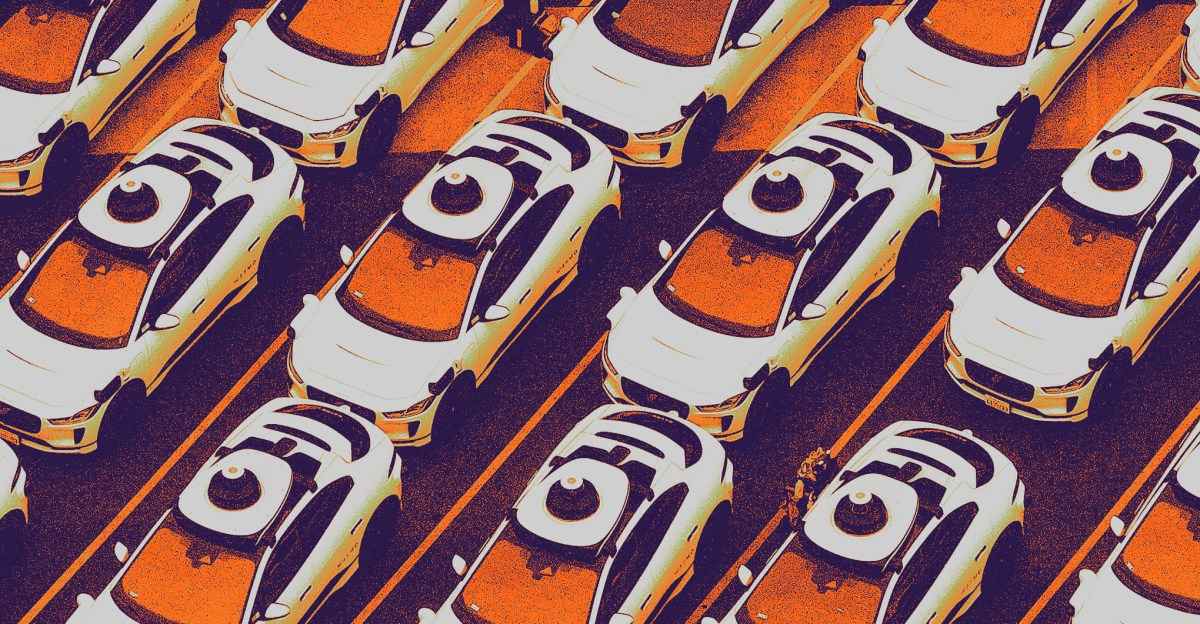
The AI bad guy will be played by an old Prius transformed with cold LED lights across the front — à la Tesla — fake cameras, a spinning lidar-like device on the roof, a black exterior, and a menacing, ever-blinking red dot. Thomassin calls the intended result a “nasty Waymo.”
“I really wanted to play the nasty, gritty look of the ’70s car chase, but with today’s robotaxi in today’s San Francisco,” he said.
The chase itself will be a throwback: real cars, real actors, and real stunts.
“I really wanted to play the nasty, gritty look of the ’70s car chase, but with today’s robotaxi in today’s San Francisco.”
— Road Rage director Romain Thomassin
“What makes Joa the good guy is not only his instinct but also his authenticity,” Thomassin said, noting a scene in which the character has an unexpected conversation with his passengers. “This type of human interaction doesn’t happen in a robotaxi.”
Thomassin doesn’t actually think robotaxis are inherently evil. But as a movie villain, they come preloaded with tension. For one thing, they’re replacing the kind of worker his protagonist represents. Joa is a Mexican immigrant trying to make a living driving in an increasingly expensive San Francisco. Robotaxis are already competing with ridehail drivers, just as generative AI is competing with workers in Thomassin’s own industry.
“Driving here is a metaphor for what’s happening in cinema, in filmmaking,” Thomassin said.


 PreviousNext
1/4
Then there’s surveillance. Autonomous cars are covered in cameras and sensors, constantly observing the streets — and people — around them. That, more than the prospect of being driven around without a human behind the wheel, is what actually unnerves Thomassin.
In Road Rage, that anxiety is pushed toward dystopia. There’s a brief encounter involving immigration enforcement, and Thomassin imagines a feature-length version in which autonomous cars identify people, trap passengers inside, or deliver them directly to authorities. The progression, as he describes it, is observation, surveillance, then control.
“The next step is that [autonomous vehicles] could become the police,” he said. And because robotaxis operate as connected fleets, the threat can scale beyond one vehicle. “Imagine an army rising up,” Thomassin said.
Robotaxis also make unusually good revenge-movie villains because people already treat them like adversaries. Thomassin points to the indignities Waymos have endured on San Francisco streets: people immobilizing them with traffic cones, tagging and vandalizing them, and even setting them on fire.
“They are being bullied,” he said. In Road Rage, that mistreatment becomes the motivation: “They want to take revenge.”
Thomassin describes Roboride as absorbing the behavior it observes around it — including the behavior of human drivers. The car is simply learning road rage from humans.
“Humans are known to be the worst versions of themselves on the road,” he said.
That makes Roboride a very 2026 update to the killer car idea in Stephen King’s Christine. There, the menace is supernatural. Here, it comes from something more contemporary: a machine that watches humans, learns from them, and inherits some of their worst traits along with the useful ones.
On the other side of the chase is Joa and his stick shift — a deliberately analog counterpoint. To Thomassin, driving stick is a deeply human act: The driver remains in control of the vehicle, physically responding to the road. What separates Joa from Roboride, in Thomassin’s telling, is instinct — and even irrationality.
During one confrontation, Joa takes his hands off the steering wheel while facing down the autonomous car. The move is so reckless that Roboride backs off. The human wins by becoming less predictable than the machine.
“Respect your madness. Be a little mad and creative in your way of doing things, and you will be able to rise against the machines.”
— Romain Thomassin
“Respect your madness,” Thomassin said. “Be a little mad and creative in your way of doing things, and you will be able to rise against the machines.”
Despite its skepticism toward AI, Road Rage may use some of the technology itself. Thomassin says the filmmakers are considering AI-generated imagery to depict what Roboride sees, while shooting the human driver’s world with traditional cinematography. To him, that distinction matters. He sees AI as a creative tool when it serves the story, rather than simply a way to replace workers.
For all the menace he sees in robotaxis, Thomassin isn’t afraid to ride in them. He signed up for Waymo as soon as he could and uses it when visiting friends and family for rides.
“I don’t feel in danger,” he said.
That may be what makes Roboride such an effective 2026 villain. The scary part isn’t necessarily that the machine will crash. The scary part is that the machine works.
Follow topics and authors from this story to see more like this in your personalized homepage feed and to receive email updates.