


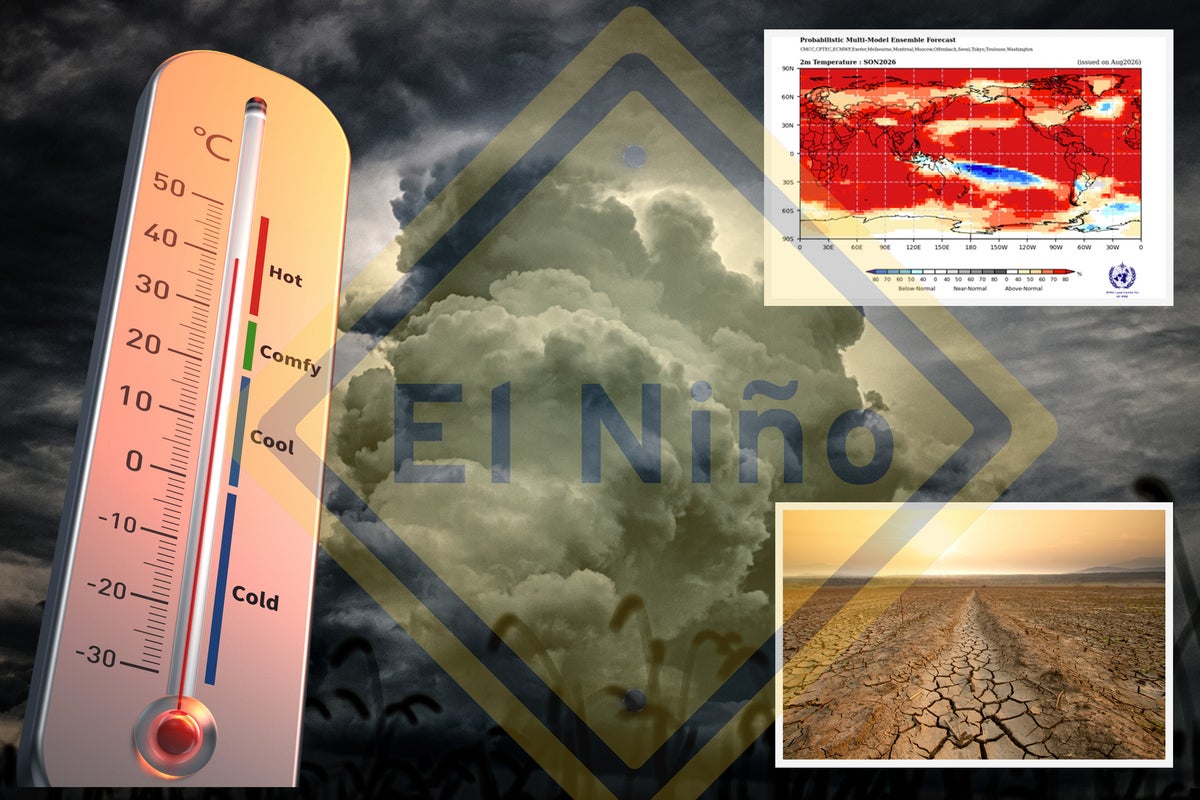
This year’s rapidly intensifying, climate change-fuelled “super” El Niño is on course to be the strongest on record – and potentially the most powerful in centuries.
“We should be clear that this is an unprecedented event”, said Professor Adam Scaife, head of long range forecasting at the Met Office. “I have never seen an El Niño signal this intense in our forecasts.” Others have described the event as “truly mind-blowing” and “Godzilla-level”.
Tens of millions of the world’s poorest people are also expected to be plunged into humanitarian crisis as the extreme weather event hits – just as vital support for health, nutrition and disaster response is being gutted by devastating foreign aid cuts from wealthy countries. Britain, for example, is currently slashing bilateral aid to eight African countries by more than 80 per cent.
Torrential rains and flooding are expected to come to parts of East Africa, while droughts are expected to intensify across southern Africa – threatening food supplies and livelihoods on both sides of the continent.
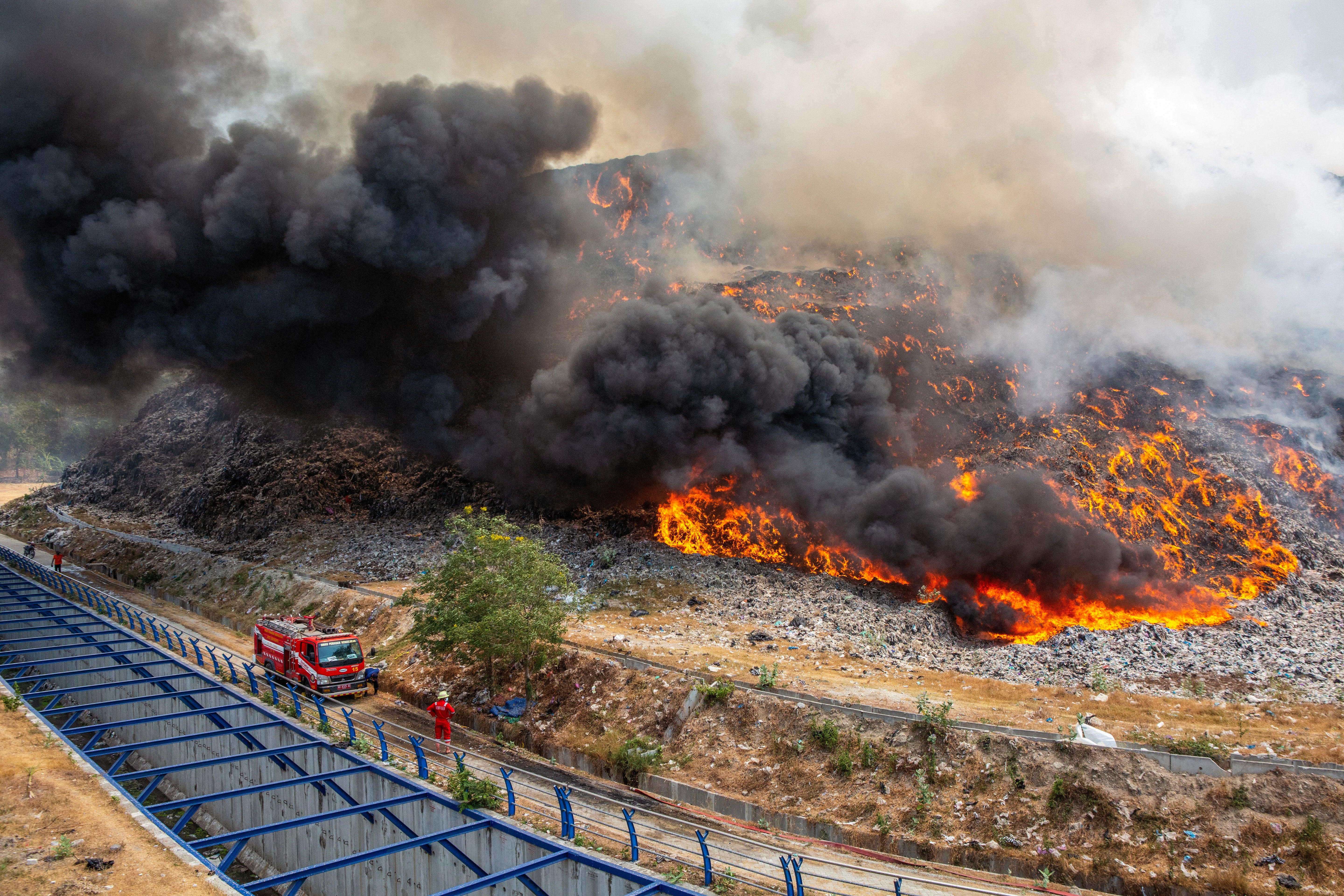
Already, the impacts are being felt in other parts of the world, from unusually weak monsoon rains in India, to catastrophic wildfires in Indonesia.
In the UK, still reeling from a summer of heatwaves that has killed thousands and pushed water levels to critically low levels, the Met office has forecast a particularly wet and stormy winter due to the El Niño. But perhaps the biggest impact will be felt in people’s pockets. Around one quarter of UK food imports – including rice, coffee, cocoa, and tropical fruits – are from parts of the world most exposed to the El Niño, according to research from the Energy and Climate Intelligence Unit.
The impacts will come on top of an ongoing cost of living crisis that experts say has been exacerbated by climate change. Poor harvests drove a 77 per cent rise in the price of coffee imported into the UK from Brazil in 2025, while cocoa bean prices from Côte d’Ivoire have doubled.
But it is people on the ground across Africa and Asia that will feel the most critical impacts.
“The world is heading into this El Niño at precisely the wrong moment,” Dr Philip Goodwin, CEO of Unicef UK, told The Independent. “We can see the warning signs coming, yet humanitarian agencies are being asked to prepare with fewer resources.”
MPs from across the political divide are now calling on the government to step up its support, as aid groups warn that countries set to be most impacted by the super El Niño are also those bearing the brunt of the global aid squeeze.
“We must change course in order to meet the scale of this crisis,” Dr Ellie Chowns, Green MP for North Herefordshire, told The Independent. “The government must turn all of their efforts to urgently reducing emissions at home… and restore development aid to ensure the Global South is not abandoned to face the worst realities of a crisis they did so little to cause.”
Andrew Mitchell, Conservative MP for Sutton Coldfield and a former development minister, added: “It is the poorest in the world who suffer first and hardest from climate change and this summer has shown the rich world, too, the grave climate threats that await us.
“Cuts to Britain’s development budget – as both Prime Ministers Johnson and Starmer did – were acts of the greatest folly… Britain needs to reinvigorate this international leadership if we are to tackle at their roots the threatening evils of climate change, illegal migration, starvation, water shortage and pandemics.”
Comments come as this week the UN warned that this year’s El Niño – an event caused by unusually warm temperatures in the central and eastern tropical Pacific – is already exceptionally strong. “El Niño is being supersized before our eyes… The science leaves no room for doubt: the planet is in uncharted waters, and those waters are heating up,” said UN secretary general António Guterres.
Occurring on average every two to seven years, a typical El Niño will see sea surface temperatures in a specific patch of the tropical Pacific rise by 1-2C, with 2C considered a very big event.
This year, the temperature has already crossed 2.6C above the El Niño – and current forecasts suggest it could peak at around 4C in November.
Speaking of the super coming El Niño, Dejene Dadi, the general manger of a coffee-growing cooperative in Ethiopia, said: “We aren’t ready for this kind of disaster… We can do climate adaptation activities like soil and water conservation, shade management, managing pests and diseases, and water harvesting and irrigation. But it is not possible without more help from coffee companies and governments like the UK.”
For its part, the UK government carried out a “responsible business conduct review” as part of its trade strategy published last year, which advocacy groups understand contains plans that would compel companies to better respond to environmental and human rights concerns in their supply chains. However, the publication of that review has been continually delayed.
“The super El Niño urgently need businesses to invest in their supply chains: paying fair prices, tackling human rights abuses, and safeguarding the environment. And the UK Government must also stop delaying publication of its Responsible Business Conduct review,” said Dr Carley-Jane Stanton, from the Fairtrade Foundation.
The most urgent El Niño concern, however, remains around the impact that El Niño-fuelled weather events will have on food systems at a time when there is very little money available to help the world’s poorest.
The UN’s World Food Programme (WFP) has projected that an additional 49 million more people could be pushed into hunger globally.
“The places most affected by El Niño are often those already facing some of the worst food crises – and over the past year we have already had to make incredible choices on prioritising populations on the brink of famine and starvation,” Richard Choularton, director of WFP’s Climate and Resilience Service, told The Independent.
“We simply do not have enough resources. This year we estimate that we need around $13bn to meet emergency food needs around the world, but we expect to only get around six and a half billion,” he added.
A major WFP appeal to donors for $200m to fund “anticipatory action” – programmes that provide families with cash ahead of climate shocks, allowing them to weather the crisis without leaving their communities – has also met with a muted response. “We asked for 200 million for about 22 countries… and we still need over 150 million. And the window for putting those funds to good use is rapidly closing,” said Mr Choularton.
Ummy Dubow, the country director for Somalia at the global development charity CARE, described the super El Niño as a “disaster” for her country during a briefing with journalists this week – in which she emphasised how Somalia is already reeling from crises including the impact of aid cuts as well as the knock-on effects of the War in Iran.
“Somalia is facing a very severe and compounding humanitarian crisis… 3.3 million people are already internally displaced, and 1.88 million children under five in Somalia are acutely malnourished,” she said. “Meanwhile, while CARE used to operate 150 health facilities, this has come down to 50 due to the aid cuts – and food prices have risen between 10 and 20 per cent and fuel costs have gone up by 10 per cent due to the War in the Middle East.”
Unicef’s Dr Philip Goodwin added that it is “children who are paying the highest price” despite the fact that they did not create the climate crisis.
Pippa Heylings, Liberal Democrat MP for South Cambridgeshire and net zero spokesperson, also called on the government to better prepare for the climate crisis and restore the foreign aid budget.
“We cannot afford to abandon our reputation as a global climate leader by betraying our pledges to countries that desperately need climate resilience,” she said.
“The Liberal Democrats want to see the government reverse their cuts. Burnham must set out a roadmap to restore the aid budget back to 0.7 per cent [of Gross National Income, GNI], as well as convening cross-party talks on climate resilience.”
The UK retained its aid budget at 0.7 per cent of GNI for a number of years, before Boris Johnson cut it to 0.5 per cent in 2021, and Keir Starmer announced further cuts to 0.3 per cent last year, cutting billions of pounds from the budget.
Sarah Champion, Labour MP for Rotherham and chair of the International Development Committee, echoed warnings that cuts to the UK aid budget are misguided at a time of such severe global danger.
“Climate change is rapidly undermining development gains across vulnerable countries, as we have recently witnessed with the disaster in Nepal,” she said. “We must recognise El Niño risks further worsening food and water security, and will exacerbate poverty and humanitarian need.
“Successive cuts to overseas development aid… are increasingly undermining good intent, at a time when the climate crisis is rapidly intensifying,” she added.
Both the Foreign, Commonwealth and Development Office, and the Department for Business and Trade, have been approached for comment.
This article has been produced as part of The Independent’s Rethinking Global Aid project