


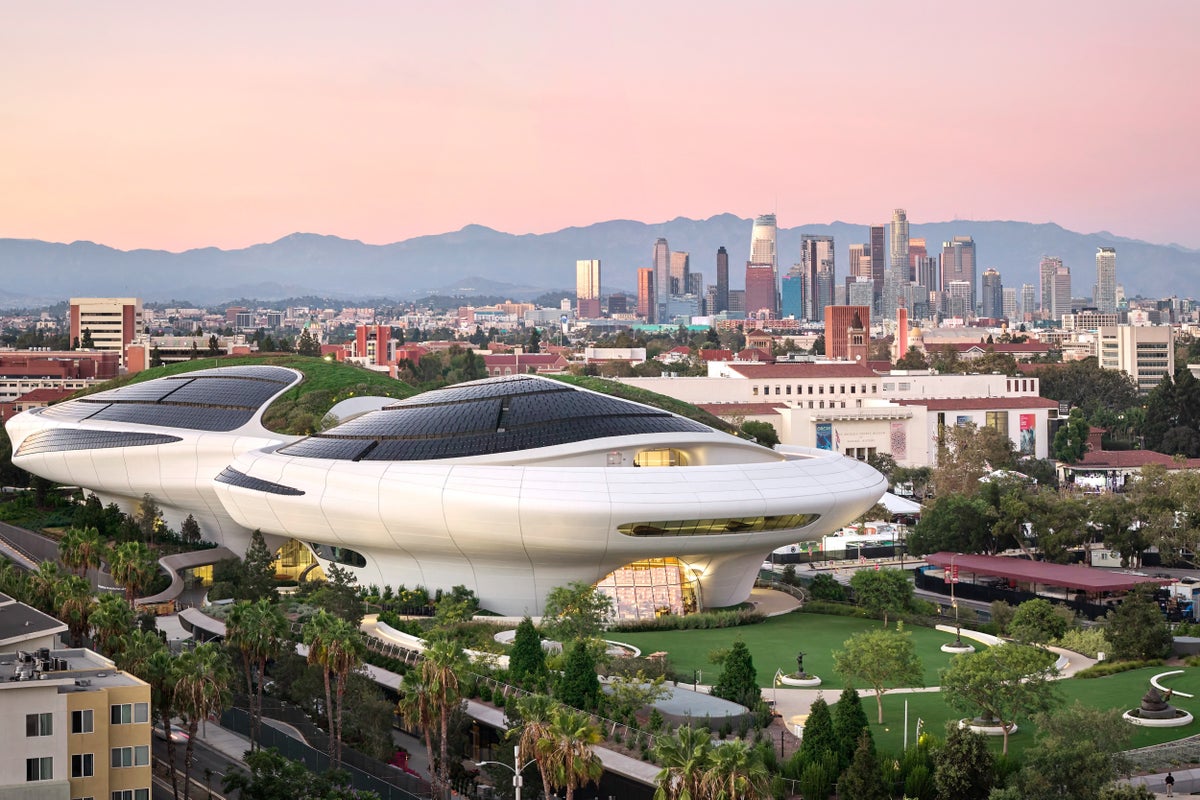
It’s hard to miss the Lucas Museum of Narrative Art. The newly opened 300,000-square-foot building is a sleek, futuristic vision of sweeping polymer-clad concrete and glass that hovers beside the University of Southern California campus in Los Angeles. “It’s the one that looks like a spaceship, right?” asks my taxi driver. Yes, this is the museum you’re looking for.
The ambitious architecture is certainly appropriate for an institution founded by Star Wars creator George Lucas and his wife, the high-flying business executive Mellody Hobson, and bankrolled to the tune of a reported $1 billion. If the Lucas name on the outside leads visitors to assume the inside is full of spaceships too, they’ll be half-right.
At the opening “Star Wars in Motion” exhibition, fans will get the opportunity to pose with vehicles including Luke Skywalker’s Landspeeder and Anakin’s Podracer, but Lucas’ ambition is something far grander than simply a place to store his old props. His museum sets out to tell the story of narrative art throughout human history, from cave paintings to comic books, and to highlight the common thread of myth-making that connects it all.
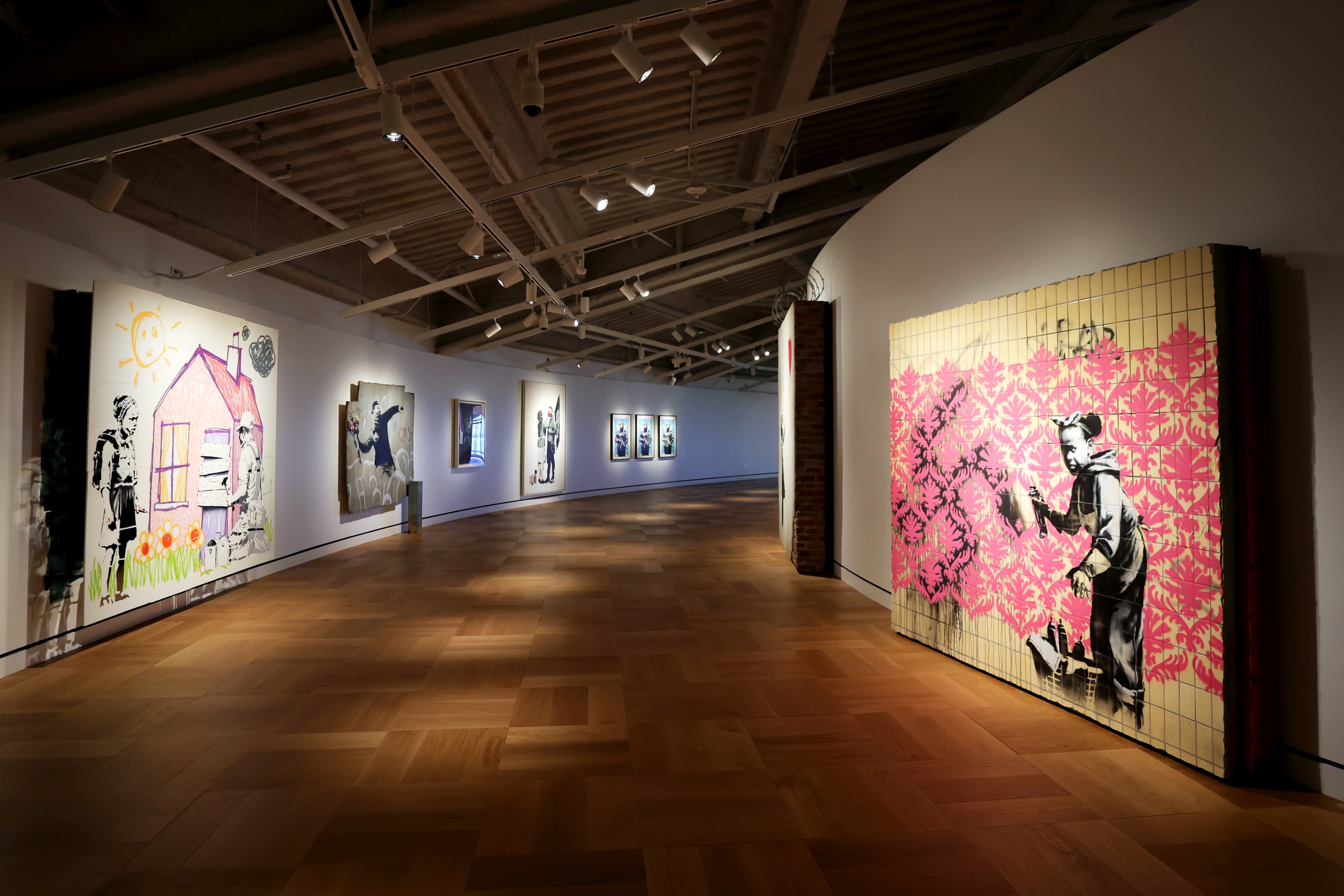
The result is a sometimes disorientating mixture of high and low culture. This is surely the only place in the world where Frida Kahlo faces off against Batman, with a 1940 self-portrait by the Mexican artist on show across a corridor from a Lindy Hemming-designed Batsuit from The Dark Knight.
There’s an early Van Gogh and a Picasso sketch, but there’s also Charles Schulz’s original Peanuts illustrations, Cassius Marcellus Coolidge’s dogs playing poker and a whole gallery dedicated to Frank Frazetta, whose work was originally intended to adorn the covers of fantasy paperbacks but now looks right at home on museum walls.
.jpeg) open image in gallery
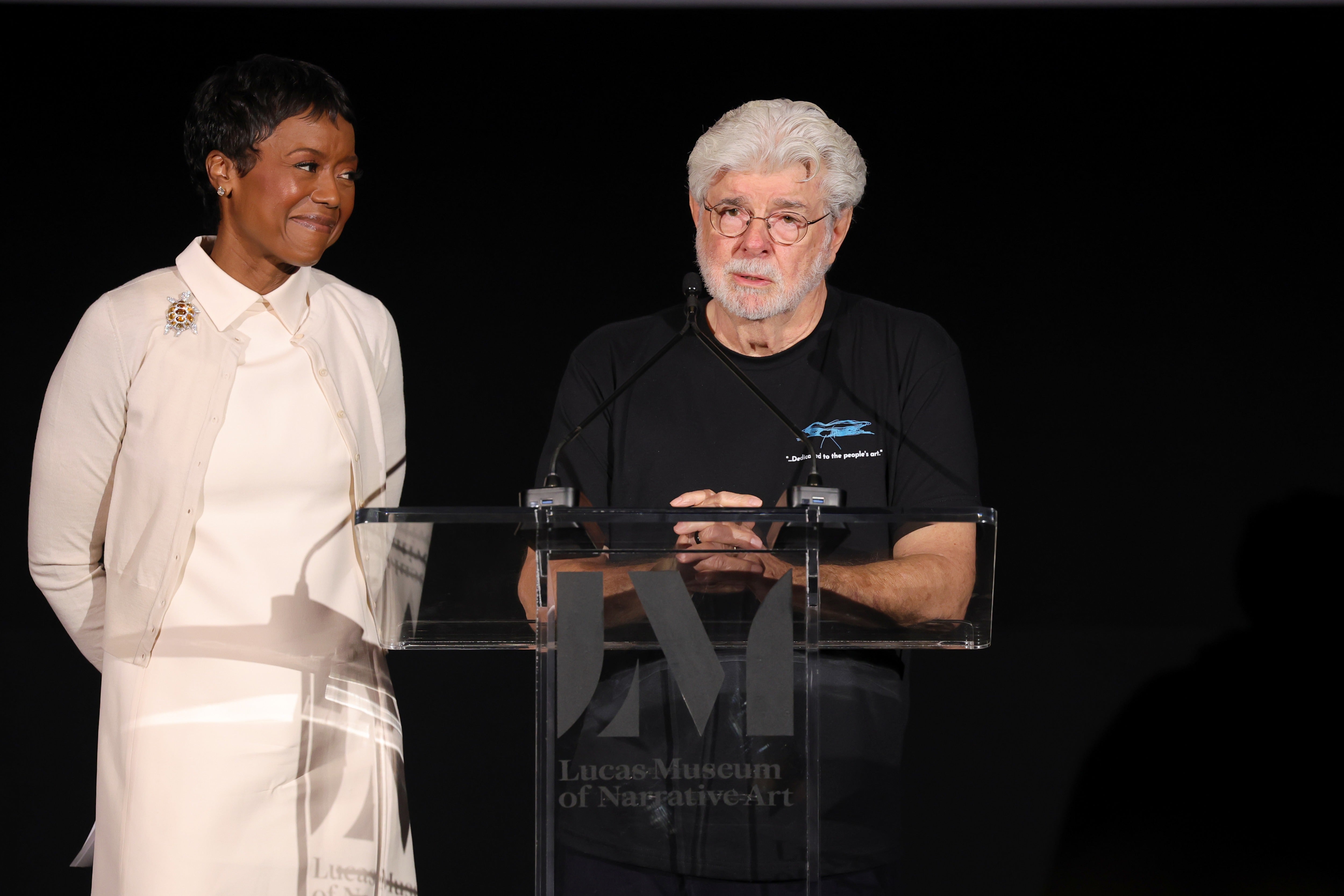
open image in galleryDuring a press conference, Lucas explained his belief that the artists whose works surround us in everyday life deserve to be elevated to the level of old masters. “It’s something that I felt very strongly about in terms of honoring illustrators, artists who illustrate stories that are already written, and most of those stories are myths; they’re not real, but the illustrations make them real,” said Lucas. “A picture is very powerful, and stories are very powerful, and you combine them together, and those two elements create a society. That’s why I wanted to build this.”
I’m used to doing the impossible… but this one almost broke my will.
George Lucas
It has been, in Lucas’ words, a “long haul” to make the museum a reality. Originally planned for San Francisco, and then Chicago, the project was forced to change location in part because Lucas refused to compromise on his vision. In the end, he ended up just across the road from USC, where the 82-year-old was once a film student.
“It’s been 17 years, between getting kicked out of cities and trying to get this built, which has been in itself eight years,” said Lucas. “Part of the problem is, I’m a contrarian. I don’t like to do things that people think can be done. I’m fascinated by doing things that people say can’t be done. I’m used to doing the impossible… but this one almost broke my will.”
 open image in gallery
Some critics have already turned their noses up, claiming that “narrative art” is a made-up category, and arguing that the museum needs to do more to explain and contextualize the work it is presenting. Sitting in the museum’s wood-lined, horseshoe-shaped library, CEO Tracey Bates tells me that the decision to let the art speak for itself was “very intentional”.

Watch Apple TV+ free for 7 day
New subscribers only. £9.99/mo. after free trial. Plan auto-renews until cancelled.
ADVERTISEMENT. If you sign up to this service we will earn commission. This revenue helps to fund journalism across The Independent.
.jpg) open image in gallery
open image in gallery“George has always said that narrative art is storytelling in one frame,” says Bates. “You shouldn’t have to be told what is happening, because what you see in it will evoke some sort of engagement with it. So that really is up to the viewer. George wanted people to focus on the image, not the text next to the image.”
She acknowledges that the Lucas name will attract plenty of Star Wars fans to the museum, and says the gallery that’s currently full of vehicles from the films will be rotated to make full use of what the filmmaker has in storage. “We’re very proud of the archives, but we also want to make sure we’re celebrating other cinema makers,” she says. “George himself will tell you he did not want it to be about himself, so that’s why [Lucasfilm archives are] only seven per cent of the museum.”
While the museum is clearly intended as a place of celebration, as I wandered the galleries and took in the painstaking work that went into creating early comic strips, book covers and magazine illustrations, I couldn’t help but wonder if the Lucas Museum will become a temple of preservation for a dying skillset.
 open image in gallery
Today, we’re surrounded by more narrative art than ever, but its production has become mechanized and automated. The idea of a magazine commissioning an artist like Norman Rockwell to paint an original artwork for their cover is now sadly a thing of the past.
“You walk through the Rockwell Gallery and see his process, the way he works with line drawings into paintings, and the fact that he would get those images out almost weekly at one point is extraordinary,” says Bates. “I think one of the things we can hope for here is to instill that creative spark in people and to hope that some visitors will become storytellers and creatives.”
.jpg) open image in gallery
open image in galleryThe building itself plays a part in that. The architect, Ma Yansong, tells me he was inspired by watching the clouds above Los Angeles and not, as I suggest, by the floating Cloud City that appeared in The Empire Strikes Back.
I don’t think the future is cold, like a machine or an abandoned factory. It should be warm, human and intimate.
Lucas Museum architect Ma Yansong
He acknowledges, though, that he and Lucas have shared tastes. “I like Star Wars,” says Ma. “There is a connection. He saw one of our previous designs, for the Ordos Museum in China. That museum was inspired by Star Wars, a scene where a spaceship landed in the desert. We both like science fiction and nature.”
The museum sits on a 13-acre site surrounded by gardens, dotted with sculptures. Many are nods to the museum’s founder, with Yoda overlooking a water fountain and a bronze recreation of Princess Leia battling Jabba the Hutt in pride of place.
.jpeg) open image in gallery
open image in galleryFor all the space-age imagery, Ma reveals that when he looks at the museum he sees something altogether more earthborn. “This architecture is almost like a belly,” he says. “It makes you feel protected, and very safe.”
It’s an illustration, he says, of his “optimistic” view of the future. “I don’t think the future is cold, like a machine or an abandoned factory,” he explains. “It should be warm, human and intimate.”
This sense of comfort and belonging is conveyed simply by shape and form, with no need for words. It’s the Lucas Museum’s mission writ large: Every picture tells a story.
The Lucas Museum of Narrative Art in Los Angeles opens on September 22