


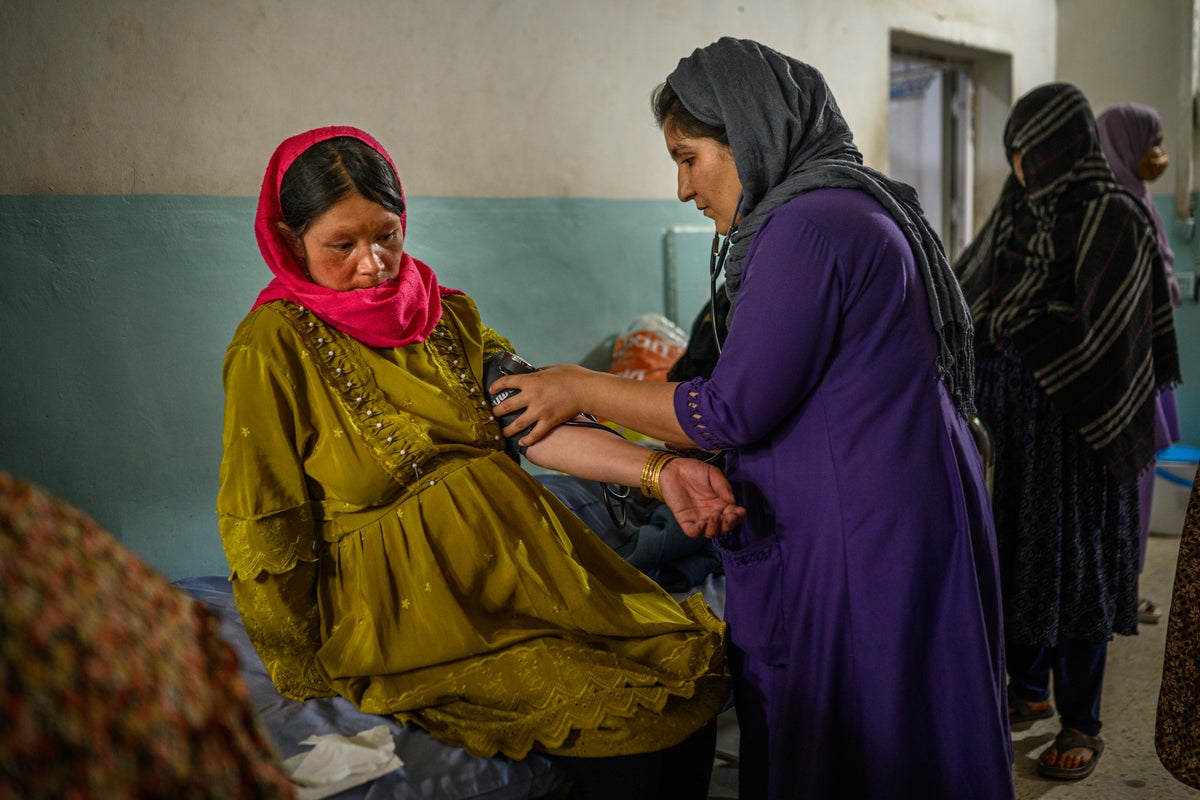
A newborn was admitted to Nangarhar Regional Hospital in eastern Afghanistan in February last year with sepsis and birth asphyxia, needing a constant supply of oxygen to survive. Yet the oxygen plant that supplied piped oxygen to 50 paediatric beds had stopped functioning – a month before, the Trump administration had ordered a freeze on US foreign aid.
At least 180 health workers from a vital US-funded health project in the region had been laid off, Dr Shah Mohammed Qazizda, a doctor and former United States Agency for International Development (USAID) project manager, tells The Independent. Maintenance of critical equipment, such as the oxygen plant, had also stopped.
The critically-ill baby died.
This tragic death is just one of at least 161 linked to the disruption that followed US aid cuts over the last 18 months in Afghanistan, according to new research by Refugees International. Half of them were women who died during pregnancy or childbirth, and 30 were newborn or foetal deaths.
Priyali Dipti Sur, a senior fellow with Refugees International, interviewed almost 550 healthcare workers across the country, many of them midwives, for the report. She documents stories of shut healthcare centres and deaths she attributes to the fallout of USAID cuts.
“These deaths are 100 per cent preventable,” she says. “I think what people really need to understand is that when money doesn’t go into these organisations, to these sectors, to these hospitals, women, children and babies die.”
The US administration began dismantling its foreign aid programme almost immediately after Donald Trump returned to the White House in January 2025, freezing billions of dollars in assistance and moving to shut down USAID.

Afghanistan had long relied heavily on international aid and was one of the countries hardest hit, with more than $1.7 billion (£1.2bn) in assistance terminated abruptly. It put women and children throughout the country at risk as obstetrics and pediatric wards were among the most severely affected.
Maternity care has seen a significant decline since – safe delivery services once available at US-supported Family Health Houses have been discontinued, affecting approximately 350 deliveries a month, according to figures from the Ministry of Public Health.
Because hundreds of healthcare centres – vital lifelines in remote areas of the country – have shut, pregnant women are having to travel hours to regional hospitals to receive care. In some of the cases Sur documented, mother and baby had died before arriving.
Some were not able to even find a vehicle to transport them to hospital, while the lack of health facilities means women are risking home births with no medical intervention.
“If a woman in Washington DC, or London, has a postpartum haemorrhage, she has access to a doctor and healthcare services and will probably survive,” says Sur. “But somebody in Balkh, for example, doesn’t have that, she does not survive.”
 open image in gallery
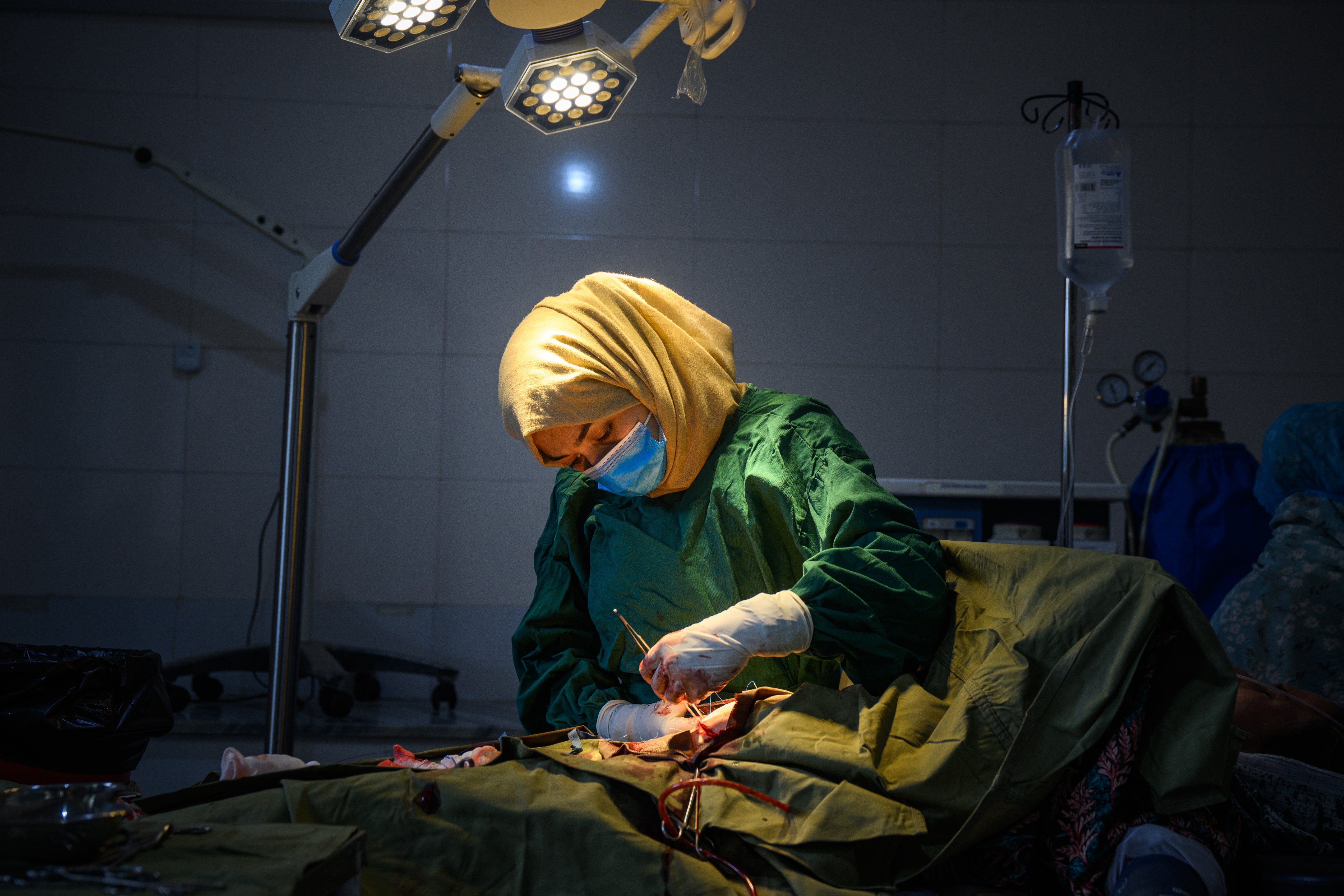
Babies that need oxygen, such as the one who died in Nangarhar, have died of asphyxia, and so have children with pneumonia. Ventilators and incubators have stopped working due to a lack of funds to repair them.
Laid-off health workers, some of whom were the main breadwinners for their families, have also died by suicide, according to Sur.
Around 1,500 people from Dr Qazizda’s US-funded urban health initiative, run by non-profit Jhpiego, lost their jobs in five provinces across the country.
Nangarhar hospital became functional again due to other funders, but resources have been limited. Neonatal mortality increased by approximately 3 to 4 per cent, and even more elsewhere, Dr Qazizda says. Stabilisation services have also been suspended and resuscitation capacity reduced.
“The health situation in Afghanistan is deteriorating day by day,” he says. “There are currently no adequate replacement resources to compensate for the impact of US funding cuts. If the gap continues, the consequences will also become increasingly severe.”
The Independent has contacted the US State Department for comment.
Research published in BMJ Global Health in March found that Afghanistan’s health system survived the Taliban takeover in 2021, but has continued to face shortages of medicines, equipment and trained staff. Now, the country is facing a severe health and malnutrition crisis.
It has among the highest infant and maternal mortality rates in the world, and one in 10 children is now acutely malnourished, according to Save the Children, with nearly 600 health facilities closed.
Separately, Sur has also collected public health data from 320 hospitals that shows deaths in general rose significantly from 2024 to 2025, and into the first half of 2026. It is hard to directly link these deaths to aid cuts, but the numbers “clearly show that something is wrong”, she says.
“Most of the aid in the last two decades, as well as the maternal healthcare sector, were funded by the US. They built close to 600 healthcare facilities, so when that aid left, maternal health severely suffered,” Sur says.
She is calling for US funding to be restored to Afghanistan’s healthcare sector and for the jobs of unemployed midwives to be reinstated. Women have been particularly hit by job losses, because they dominate fields such as midwifery.
“I also want people to know the names of women and children who are dying,” said Sur, referencing Elon Musk. Put in charge of Trump’s cost-cutting drive last year, the world’s richest man played a central role in the effort to dismantle USAID.
He then challenged critics to name a single person who had died as a result of the cuts, saying on X they could not cite one.
Recounting the story of a pregnant woman who died while transferring to a regional hospital for care, Sur says: “Her name was Halima.”
This article has been produced as part of The Independent’s Rethinking Global Aid project