



Researchers who studied the milk of cockroaches and the science of blowing one’s nose were among the winners of this year’s Ig Nobel Prize, the satirical award given for scientific research deemed so unusual as to raise a laugh.
A total of 10 research teams, including from Oxford University, received the award on Thursday.
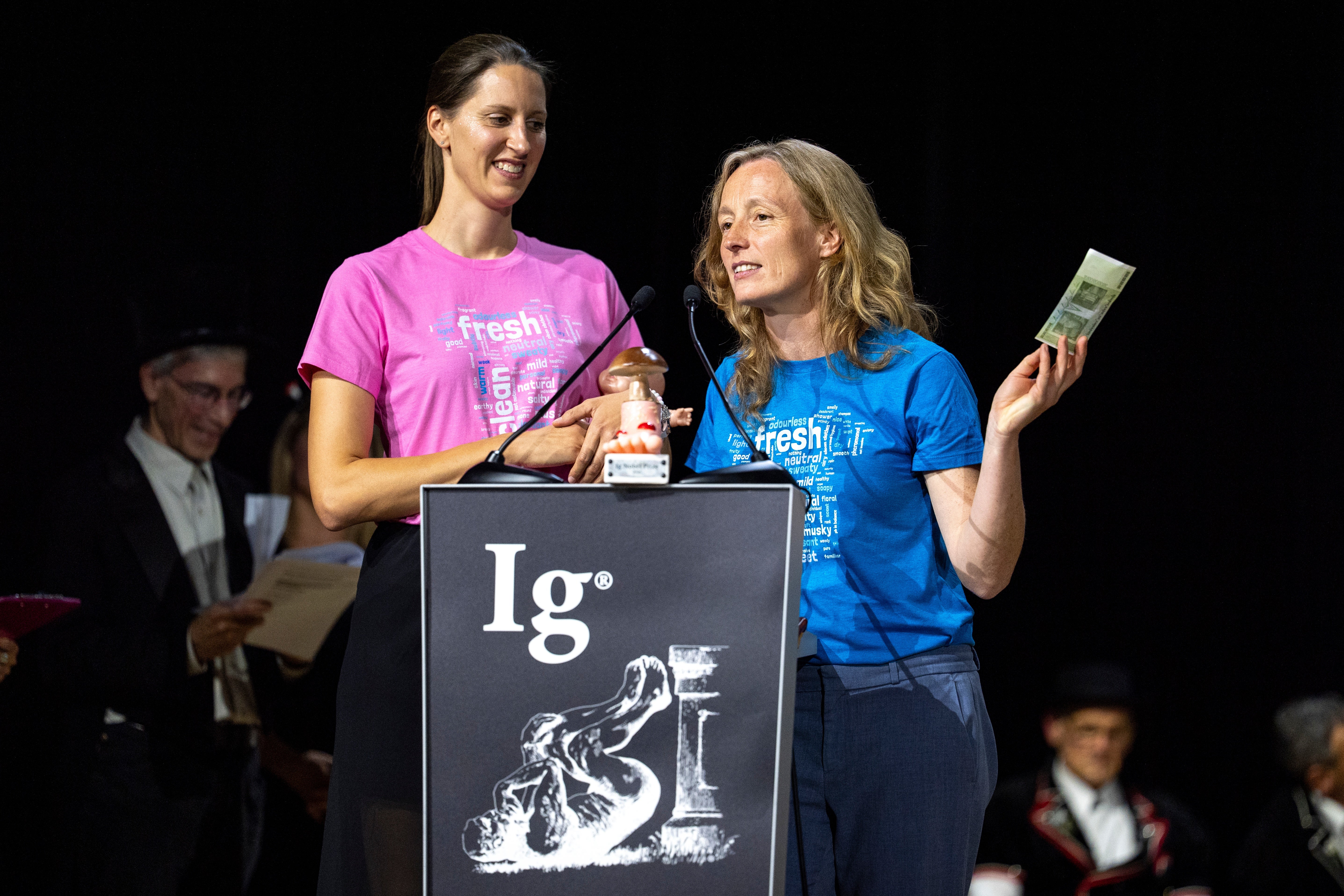
Catherine F Talbot of the Florida Institute of Technology won the Ig for reconstructing the evolutionary history of kissing and the late Tokuji Unno for studying the science of blowing one’s nose.
A team of researchers at the Institute of Stem Cell Biology and Regenerative Medicine in India won for showing that milk produced by cockroaches that gave birth to live young contained almost three times as much energy as diary milk proteins.
 open image in gallery
Franz Bender, Marcel van der Heijden, Atlant Bieri, and Pia Viviani won for burying 1,000 pairs of underwear in more than 25 nations and digging them up two months later to understood how soil organisms broke them down.
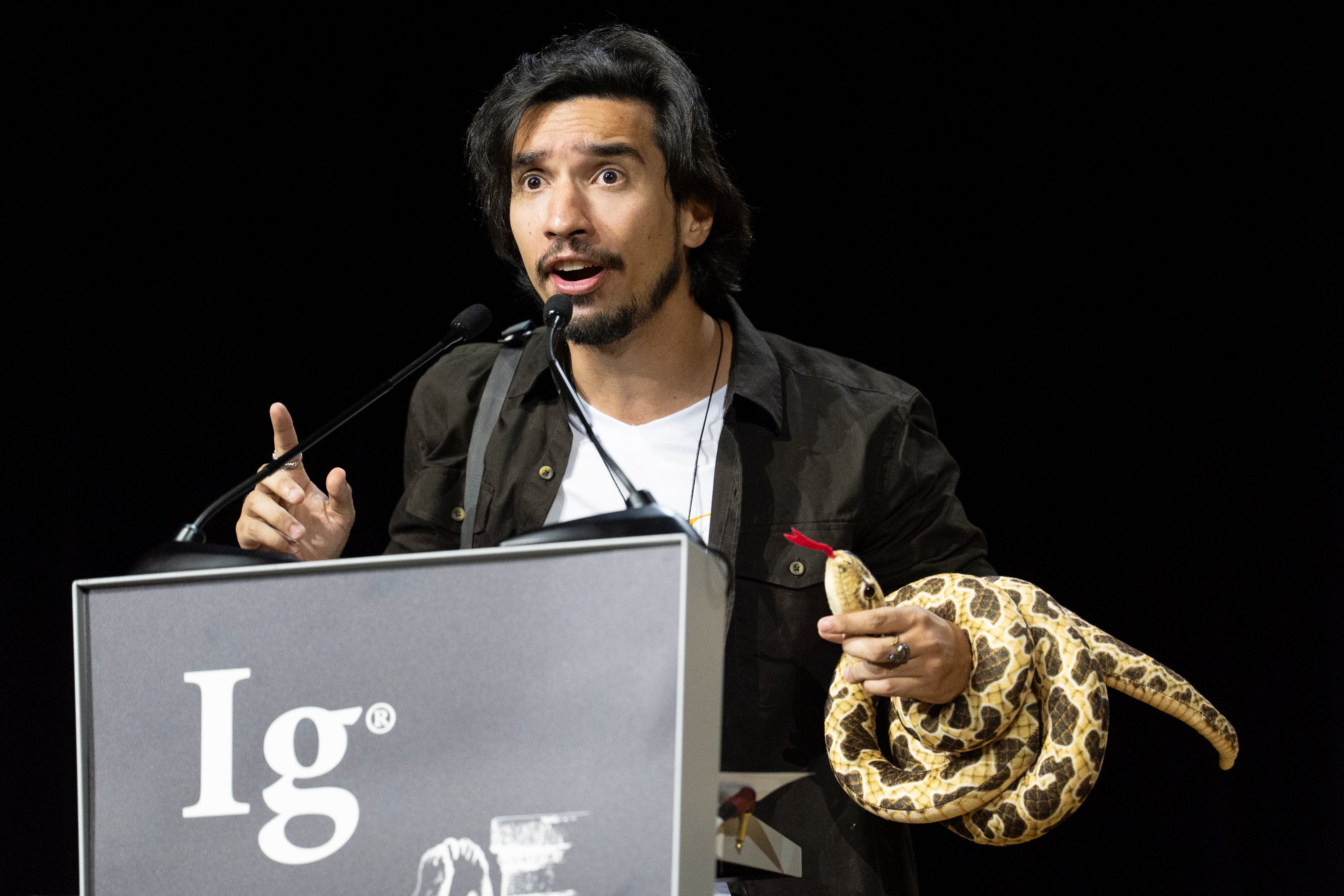
In keeping with tradition, audience members folded paper aeroplanes and threw them towards the stage as the event got underway.
The awards ceremony organised by the Annals of Improbable Research, a digital magazine dedicated to unusual and imaginative scientific work, was held in Zurich, Switzerland, marking the first time in the Ig Nobel’s 36-year history that the event took place outside the US.
 open image in gallery
Organisers said the move away from the US was driven by concerns about the ability of scientists and journalists to secure visas amid the Donald Trump administration’s immigration crackdown, which was focused on deporting people who were in the country illegally as also holders of student and exchange visas.
“During the past year, it has become unsafe for our guests to visit the country,” Marc Abrahams, the ceremony’s master of ceremonies and editor of the magazine, told the Associated Press earlier this year.
“We cannot in good conscience ask the new winners, or the international journalists who cover the event, to travel to the USA this year.”
 open image in gallery
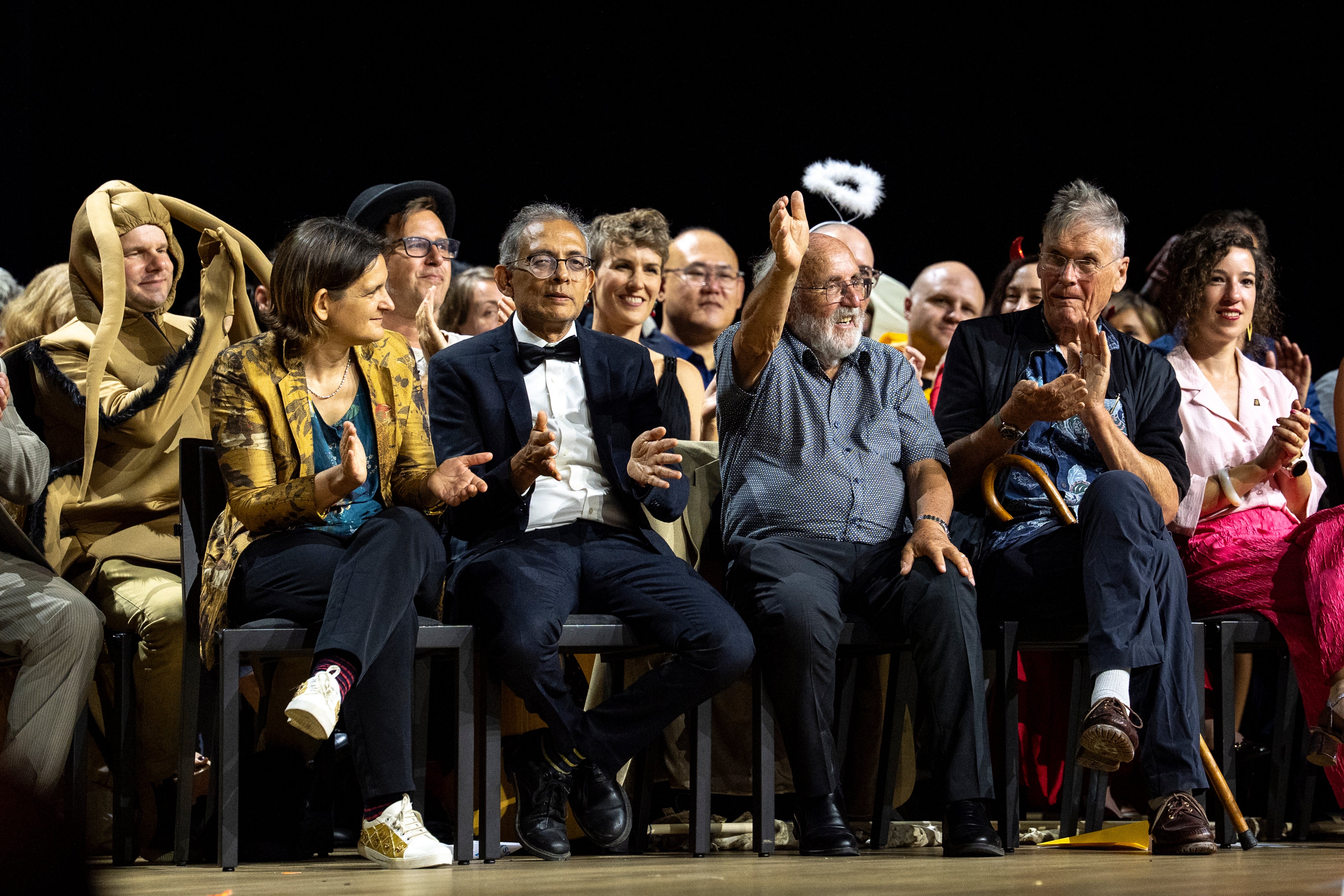
Four of last year’s 10 winners had chosen not to travel to Boston for the ceremony because of such concerns, organisers said.
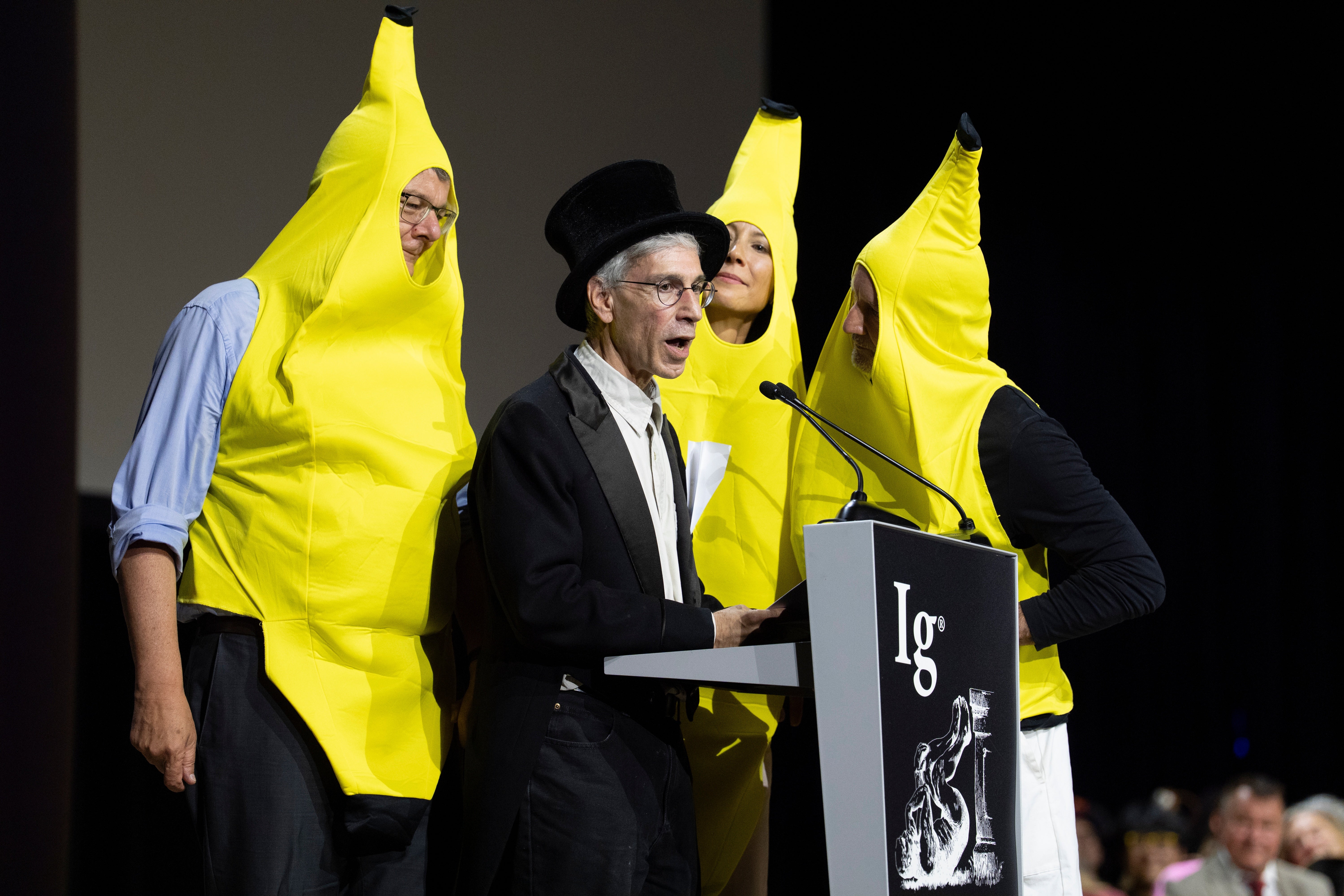
The previous 35 editions had largely been held at Harvard University, the Massachusetts Institute of Technology and Boston University. However, from this year, Mr Abrahams said, the awards ceremony would alternate between Zurich and other European cities. The 2027 edition will be held in Antwerp, Belgium. There are no immediate plans to return the event to the US.
 open image in gallery
Milo Puhan, an epidemiologist at the University of Zurich who took an Ig in 2017 for research showing that playing the didgeridoo could reduce snoring and the severity of sleep apnoea, welcomed the move to his home city. “The Ig Nobel Prize makes research visible and does so with a wink,” Dr Puhan told the Associated Press.
The Ig Nobel Prize has no connection to the Nobel Prize, which will be announced in early October.
Previous Ig Nobel winners have included Japanese researchers who studied whether painting cows with zebra-like stripes could stop flies biting them, and a group from Africa and Europe who studied which types of pizza lizards preferred to eat.