


AdvertisementChina stock marketBusinessChina Business
Deleveraging clouds China’s AI trade as rising US Treasury yields, inflation fears persist
2-MIN READ2-MIN Listen
Zhang Shidongin ShanghaiPublished: 1:00pm, 4 Sep 2026Updated: 1:06pm, 4 Sep 2026
Chinese leveraged traders continue to unwind their bets on stocks, as unease over rising global bond yields and a lingering oil shock add uncertainty to the artificial intelligence trade.
The outstanding balance of stocks bought with borrowed money dropped to 2.62 trillion yuan (US$390.1 billion) on Thursday after a brief rebound in August, according to data from China Securities Finance. That was 13 per cent below an all-time high of 3.01 trillion yuan set on June 25. Meanwhile, short positions on stocks rose to 29.2 billion yuan, near a two-year high.
The subdued risk appetite aligned with global caution about risk assets after long-duration US Treasury yields rose to multi-year highs and Federal Reserve chairman Kevin Warsh signalled an interest-rate increase unless inflation moderated. Stocks were also capped by Beijing’s reluctance to introduce a broad stimulus package even after key economic data fell short of estimates in July.
The pattern indicates that deleveraging, which began during the July sell-off in tech stocks, has yet to run its course and that a strong rebound may still be elusive given that margin trading is a barometer of risk sentiment.
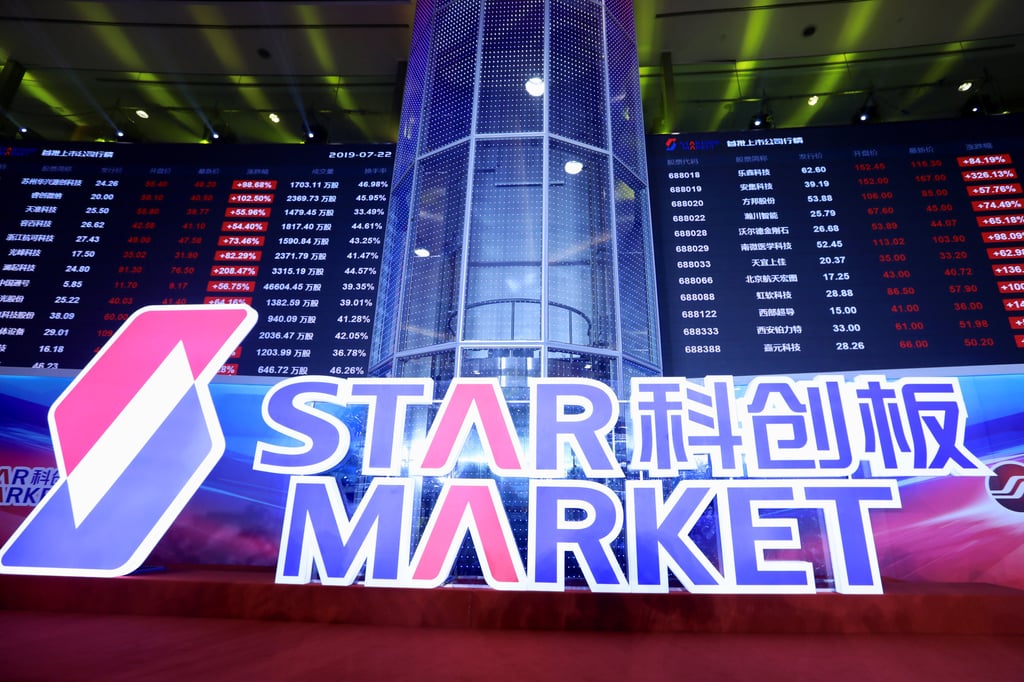
The Star Market 50 index, the chip-heavy gauge at the centre of China’s AI trade, is approaching a previous low triggered by the biggest-ever monthly decline in July. The index tumbled 26 per cent that month, tracking a global tumult of tech stocks on jitters over whether massive AI investments would translate into monetisation.
AdvertisementSelect VoiceSelect Speed00:0000:001.00x