



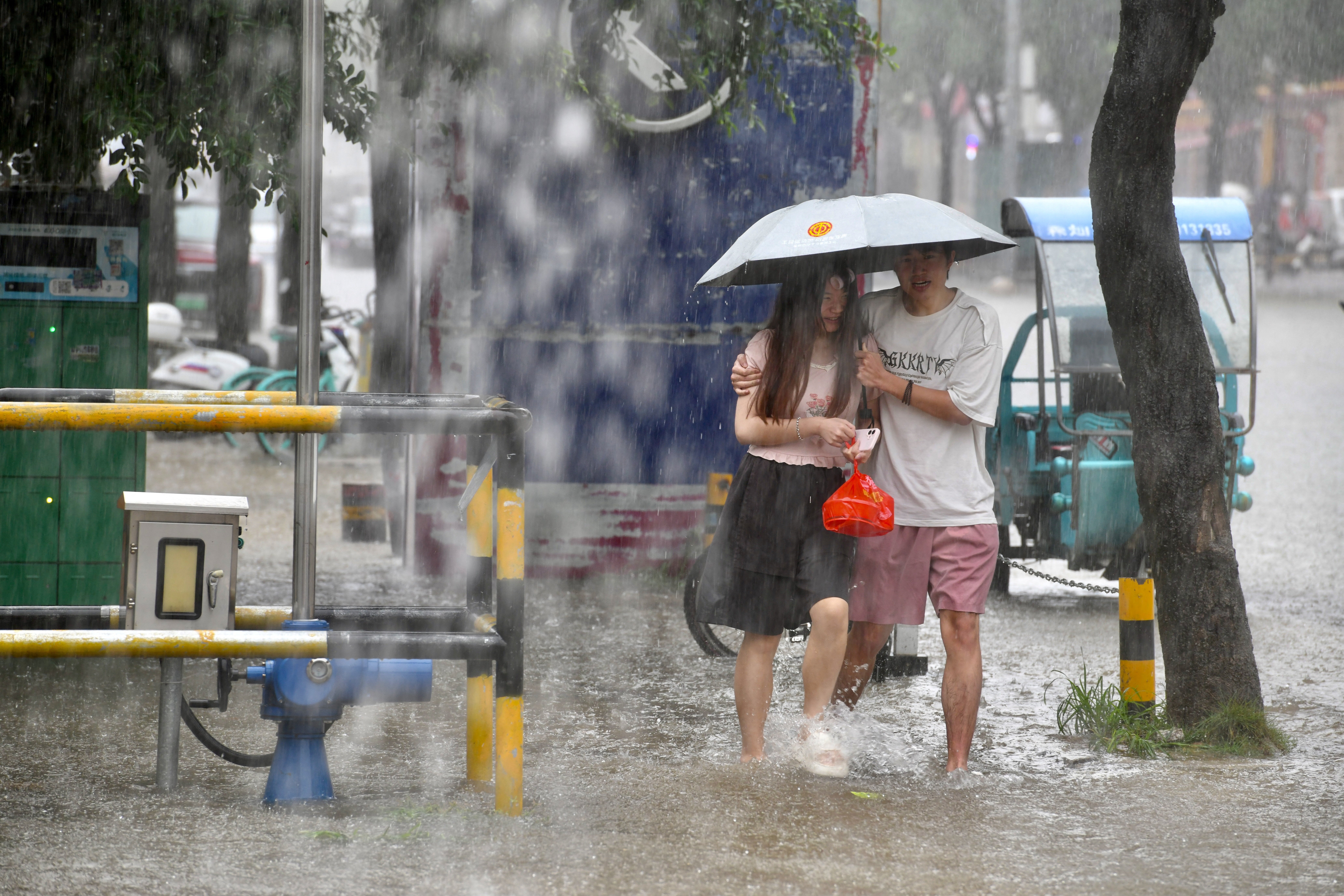
Heavy rain continued to threaten the southern Chinese provinces of Fujian and Guangdong on Friday after torrential downpours linked to Typhoon Saudel triggered severe flooding in the coastal region.
The deluge inundated towns and rural areas, submerging vehicles and leading to the structural failure of a three-storey brick building.
In the tea-producing city of Fuding in Fujian, verified social media videos showed emergency crews wading through waist-deep water to rescue elderly residents. In the nearby mountainous village of Jinxi, floodwaters swept through residential properties, verified footage showed, collapsing another three-storey home.
Authorities across several coastal districts responded by closing schools, halting public transport services, and implementing emergency flood response protocols.
Saudel made its third landfall on Fujian’s coastline on Thursday morning, having gained strength over the South China Sea. The seventh typhoon to strike China this year, it is also the third storm to hit the city of Yuhuan in Zhejiang province in under two months.
China’s Meteorological Administration described the sequence of weather events as highly unusual, with experts attributing the pattern to El Niño.
The El Niño weather phenomenon reinforces the Western Pacific subtropical high, strengthening it, and pushing it further north to direct typhoons northwest towards eastern China.
On Thursday, the UN cautioned that El Niño could intensify through 2027, potentially becoming the most severe on record and heightening the risk of extended extreme weather.
Hundreds of thousands of people across Zhejiang and neighbouring provinces have been moved to safety since late August, with Fujian alone evacuating some 83,000 people as Saudel pushed inland.
Saudel arrived shortly after Typhoon Narra brought heavy rainfall to Guangdong, Hainan, and Guangxi late last month. China’s natural resources ministry warned of an elevated danger of secondary hazards such as landslides, noting that swollen rivers had breached warning levels and were threatening several low-lying settlements.