


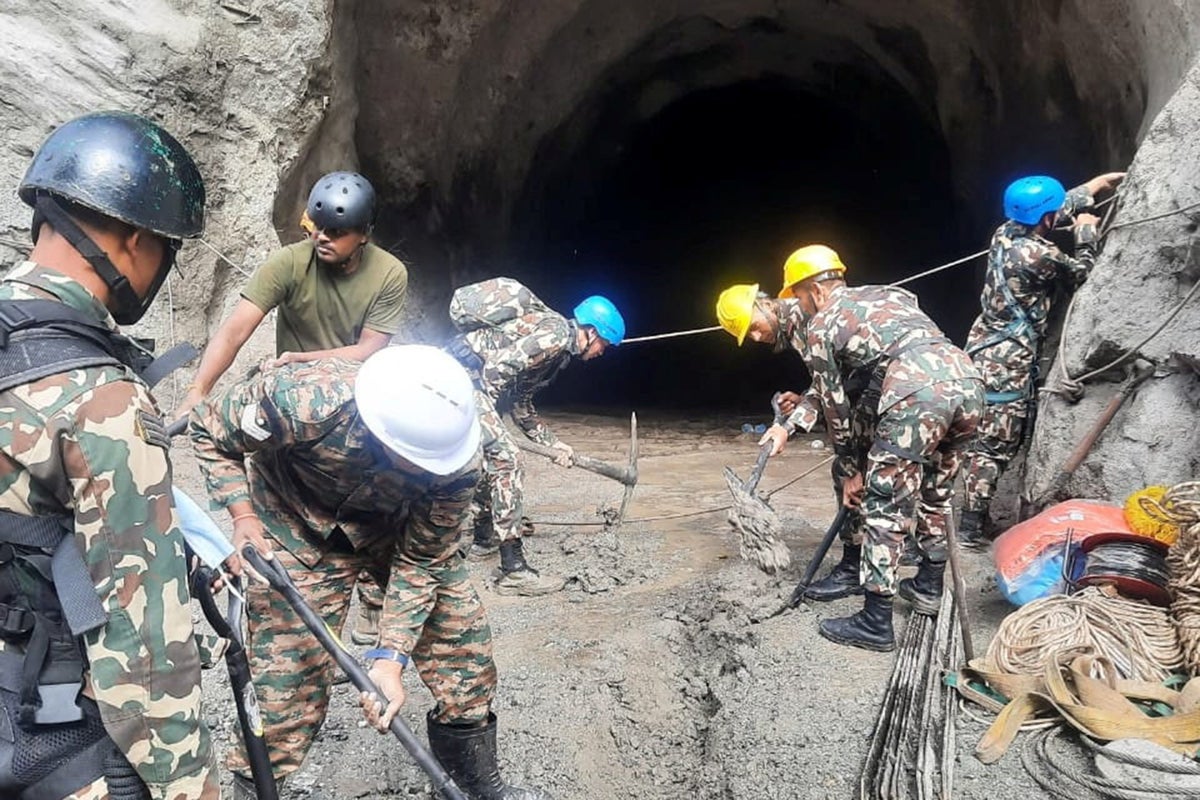
Rescue teams were racing against time to find workers trapped inside hydropower tunnels as experts expressed hope of them being alive more than a week after the deadly flash floods.
Last week’s flood, triggered by the collapse of a glacier near Nepal‘s border with Tibet, tore through towns and valleys across the mountainous region, killing at least 1,252 people, while more than 4,200 remained missing.
The rescue efforts have increasingly centred on hydroelectric project tunnels along the banks of Trishuli river where authorities believe workers may have survived after being cut off by floodwaters and debris.
Some tunnels contain chambers with air supplies, and rescuers, with the help of Chinese and Indian teams, were trying to reach about 669 missing workers.
“In Rasuwagadhi, we think 46 people are trapped in a room-like structure in the tunnel,” Amhsu Kiran Shahi, a board member of the Nepal Electricity Authority, said. “We are very confident that they must be alive after one week because … they have food and water over there in the building.”
Fresh water and oxygen flow are among the key factors for survival, and officials believe the tunnels were large enough to allow a truck to pass through, potentially helping improve air circulation.
At the upper Trishuli 3A facility, another project hit by the floods, workers began manually opening the upper section of the passage. It took rescue workers almost six days to find the tunnels because of thick mud, said Mr Shahi.
Officials believe there was a dry chamber inside and expected oxygen to be flowing through the tunnel, with pipes also being used to push oxygen inside. “We are expecting (survivors) in there because we are told there is a dry space inside. We are trying to break into the tunnel now,” Mr Shahi said.
Nepali army spokesperson Raja Ram Basnet said two bodies had been recovered from the tunnel of Langtang Khola hydropower plant on Thursday.
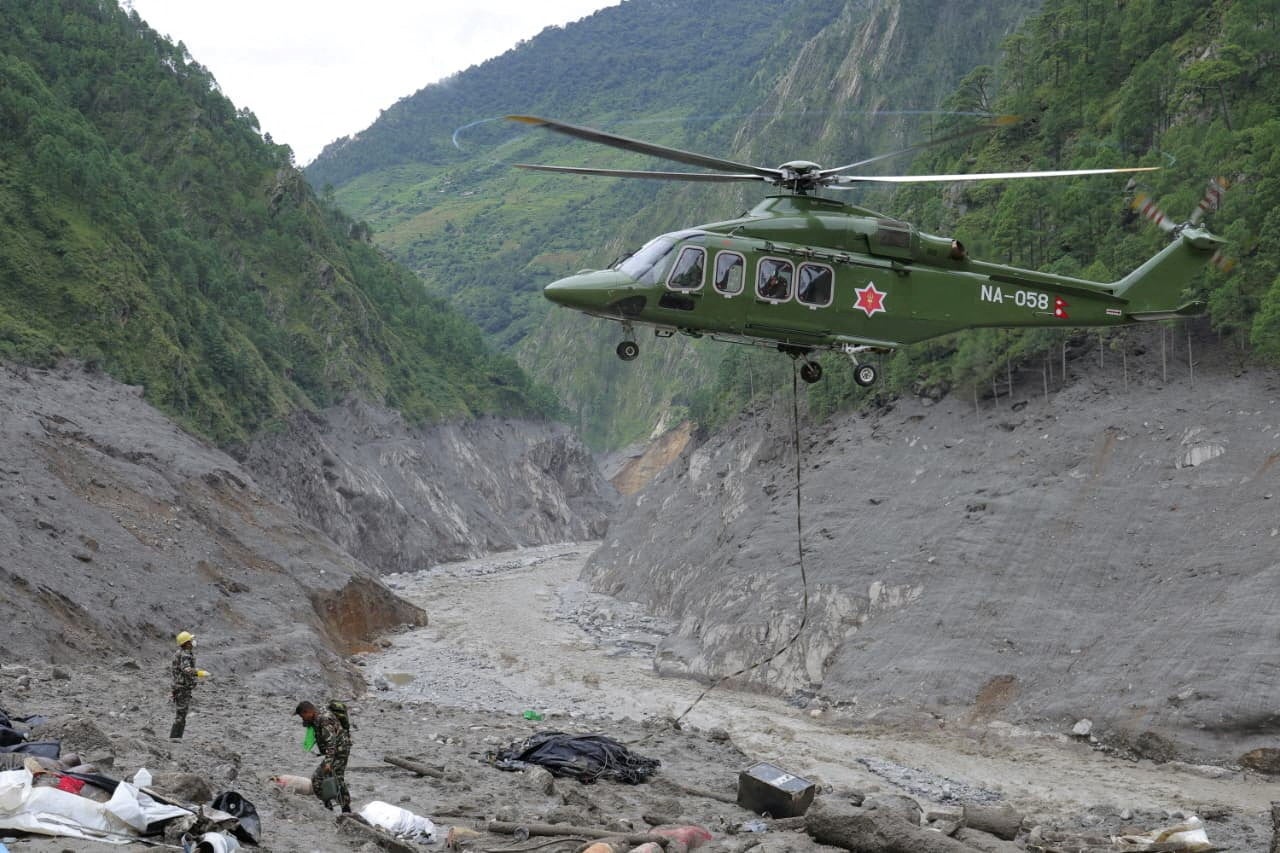
The Rasuwagadhi Hydroelectric Project, a 111-megawatt facility located in the worst-hit Rasuwa district, lies in a mountain valley some 5km from the Nepal-Tibet border.
“This is the only project where it’s possible to walk through the tunnel. The army tried doing that three days ago, but they didn’t find the room,” Mr Shahi said. “We are going in again.”
Rescuers are also looking for survivors believed to be trapped inside tunnels at other locations, where powerhouses have spaces and rooms for people to stay, according to Mr Basnet.
Prime minister Balendra Shah told parliament the search would continue.
“Our priority remains clear: To continue our search and rescue operations, find those who are still missing, and continue supporting everyone affected,” he said.
The chance of finding survivors elsewhere was fading, authorities said, but there was no let up in rescue operations as teams scoured the mountainside along the border with Tibet where floods tore through towns and valleys.
“The hope of finding survivors is decreasing,” said Phanindra Paudel, a senior official at Nepal’s National Emergency Operation Center. “We pray and are hopeful. Hope is hope.”
Major rescue operations were under way or planned at four hydropower projects. Two sites, where about 90 people are missing, offered the strongest prospect of finding survivors because of the presence of air inside the tunnels, Mr Shahi said.
Thomas Chandler, director of Columbia University’s National Center for Disaster Preparedness, said other important considerations for survivors include “whether there are indications of serious injuries” and whether there’s a safe way to deliver water and essential supplies during the rescue operation.
He cited a Himalayan tunnel collapse from 2023 caused by a landslide, where 41 Indian workers were rescued after being trapped for 17 days. They were provided food, water and oxygen through pipes.
Meanwhile, the chief of National Disaster Risk Reduction and Management authority said that preliminary estimates suggested 7,500 houses had been completely washed away or buried under the debris.
Even houses still standing were not habitable, said Dharma Raj Upreti said, with authorities estimating that around 20,000 houses would need to be rebuilt in different, safer locations.