


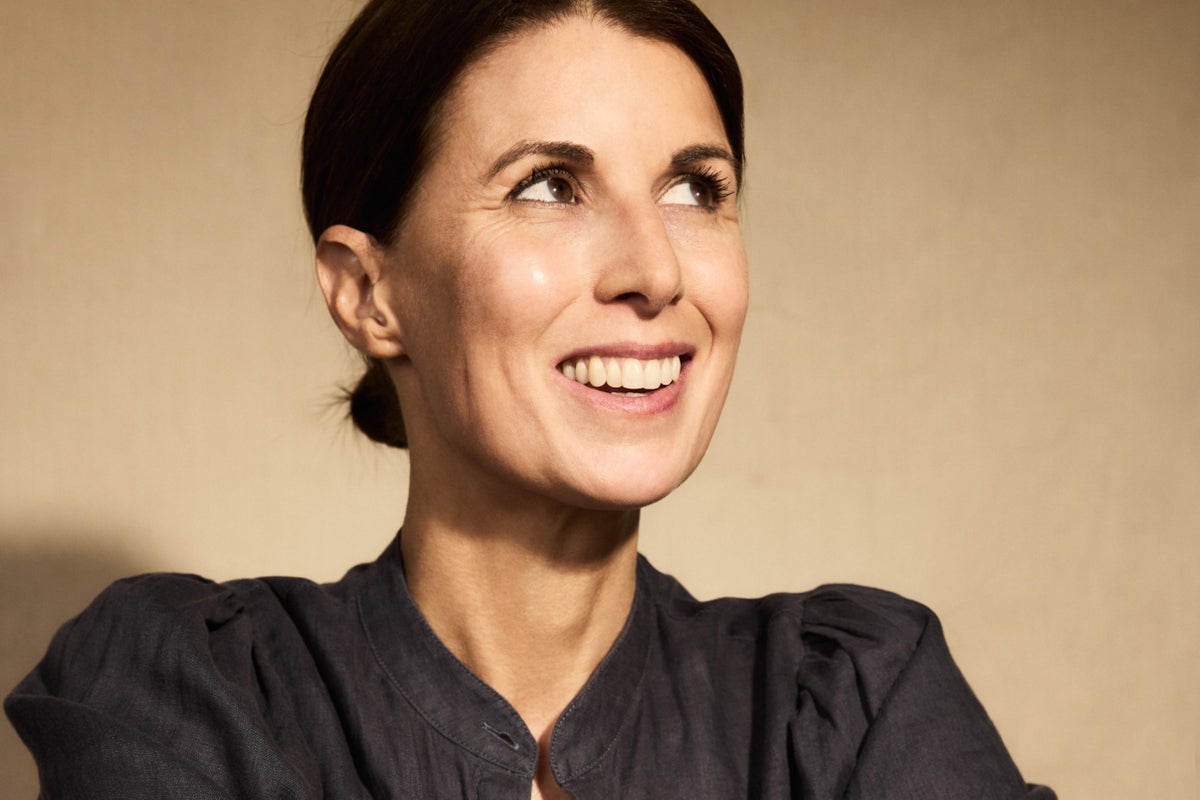
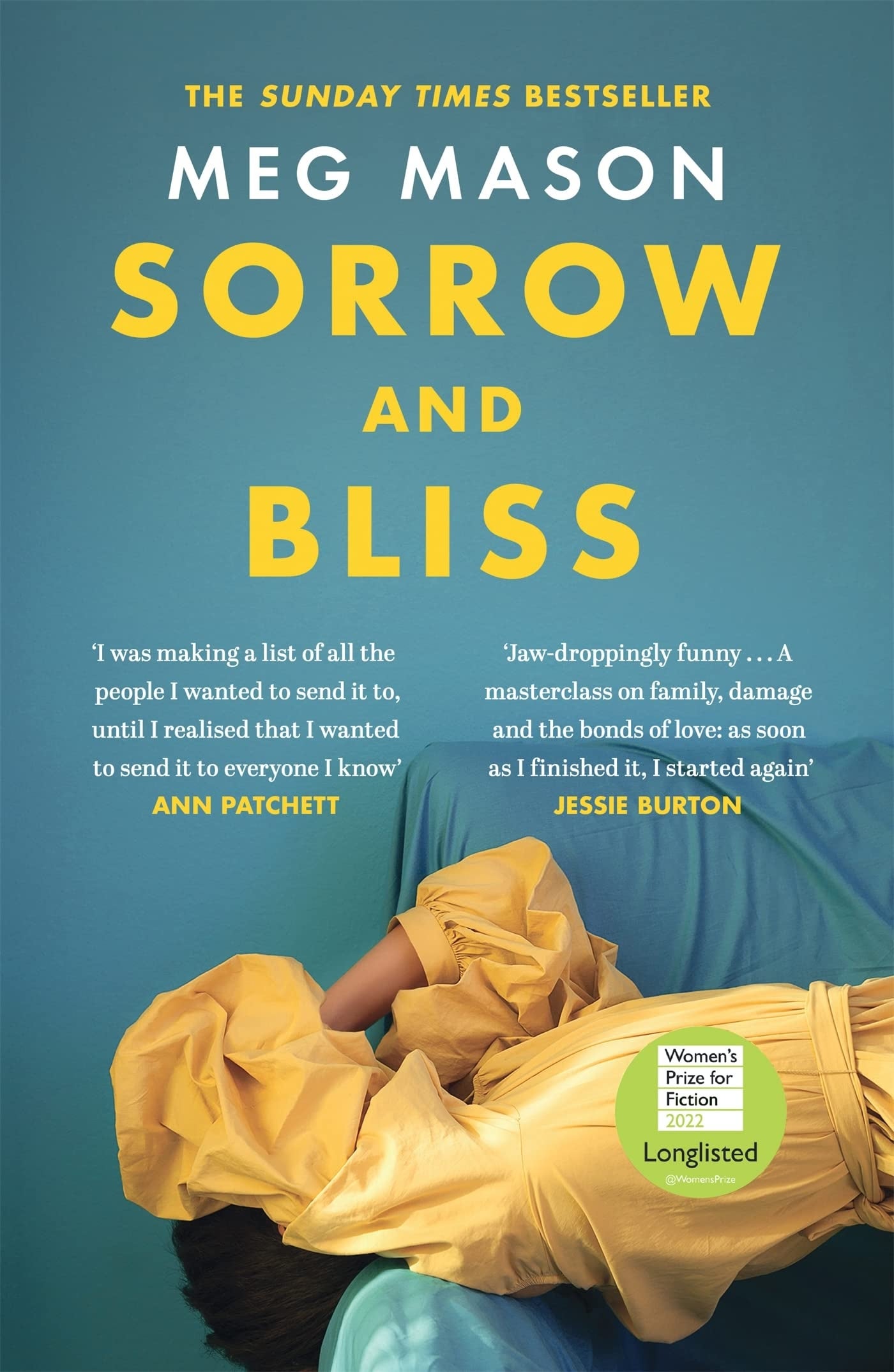
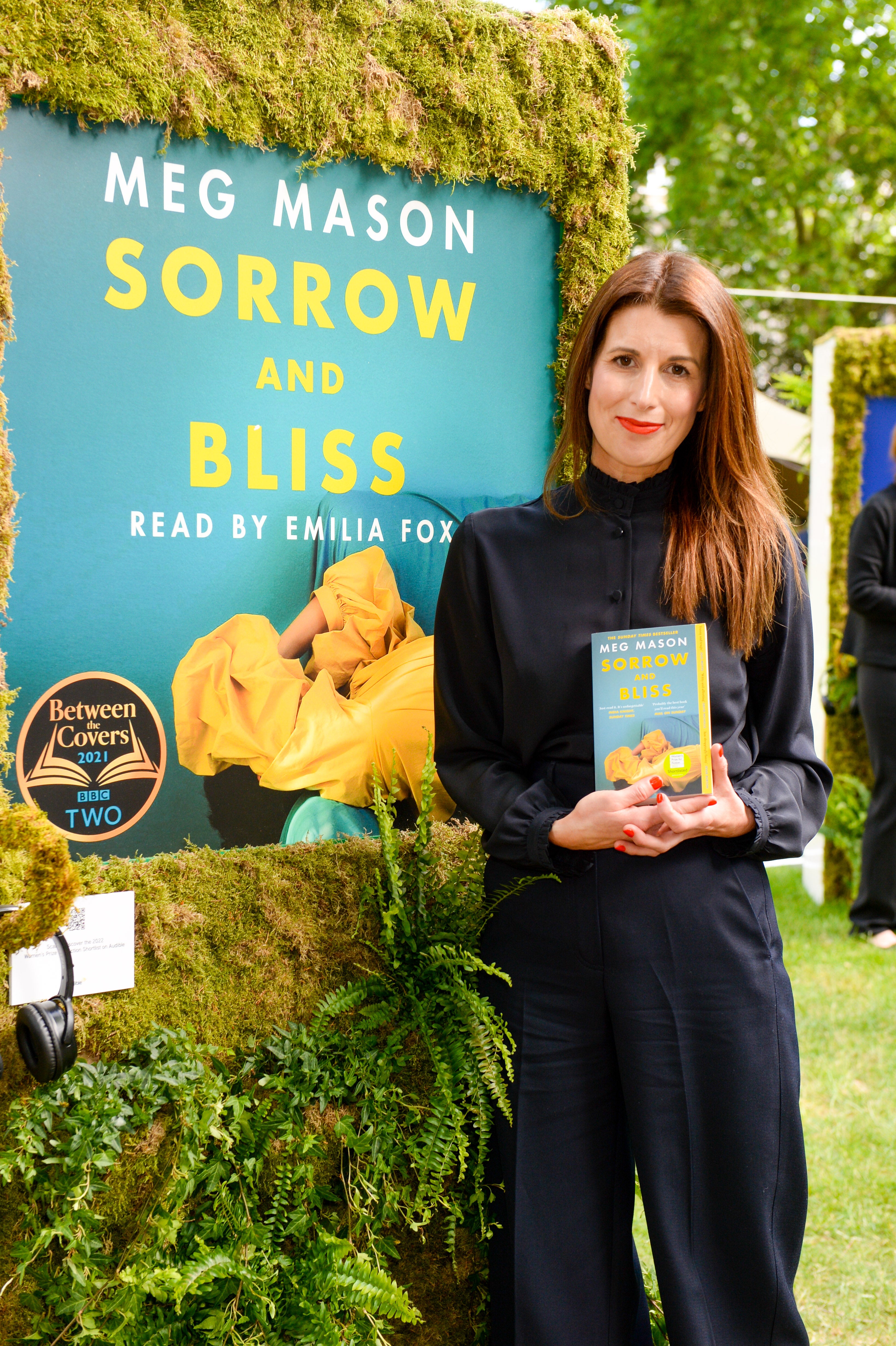
New Zealander Meg Mason is the bestselling author of the 2021 book Sorrow and Bliss. A big-hearted story about mental health, marriage, family and love, and Mason’s first novel to be published in the UK, the book was shortlisted for the Women’s Prize for Fiction and won Fiction Book of the Year at the British Book Awards.
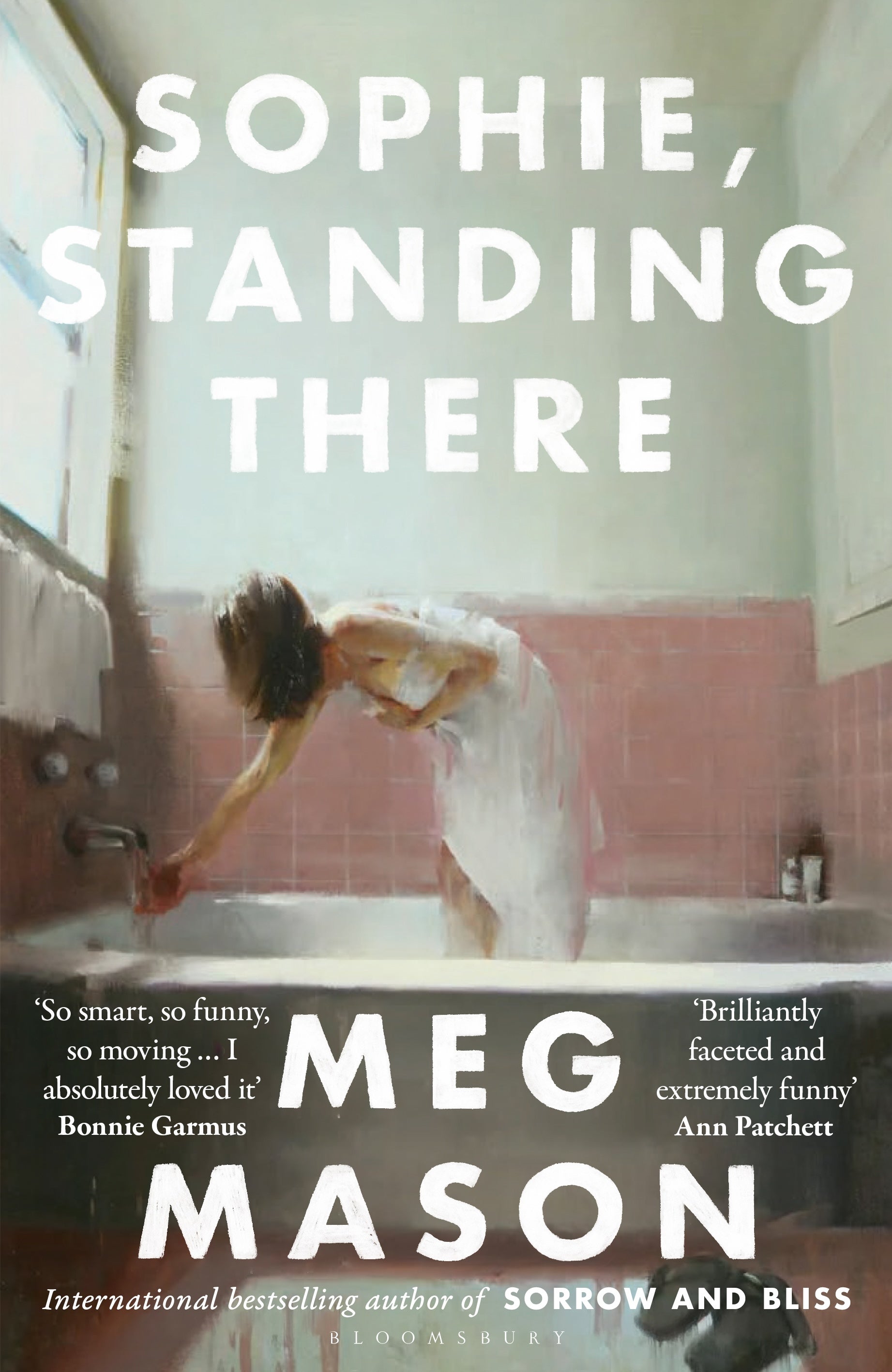
Mason’s new novel Sophie, Standing There brings her trademark humour and tenderness to a new literary-focused setting. Sophie is a freelance sound technician whose job involves spotlighting famous authors while remaining largely invisible herself. When her personal life begins to unravel, she finds comfort in the books of celebrated author Lilac Dunne, a woman who Sophie has never met but with whom she quickly forms an intense attachment. A novel about loneliness and intimacy, Sophie, Standing There has earned praise from Ann Patchett and Gillian Anderson.
Below, the author talks about navigating reader expectations, why she hates the term “sad girl lit” and whether the badly behaving authors of her novel were based on her real-life peers…
Sophie Standing There takes place, in part, at a literary festival – how much did you pull from your own experiences at similar events?
Before Sorrow and Bliss, I’d only attended literary festivals as a member of the audience. And suddenly, I found myself as an author, in front of an audience. And I enjoyed it (and knew exactly how lucky I was to be there), but the part I really loved were the moments in the wings, right before walking on stage. It’s an incredibly intimate space, very close, dark, a lot of adrenaline, and everyone who works in the service of books and authors, from publicists to techs, is crammed together, and somehow it feels like all of life can be witnessed there. But unlike in Sophie, I’ve never witnessed a disaster onstage, so the hot soup incident in the novel is entirely invented.
The opening segment features funny, revealing anecdotes about authors such as George Saunders, Ann Patchett and Mick Herron – are these based on real events you’ve witnessed?
Gosh, no! Every writer I’ve met on the circuit has been lovely, which is why casting them the way I have in the novel – as Talent, not behaving at their best – was so amusing to me as I wrote. But I sought permission from all of them – 12, including Douglas Stuart, Bonnie Garmus, David Sedaris, Elizabeth Strout and Richard Osman – and they all gave it, which is further proof of their loveliness, and generosity.
Sophie develops a parasocial relationship with this famous writer. Have you ever found yourself completely in thrall to someone you did not know?
I’ve been best friends with Nancy Mitford since I was 20 and first read The Pursuit of Love. Of course, back then I’d never heard of the term “parasocial” although it’s existed since the 1950s, and even now, I wouldn’t choose to apply that term to this phenomenon, because it sounds so Dictionary of Mental Illness. I think literary friendship is much nicer, and I think we all ought to have one.
 open image in gallery
Alternatively, as an author have you ever found yourself on the other side of that ‘parasocial’ relationship?
I’ve met readers who feel surprisingly passionate about my work; I’ve seen Sorrow and Bliss tattoos, one woman in a signing line wanted me to sign her ear because she’d listened to the audiobook (she accepted an alternative suggestion). But in none of those instances have I felt like maybe the feeling on their side was a little too intense. And truly, if there is a reader who might be in a lonelier time of life, just now, and a constructed version of me serves as company, the constructed version of me is more than happy to fill the gap.
Like Martha in Sorrow and Bliss, Sophie is going through the breakdown of her marriage. What about that time in a protagonist’s life interests you as a narrative device?
The nature and circumstances of the relationship in Sorrow and Bliss and Sophie were so different, it wasn’t until readers started to point it out that I saw I’d written about marriage breakdown in both. I think it’s because meeting a character who is already in a state of tumult or upheaval means the momentum of the narrative is already there, and the question of the novel is immediately what brought them to this place. And perhaps because I haven’t experienced a marriage breakdown myself, it’s something I naturally want to explore in fiction.
“Sad girl lit” crops up in the book. What do you personally make of that genre?
I personally find it infuriating, almost offensive to us, as both readers and writers. I’d never heard of it as a descriptor before Sorrow and Bliss and couldn’t understand why such a pejorative term would be described, not so much to the book, but to the character of Martha who is neither sad, nor a girl. She’s a chronically ill woman in her forties. It just feels so minimising, and does the same to the novel as describing something as a “guilty pleasure” or “chick lit”, as though we ought to apologise for reading it. And of course, where is the equivalent tag in books written and read by men?
 open image in gallery
The book is written in close third-person as opposed to the first person of Martha’s first person in Sorrow and Bliss – what was behind that decision?
It wasn’t a conscious decision. The POV came with the character of Sophie. And I would have defined it as close third-person too, but from the very beginning it felt like there was something more specific, a bit weird and naive even, about the tone, and I wasn’t sure if it would be allowed by my editor. But one day, I went back to George Saunders’ Swim in the Pond With Rain, which is all about Russian short stories, and in it was mentioned a POV called “Skaz”, which – to be nerdy for a minute – “uses a first-person narrator who speaks in a distinct regional dialect, slang, or class-based idiom, mimicking a live storyteller rather than a formal writer”. And I was like, Oh! I’m skazzing, so my editor has to let me.
 open image in gallery
Was it a daunting task to follow up the massive success of Sorrow and Bliss – a book that, you said, only came to you once you had let go of the pressure?
Well, I never quite let go of the pressure, but the pressure kept evolving, or it existed in so many forms at once. One day it would feel like the pressure of time – missing deadlines, not taking so long that everyone had forgotten me as a writer. Another day, it felt like the pressure of expectation – it won’t be as good – or the pressure to do something different, creatively. But the solution, truly, was sports psychology. Specifically, a book called Perform Under Pressure, by Dr Ceri Evans, who advises the All Blacks (my home team). It was life-changing, so much so, I wrote him a thank you note, and we ended up doing an event together at a literary festival, because life is so strange and wonderful.
What is your relationship like with your readers? Do you find it difficult navigating reader expectations who may want Sorrow and Bliss 2.0?
I think it’s a perfectly reasonable wish if a reader has loved Sorrow and Bliss very much. But it would be truly the worst thing to either try and produce or actually produce another iteration of that novel, because of course, it would be a lesser version. So, you do have to just pick a direction, and while I don’t want to disappoint my original audience, because I’m so grateful they exist, part of me feels like Sophie is for a different audience, a quieter one, and I am excited to meet them.
Being an author is very solitary; how do you find the public-facing aspect of your role?
I adore it. There were so many days, working on the many partial manuscripts I wrote while I was trying to find Sophie, that were so miserable, I would dream of a time when I’d have something to publicise. So, the fatigue, hunger, blisters and overwhelm that do accompany a book tour feel like a genuine prize for completion.
‘Sophie, Standing There’ is out now, published by Bloomsbury. Meg Mason will be speaking at Henley Literary Festival on 5 October. Find out more at henleyliteraryfestival.co.uk