


The soldiers. The sailors. The battles. The conflicts.
There is no recounting of the U.S. story where its existence as a nation isn’t intertwined with its military history, from 1776 to now.
It runs through the weave of ordinary American life, like the way that “Thank you for your service” is a commonplace saying aimed at veterans and those in uniform. But it has frayed in other ways.
Most American adults don’t serve, or aren’t very connected to the people who do and their families to have a sense of what their lives are like. Those who do serve often come from generations of the same families, or the same communities, from certain states more than others. It’s a concentration that can make the responsibilities and burdens of military life land disproportionately on them. The public pays little attention unless there’s a crisis situation, like the concerns over mental health for USS Abraham Lincoln sailors.
The military-civilian divide, a gap in understanding and connection, carries real-world impacts on public policy, on the logistical issues of everyday military life, on the views or stereotypes each side carries about the other. It raises questions: In this experiment in democratic life that has run for 250 years, how can military and civilian life sit so far away from each other? And how can that divide be crossed?
Disconnects are ever more evident
That America benefits from having a professional, highly trained military whose members have opted into being there is not in contention, nor is there any serious effort to bring back an active draft. These days, the military includes about 2 million people on active duty or in the National Guard and reserves.
That number is a tiny portion of the roughly 230 million adult citizens and legal permanent residents in the country. Contrast it to the World War II era, says Peter Feaver, a professor of political science at Duke University, “where everybody, every family, had somebody who had served.”
“If not themselves, if not their dad or mom, certainly they had an uncle or an aunt or somebody,” he says. “And the military was widely distributed geographically throughout society.”
That’s generally not the case these days, says Kathy Roth-Douquet, co-founder and CEO of Blue Star Families, an organization which advocates for military households and has launched the Do Your Part initiative, calling on sectors in civilian society to think of policies and other ways to support military families without being required to enlist.
“Military service kind of became a cul-de-sac, where it was people who served beget people who served, who married people who were from families who served,” she says.
In the Army, for example, more than 75% of recruits come from families where a relative has served, according to the U.S. Army Recruiting Command. In FY2025, about half of the Army recruits came from seven states.
In recent years, U.S. military leaders have spoken of the importance of shifting that, to be able to recruit from a wider pool of young Americans.
Such concentrations have meant that the dangers of military actions aren’t shared equally, says Jason Higgins, an assistant professor of history at Virginia Tech, where he teaches on the Vietnam War.
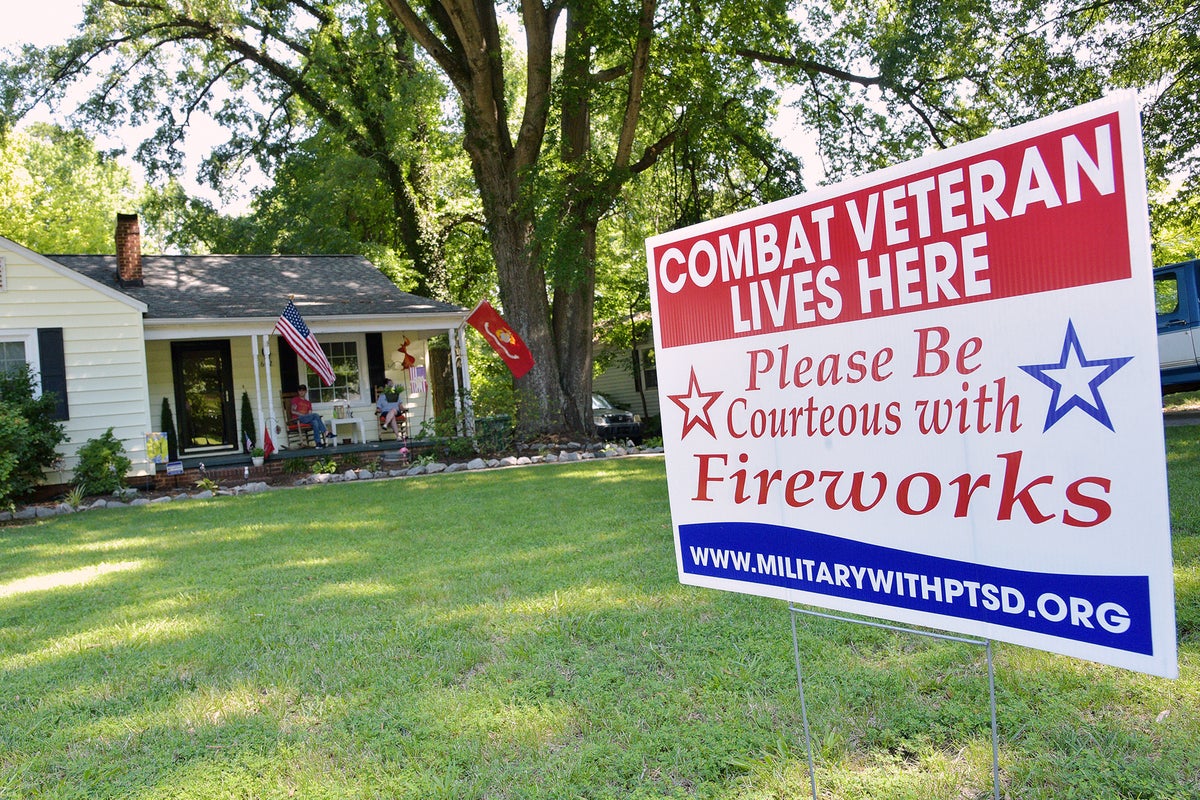
He pointed to the Iraq War. Repeat deployments became a frequent thing for some of those serving, creating more adverse effects like PTSD and physical injuries, as well as families having to cope with long absences and repeated attempts to reintegrate a loved one who would then have to leave again.
“You have this small group of American families who are the only ones who directly experience the consequences of war,” he says.
That lack of knowledge on the part of the American public can also lead to stereotypes and assumptions about what it means to be a military member or veteran, the different roles in which people serve, and what they might need to help them reconnect to civilian life when their service is done.
It’s what has made some veterans uncomfortable with the “Thank you for your service” refrain, feeling like they’ve been turned into “statues,” Higgins says.
“Whenever you turn people into statues, you’re not recognizing their humanity,” he says. So the repeated thanks, the valorizing, “while they’re well-intended, they make people feel like outsiders of a society … not every veteran wants to be called a hero.”
‘Get to know us,’ a military spouse hopes
It’s not just in times of war and military action that the gap exists, but in understanding the realities of day-to-day military life.
Military parents are continually dealing with their kids having to transfer to new schools. Military spouses can find it difficult to build fulfilling careers if they’re regularly moving regions for their partners’ orders.
Trying to close the gap isn’t about everyone enlisting, though, says Sheila Rupp, a military spouse for over 20 years whose life has included regular moves every couple of years as her husband got new assignments. It’s about the general public being willing to connect with military families.
“I think the average American really wants to support military families, but they often don’t know how,” said Rupp, 43. “If people were more connected and they actually knew their friends and neighbors that do serve or have served recently, I think it would impact a lot of things.”
She added: “I just wish that there were more opportunities for people to get to know us … because obviously the civilian population brings support to our networks. And I think that there’s a lot that military families bring to the communities in which they live and serve too. So I think relationship is really important.”
___
This is part of a group of stories exploring life in the United States as the country marks its 250th anniversary. Click here for more. Take a look at some of the objects that have come to define America here.