


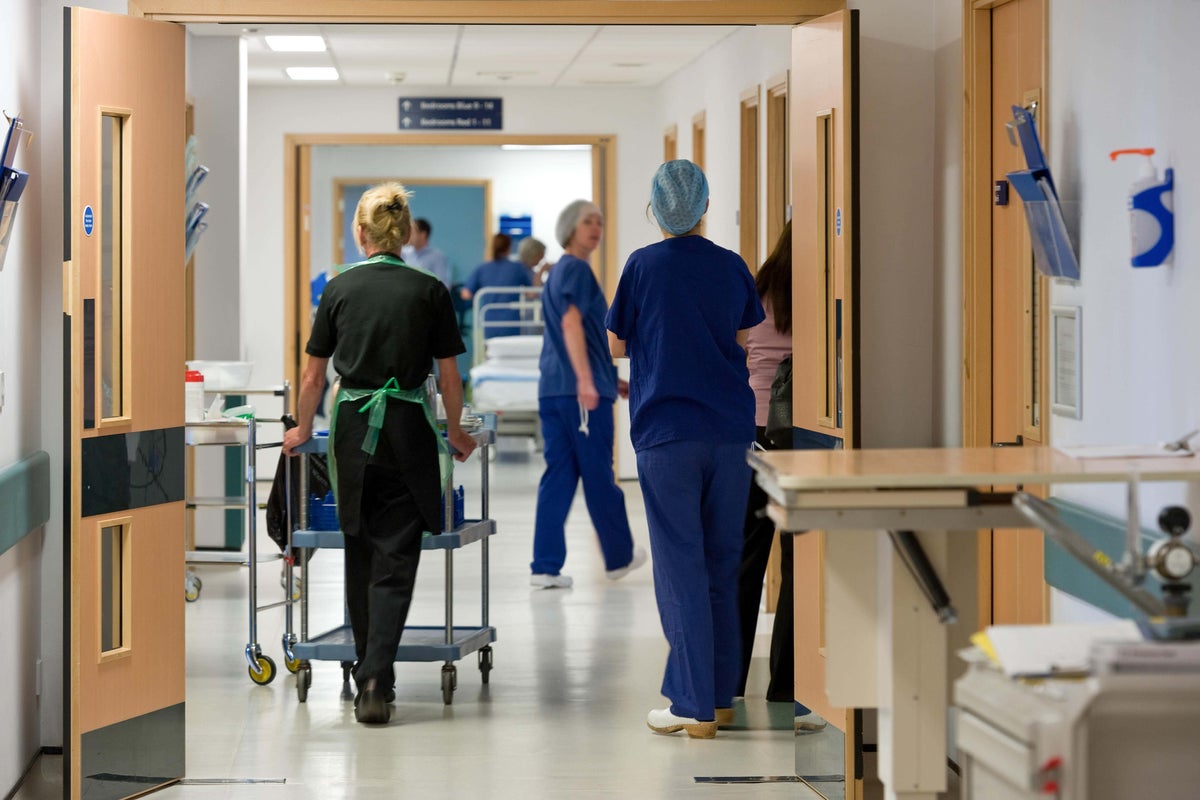
A majority of healthcare staff have delivered end-of-life treatment to patients in hallway areas or temporary spaces, new research reveals.
Inadequate staffing capacity alongside extreme time pressures were also identified as primary obstacles to looking after dying patients.
Practitioners further described widespread flaws in care planning, causing uncertainty and occasions where CPR attempts were performed against the express wishes of patients.
The joint Marie Curie and Nursing Standard poll of 1,153 nurses and healthcare professionals across the UK found 55% had treated patients in corridors or non-clinical areas.
Over seven in 10 respondents reported that managing people in environments unsuitable for palliative care damaged patient dignity while leaving families and relatives deeply distressed.
 open image in gallery
Regarding obstacles to delivering treatment, roughly 72.2% identified staff numbers as a major constraint, whereas 56.2% reported time deficits as a problematic issue.
In addition, Marie Curie uncovered widespread flaws in advance care planning, generating uncertainty regarding what patients actually wanted during their final days.
Over one-third of nursing staff stated they had seen resuscitation carried out despite considering the procedure completely inappropriate.
A practitioner recalled resuscitation being attempted on a terminally ill cancer patient who ultimately passed away on a bathroom floor.
They said: “We were never going to get her back. She died on the floor in the bathroom, undignified, family hysterical, staff all left traumatised.”
A different nurse described an elderly man keeping a physical care document in his pocket so clinicians would not perform interventions against his desires.
Sarah Williamson, director of nursing and quality at Marie Curie, said: “These harrowing stories are incredibly difficult to read, but it’s so important that we are aware of the stark reality facing nurses, clinical teams, families and patients every day.
“When someone has taken the time to think about how they want to die, that decision should follow them, wherever they are and to whoever is caring for them.”
Marie Curie is urging the Government to utilize the proposed Health Bill to address system gaps.
The organisation stated that a unified patient file must be made accessible to every end-of-life provider and palliative team so individual choices are honoured.
Ms Williamson said: “The Health Bill is a chance to fix the systems behind these decisions, so that a person’s wishes are recorded once and available to everyone involved in their care.
 open image in gallery
“We’re also looking at how we can help. Marie Curie is trialling new ways of working with the NHS in hospital emergency departments and GP practices to identify people approaching the end of life earlier and put the right support in place, including advance care plans.”
Professor Lynn Woolsey, chief nursing officer at the Royal College of Nursing, said: “No one deserves to receive care in a hospital corridor, let alone someone at the end of their life.
“These non-clinical areas are fundamentally unsafe, denying nursing staff access to basic equipment such as oxygen and suction for the people in their care.
“They’re also totally undignified, leaving some of the most vulnerable to receive treatment, use the toilet and sometimes die in full glare of the public. It’s totally unacceptable.
“To prevent those with terminal illnesses from enduring such shocking care, we need the Government to deliver on its commitment to keep people comfortable closer to home. District nurses are key here, but their numbers have plummeted over the last decade leaving vulnerable people with nowhere else to turn.
“This sadly means that those approaching the end of their life are being hospitalised, which is why we also need action to boost hospital bed numbers and ensure there are enough nursing staff to provide safe and dignified care”
Jane Turner, chief nursing officer at palliative care and bereavement charity Sue Ryder, said: “No one should spend their final moments in a crowded hospital corridor, without privacy, comfort or dignity.
“And no family should have to say goodbye to someone they love in such distressing circumstances.
“Behind every story of corridor care is a real person at one of the most vulnerable times in their life, with their loved ones desperately trying to make the most of their final moments together.
“The right care, in the right place and at the right time should be the norm, not a luxury. This is why at Sue Ryder we believe that death and grief deserve better.”