


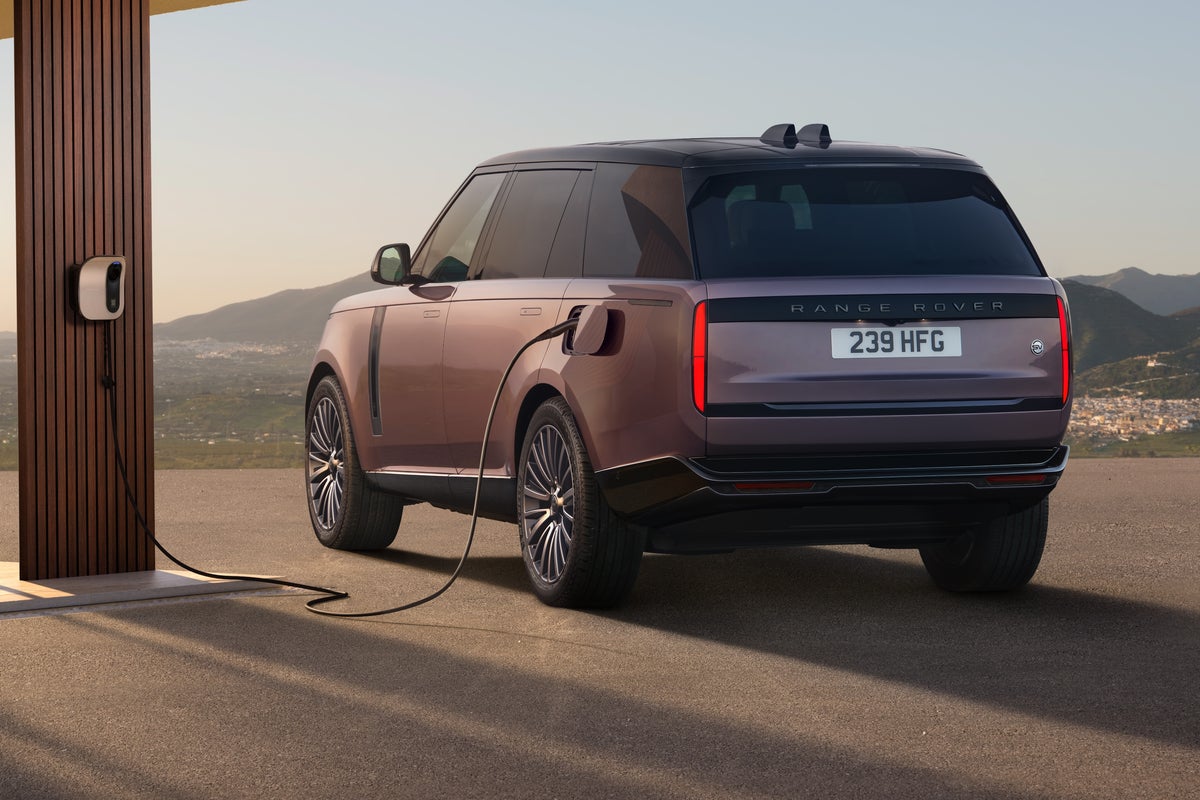
It’s taken its time getting here, but the Range Rover Electric is finally going on sale. And, appropriately for a car that’s supposed to make life calmer and more relaxing, it’s claimed to be the quietest Range Rover ever.
The new all-electric Range Rover flagship gets a claimed maximum range of up to 372 miles, 543bhp and 850Nm of torque, charges from 10 to 80 per cent in a claimed 22 minutes and has a confirmed price of £154,070, with first customer deliveries due in 2027.
I drove a prototype Range Rover Electric at Goodwood back in July 2025 when many of the important numbers were somewhat sketchy – including that price. I knew it had a huge battery and that more than 300 miles of range was on the cards, but now, finally, the production figures fill in plenty of those gaps.
 open image in gallery
The battery capacity is 118.5kWh, using 344 prismatic cells and an 800-volt electrical system. Two electric motors produce the combined 543bhp and 850Nm, enough for 0-60mph in as little as 4.3 seconds. Range Rover also quotes 50-75mph in 2.7 seconds, so overtaking or joining motorways should be a breeze.
As well as the claimed 372 miles on the official WLTP tests, Range Rover also quotes a real-world figure of up to 333 miles. As ever, what owners actually see will depend on temperature, speed, driving style and how much of the car’s kit is being used.
Plugged into a suitably powerful 350kW public rapid charger, Range Rover says the battery can go from 10 to 80 per cent in around 22 minutes or add around 137 miles in 10 minutes when conditions allow. That’s a quick turnaround for such a large battery.
Much of what I experienced in that prototype hasn’t changed. The company’s line from the start has been that this should be a Range Rover first and an electric car second, and visually it sticks closely to the petrol, diesel and plug-in hybrid versions. There’s an aerodynamically tweaked grille, different wheels on most versions and work underneath the car to help it slip through the air more efficiently, but there’s no big attempt to shout about the fact that this is the first Range Rover without an engine.
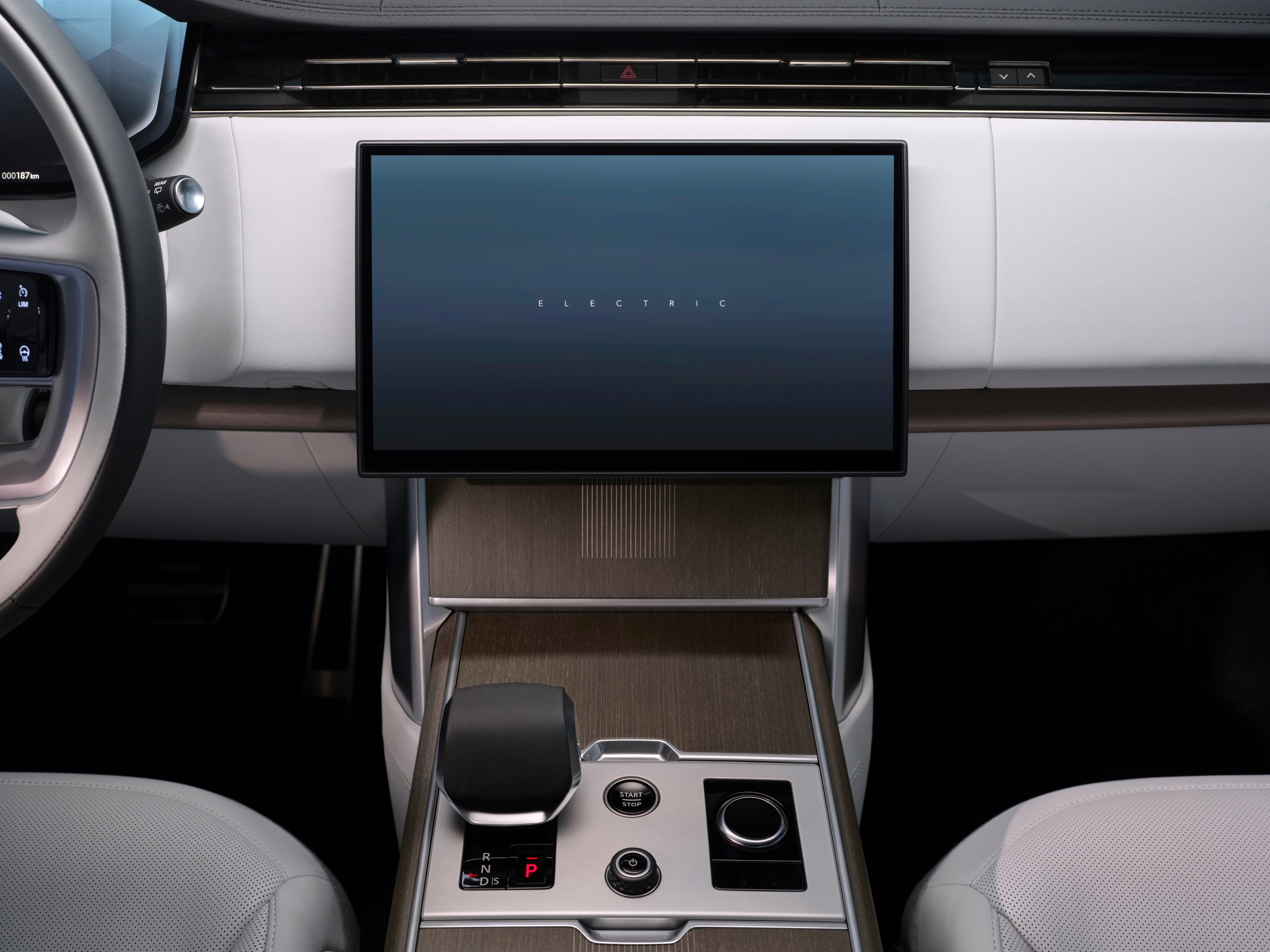
The current Range Rover’s MLA platform was designed from the beginning to take different types of power. When I saw the prototype’s chassis at Goodwood, the battery and electrical hardware had been packaged so there were no obvious compromises inside. The cabin remained the same cool, minimalist and plush place, with the familiar 13in Pivi Pro touchscreen, plenty of space and the same huge split-tailgate boot.
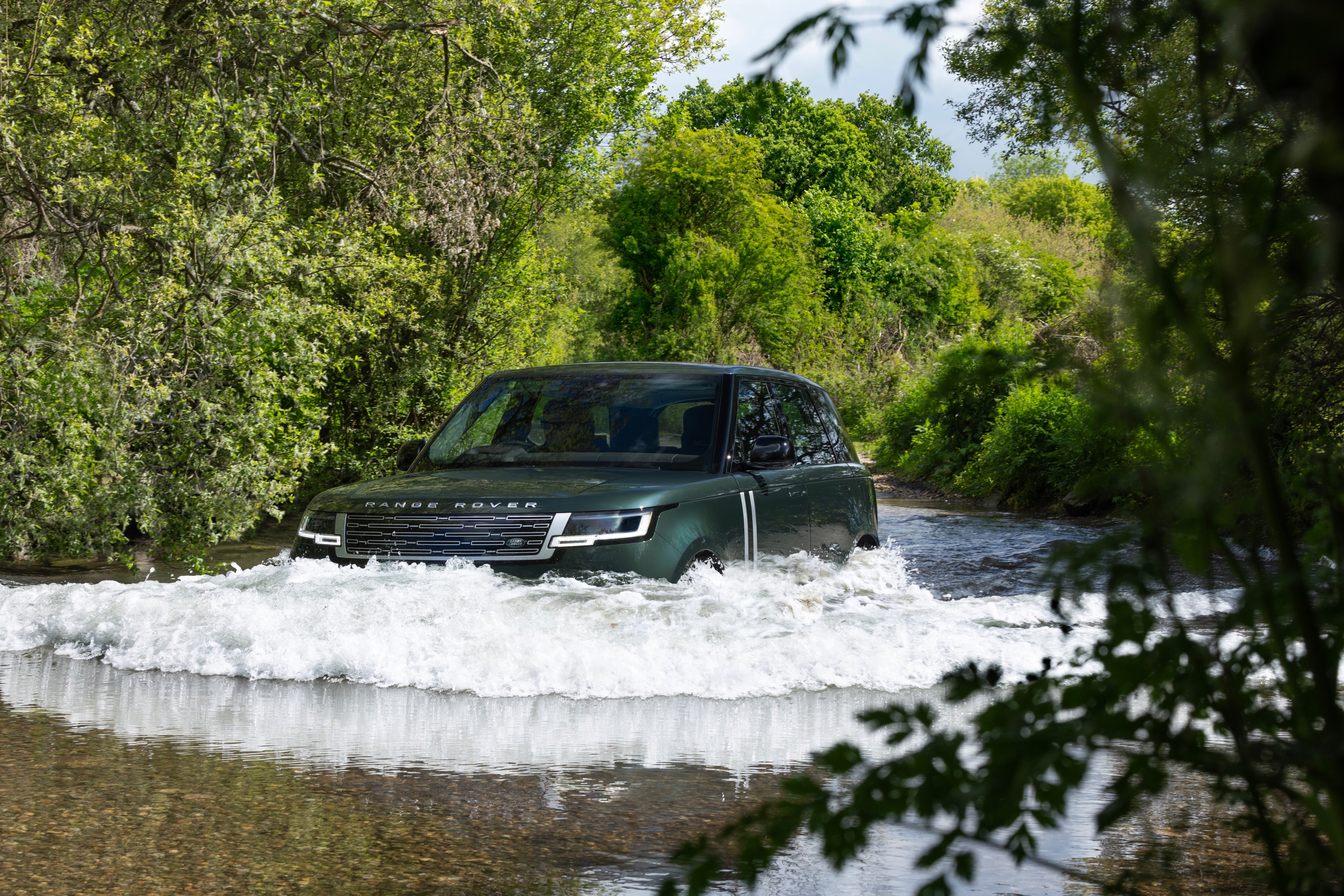
My first drive was off-road rather than on it, on a purpose-built course with rock crawls, slippery inclines and steep ramps where the Range Rover Electric proved to be every inch the serious 4×4, even though you sit in a luxurious, lounge-like interior.
Rather than balancing the throttle and waiting for an engine, gearbox and four-wheel-drive system to sort themselves out, the electric motors could feed in tiny amounts of power very precisely. The result was slow, smooth progress, even with individual wheels hanging in the air, while exterior cameras helped show exactly where the car was going.
 open image in gallery
The production version has been tweaked even further. Its Integrated Traction Management system can control motor speed within 50 milliseconds, which Range Rover says is up to 100 times quicker than an equivalent combustion-engined system. Another system can vary the amount of torque going to the rear wheels from 100 per cent to zero depending on grip.
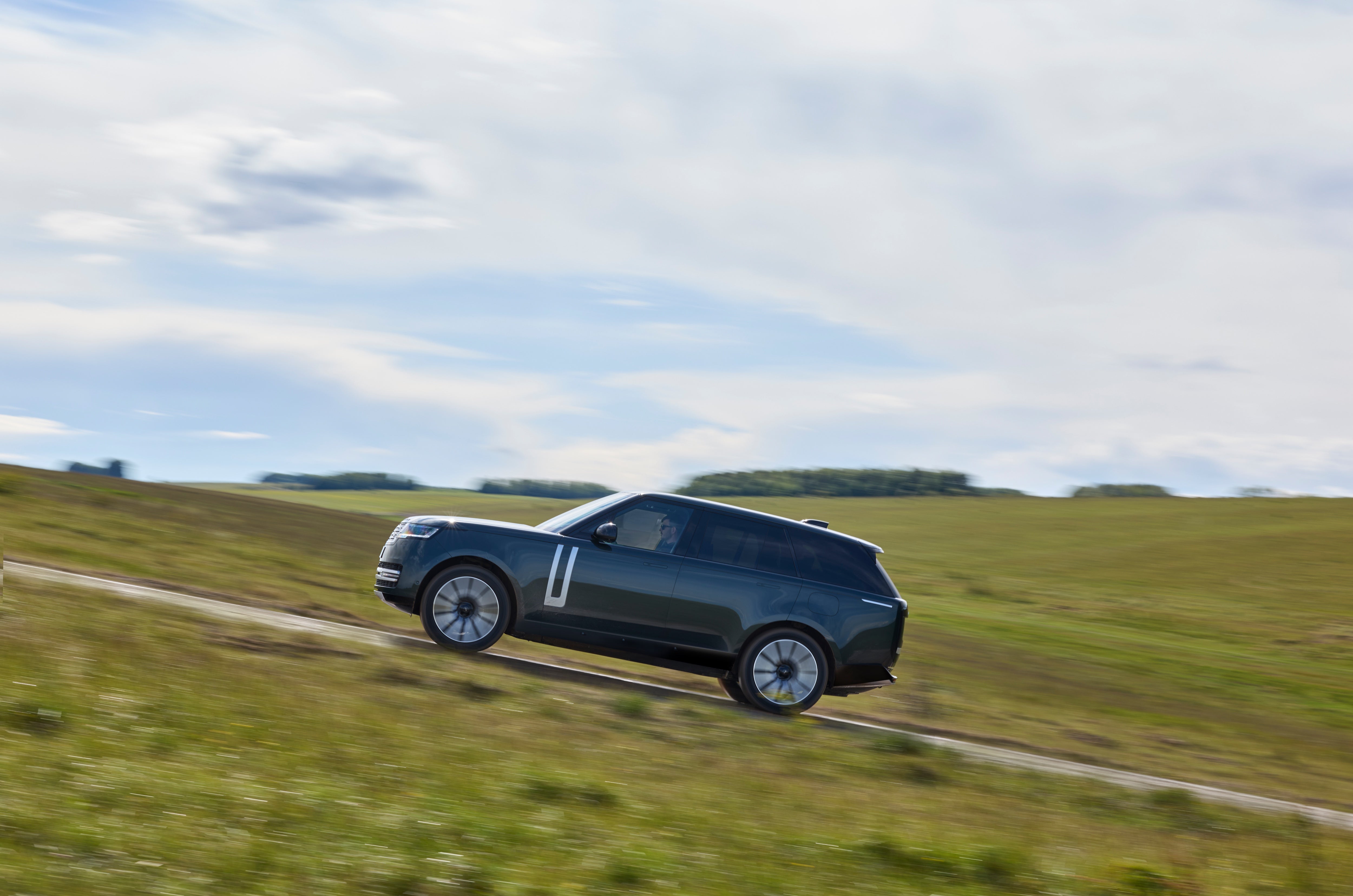
Single-pedal driving helps off-road, too. The car can pull away on slopes of up to 33 degrees and complete a rolling climb on gradients of up to 45 degrees, while it can still wade through up to 900mm of water. The lower centre of gravity and twin-chamber air suspension are also designed to help it feel more settled on the road. JLR vehicle engineering director Matt Becker said: “The defining characteristic of Range Rover Electric is its ability to perform across every surface, with effortless comfort and refinement.”
Since that first drive, I’ve also driven the Range Rover Sport Electric prototype at Goodwood over tarmac, gravel, grass, steps and even through an aircraft fuselage parked across the circuit. The Sport is being developed to feel more alert and agile than the full-size Range Rover, but the same advantages of electric power were obvious, particularly the smooth delivery of power and fine control at low speeds.
For the full-size Range Rover Electric, refinement is the bigger focus. Range Rover says there’s less cabin noise than in any previous version and has developed a ThermAssist system to keep the battery and cabin at the right temperature while cutting the energy needed for heating. The company says it can reduce heating energy use by up to 40 per cent and add as much as 25 miles of range in some conditions. Range Rover managing director Martin Limpert said: “Electric propulsion is perfectly suited to the exquisite refinement of Range Rover, elevating the sense of calm and secluded sanctuary for occupants.”
 open image in gallery
Range Rover says the Electric has covered more than 932,000 miles of physical development work, the equivalent of circling the world 38 times, as well as more than 250,000 hours of virtual testing. It has been tested at minus 40 degrees Celcius in Sweden, in the heat of Dubai and at parent company JLR’s Eastnor Castle off-roading facility in Herefordshire.
A new Range Rover app will let owners check charge and predicted range, see the car’s location, make sure it’s locked and schedule home charging. Cabin purification and the heated steering wheel can also be switched on remotely.
The electric powertrain comes with an eight-year or 100,000-mile warranty, while a Battery Digital Twin uses more than 900 diagnostic data points to help keep an eye on its condition.
Production will take place alongside petrol, diesel and plug-in hybrid Range Rovers at JLR’s Solihull factory, where 9,000 manufacturing staff have been trained for electrification. The batteries and electric drive units are produced by JLR at its plant in Wolverhampton.
 open image in gallery
The order book is open now, with short- and long-wheelbase versions in Autobiography, SV, SV Black and SV Ultra trims. There’s also a First Edition in Belgravia Green, Santorini Black or Varesine Blue, with a new Light Cloud Ultrafabrics and Kvadrat interior.
Prices start at £154,070 for the EV550 Autobiography short-wheelbase and £157,610 for the First Edition. The EV550 SV starts at £176,230, the SV Black at £190,320, while the long-wheelbase SV costs £215,670 and the SV Black £225,240.
If you want the Ultimate Range Rover Electric – the SV Ultra – you’ll have to contact Range Rover for assistance with specifying your car, and I suspect that’ll result in a payment some way north of a quarter of a million pounds.
When I first drove the prototype, Range Rover wouldn’t say exactly when customers would get their cars, only that it would launch when it was ready. We now know much more about what that extra development time has produced: a big battery, a 372-mile maximum range, rapid charging, V8-level power and the sort of near-silent progress Range Rover believes suits its flagship better than ever.