



For a while, it seemed like Shein was set for world domination. The China-founded company heralded a new era for fast fashion, one whereby new items were uploaded within hours, and entire outfits could be bought for under £5. This was fast fashion on drugs, and the high became addictive. In the year to the end of March, Shein had more than 273 million active customers who placed more than a billion orders.
Now, it looks like the golden age might be losing its shine. On Tuesday, shares in Shein fell by 6 per cent, a surprising drop for the company that was once valued at $100bn (£73bn); now, after having gone public on the Hong Kong stock exchange, it’s worth just a quarter of that figure. The somewhat lacklustre performance comes after Shein’s failed efforts to list in New York and London, with the former being blocked by regulators over concerns regarding forced labour. Similarly, in the UK, a £50bn flotation was hindered by queries about the company’s supply chain.
 open image in gallery
The result is a lingering question mark over the future of Shein’s business, and whether fashion can truly be sustained at this accelerated pace, when governments are finally wising up to the environmental and ethical consequences of low-cost, high-speed retail models.
For instance, this week, Oxfam launches its annual Second Hand September campaign to encourage people to exclusively shop pre-loved clothing for 30 days or longer. Thousands of people take part each year and the 2026 campaign is being fronted by Richard E Grant.
 open image in gallery
Still, Shein remains one of the largest listed fashion companies, with a valuation on par with H&M. But does this lag suggest that fast fashion is finally losing the stronghold it once had? Are consumers prioritising more sustainable ways of shopping? And will this be the net positive the industry has been waiting for?
The answer is complicated. Founded in China in 2008 by Chris Xu, Shein began as a small online business selling wedding dresses. After developing into a mainstream retail brand, it remained somewhat obscure until the pandemic, when online shopping boomed; its revenue shot from $2bn in 2018 to $15.7bn in 2021. Following a “test and repeat” model used by Inditex and H&M, Shein became famous for keeping just 6 per cent of its inventory in stock for longer than 90 days.
685%
Shein’s approximate revenue jump between 2018 and 2021
This was a business built on pace, often at the expense of social and environmental practices, while also being accused of ripping off smaller labels and even, at one point in 2020, selling swastika necklaces – it swiftly issued an apology and removed the necklaces from its website. In another more recent blow to the company, Shein lost a copyright lawsuit against its arch-rival, Temu, after trying to claim it had perpetrated “industrial-scale” violations by allowing vendors on its platform to advertise clothing using photos from Shein’s website.
 open image in gallery
On top of this, the end of tariff exemptions on cheap goods in the US and Europe put a spanner in the works, forcing Shein to raise its prices. In the first three months of this year, Shein recorded a $99m loss in the first three months of this year. In the same period last year, it made a $395m profit.
“It may indicate a change in Gen Z’s shopping habits,” says Dr Rose Marroncelli, senior fashion lecturer at Nottingham Trent University. “Given their often limited disposable incomes, due to their life stage, the low price points offered by brands such as Shein are particularly attractive. But research indicates that Gen Z are becoming more environmentally conscious. Meanwhile, US and European governments are paying closer attention to ultra-fast fashion, and in the UK, the Competition and Markets Authority (CMA) was granted significantly enhanced enforcement powers in 2025, equipping it with the ability to impose severe penalties on businesses found guilty of misleading environmental claims.”
This subsequently increased the penalties for companies found to be “greenwashing,” aka presenting themselves as environmentally responsible while maintaining other underlying practices that harm the environment. “Companies found guilty of misleading practices risk not only financial penalties but also lasting reputational damage,” adds Dr Marroncelli. “Therefore, Shein needs to pay close attention to the environmental impact of its business model, and how it communicates this with the consumer moving forward.”
Increasingly, Gen Z favours honest and transparent brands
DrRose Marroncelli, senior fashion lecturer at Nottingham Trent University
There’s also the basic fact that buying clothes from retailers like Shein doesn’t feel au fait with today’s trend circuit, which feels more centred around sustainable shopping than ever before. In the UK, two-thirds of consumers purchased second-hand goods online in 2024. Platforms like Vinted and Depop are more popular than ever, with revenues at the former surpassing €1bn last year. Luxury goods are also now more likely to be bought secondhand on more affordable platforms like Vestiaire Collective, given how much more valuable rare, vintage items have become in comparison to new designer garb.
“Increasingly, Gen Z favours honest and transparent brands,” adds Dr Marroncelli. “They are widely characterised as a group that values authenticity and corporate accountability, showing a stronger preference for brands that provide clear information about their environmental and social practices.”
Indeed, one of the generation’s most beloved brands is Reformation, which puts sustainability at the heart of its business and marketing, regularly publishing detailed reports on its carbon emissions and water use. It also uses a wide range of deadstock and natural fabrics across its collections, including linen, organic cotton, and TENCEL™ Lyocell, a semi-synthetic fibre made from sustainably sourced wood pulp.
Meanwhile, in 2025, Shein was fined €1m in Italy for misleading environmental claims about their products. This came a month after they were penalised with a €40m fine from the French consumer watchdog.
More of us are getting old clothes repaired, too, instead of replacing them, with restoration services rising in popularity – according to Vogue Business, the Dutch social enterprise United Repair Centre (URC) mends approximately 55,000 items a year for over 35 performancewear brands, including Patagonia and Decathlon.
 open image in gallery
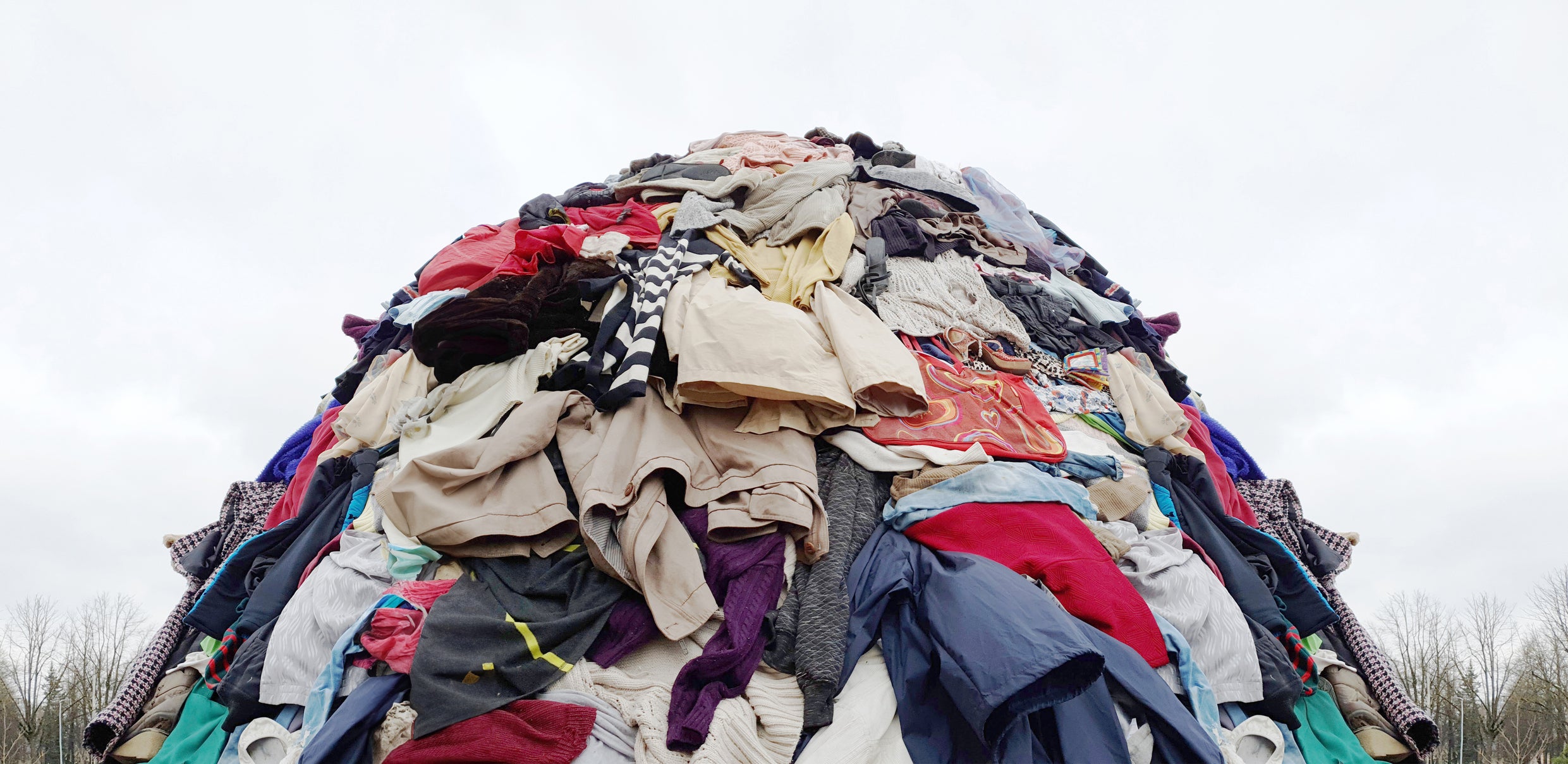
Perhaps, after a summer of raging wildfires and climate crisis-related natural disasters, the environmental consequences of our shopping habits feel more pertinent than ever, particularly when you consider the statistics: according to Oxfam, the water used to produce the nation’s unworn clothing is equivalent to a lifetime’s supply for one million people. And it has been estimated that the UK sends 300,000 tonnes of clothes to landfill each year. If nothing changes by 2050, the Ellen MacArthur Foundation estimates that the fashion industry will be responsible for 26 per cent of the world’s carbon budget.
But it’s not all a move in the right direction. Consider Lefties, the cut-price chain launched by the owner of Zara as a direct rival to Primark and Shein. Its first UK store opened last week in Liverpool, employing robotics to reduce staffing costs – self-checkouts scan entire baskets at once. Two other stores will launch next year in the Lakeside shopping centre in Essex and the Metrocentre near Newcastle.
Still, Shein’s stock market debut does mark a clear and significant shift given its previous, seemingly unstoppable, meteoric rise, indicating the future of fashion might be changing. “As interest in sustainability continues to rise, brands like Shein will have to rethink their ethical and sustainable practices in order to remain both relevant and profitable,” says Dr Marroncelli. “Demand for affordable and stylish clothing remains high, but Shein will have to balance low cost with transparency and quality to meet changing consumer expectations and gain customer trust.”