


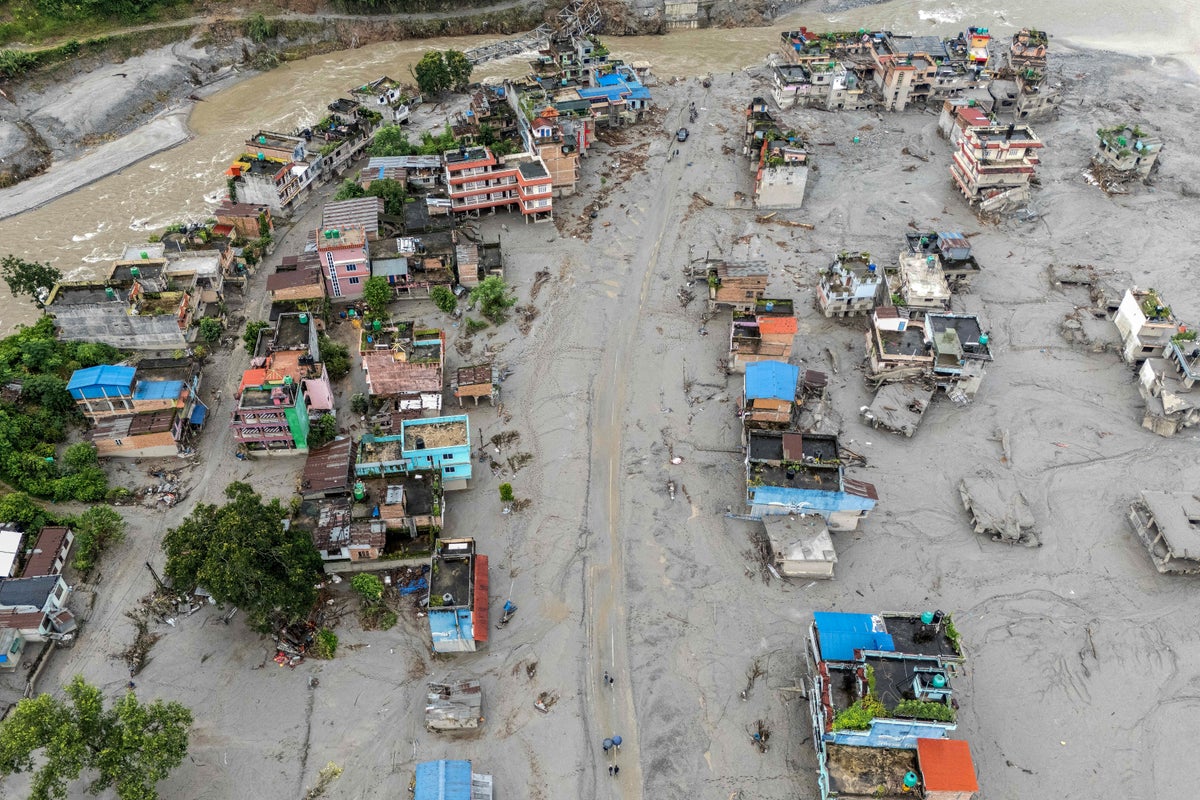
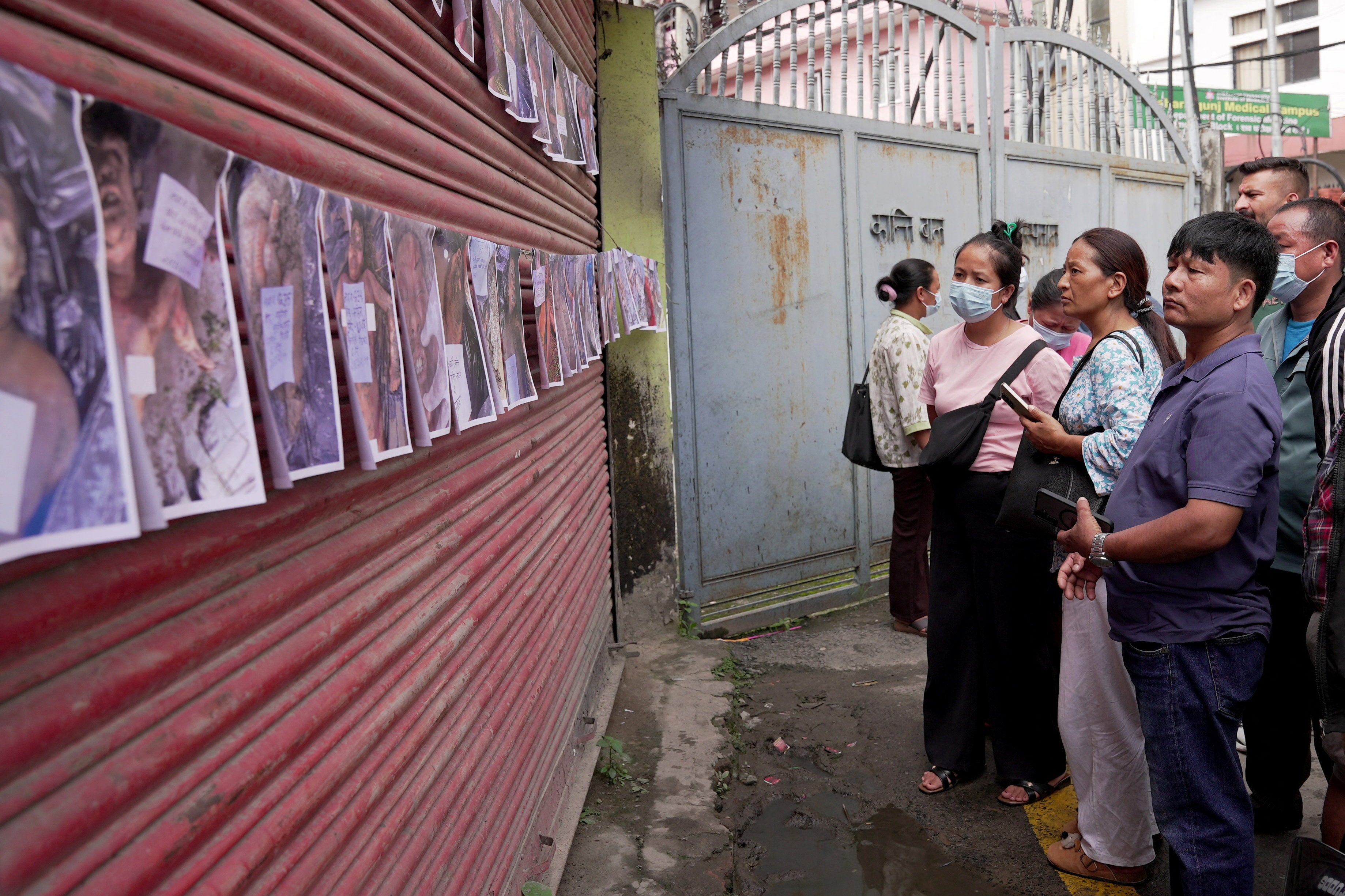
The bodies of people swept away in this week’s devastating flash floods in Nepal are washing up more than a hundred miles away in India as rescue teams race against time to search for the dead and missing while facing the challenge of fast decomposing bodies.
Eight bodies have been found in Uttar Pradesh and Bihar, two northern Indian states bordering Nepal, more than 100 miles from the flood’s source.
Another body was recovered in Lumbini province – still within Nepal, but some 250 miles from Rasuwa, the district hit by a 70ft wall of ice, mud and water on Wednesday morning.
Four were recovered from a river in Uttar Pradesh’s Maharajganj district. Officials there said they were severely decomposed and were being held at the mortuary of a district hospital, awaiting identification.
“We are in contact with the Nepal administration regarding the matter,” said Gaurav Singh Sogarwal, the district’s magistrate. He said the region had also seen high water levels but that the immediate threat of flooding had now passed.
Another three bodies have been recovered from the Gandak river in Uttar Pradesh, and one more from the same river near the Valmiki Nagar Barrage in Bihar.
Most of the bodies that are now being recovered, three days after the disaster, have already decomposed beyond recognition, the authorities said. They will be buried quickly after legal formalities are completed, because of the health risk and fears of an epidemic.
“DNA samples will be collected, and the bodies will be buried in an open space,” the administration of Chitwan district in southern Nepal said in a notice.
Nepal’s foreign minister, Shisir Khanal, said officials were concerned by the rate bodies were decomposing in the hot and humid conditions. He said the country did not need help with search and rescue, but required foreign assistance rescuing people trapped in tunnels, restoring transport and communication links where bridges had been destroyed, and identifying bodies through DNA testing and longer-term storage.
“We have already made requests for such specialised services and technical assistance in areas where we don’t have enough expertise and technical know-how,” Mr Khanal told Reuters late on Friday.
 open image in gallery
The combined death toll in Nepal and Tibet has risen to 633, authorities said on Saturday, with nearly 3,000 people still missing across the two countries, including at least 540 foreigners, many of them Hindu pilgrims from India.
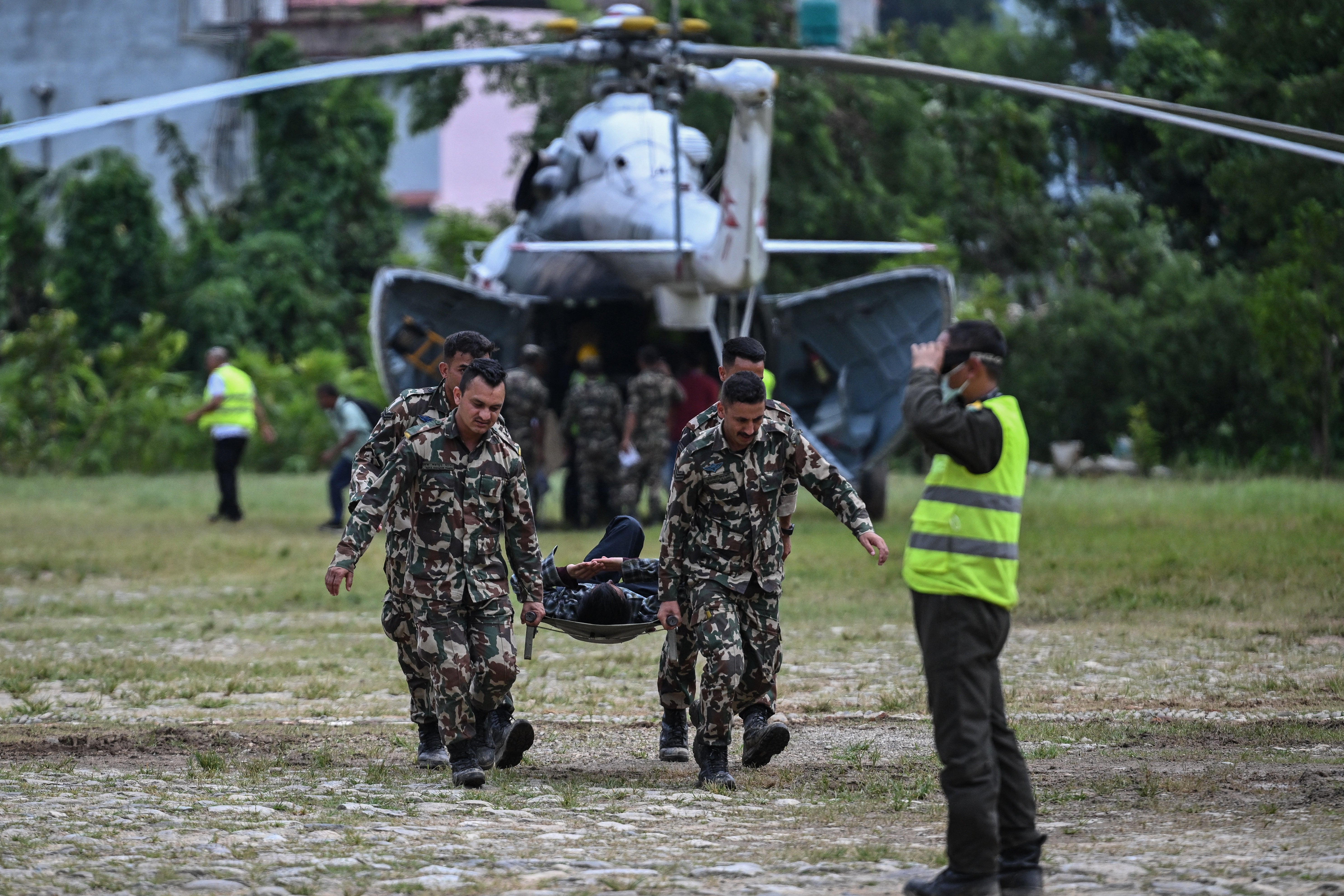
Search and rescue operations were suspended again on Saturday because of bad weather, according to Narendra Pariyar, the top bureaucrat for Rasuwa district, one of the worst-hit areas.
“Search and rescue operations have been temporarily halted because it is raining and the weather is foggy,” he told Reuters, adding that the immediate focus had shifted to arranging land transport to move rescued pilgrims to Kathmandu.
More than 5,000 army and police personnel are searching Nepal for bodies and survivors. The operation was also paused on Friday over fears that a lake straddling the Nepal-China border, formed when debris from the initial glacier collapse blocked the valley’s rivers, could overflow into the Lhende Khola and Trishuli rivers.
That risk has since reduced, Chinese authorities said, with satellite imagery showing water slowly draining through the blockage. Nepal is monitoring two such lakes upstream of the flood zone, and officials have warned that flood risk will persist until both fully drain.
 open image in gallery
India has sent three flights carrying about 60 tonnes of relief material to Nepal, including blankets, medicines, food and water purification tablets, and plans to send a tunnel rescue team and a medical team.
India has also offered its disaster response force and prefabricated bridges, along with technical teams to help restore connectivity, its foreign ministry said. China has called for emergency aid to disaster-hit areas of Nepal and international rescue cooperation, without elaborating on what it is sending.
The disaster is set to cost Nepal as much as a tenth of its economy to rebuild. Finance minister Swarnim Wagle estimated the reconstruction bill at between $4 billion and $5 billion, though he said this would likely be less than the roughly $9 billion spent recovering from the 2015 earthquake, Nepal’s worst recorded disaster.
The floods have already damaged hydropower stations that account for more than 12 per cent of Nepal’s electricity generating capacity.
The disaster was triggered on Wednesday when part of a glacier and the mountainside beneath it collapsed on Langtang Lirung, a mountain straddling the Nepal-Tibet border, sending ice, rock and mud crashing into a river below. The mountains in this part of the Himalaya have been warming at roughly five times the global average since the 1960s, with the rate of ice loss across the wider region doubling since 2000.