


AdvertisementUS-China relationsOpinionWorld Opinion

OpinionBao Yinan
US and China must team up to keep maritime trade routes free and safe
3-MIN READ3-MIN Listen
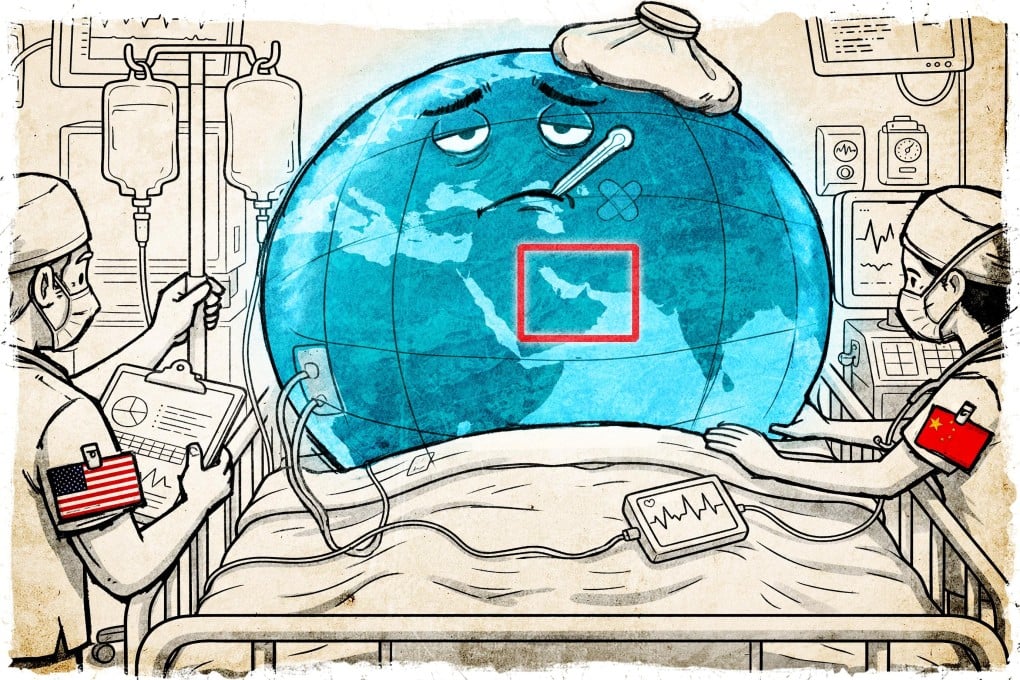
Bao YinanDr Bao Yinan is an associate research fellow at Huayang Centre for Maritime Cooperation and Ocean Governance. Published: 8:30pm, 28 Aug 2026With the end of the 60-day US-Iran memorandum of understanding, tensions in the Strait of Hormuz have flared again. The crisis in the strait highlights how the security and stability of key international waterways are becoming an increasingly urgent global concern.Over the past decade, major maritime routes have been affected by regional armed conflicts, geopolitical tensions and growing security risks. These disruptions have exposed a vulnerability in the global trading system: a key international waterway need not be formally “blocked” for shipping to become constrained.
A strategic international strait may remain legally “open” while ships face military threats, attacks, higher insurance premiums, sanctions-related risks, forced re-routing or arbitrary conditions for passage. In such circumstances, the question is no longer simply whether the waterway is “open” or “closed”, but whether ships can pass through it safely, predictably and at a reasonable cost. This distinction matters significantly to both China and the United States.
Global trade and energy transport depend on a limited number of key waterways, particularly the English Channel, Strait of Malacca, Strait of Hormuz, Panama Canal and Suez Canal. Disruption in any of these chokepoints can quickly spread through global markets by raising freight and insurance costs, delaying supply chains and driving up energy prices.
China is particularly dependent on maritime transport for its trade and energy supplies. The Strait of Malacca is a major gateway for China’s trade with the Middle East, Africa and Europe, while the Strait of Hormuz is critical to energy flows. That is why China keeps emphasising that, for the Strait of Hormuz, “ensuring unimpeded passage serves the common interest of the international community”.
The US is also deeply embedded in the global maritime system. Although its energy structure and trade patterns differ from China’s, disruptions to key international waterways impose economic costs too, while increasing the resources Washington must devote to protecting global maritime security.
AdvertisementSelect VoiceSelect Speed00:0000:001.00x