


FG advised against more spending on idle NNPC refineries
August 27, 2026 12:14 am

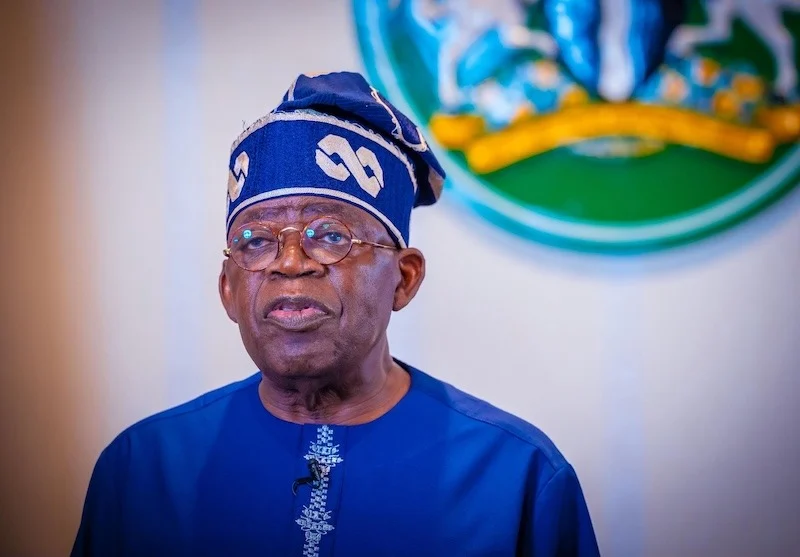
FILE: President Bola Tinubu
By Dare Olawin
The Federal Government has been urged to stop committing more public funds to the rehabilitation of idle refineries, warning that continued spending without a clear commercial case could deepen the country’s financial losses.
An energy expert, Dan Kunle, made the call in an open letter to President Bola Tinubu, days after the president assured that the government-owned refineries would return to operation.
Tinubu had recently assured the leadership of the Nigeria Union of Petroleum and Natural Gas Workers at the Presidential Villa, Abuja, that the Port Harcourt, Warri and Kaduna refineries would “come back to work”.
The President said his administration was undertaking a “firm reset and structural reworking” of the facilities to make them profitable and capable of delivering value to Nigerians.
However, Kunle in his letter questioned the rationale behind further investment in the Port Harcourt, Warri and Kaduna refineries, arguing that the government should first establish what had gone wrong with previous rehabilitation programmes and how much had already been spent.
The government-owned refinery units have a combined installed capacity of about 445,000 barrels per day, comprising the 65,000 barrels per day Port Harcourt old refinery, 150,000 bpd Port Harcourt new refinery, 125,000 bpd Warri refinery and 110,000 bpd Kaduna refinery.
They have all been moribund for years despite billions spent on turnaround maintenances.
Kunle noted that the Federal Executive Council approved about $1.5bn for the rehabilitation of the Port Harcourt refinery in 2021, while another $1.484bn was approved for the Warri and Kaduna refineries.
He said this amounted to almost $3bn in major refinery rehabilitation approvals in 2021 alone, stressing that the recent expenditure represented only part of the money committed to the assets over the years.
He cited a House of Representatives record, based on information reportedly submitted by the Nigerian National Petroleum Company Limited, which stated that the three refinery companies incurred about N4.8tn in operating and running costs between 2010 and 2020, with accumulated losses of about N366.5bn.
The record, he added, showed that about N42.65bn was spent on rehabilitation projects between 2013 and 2019.
Kunle further noted that a separate House of Representatives motion in 2023 cited N11.35tn as the cumulative amount allocated to refinery renovation from 2010.
He, however, said the figures should be independently reconciled before being treated as audited expenditure, arguing that this made a forensic accounting of the refineries’ spending imperative.
Kunle said the NNPC’s 2024 annual report also stated that Project Yield, a seven-year financing arrangement used for the Port Harcourt refinery rehabilitation contract, had drawn about N1.4tn as of 31 December 2024.
He argued that the issue had gone beyond routine maintenance, describing it as a national capital allocation and opportunity-cost question.
“Before spending another billion, perhaps we should finally ask the uncomfortable question: Are we repairing these refineries or refusing to admit that their time has failed?” he asked.
The energy expert also raised questions about whether the new Chinese partners in the refinery projects were genuinely committed to making the facilities operational or were mainly interested in securing the sites for their private ventures.
Kunle said the refinery problem could not be separated from the wider infrastructure required to operate them, including crude supply pipelines, product evacuation pipelines, depots and terminals.
He noted that the crude supply route from the Niger Delta through Warri to Kaduna had been plagued by years of vandalism, integrity issues and operational challenges, stressing that refineries could not function sustainably without reliable infrastructure for crude supply and product evacuation.
He said the country had also spent heavily on pipeline repairs, security and maintenance, citing about N49.69bn reportedly spent on pipeline repairs and management in the first 10 months of 2020 and N8.35bn spent on pipeline repair, security and maintenance in June 2022 alone.
He described the situation as a “stranded system” rather than merely three stranded refineries.
Kunle urged Tinubu to reconsider further rehabilitation spending and transfer the refineries to the Bureau of Public Enterprises for possible private-sector management.
He also identified other stranded national assets, including the Ajaokuta Steel Company, NIOMCO-Itakpe, ALSCON, NIPP power plants and the Mambilla hydropower project, as examples of projects that had consumed significant public resources without delivering their intended economic benefits.
The energy expert said Nigeria needed to distinguish between assets worth saving and institutions that the government was simply afraid to close.
“Some assets should be rehabilitated. Some should be sold or concessioned. Some should be repurposed. Some require complete replacement. And some should be allowed to die,” he stated.
Kunle urged the Federal Government to carry out an honest accounting of funds already committed to the assets before approving further investments, warning, “Past expenditures must not become the justification for more future expenditures.”
He added that the government should allow the private sector to lead Nigeria’s industrialisation while focusing public resources on effective governance and infrastructure development.
However, fuel marketers told our correspondent that they believe the words of Tinubu that the refineries would work again.
The National Vice-President of the Independent Petroleum Marketers Association of Nigeria, Hammed Fashola, said the current approach to reviving the facilities was different from previous rehabilitation efforts and expressed confidence that they could work again.
Similarly, the National President of the Petroleum Products Retail Outlets Owners Association of Nigeria, Billy Gillis-Harry, backed the revival, arguing that Nigeria needed multiple sources of refined petroleum products and should not depend on a single major refinery. Both groups rejected former President Olusegun Obasanjo’s position that the government-owned refineries could not work again
Dare Olawin is a journalist at Punch Newspapers with over a decade of reporting experience. He began his career as a community reporter and now covers the energy sector, including oil, gas, electricity, and renewables. Dare’s work reflects hands-on newsroom experience, professional development through workshops and conferences, and a strong commitment to accurate and insightful journalism.
All rights reserved. This material, and other digital content on this website, may not be reproduced, published, broadcast, rewritten or redistributed in whole or in part without prior express written permission from PUNCH.
Contact: [email protected]