


AdvertisementC-Suite Content HubBusiness
Stablecoins Seen as New Rails for Global Finance
BySCMP C-Suite5-MIN READ5-MIN Listen
Jolene OtrembaPublished: 5:00am, 27 Aug 2026
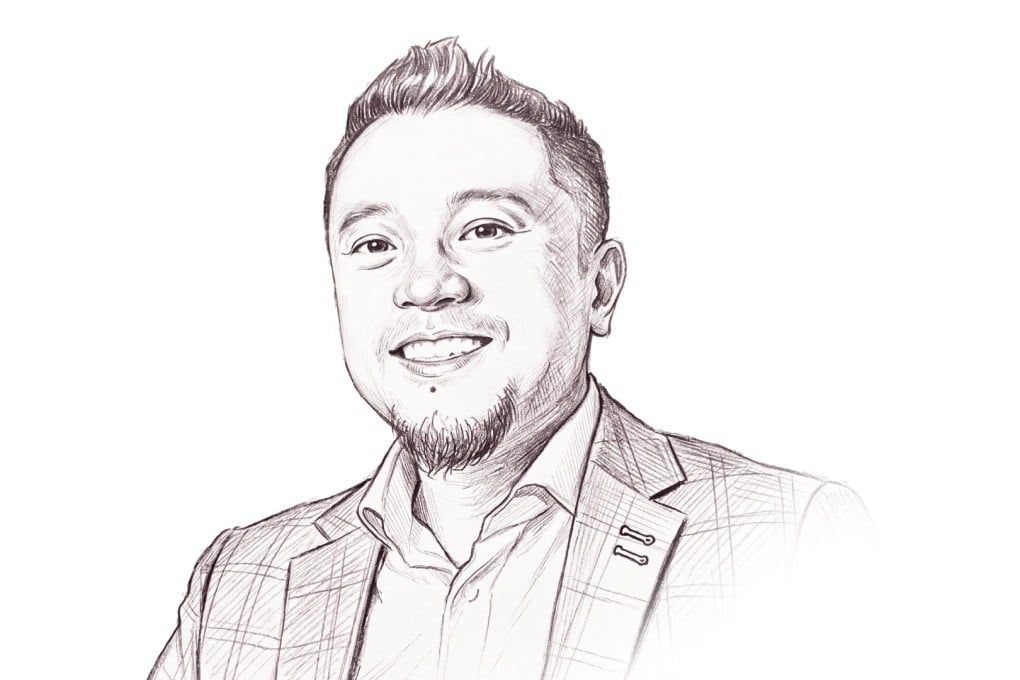
Coins.ph Chief Executive Officer Wei Zhou is betting that regulated stablecoin rails can lower the cost of remittances, widen access to dollars and bring millions of underbanked users into the financial system.
When Wei Zhou tried to move his own savings from Asia to the United States to buy a family home, he ran into the same problem faced by millions of cross-border workers and families: the traditional financial system was slow, expensive and difficult to navigate.
“That whole process just took like a month and a half,” he recalls. “I thought to myself there’s got to be a better way of getting things done.”
Eventually, he turned to Bitcoin. For Zhou, it was a revelation. Bitcoin stopped being an abstract technology or speculative trade. It became a working alternative to a system that had failed him when he needed it most.
“At that time I was like, oh my, this thing exists kind of completely outside of the existing financial system,” he says.
That experience drew him into what he calls “the Bitcoin rabbit hole” and eventually led him to Coins.ph, the Philippines’ leading fully regulated fiat, crypto and mobile wallet provider, holding dual Virtual Asset Service Provider and Electronic Money Issuer licences from the Bangko Sentral ng Pilipinas.
Today, as chief executive, Zhou is not trying to persuade every user to become a crypto enthusiast. His ambition is more practical: to make blockchain-based finance useful enough that ordinary people do not have to think about the technology at all.
Changing the Game
Coins.ph began as a retail crypto trading application, a place where users in the Philippines could buy and sell digital assets such as Bitcoin, Ethereum, Solana and stablecoins including USDT and USDC. Zhou describes its original position simply as “kind of like Coinbase in the Philippines”.
Under his leadership, the company has moved beyond the role of a consumer crypto app and increasingly becoming part of the infrastructure behind money movement, especially for remittances and peso-stablecoin conversion.
“Today we have evolved from just a pure retail application to more of a B2B financial service organisation,” Zhou says.
The change is significant. Coins.ph now acts as a regulated gateway for stablecoins moving in and out of the Philippines, and serves millions of users. It works with global remittance companies, including Remitly and Taptap Send, enabling them to use crypto rails and payment rails to send and receive stablecoins and convert them into pesos.
For the end user, the blockchain layer may be invisible. A worker sending money home may not know whether USDC or USDT was involved in the transaction. But what they may notice is a better rate, lower fees or the ability to move money at times when traditional foreign exchange markets are less efficient.
“People don’t necessarily have to know that the technology that they’re using is a blockchain technology,” Zhou says.
And that, for him, is the point. The breakthrough is not in persuading the mass market to understand wallets, chains and tokens. It is in applying the technology where it can remove friction from daily financial life.
He gives the example of weekend remittances. Traditionally, remittance companies may charge higher rates over weekends because of the need to hedge currency exposure while markets are closed. Stablecoins can reduce that burden by allowing value to move outside conventional banking rails.“From a user perspective, the rates that they can offer are probably going to be lower on the weekends than it was before,” he says.
The company also notes that according to the World Bank, the global average cost of sending cross-border remittances sits at roughly 6.4%, more than double the UN Sustainable Development Goal target of 3%, highlighting a clear advantage of adopting blockchain technology.
In a country such as the Philippines, where remittances account for over $40 billion annually and roughly 9% of total GDP, even small reductions in cost matter. As the world’s fourth largest remittance-receiving nation, Zhou’s proposition is less about crypto as an investment class and more about crypto as critical economic infrastructure.
Shaping Tomorrow
Given this, Zhou’s broader thesis is that stablecoins are quietly becoming one of the most important tools for global financial inclusion.
As long as you have a wallet, as long as you can get USDT on it, you pretty much have access to dollar-denominated value anywhere in the world,” he says.
The idea is especially powerful in markets where access to formal banking is limited, local currencies are volatile or dollar accounts are difficult to obtain. Stablecoins, in Zhou’s view, have already created a first layer of access by giving people a way to hold and move dollar-linked value through a mobile wallet.
Zhou sees this as financial inclusion, which he believes is a three-step ladder: access to an account, then credit, then investing. Stablecoins, he says, have already helped “bank the unbanked” by giving people a digital dollar-like wallet. Coins.ph now wants to extend that model into “credit the uncredited” and “broker the un-brokered,” using its regulated platform and transaction history to offer credit and investment products.
“We want to go around the world and provide legal, affordable and reliable access to stablecoins,” Zhou says. “The next thing is, we want to be able to give you credit. After that, it’s investment opportunities.”
His vision extends well beyond one market. Zhou believes a meaningful share of global dollar commerce will eventually move away from traditional correspondent banking and SWIFT-based systems towards blockchain rails. With annual global stablecoin settlement volumes already reaching billions in cross-border transfers alone, the shift is underway. While he doesn’t predict that traditional banks will disappear, he expects a hybrid future in which a significant portion of money movement is handled through stablecoins and blockchain-native currencies.
“Today, maybe close to 100 per cent of global commerce for dollars goes through the SWIFT system,” he says. Over time, he expects that number to fall, leaving stablecoins and blockchain rails to handle “20, 30, maybe even 40 per cent” of that number.
He also anticipates a world in which more national currencies exist in blockchain form: a blockchain dollar, yen, peso and euro interacting on a new layer of financial technology. But he remains pragmatic. Digital rails do not eliminate the need for foreign exchange or local currency settlement. A blockchain dollar arriving in the Philippines still has to become pesos that merchants, workers and families can use.
Lessons That Last
With a career spanning Wall Street, China’s internet economy and crypto, Zhou became chief executive of Coins.ph in 2022, aged 44. That experience shaped his leadership style.
“I came in as a more aged, more seasoned CEO,” he says. “I came in knowing that this is not a sprint.”
Coins.ph was not a finished machine but a “fixer upper”. The company had to rebuild its technology, processes, operations and culture.
“We had to rebuild the foundation,” he says.
The people-lessons were harder. Zhou brought in trusted colleagues and treated them as co-founders, but most did not stay.
“It’s hard to instil a founder culture in people that were not real founders of the business. It’s much better to instil an ownership culture,” he says.
He concluded that ownership mattered more than imposing a founder ethos on a select group. That means giving people responsibility, trusting their decisions and expecting accountability. It also reflects his enduring value of loyalty.
“I feel a sense of duty to stay loyal to the mission or to the people that I’m with, until proven otherwise,” he says.
Some of Zhou’s career decisions, including leaving a prestigious financial role for a job-search website in Beijing, looked irrational at the time. He says they were driven by curiosity and the belief that something had unrealised potential.
“For me it’s more about passion and desire,” he says. “Once I see potential in something, until that potential gets there, I’m just going to keep moving.”
That blend of calculation and conviction has carried Zhou to Coins.ph, where he sees stablecoins as another source of untapped potential. His bet is that the next great financial institution may look less like a bank than a wallet operating quietly in the background.
AdvertisementAdvertisementSelect VoiceSelect Speed00:0000:001.00x