


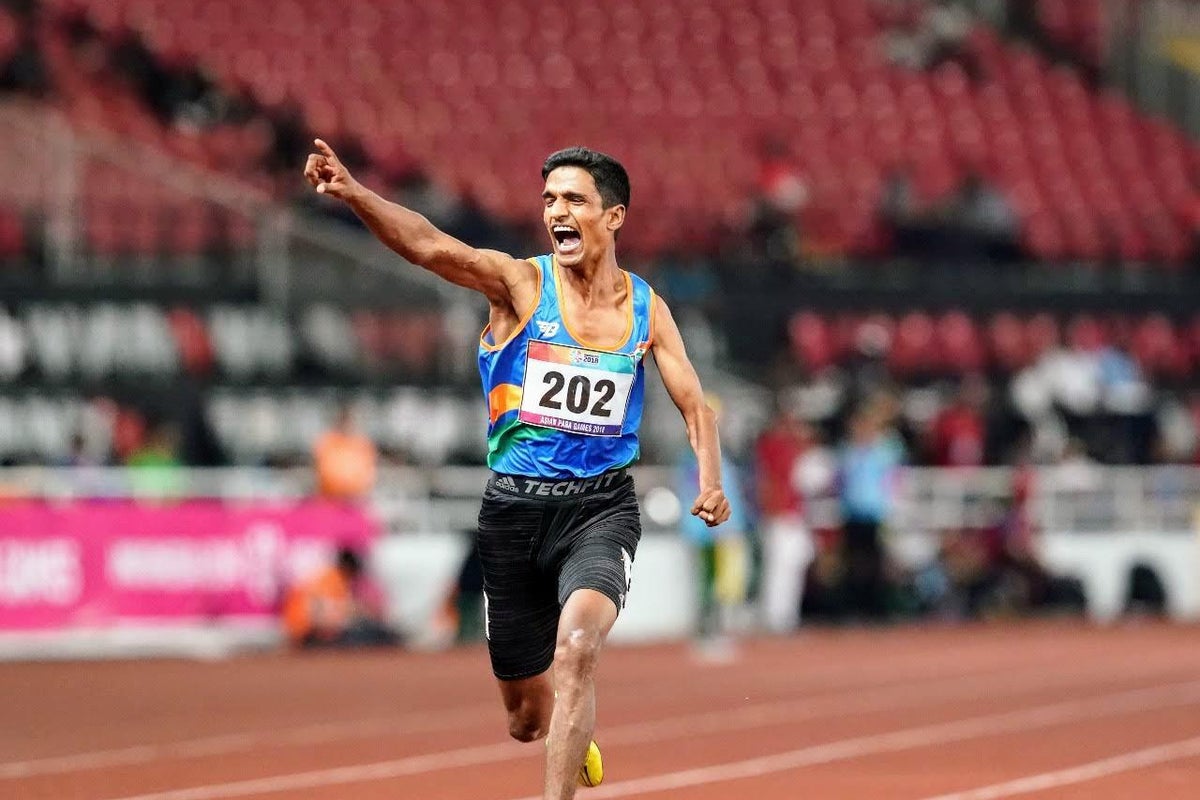
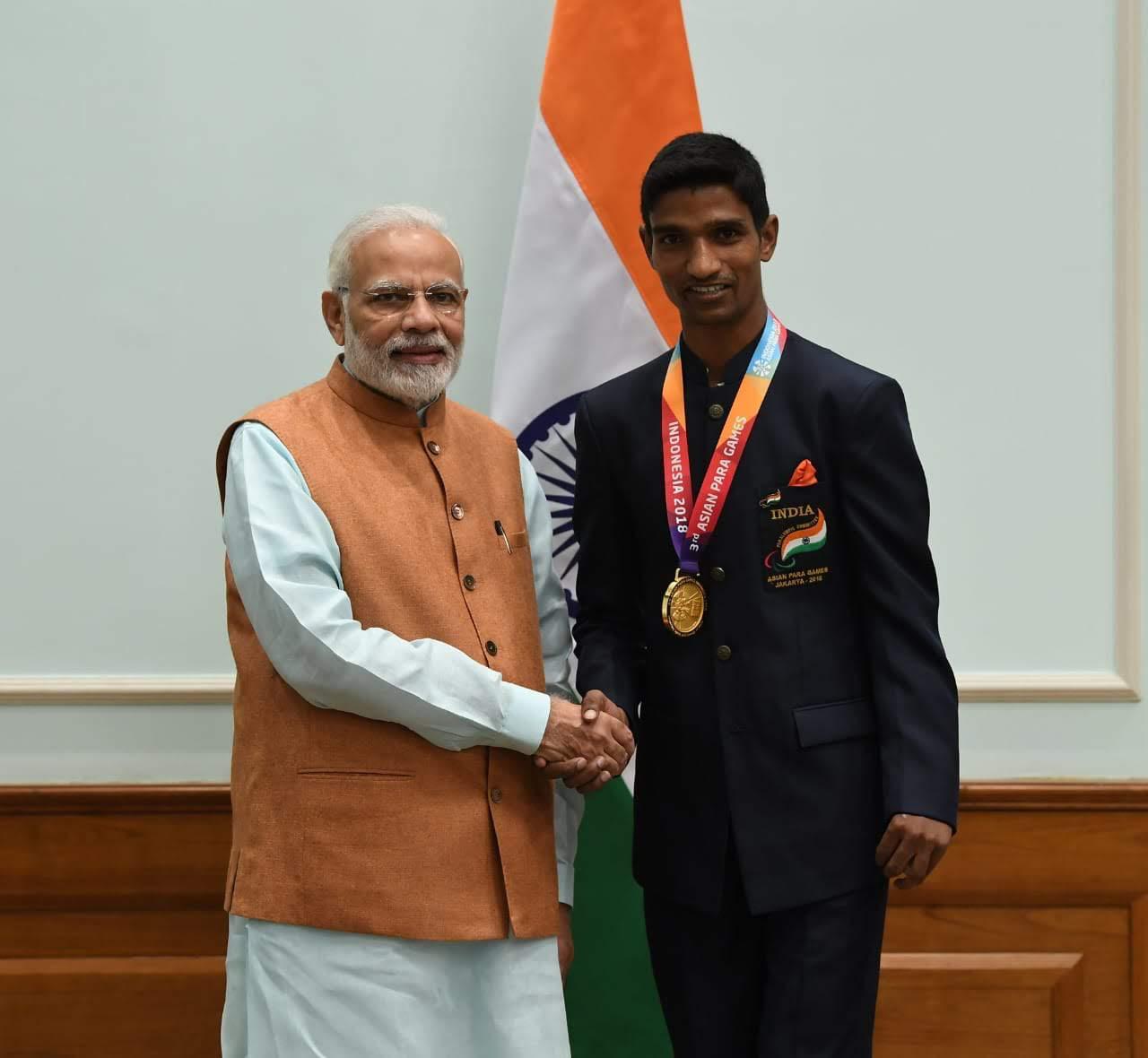
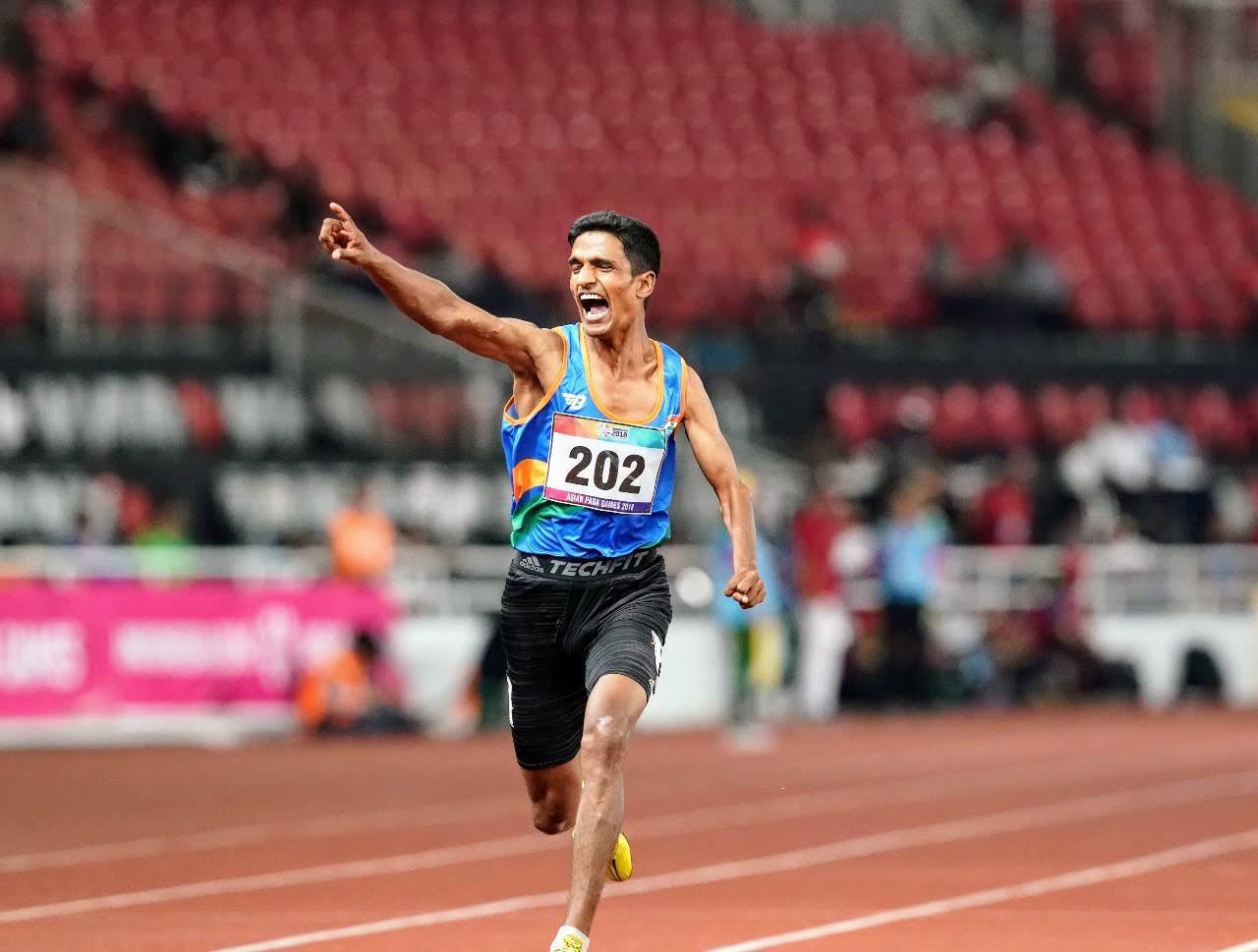
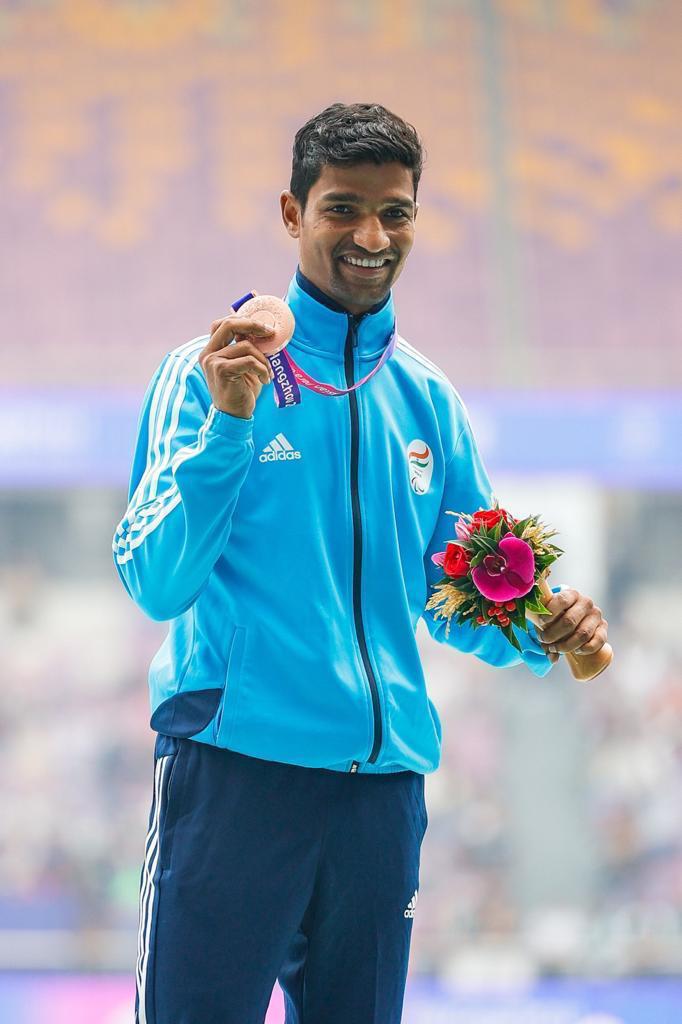
Narayan Thakur still remembers the posters that stretched from his home in Delhi along several kilometres to the main road, celebrating the para-athlete for winning gold in the Asian Games of 2018. He received a hero’s welcome at the airport and an in-person meeting with prime minister Narendra Modi, who lauded him alongside other winners.
But his moment of joy and national recognition was short-lived. Soon after his return to India he was accused of doping, leaving him at risk of losing his hard-earned medal. Overnight, all the posters celebrating him disappeared. They were replaced by newspaper articles accusing him of taking a banned, performance-enhancing substance, while the life changing amount of Rs 10m (£78,500) that he was set to receive in prize money from the government was frozen.
“After the results came, I was feeling very alone and unsupported,” said Thakur, who had made history by becoming the only Indian to win 100m gold at an Asian Para Games, competing in the T35 category for athletes with coordination impairments. “I felt that I was being punished for something that I did not do.”
Thakur faced months of infamy while he battled to prove his innocence and establish that he was a victim of institutional negligence rather than a willing user of performance-enhancing drugs, caught up in a flawed system where genuine doping is a serious and pervasive issue.
In April, India was elevated to Category A by the Athletics Integrity Unit (AIU) – the independent body responsible for combating corruption and wrongdoing in athletics – placing it alongside the likes of Russia, Belarus, Ethiopia, Kenya and Nigeria as a country with an “extremely high” risk of doping.
 open image in gallery
The measure compels the country’s sporting authorities to exert greater oversight of athletes, but it also threatens to undermine India’s ambition to host the 2036 Olympic Games, with athletics’ governing body warning that a nation’s anti-doping record is a significant factor in such decisions.
According to the World Anti-Doping Agency’s annual report released in December, Indian athletes committed 260 doping-related rule violations in 2024, making the country one of the world’s worst doping offenders for the third consecutive year. India recorded a positivity rate of 3.6 per cent, with 260 adverse analytical findings from 7,113 samples – the highest rate among all countries.
Speaking to The Independent, multiple Delhi-based track and field athletes described being at competitions where toilet bins were filled with needles, which they suspect had contained illicit drugs. They spoke on condition of anonymity due to the sensitivity of the topic and for fear of suffering repercussions for speaking out.
The athletes described a culture where even those who want to stay clean face a struggle to avoid banned substances, due to a lack of information provided at grass-roots levels. “I did not know that some kinds of painkillers also have salts that could be counted in doping,” one said, adding that better awareness of the issue only really exists at the national and international level.
Another athlete criticised the quality of coaching at lower levels, blaming a lack of funding. He said that while playing at a state-level competition he won gold, for which he should have received a sizeable payout. “That money consistently gets delayed for months. It is suppose to help us get good quality coaches who actually know and can guide us, given our own lack of exposure. What kind of coaches will we hire without adequate funds? Of course, we get the misguided, non-serious people.”
 open image in gallery
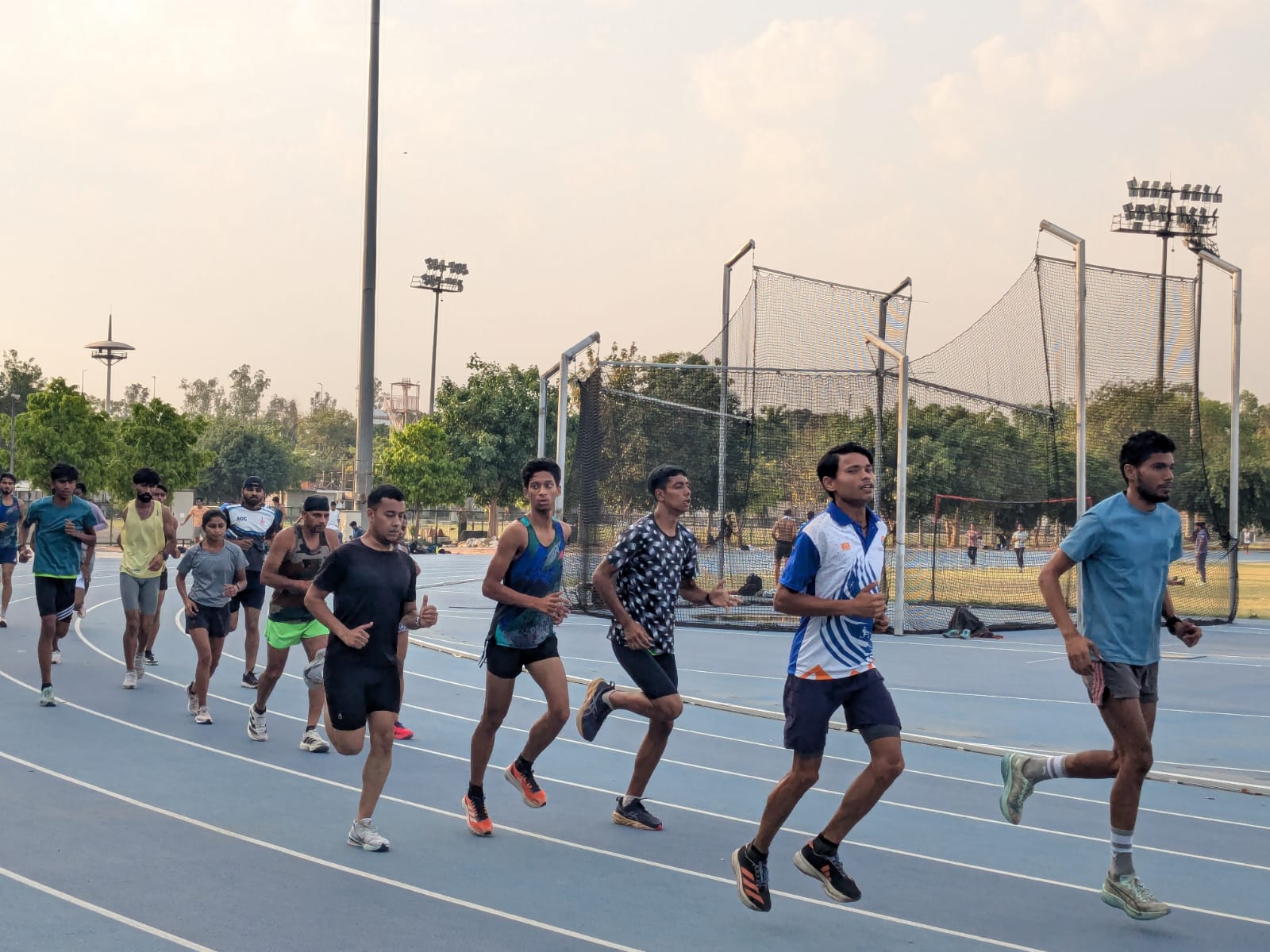
But perhaps the biggest root cause for doping described by athletes and officials alike is the incredible pressure placed on young people to perform at the highest level, thereby securing their own futures. In India, athletes are given award money as well as government jobs – effectively a career for life after they retire from competing – if they can secure a medal at an international games. It’s a make-or-break incentive, especially for those hailing from poorer families.
India lags behind most Western nations in terms of transition programmes for retiring athletes to move on to other careers, explains Surendra Meena, assistant director of the Department of Physical Education at the University of Rajasthan in Jaipur. “An athlete peaks between the ages of 18 and 27, especially in track sports. And within this period he or she has to grab a job.”
Doping also disproportionately affects those from a poorer socio-economic background because they are over-represented in more physical Olympic sports “like running that requires lot of physical labour”, says Meena. That’s because they are priced out of more technical sports like archery or shooting that have a higher cost barrier for equipment and infrastructure.
“In technical games, an athlete has over a decade and a half to prove their mettle. But training in say, archery or shooting is expensive. The pellets are so expensive that a child from a normal family will not be able to afford it,” he says.
Brett Clothier, head of the Athletics Integrity Unit, says in an interview with The Independent that India’s doping problem is extremely serious and uniquely difficult to tackle. Unlike offenders like Russia where doping is part of a centralised, state-endorsed system, “in India it is highly decentralised and opportunistic”, Clothier says.
The AIU says it has been working on anti-doping reforms in India for years but “not enough has changed”. Clothier says significant investment is needed to tackle India’s doping crisis.
“The AFI (Athletics Federation of India) have been doing their best to improve the situation, and have always been strong advocates for clean sport. And there have been improvements in the doping framework in India over the last few years. But the problem is still very serious. The doping risk is extreme.”
 open image in gallery
He calls on the government to introduce “structural changes that will improve the capacity and powers of Nada (the National Anti-Doping Agency) to really address this matter”.
“The scale of the issue, the scale of the doping risk, needs to be met with really serious, financial commitment from the government, structural change to the Nada itself [and] to the criminal laws.”
Meena says the problem has to be tackled from the grass-roots up, a level where there is currently “no regular interaction with athletes to address their queries [about doping]”.
“While there is a world anti-doping agency and national anti-doping agency, there is no state level anti-doping agency. And I feel that such an anti-doping agency should be present at the state level,” he says.
India has never hosted an Olympic Games, and doing so for the first time would be a source of great national pride. During his speech at this year’s Independence Day on 15 August, Indian prime minister Narendra Modi said the government was launching a “nationwide talent hunt” to recruit athletes with the 2036 games in mind, and suggested the 2030 Commonwealth Games in Ahmedabad would be a good practice run. “India’s performance is improving, and we are strong contenders to become an Olympic host in 2036,” Modi told the crowd in his address from the ramparts of Delhi’s Red Fort.
But international officials have cautioned that it is not possible to fully separate the issues of doping and hosting the Olympics. India would need to implement “a lot of governance and structural reforms” if it intends to be successful in its 2036 bid, the chief of the International Testing Agency (ITA) Benjamin Cohen told The Athletic in a recent interview.
 open image in gallery
A spokesperson for the AFI admits doping is “an issue”, but rejects the idea that it is connected to India’s suitability as an Olympics host. Adille Sumariwalla tells The Independent: “Yes, we are fighting it (doping). Are we serious about it? We are absolutely serious about it. But to link it to ‘you will not get the Olympics or you’ll get the Olympics because of doping’ is a non-starter. Yes, it is an issue, and we are looking at it, we’re tackling it.”
He admits that there is a systemic issue and the institution is “serious” about fighting it, as he demands criminalisation of doping by athletes. “If you really look at it in 2025, the numbers have come down from 2023 and 2024. So therefore, is there an improvement? Yes. Can there be more improvement? Of course, there can be. So, I’m really not concerned about it,” he says.
Sumariwalla argues that government agencies are already taking action, handing out thousands of booklets to junior athletes to educate them about prohibited substances and “the evils of doping”. “We tell them, if you are sick, if you have fever, if you have anything, take this book and go to the doctor and tell them these are the medicines we cannot take,” he says.
Yet Thakur’s ordeal offers a glimpse into a system where that messaging is failing to reach even the highest levels of the sport, never mind age-group tournaments around the country.
He developed a cough in September 2018, while training at the Sports Authority of India’s elite centre in Gandhinagar a month before the Asian Games. He was prescribed medication by a doctor at the government-run facility, and bought the medicine from the campus chemist, also operated by the Sports Authority of India.
“Two spoons, that is all I took,” he recalls in an interview with The Independent.
The following day, officials from the National Anti-Doping Agency (Nada) collected his sample during a routine test, recording details of the prescription. The results arrived only after he had returned from the Games with a gold medal. The celebrations quickly turned to panic when Nada informed him that a prohibited substance had been detected in his sample.
As he fought to clear his name, the allegations transformed his public image almost overnight, spreading more quickly than word of his athletic achievements ever had.
“[Before then] our neighbours just thought I go somewhere [to compete], but they did not know exactly what I did. And then suddenly my name started to appear in the news: ‘Narayan Thakur accused of doping’.”
 open image in gallery
Born into a low-income family in 1990, Thakur lost his father at an early age and was raised by his mother before being sent to an orphanage at eight. It was there that he first dreamed of becoming an athlete.
“In the morning assembly, teachers used to announce the name of people who won medals in national and zonal-level games. I used to dream, one day, everyone would clap for me.”
After leaving school, he waited tables at roadside eateries and cleaned buses to finance his training before making his way to New Delhi’s Jawaharlal Nehru Stadium in 2013, travelling four hours each day to train with a coach.
For two years, Thakur travelled four hours a day, changing three buses to train. The sacrifices paid off. “In 2015, I got my first national medal.” A year later, he qualified at the world championship trials, putting an international career within reach.
“People used to put up posters of Usain Bolt, Justin Gladney, Mike Tyson. And I used to wonder, maybe, someday, someone might put up my poster in their room.”
Determined to clear his name, Thakur appeared before the Anti-Doping Disciplinary Panel in 2019, arguing that he had relied on medication prescribed by a Sports Authority of India doctor. After producing the prescription and receipt, he was “discharged of all the allegations”.
He blames SAI for the whole episode, saying he was clear in his request for medicine free from any potential doping compounds. It remains unclear whether any action was taken by the panel against SAI officials. The Independent has sought comment from the sporting body.
Now, eight years later, Thakur is preparing for another Asian Games next month in Japan. “I want to do well for the Asian games in Japan and win a medal for the third consecutive time,” he says. As an individual, he has cleared his name. Whether his country can do the same in time to achieve its Olympic dream, however, remains to be seen.