


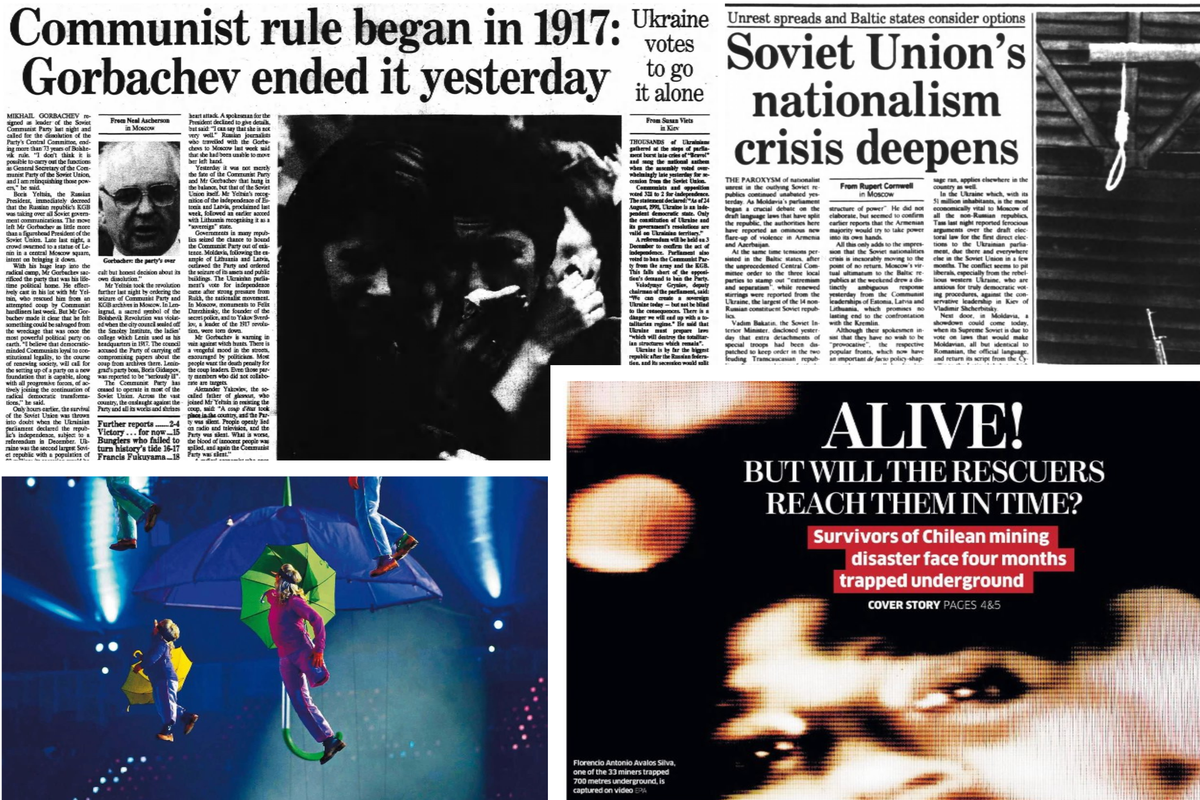
This week, communist rule fractures beyond all recognition. Poland embraces democracy. Nationalist unrest rapidly spirals across the Baltics. And just two years later, Mikhail Gorbachev resigns, ending over seven decades of Soviet power. Historic breakthroughs emerge elsewhere with the Oslo Accords and the miraculous discovery of trapped Chilean miners. Closer to home, Tony Blair’s top spin doctor Alastair Campbell steps down, and British sport celebrates a breathtaking Paralympic opening ceremony and a legendary Ashes victory.
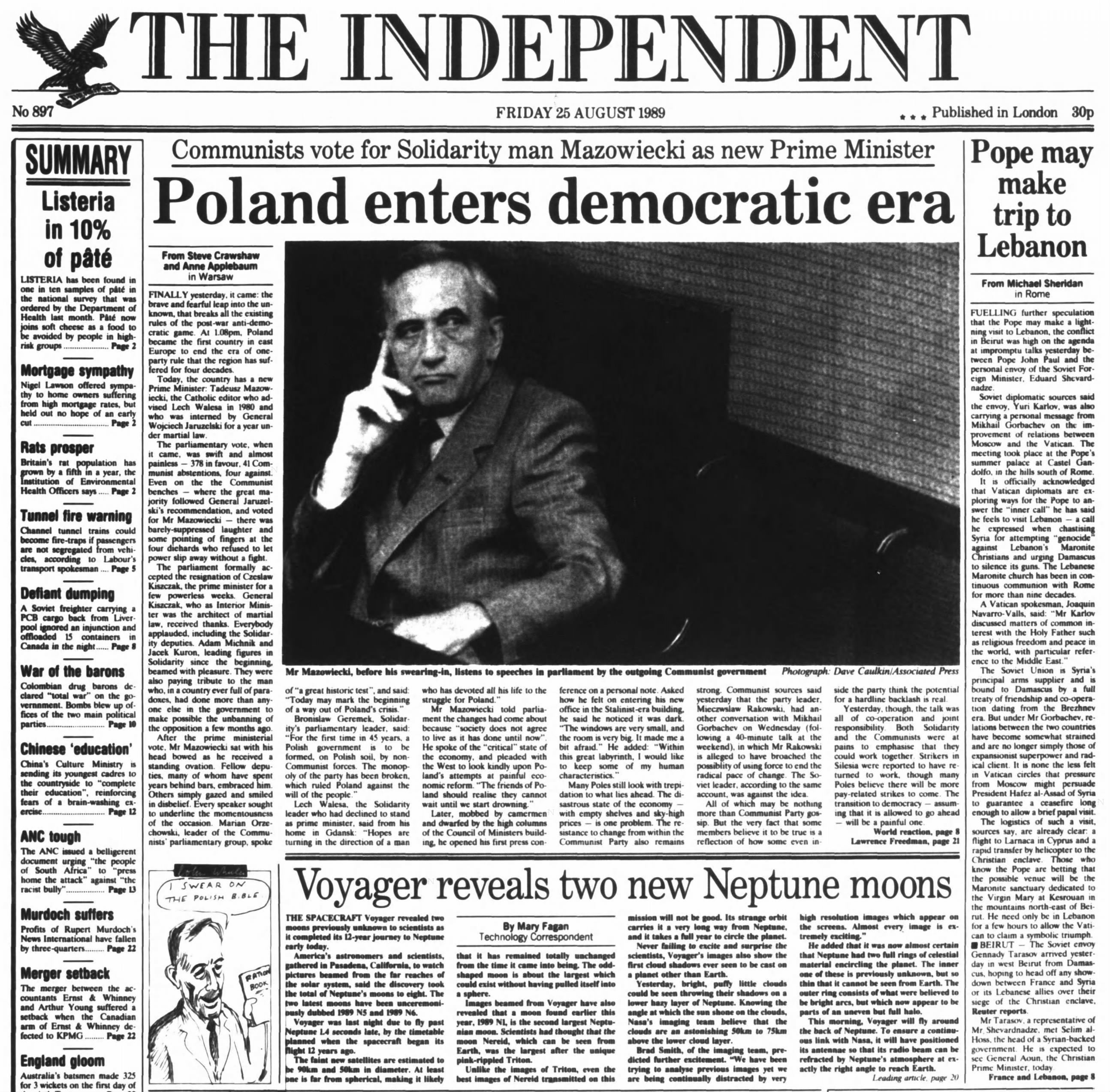
25 August 1989 – Poland enters new democratic era
The Polish parliament overwhelmingly votes to elect Tadeusz Mazowiecki as the nation’s first non-Communist Prime Minister in over four decades. The historic appointment of the Catholic editor comes just years after he was interned as a political prisoner under martial law. This massive parliamentary shift effectively ends absolute Soviet-backed rule in the country and marks a massive turning point for the impending fall of the Iron Curtain.
 open image in gallery
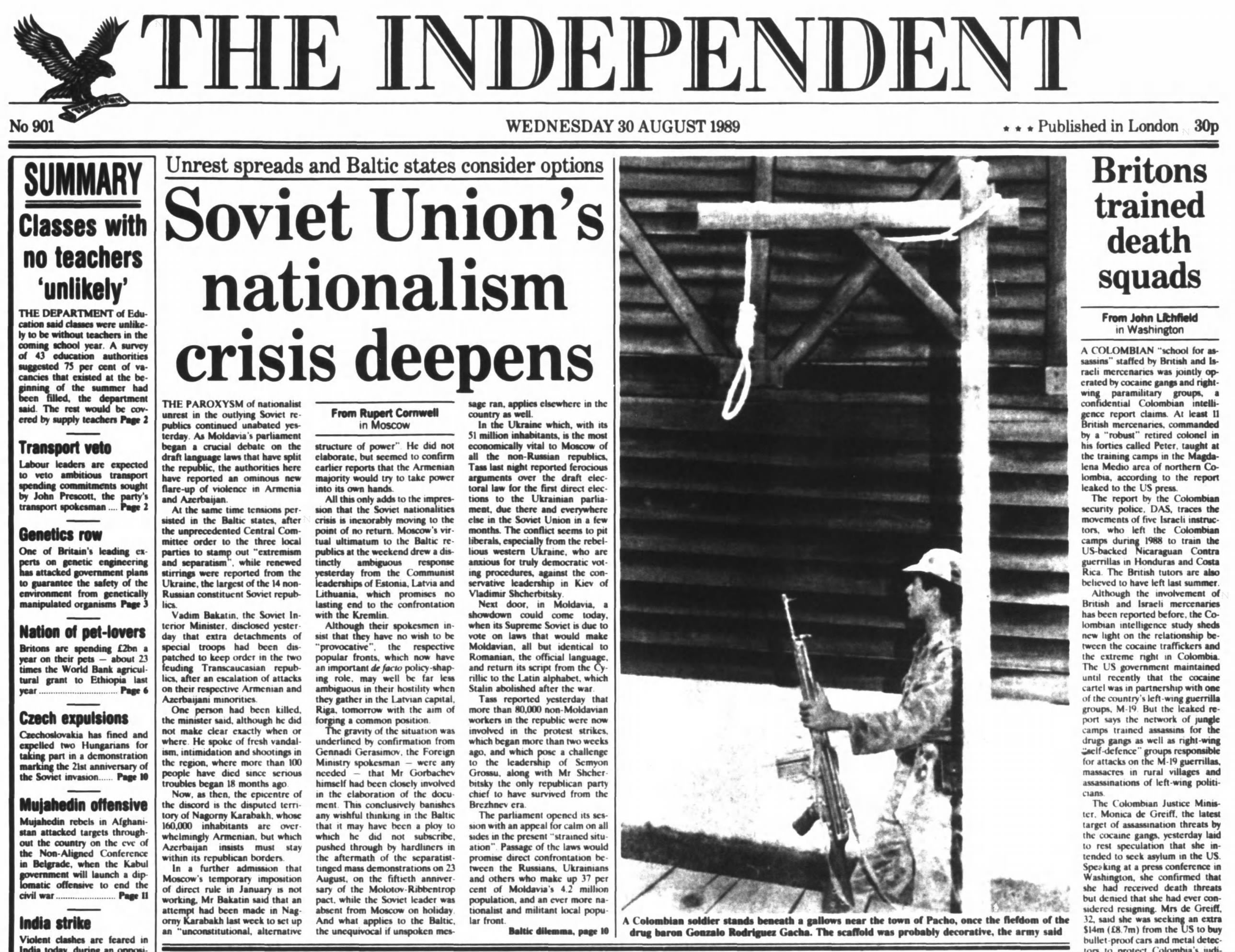
30 August 1989 – Soviet nationalism crisis deepens following Poland’s exit
An intense wave of nationalist unrest continues to fracture the Soviet Union just days after Poland successfully broke away from its sphere of influence. Authorities report a resurgence of violence in Armenia and Azerbaijan while tensions rise in the Moldovan parliament. The compounding regional crises prompts the central government to issue an unprecedented directive ordering the Baltic states to immediately stamp out all local separatist movements.
 open image in gallery
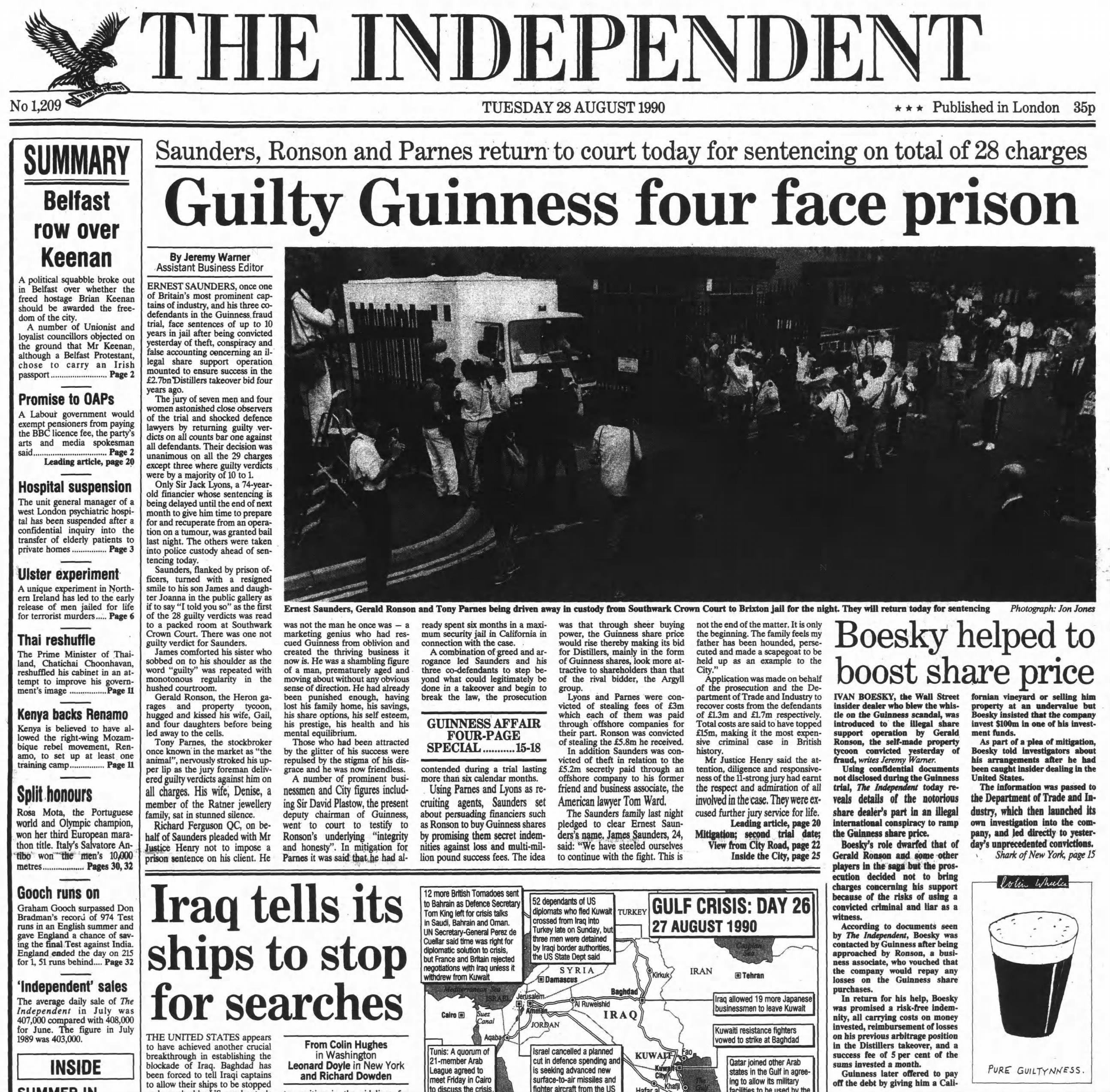
28 August 1990 – Guinness Four face prison for fraud
Three members of the so-called Guinness Four arrive in court to be sentenced for their direct involvement in one of the largest corporate frauds in British history. Ernest Saunders, Gerald Ronson, and Anthony Parnes were found guilty of artificially inflating the company’s stock price to secure a lucrative takeover of a rival drinks empire.
 open image in gallery
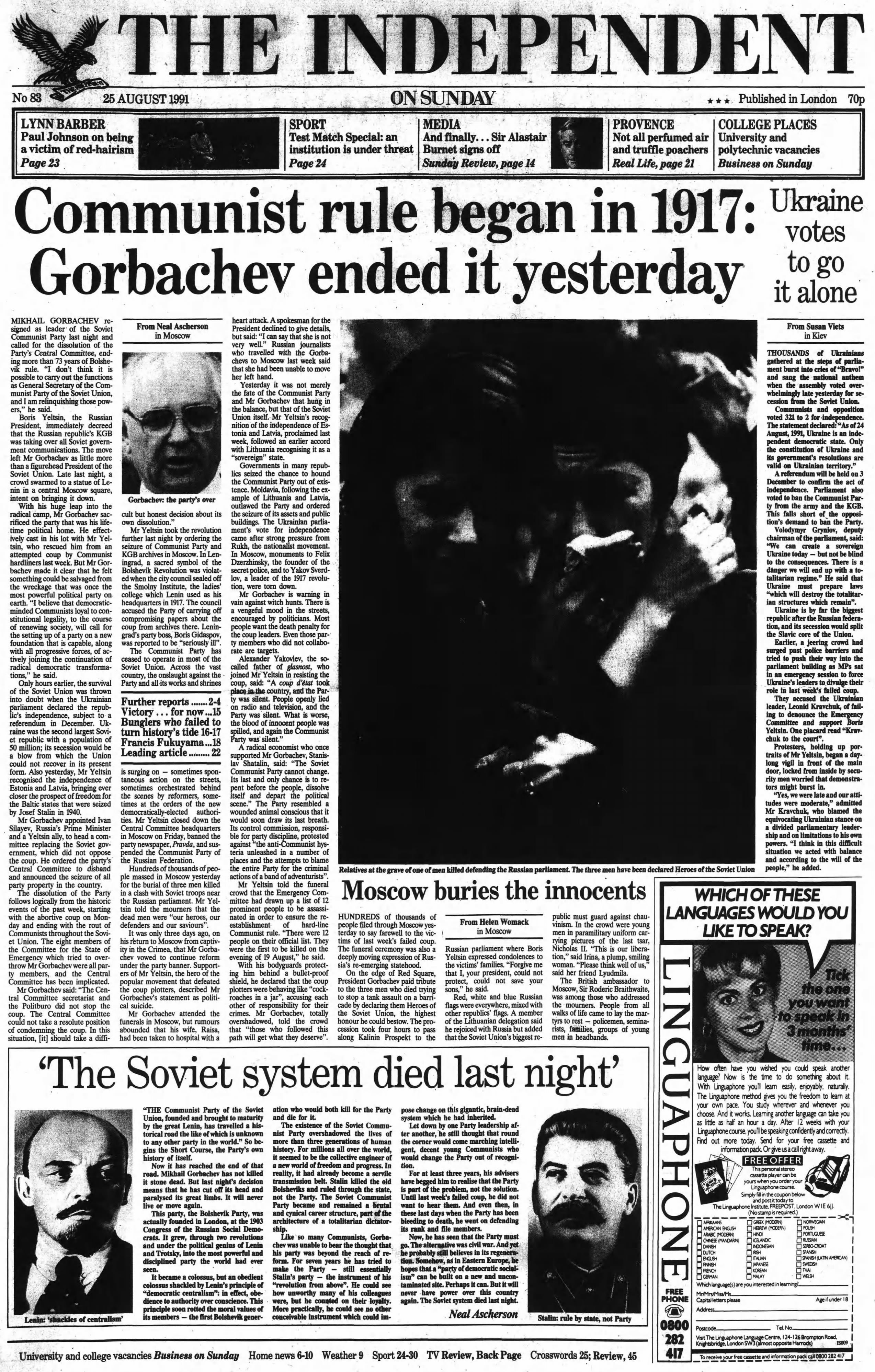
25 August 1991 – Communist rule ends as Gorbachev steps down
Mikhail Gorbachev formally resigns as the leader of the Soviet Communist Party and calls for the immediate dissolution of its powerful Central Committee. The move effectively brings an end to over seven decades of absolute Bolshevik rule across the rapidly fracturing Soviet Union. In the ensuing power vacuum, Russian President Boris Yeltsin swiftly consolidates his own authority by seizing control of state communications, reducing Gorbachev to a symbolic president with no real power.
 open image in gallery
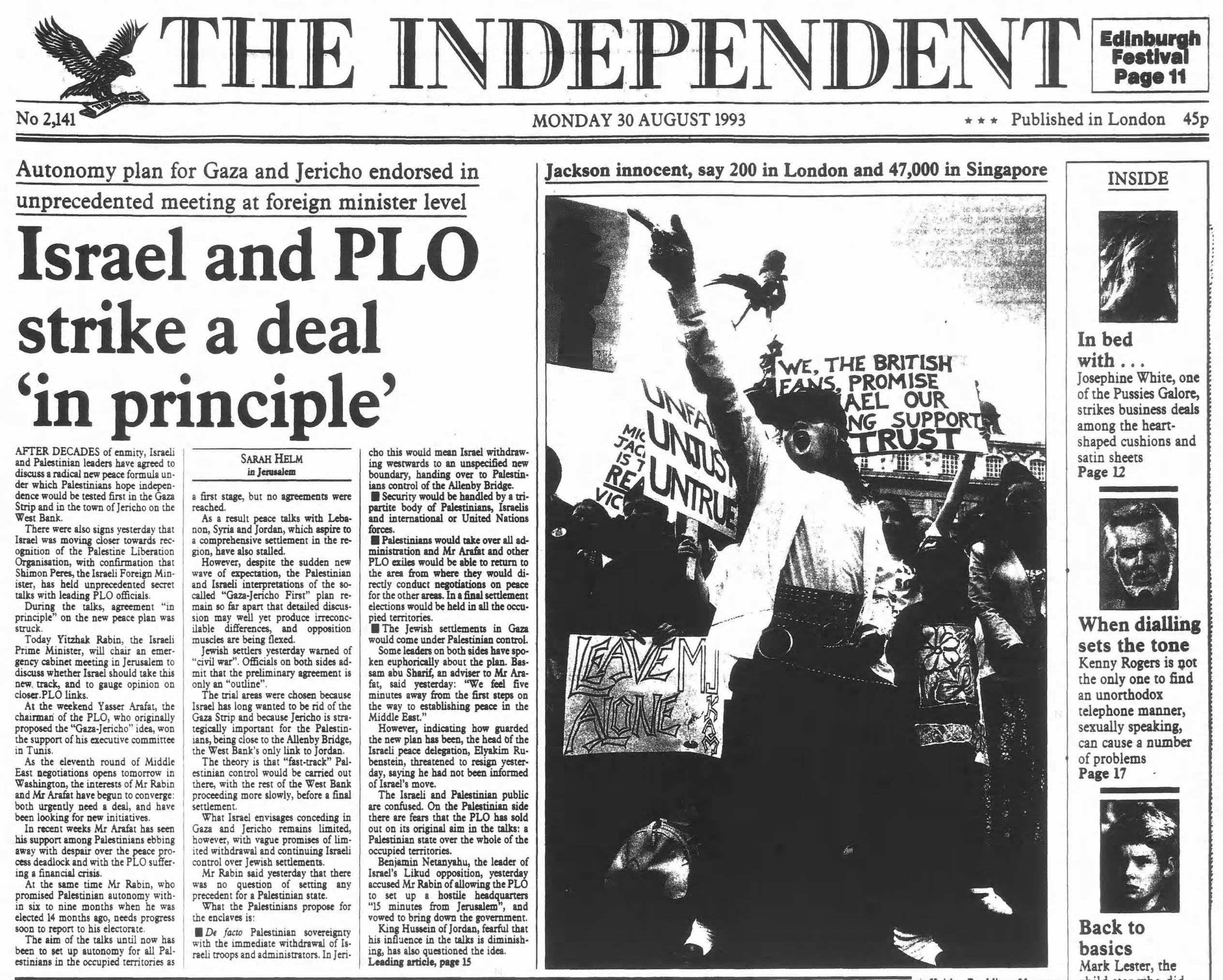
30 August 1993 – Israel and PLO strike historic peace deal
After decades of bitter conflict, Israeli Prime Minister Yitzhak Rabin and PLO Chairman Yasser Arafat agree to a radical new peace formula that became known as the Oslo Accords. The framework proposes limited Palestinian self-rule, starting with the Gaza Strip and the West Bank town of Jericho, alongside mutual political recognition. However, the breakthrough immediately faces fierce domestic backlash from opposition leader Benjamin Netanyahu, who vows to “bring down the government”.
 open image in gallery
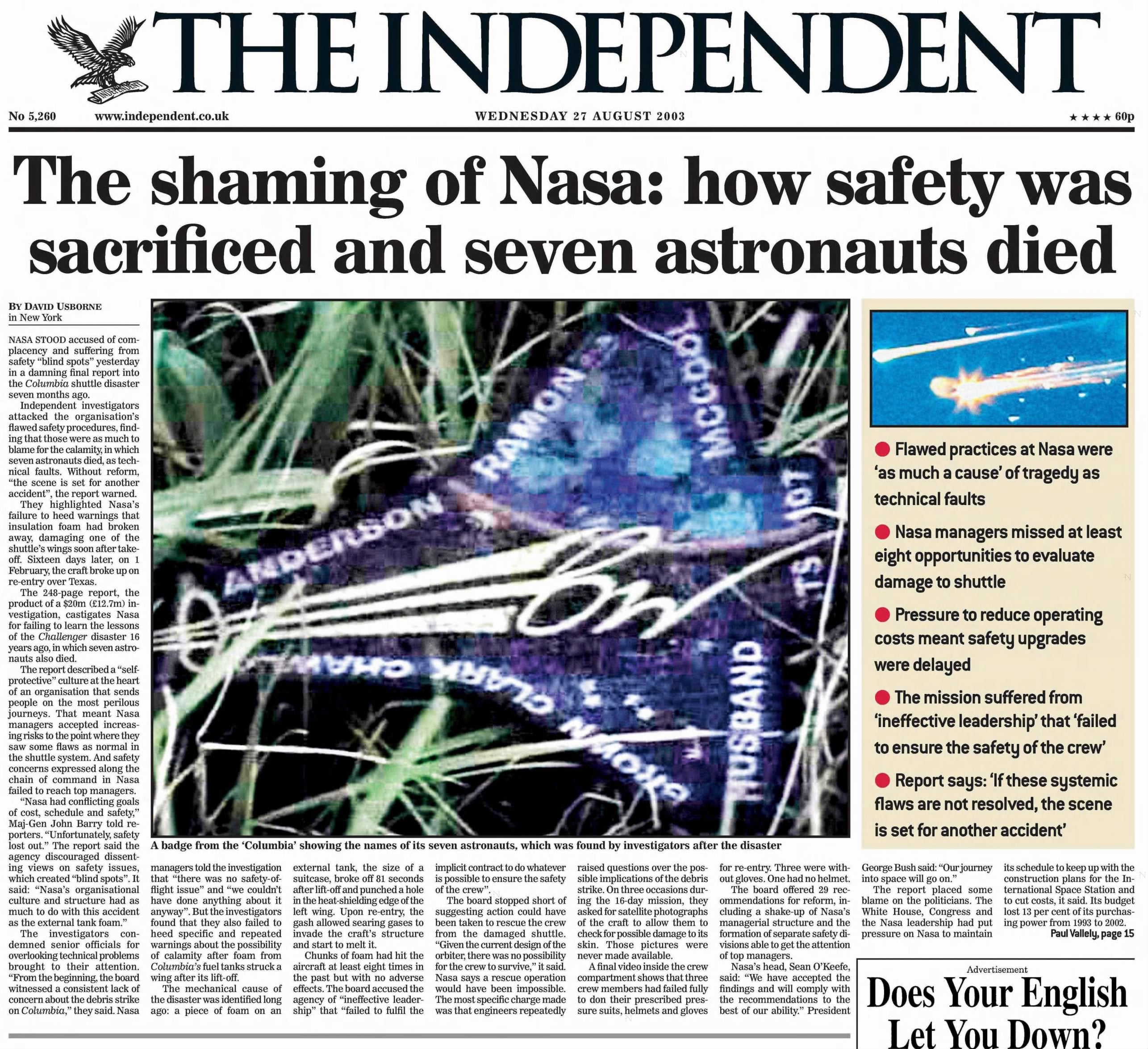
27 August 2003 – Investigation blames NASA for space shuttle disaster
NASA faces fierce public and political backlash after a final investigative report concludes that fatal organizational flaws led directly to the Columbia space shuttle disaster. The spacecraft had disintegrated upon re-entering the Earth’s atmosphere seven months earlier, killing all seven crew members on board. While investigators determined that a broken piece of foam caused the physical damage, they ultimately blamed the tragedy on a broken safety culture that routinely ignored serious warnings.
 open image in gallery
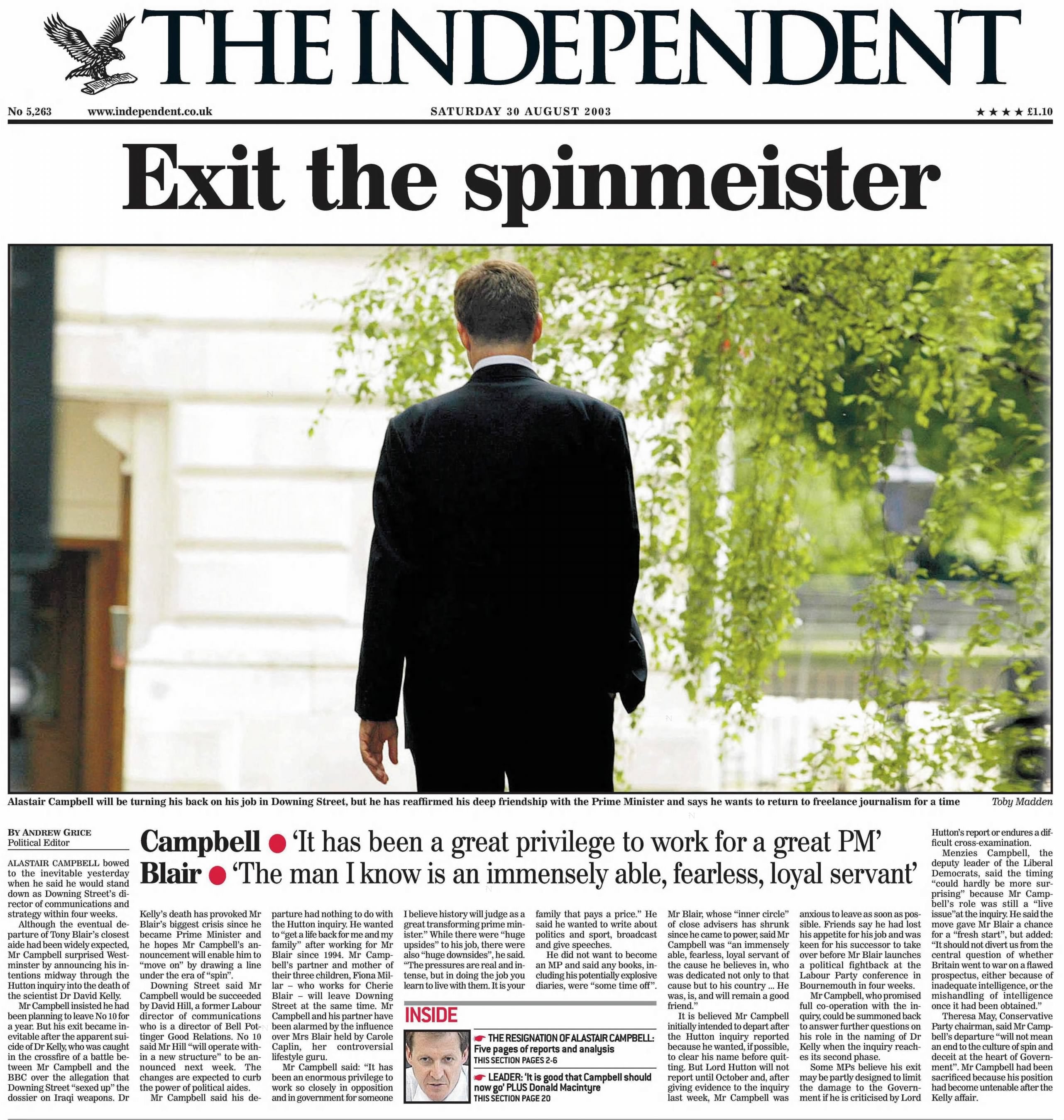
30 August 2003 – Blair’s top spin doctor steps down amid David Kelly affair
Alastair Campbell announces his resignation as Downing Street’s director of communications after his position becomes politically untenable. The controversial strategist had faced months of intense scrutiny over allegations that he exaggerated government intelligence regarding Iraqi weapons of mass destruction to justify the recent war. His fierce public feud with the BBC and the tragic suicide of government scientist Dr David Kelly ultimately forced Tony Blair’s closest aide to step aside.
 open image in gallery
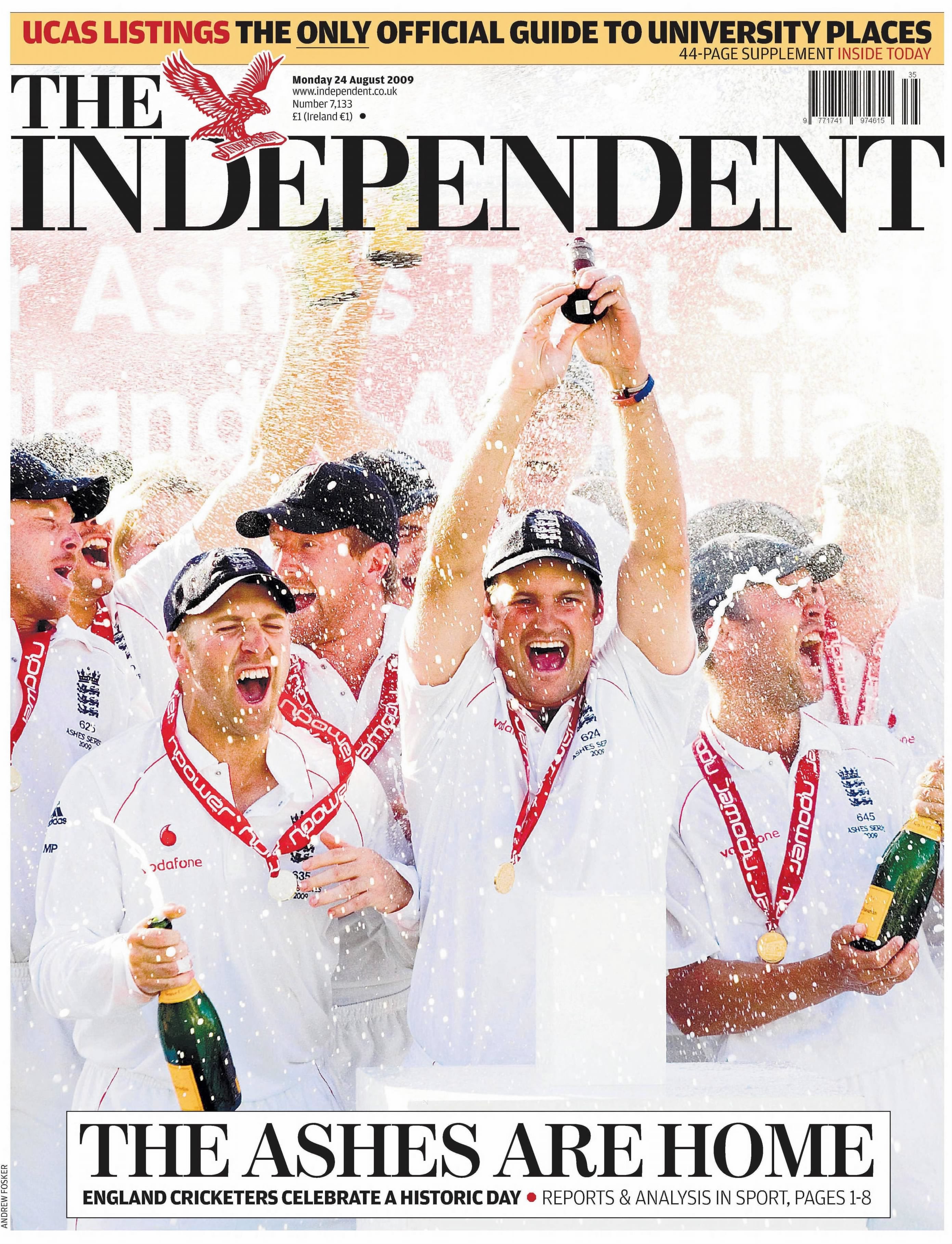
24 August 2009 – England cricketers celebrate historic Ashes victory
The England national cricket team successfully reclaims the prestigious Ashes urn following a dramatic and decisive series finale against Australia at The Oval. The overall victory proved especially historic as the squad finally broke a seventy-five-year curse by defeating their rivals at Lord’s earlier in the campaign.
 open image in gallery
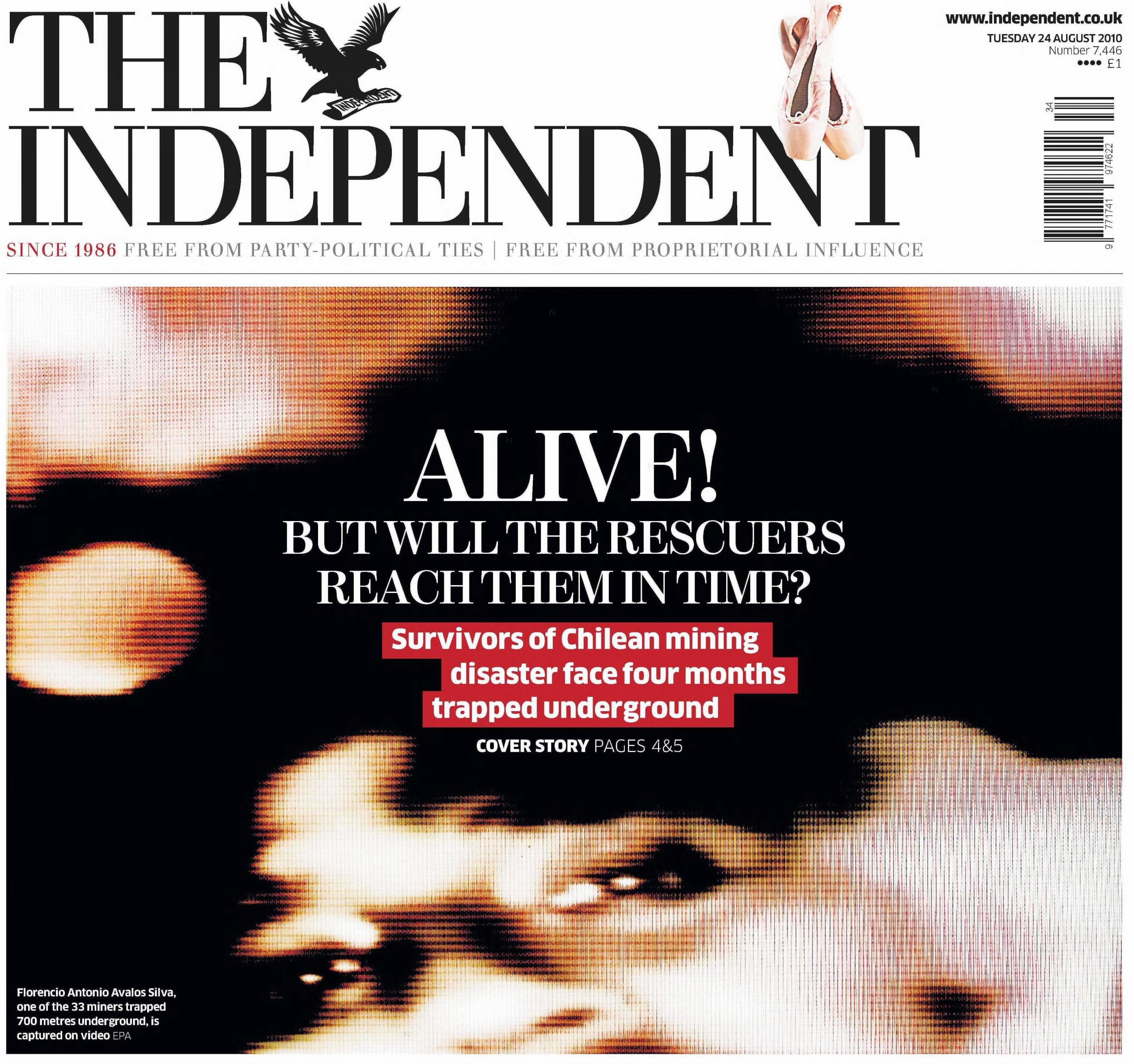
24 August 2010 – Trapped Chilean miners found alive after two weeks
Global attention focuses on the San José mine in Chile after authorities announce that thirty-three trapped miners have been found alive seventeen days after a massive cave-in. While the initial survival of the men sparked nationwide celebrations, mining experts quickly warned that safely extracting them from deep underground could take several months. But nearly ten weeks later, a specially designed rescue capsule successfully pulled all the men to safety one by one.
 open image in gallery
30 August 2012 – London 2012 Paralympic Games begin
The London 2012 Paralympic Games get off to a spectacular flying start with an impressive opening ceremony at the Olympic Stadium. The Games marked a homecoming for a sporting movement that originally began in a British hospital decades earlier. Over the following weeks, the record-breaking competition would come to transform public perceptions and establish a powerful new legacy for elite disabled athletes.
 open image in gallery