


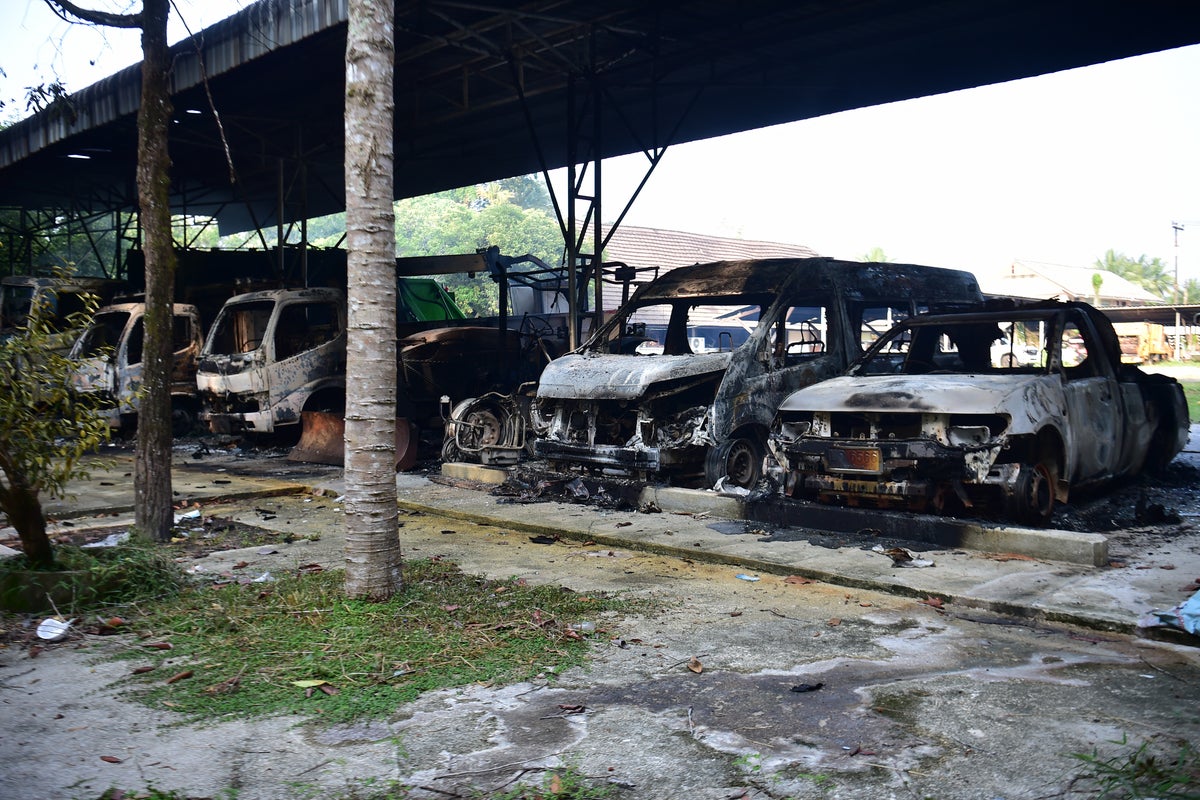
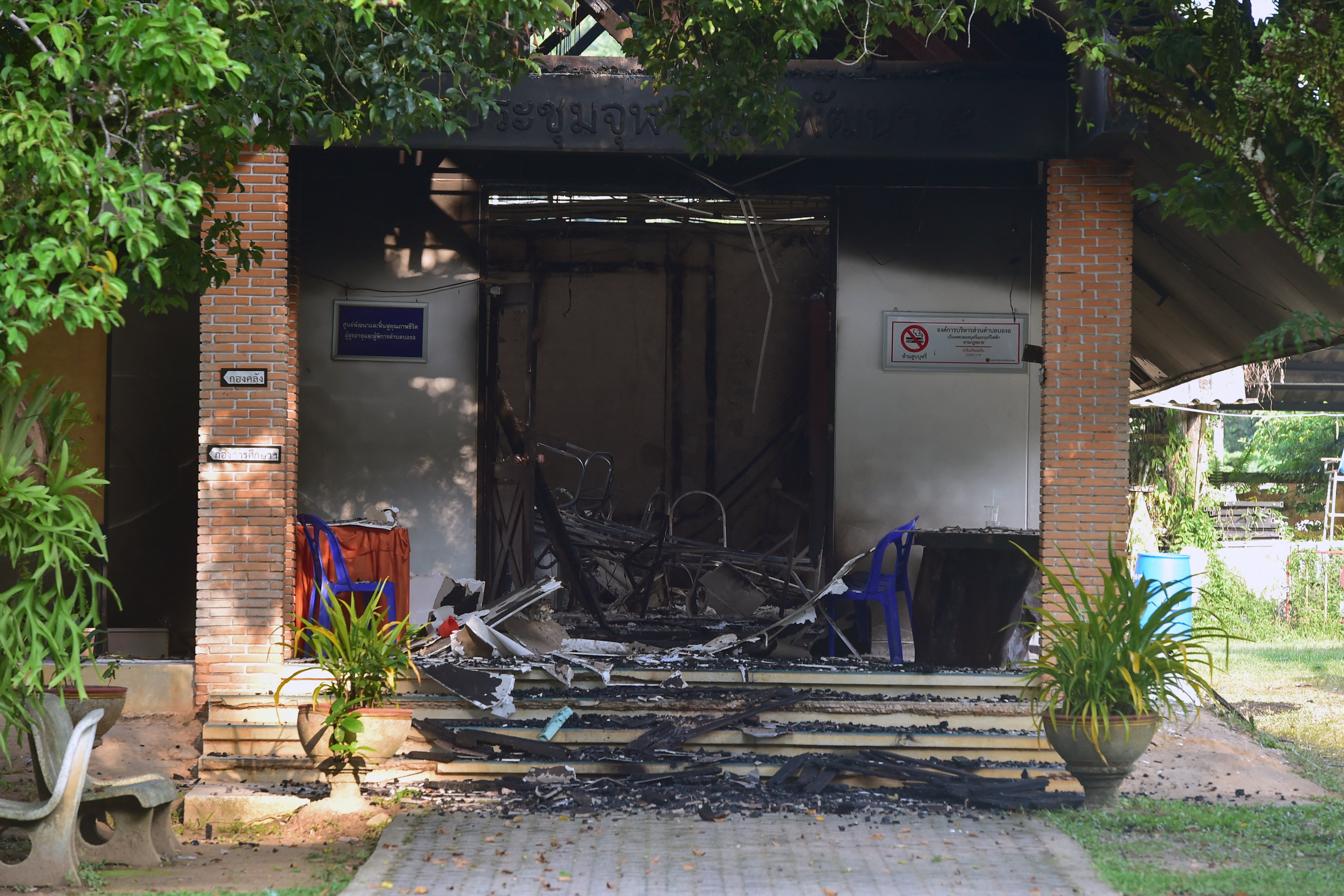
Suspected insurgents set fire to government buildings, shops, and cars in more than 70 locations across Thailand’s troubled southern border region, injuring at least three people in the coordinated series of attacks over the weekend.
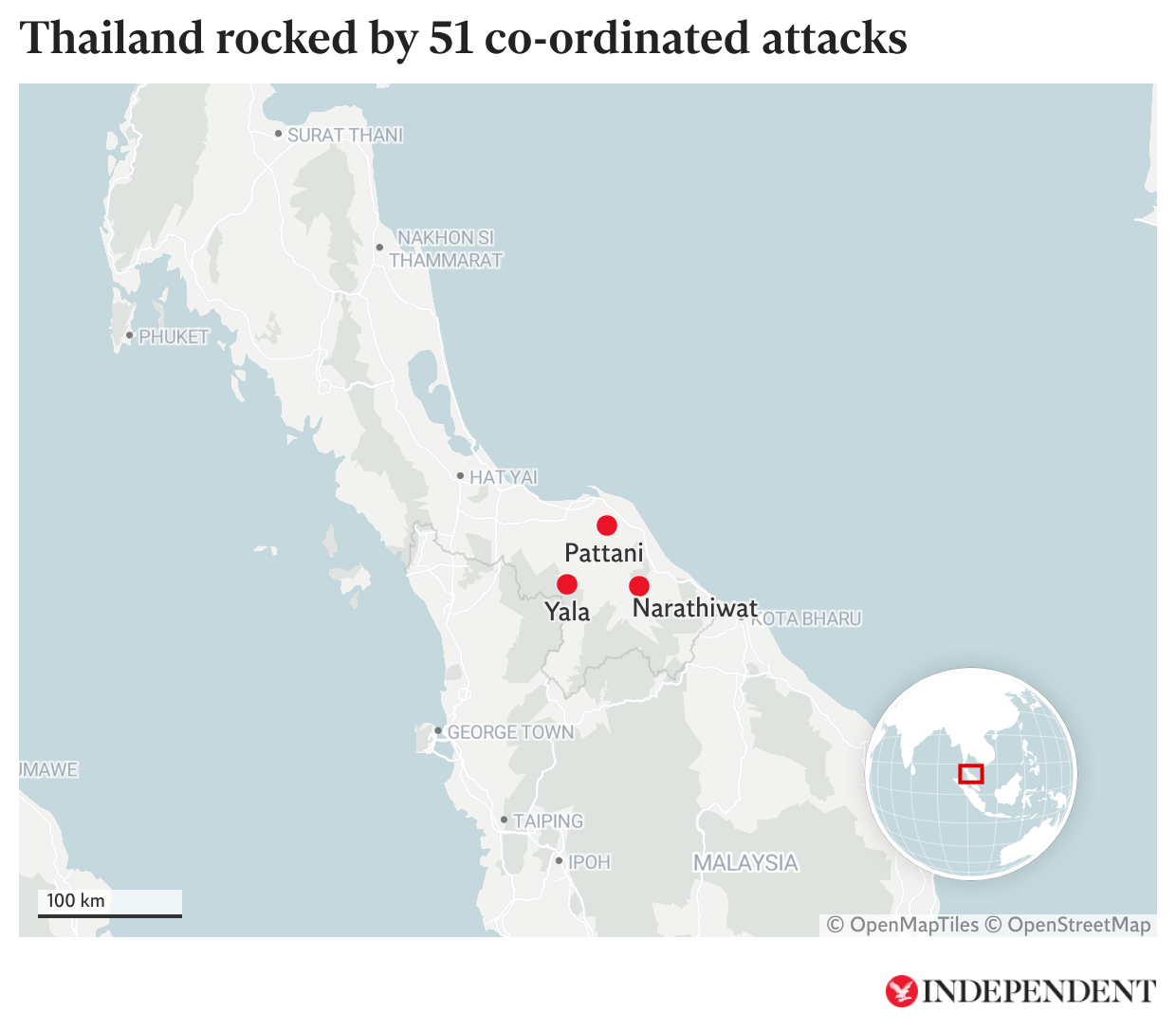
The attacks that rocked the insurgency-hit “deep south”, targeted telephone towers and railway infrastructure across 21 districts in Thailand’s Narathiwat, Pattani, and Yala provinces.
The attacks began around 8pm local time on Saturday, according to Thailand’s Internal Security Operations Command (ISOC).
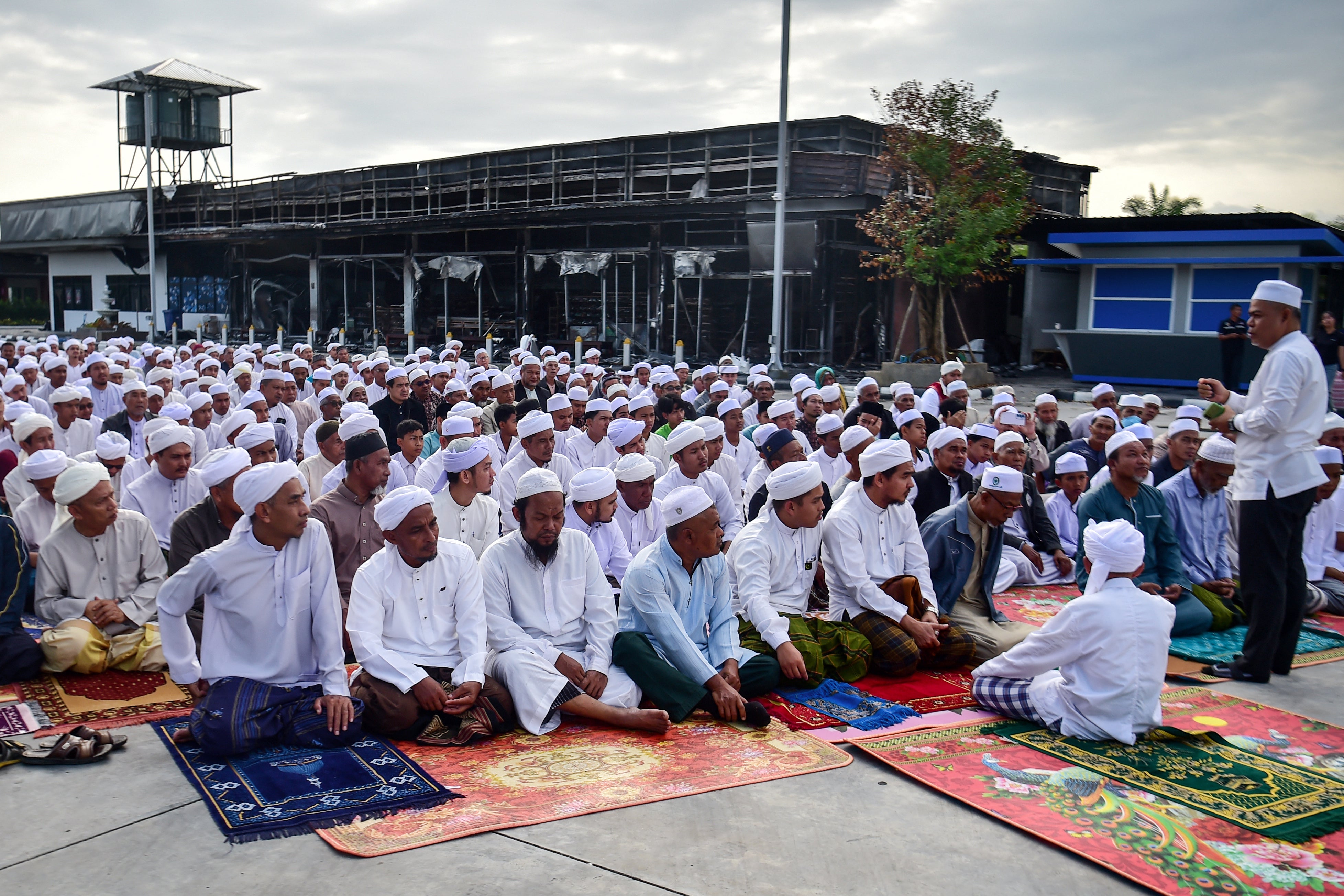
The violence primarily involved small bombs, arson, and other forms of property damage. The highest-profile target was a 7-Eleven convenience store in Pattani.
 open image in gallery
What happened?
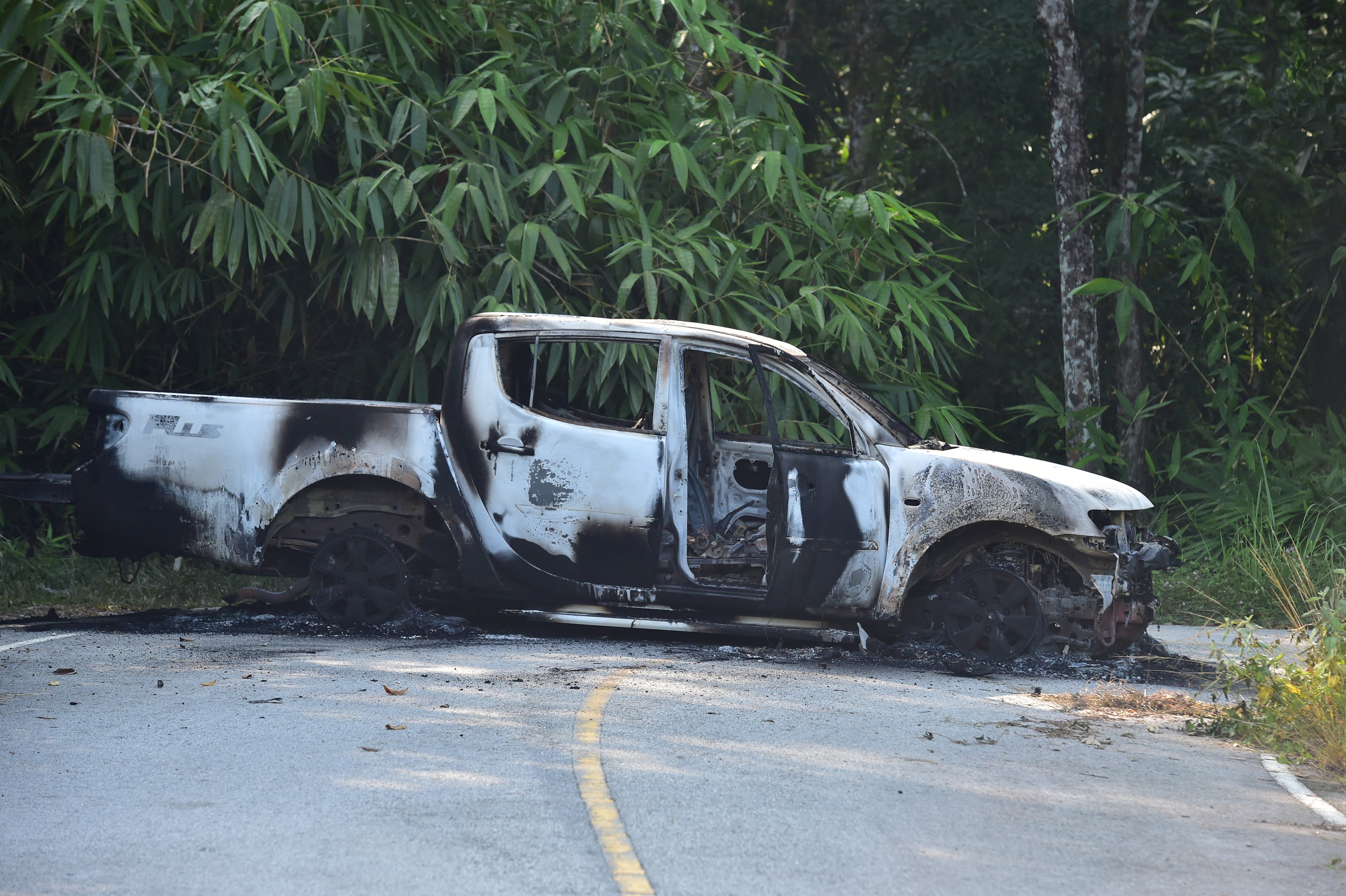
Attackers burned tyres and vehicles, damaged telephone towers and surveillance cameras, scattered caltrops on roads and planted suspicious objects. Explosions later struck electricity infrastructure and railway tracks.
In one of the more serious incidents captured on camera, at least five armed men raided a convenience store in Pattani’s Yaring district. They ordered employees and customers outside before one attacker planted an improvised explosive device inside the shop. The resulting blast triggered a fire that destroyed the store and forced firefighters to retreat when further explosions occurred.
 open image in gallery
In Yarang, six masked gunmen reportedly tied up a security guard before setting fire to a government garbage truck, while attackers in Nong Chik burned a fire engine.
The Narathiwat military command announced a curfew from Saturday night until 6am on Sunday as tensions flared.
The national railway operator also temporarily suspended part of a route in Narathiwat after officials reported damage on the tracks “caused by a disruptive bombing incident last night”, the Isoc said.
Part of a long-running conflict
The Isoc characterised the incidents as a deliberate, multi-location operation designed to create unrest and disrupt public order.
Prime minister Anutin Charnvirakul, who is also the interior minister, convened an urgent meeting of senior security officials on Sunday morning, before departing for Nan province to inspect flooding in the north.
These attacks did not occur in isolation. They form another wave in the decades-old southern insurgency, often called the Deep South conflict.
 open image in gallery
The three provinces sit along Thailand’s border with Malaysia. The region is predominantly Malay-Muslim and has a distinct history, language and cultural identity from Thailand’s largely Buddhist majority population.
No group has claimed responsibility for the arson attacks.
Since a major escalation in 2004, ethnic Malay Muslim armed groups in the predominantly Muslim provinces of Pattani, Yala, and Narathiwat have fought for greater autonomy or independence from Buddhist-majority Thailand. The Barisan Revolusi Nasional (BRN), the main separatist organisation active in the region, is widely regarded as the dominant force directing much of the armed struggle.
According to the Thai Examiner, BRN is believed to be headquartered in Malaysia, although the Malaysian government denies that the group is based there.
Several armed groups operate across the three provinces, but security sources attribute overall direction of this particular large-scale, near-simultaneous campaign to BRN leadership, the report said.
Muslim residents have long complained of being treated like second-class citizens in Thailand, and separatist movements have been periodically active for decades.
Insurgent violence escalated sharply in 2004 and led to heavy-handed crackdowns by security forces, further fuelling discontent.
 open image in gallery
According to Deep South Watch, a think tank based at the Prince of Songkla University’s campus in Pattani, 7,837 people have died in the violence in the past 22 years.
The army commander for the southern Pattani province said on Sunday that there were intelligence reports on local offices.
“We had intelligence reports for about two months that there would be attacks on local offices,” Norathip Poinok told reporters. He said the military had issued warnings to security agencies but did not know when and where the assaults would occur.
Don Pathan, an independent security analyst, said the BRN carries out attacks largely for leverage as it negotiates with the Thai government.
“From the ground, BRN combatants are turned off by the boasting of military officials and wanted to use the spike in violence to demonstrate their capabilities,” said Mr Pathan.
“Many of the targets in these latest incidents were civilians, but BRN combatants were not after body counts. They want to send a stern message to the Thais of what they are capable of doing.”
 open image in gallery
Talks between the Thai government and the BRN were expected to resume in June after a rise in violence.
But the talks have remained in a deadlock due to disagreement over self-government, security measures and political representation.
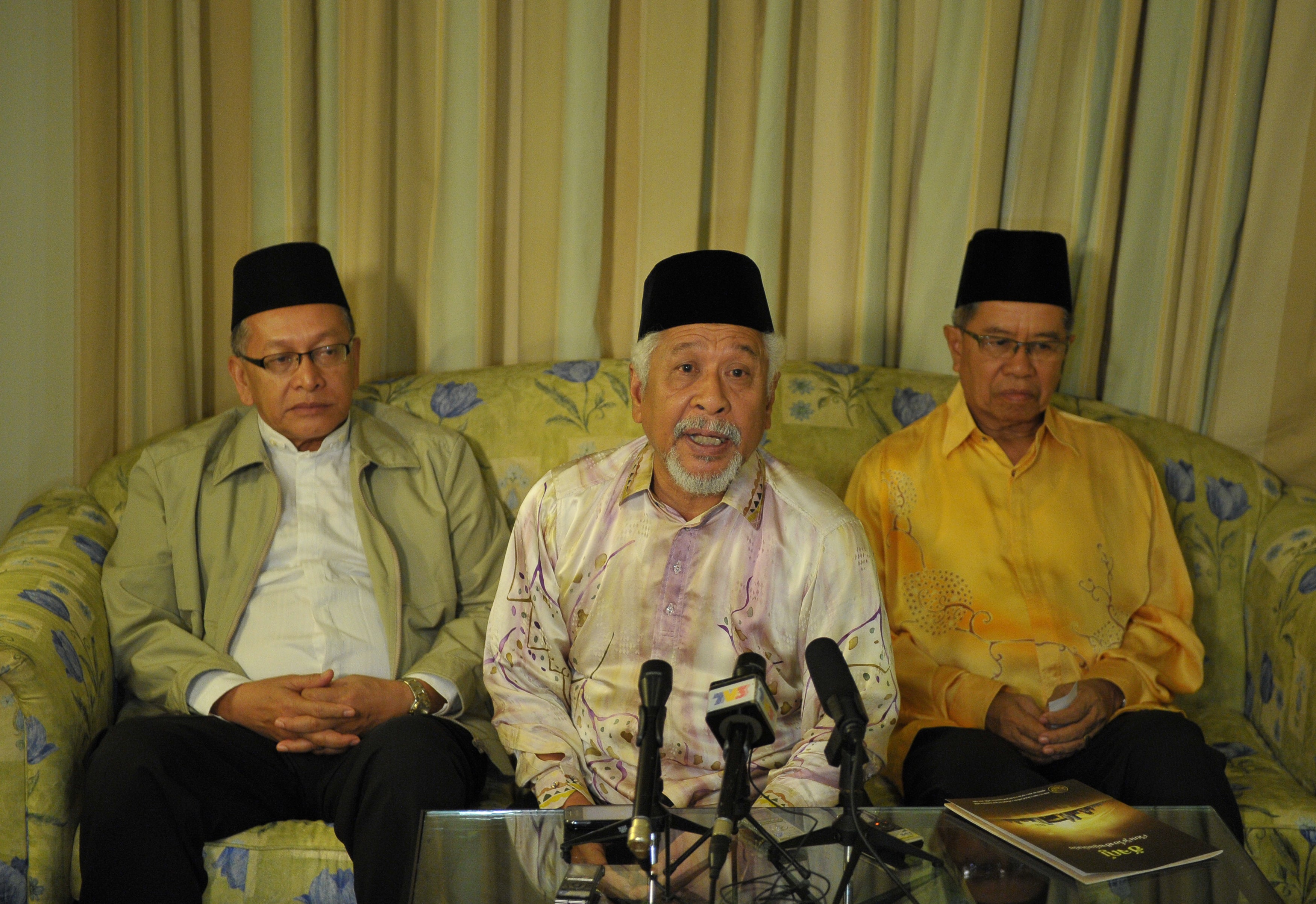
Earlier this week, the head of Thailand’s National Intelligence Agency, Thanut Suvarnananda, said he wants to move away from a transactional approach. He was appointed by the government to lead the peace process.
He said he will seek to turn the BRN from an adversary to a potential partner, addressing the demands of the communities of the deep south, including the predominantly Malay-Muslim provinces of Pattani, Yala and Narathiwat that were once part of the independent Malay sultanate of Patani.
The last major flare-up came in July, when about 10 attackers opened fire and threw pipe bombs at soldiers at a security checkpoint in Narathiwat. Five paramilitary soldiers were killed and six civilians were wounded, including a 10-year-old boy.