


Regulatory issues threats to oil investment, others, says PENGASSAN
August 19, 2026 10:54 pm

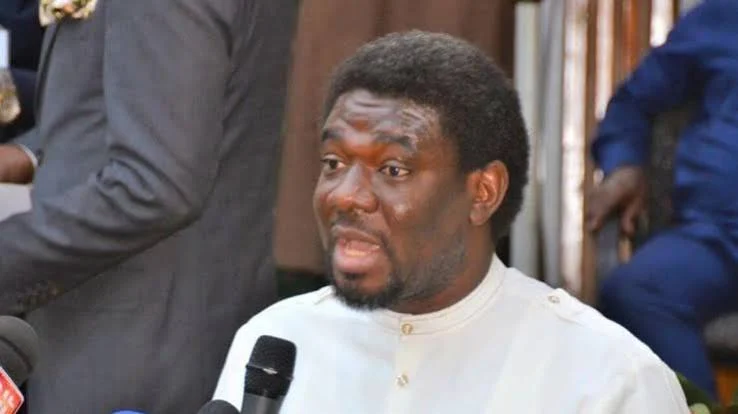
FILE: TUC leader Festus Osifo
The Petroleum and Natural Gas Senior Staff Association of Nigeria has warned that regulatory uncertainty, overlapping mandates and lengthy approval processes could undermine fresh investment and slow production growth in Nigeria’s oil and gas industry.
The PENGASSAN President, Festus Osifo, raised the concerns on Wednesday at the fifth PENGASSAN Energy and Labour Summit 2026 in Abuja, where government officials, regulators, operators and labour leaders examined ways to strengthen stability and attract investment into the sector.
The summit, themed, “Strengthening Regulatory Frameworks as a Catalyst for Stability and Growth in Nigeria’s Oil and Gas Industry,” came against the backdrop of renewed efforts by the Federal Government to increase crude oil production, attract investment and deepen domestic refining and gas development.
Osifo said the capital-intensive nature of the petroleum industry made regulatory certainty critical to investors making long-term commitments.
He said the Petroleum Industry Act, 2021, had represented a major step in reforming the sector, but subsequent changes to the regulatory framework, including the movement of some fiscal provisions from the PIA to the Nigeria Revenue Act and the use of executive orders, had created uncertainty.
He also raised concerns about overlapping responsibilities among regulatory agencies, warning that operators should not be subjected to repetitive approvals, multiple inspections and conflicting directives.
“Investors need clear rules not alterations. Operators need predictability. Workers need protection. Host communities need confidence, while governments need sustainable revenues,” Osifo said.
The PENGASSAN president urged the government to streamline approval processes and deploy technology to reduce regulatory bottlenecks while maintaining effective oversight, safety and environmental standards.
He warned that delays in approvals could frustrate development plans, final investment decisions and projects capable of increasing oil and gas production.
“These do not instil confidence or promote stability; instead, they amplify uncertainty and disruption.
“What we require is not weak regulations. What we need is smarter regulations; regulations that understand commercial realities, embrace technology and eliminate unnecessary duplication.
“Capital is mobile and investors will naturally gravitate towards jurisdictions where there is clarity and efficiency. Our processes must therefore be clear and our systems efficient,” he said.
Osifo further demanded stronger protection for workers affected by acquisitions, divestments and restructuring in the industry.
He argued that changes in ownership of oil and gas assets should not automatically translate into job losses or the erosion of workers’ pensions, collective bargaining agreements and other established rights.
“Licences and assets may change hands, but workers are not commodities to be discarded at will,” he said.
Osifo also criticised the abuse of expatriate quotas, calling for stricter enforcement to ensure that foreign workers were employed only where genuine skills gaps existed.
He said expatriate appointments should be linked to measurable knowledge transfer and succession plans that would build the capacity of Nigerian workers.
The labour leader further called for stronger enforcement of local content, health, safety and environmental regulations, alongside increased investment in domestic refining, gas processing and infrastructure for liquefied petroleum gas, compressed natural gas and liquefied natural gas.
He said Nigeria must move beyond simply recovering lost production and focus on unlocking new reserves, attracting fresh capital and sustainably increasing oil and gas output.
“Without investment, there will be no project. Without projects, there will be no sustainable jobs. Without production, there will be no revenue. And without fairness and stability, none of these can endure,” Osifo added.
On his part, the Group Chief Executive Officer of the Nigerian National Petroleum Company Limited, Bayo Ojulari, said regulatory stability also depended on the professionals responsible for implementing policies and managing industry operations.
“A regulatory framework, however well written, is only as strong as the people who apply it every day. So, before we speak of frameworks and policy, we must speak of the people who give them life,” Ojulari said.
He said NNPC Limited was working to improve its employee value proposition and create an organisation where workers would have confidence in choosing the company as their preferred workplace.
The Minister of Labour and Employment, Muhammad Dingyadi, also called for stronger regulations to improve investor confidence, protect workers and enhance the competitiveness of the petroleum industry.
“Strong regulatory frameworks are the bedrock upon which stability, investor confidence and equitable growth are built,” he said.
Dingyadi said stable labour relations were inseparable from stability in the oil and gas sector, urging stakeholders to address regulatory gaps, environmental concerns, energy transition and local content development.
“When workers are empowered, when dialogue replaces discord, and when fairness guides our policies, the entire nation benefits,” the minister said.
He urged participants to develop practical measures that would keep the oil and gas industry a reliable source of revenue, jobs and sustainable economic growth.
Damilola Aina is a journalist at Punch Newspapers with over five years of experience covering energy, business, investment, infrastructure, and property sectors. He specializes in producing well-researched and insightful reports that inform readers and provide clarity on complex topics. Damilola’s work demonstrates practical newsroom experience, editorial insight, and a strong commitment to accurate and engaging journalism.
All rights reserved. This material, and other digital content on this website, may not be reproduced, published, broadcast, rewritten or redistributed in whole or in part without prior express written permission from PUNCH.
Contact: [email protected]