 Image source, PA Media
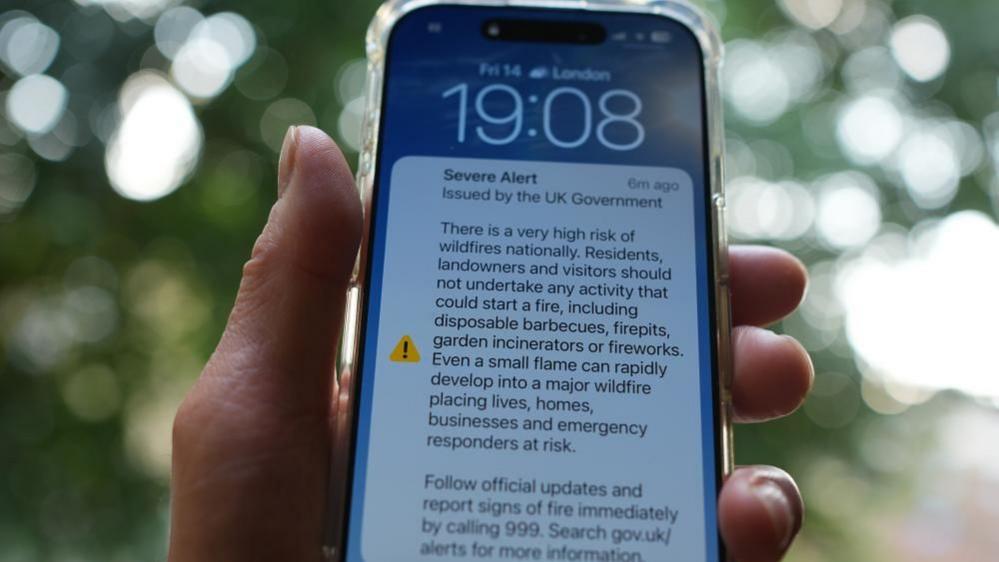
The alert was sent to mobile phones across England and Wales last Friday
ByJoe Coughlan
The government has defended its decision to send an emergency phone alert warning of wildfires across England and Wales last week as “entirely appropriate”.
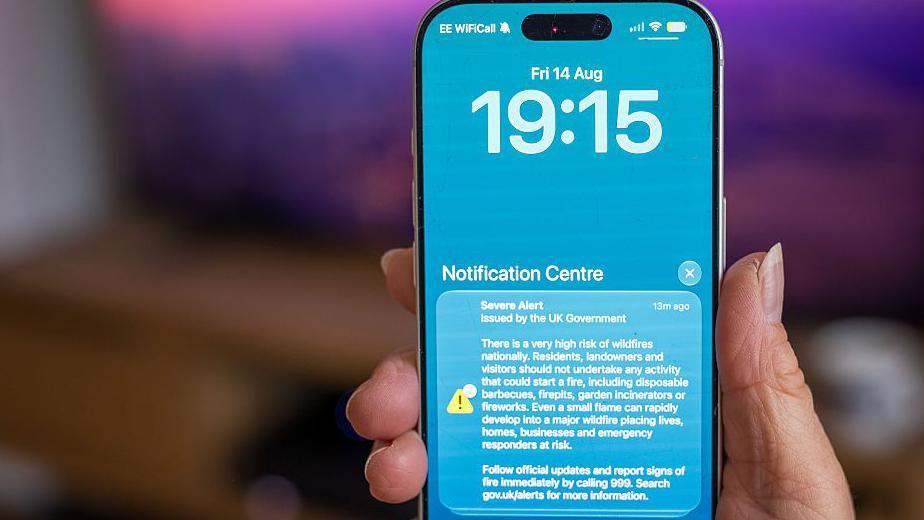
Millions of mobile phones bleeped with a “severe alert” notification on Friday, stating there was a “very high risk of wildfires nationally”.
The lack of advance warning for the alert was criticised by charities and domestic abuse survivors, who said there was little chance to protect those hiding secret phones.
The prime minister’s official spokesperson said on Monday the first duty of government was to “keep people safe” and the alert had been sent “after a direct request from fire and rescue services on the front line”.
They added that at the time of the alert there were 43 fires and 11 major incidents which “stretched resources to the very limit” and required military support.
Most people started to receive the alert from 19:00 BST on Friday, with a message cautioning against the use of disposable barbeques, naked flames or fireworks.
The notification was the biggest use yet of the emergency alert system and Prime Minister Andy Burnham urged the public to take it “seriously”.
Wildfire alert sounds while The One Show live on air
A Cabinet Office press release about the alert, posted to its website at about 18:45 on Friday, was missed by many in the media, which meant there was little warning to the public.
Some campaigners have said this potentially jeopardised domestic abuse victims trying to hide secret phones they use to seek support and try to escape abusers.
Women’s Aid, the national charity aiming to end domestic abuse, is calling for more forewarning of alerts wherever possible.
Veronica Oakeshott, the charity’s head of external affairs, told BBC News: “Survivors of domestic abuse frequently turn to second phones to help them access lifesaving support or flee from abuse.”
It is vital the devices stay hidden, she said, adding: “We would urge the government to forewarn the public that alerts might be issued, when possible.”
A government spokesperson previously said it was working closely with domestic abuse charities for tests of the system.
It has also been reported that senior government figures were discussing whether or not to send the alert hours before, on Friday morning.
Phil Garrigan, chair of the National Fire Chiefs Council, said on Monday he was grateful to the public for the response to the emergency alert.
He told BBC Radio 4’s Today programme his organisation had seen a decrease in the number of wildfires emergency services have responded to in the last 72 hours.
Garrigan added that there were still four major incidents declared in Hampshire, Cambridgeshire, South Wales and the West Midlands.
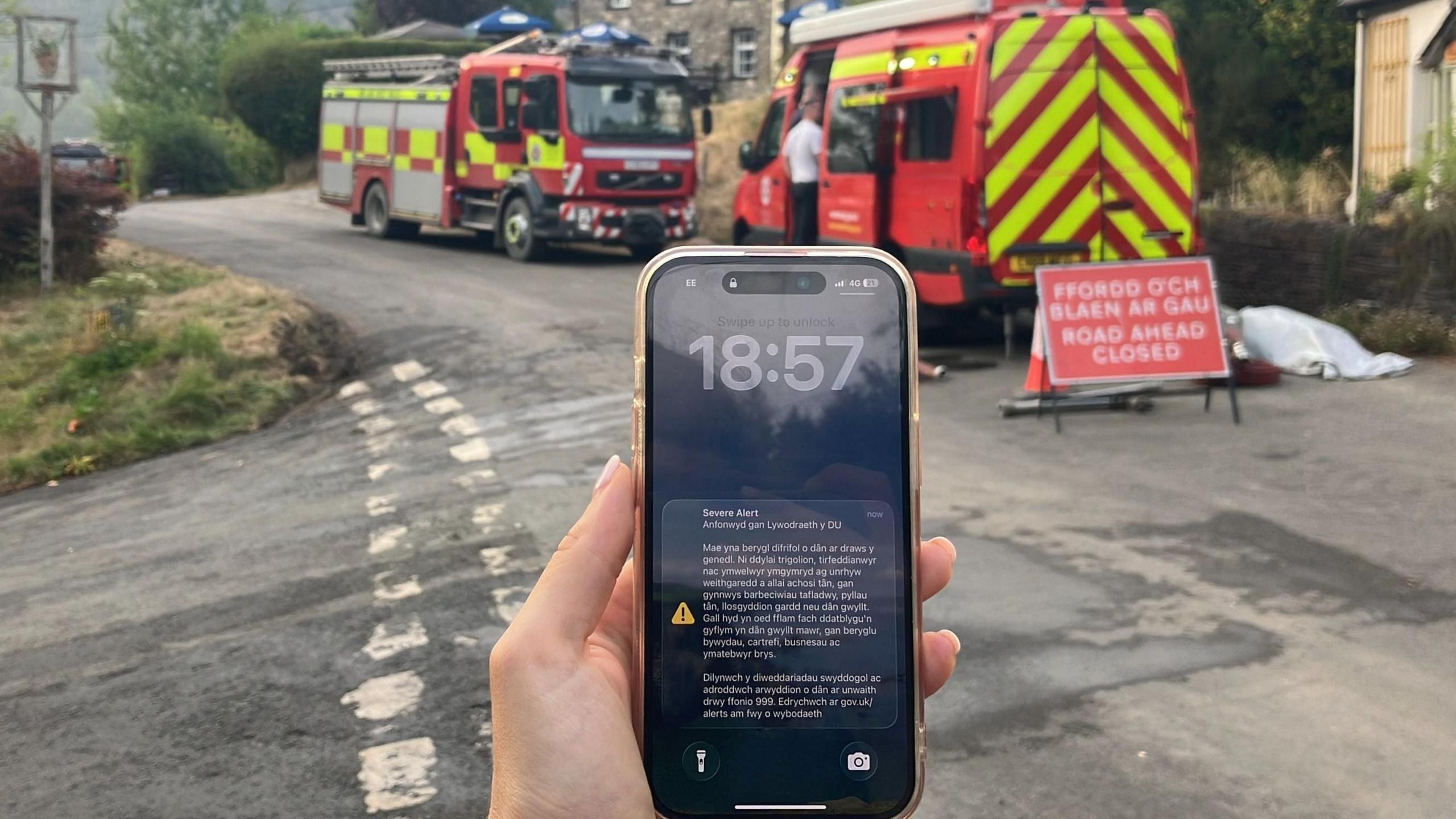
Politicians, including Reform UK’s Laura Anne Jones and Andrew RT Davies for the Conservatives, have also questioned why the emergency alert was sent to phones in Welsh before it arrived in English.
The UK government did not comment directly, but said under the Welsh Language Act, it has to send alerts in the Welsh language first and sends alerts bilingually where possible.