


Osun loss: APC youth leader urges major party overhaul
August 17, 2026 1:35 am

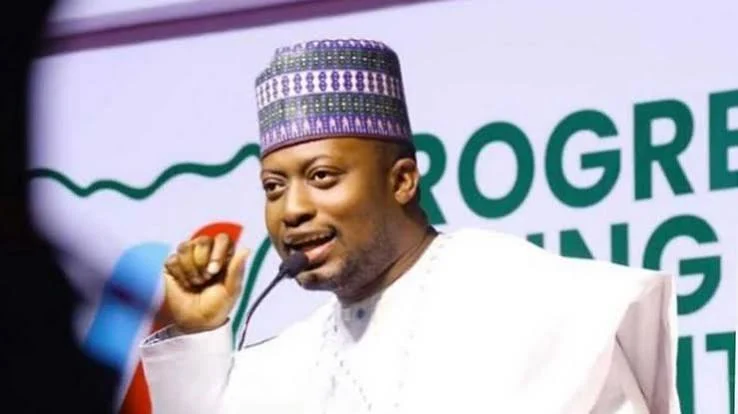
The National Youth Leader of the All Progressives Congress, Dayo Israel. Photo credit: Web
The National Youth Leader of the All Progressives Congress, Dayo Israel, has urged the ruling party to undertake a major strategic overhaul following its defeat in the Osun State governorship election, warning that the lessons from the poll could have serious implications for the 2027 general election.
Israel, in a post-election assessment on Sunday, titled, “Osun has spoken: The bitter truth APC must hear before 2027,” said the defeat should not be explained away through excuses or blamed on individuals, but should trigger an honest review of the party’s campaign structure, grassroots mobilisation, internal cohesion and engagement with young people and women.
He also credited President Bola Tinubu with allowing the Osun electorate to freely determine the outcome of the election, while praising Governor Ademola Adeleke for building a strong grassroots connection.
He praised music star, David Adeleke, popularly known as Davido, for mobilising young voters around the opposition campaign.
The APC youth leader said the party must understand that electoral politics goes beyond elite approval, policy arguments and the presence of prominent politicians at rallies.
“The Osun governorship election has been won and lost. Governor Ademola Adeleke of the Accord has been declared re-elected with 511,067 votes, defeating our candidate, Bola Oyebamiji, who received 444,815 votes.
“That margin is substantial enough to demand honest reflection, not excuses, blame-shifting or the familiar ritual of assembling another committee whose report may never change how we campaign,” he said.
Israel congratulated Adeleke and the people of Osun State, while commending Oyebamiji, APC members, agents and volunteers who participated in the contest.
He said the party’s first major lesson was the need to understand the electorate and build campaigns around genuine grassroots connections.
According to him, Adeleke’s personal style, including his dancing, singing, accessibility and public engagement, helped him establish an emotional connection with voters that his opponents underestimated.
“For years, some members of the political elite have reduced Governor Adeleke to his dancing. That assessment has always underestimated both the man and the nature of Osun politics.
“Governor Adeleke’s dancing was never a weakness. It was a political language. It humanised him, made him accessible, and created emotional proximity with ordinary voters,” Israel said.
He counselled the APC to stop assuming that sophistication in elite political circles automatically translated into votes at the grassroots.
“Politics is not only policy. It is emotion, identity, presence and belonging,” he said, adding that, “Our party must therefore stop confusing sophistication with electoral value.”
Israel identified Davido as another significant factor in the election, particularly in the mobilisation of young voters.
He said the singer used his influence, digital networks, music industry connections and personal credibility to bring young people and cultural influencers into the opposition campaign.
“Davido did not treat his role as symbolic. He was placed at the centre of youth mobilisation and used his influence, networks, music, digital reach and personal credibility to connect the campaign to a generation,” he said.
The APC youth leader questioned whether the ruling party had sufficiently empowered young Nigerians capable of wielding similar influence on its behalf.
“Who are the Davidos in the APC? Who are the young men and women within our movement who are willing to put their influence, creativity, reputation and networks visibly on the line for the party?” he asked.
Israel said the party could not continue to depend almost exclusively on governors, senators and former political officeholders during election campaigns while leaving its youth and women structures on the sidelines.
He specifically criticised what he described as the inadequate engagement of the constitutionally recognised National Youth Wing during the Osun campaign.
“I understand that some individuals had reportedly been working for months before this election. Yet the constitutionally recognised National Youth Wing was not meaningfully engaged.
“This is not about individuals. It is about an institutional culture that sidelines its own structures while relying on ad hoc arrangements during elections,” he added.
Israel also raised concerns about the absence of regular strategic meetings of the APC National Working Committee after the inauguration of the campaign council, saying the failure to review progress and adjust strategy represented a serious organisational weakness.
According to him, youth and women leaders should not be deployed merely to mobilise crowds at rallies but should be integrated into the core campaign strategy.
“The National Youth Wing should not be activated only to fill stadiums or sidelined for support groups. A women’s wing should not be reduced to decoration at rallies,” he said.
He also called for a rethink of the format of APC political rallies, arguing that campaigns should give greater prominence to local leaders, community organisers, women mobilisers, youth coordinators and other grassroots actors.
“A rally is not a ceremony. It is a mobilisation tool,” he stated.
He argued that the presence of national political figures and governors at rallies could create visibility but would not necessarily translate into votes without a strong local organisation.
“Bringing governors and national figures from outside Osun may create optics, but elections are won by those who understand the streets, compounds, markets, campuses, motor parks, churches, mosques and communities,” he said.
Israel also identified internal division as one of the party’s biggest challenges, warning that no campaign technology could compensate for a fractured political organisation.
“No amount of campaign technology can compensate for a fractured political family.
“We cannot continue with a ‘to your tents, O Israel’ approach and expect victory. Politics is addition. Sometimes it requires humility, accommodation and strategic reconciliation,” he maintained.
He urged the APC to strengthen its reconciliation efforts and pointed to the party’s absorption of opposition governors in states such as Akwa Ibom and Plateau as evidence that political expansion was possible when the party prioritised coalition building.
Israel went further to suggest that the APC should be willing to engage Adeleke politically, arguing that today’s opponent could become tomorrow’s ally.
“We should also be bold enough to open a sincere political conversation with Governor Adeleke. In politics, yesterday’s opponent is sometimes tomorrow’s ally,” he said.
The comments come after Adeleke, the Accord candidate, defeated APC’s Oyebamiji in the August 15 Osun governorship election.
The result is being closely watched by political parties ahead of the 2027 general elections, particularly because Osun is regarded as an important political battleground in the South-West.
Beyond the immediate outcome, the election has generated competing interpretations about the strength of the APC’s political machinery and the ability of opposition parties to consolidate support ahead of 2027.
Israel said the party must not wait until weeks before an election to constitute campaign structures and expect them to deliver victory.
“We must also end the practice of assembling campaign councils weeks before elections and expecting miracles.
“A campaign council must be formed early, properly funded, given clear deliverables and held accountable. Anything less is theatre, not strategy,” he added.
He called for the deliberate identification and empowerment of young communicators, creatives, professionals, digital influencers, campus leaders, community organisers and women mobilisers ahead of the 2027 elections.
The APC youth leader, however, praised Tinubu’s conduct during the Osun election, saying the President had demonstrated commitment to democratic competition by allowing the electorate to determine the outcome.
“President Tinubu may have lost Osun for the APC, but he won something larger for Nigeria: another opportunity to demonstrate that the vote of the Nigerian people must matter,” he said.
He stressed that the party’s defeat should be treated as an opportunity for renewal rather than a trigger for blame.
“President Tinubu gave us a democratic contest. Governor Adeleke understood his people. Davido understood his generation.
“The question is whether the APC understands its own lesson.
“This is not a call for blame. It is a call for renewal. Silence will not win 2027,” he added.
Efforts to get the response of the party leadership through its National Publicity Secretary, Felix Morka, were not successful as he neither picked his calls nor responded to the WhatsApp messages sent to his mobile phone.
Tinubu group seeks strategy review
The Ndigbo for Asiwaju Bola Ahmed Tinubu 2027 Forum has urged President Bola Tinubu and the All Progressives Congress leadership to review the party’s political strategy ahead of the 2027 presidential election following the party’s defeat in Osun.
The group described the outcome as a warning signal, saying the inability of the APC structure in Osun to secure victory despite assurances from the party’s Governors Forum raised questions about the effectiveness and grassroots reach of some party structures.
In a statement issued on Sunday by its National Coordinator, Okechukwu Isiguzoro, and Secretary-General, Dr Ugwuoke Ugwuoke Jr, NDI-ABAT said the Osun result should serve as a wake-up call for the Presidency and APC leadership.
“The Osun election outcome should not be treated as an ordinary political event but as a crucial wake-up call for the Presidency and the APC leadership,” the group said.
The forum said the 2027 presidential contest would require a strategy built around verifiable achievements, direct engagement with citizens and trusted political messengers capable of communicating the administration’s policies at the grassroots level.
It specifically urged Tinubu to encourage and empower the Minister of Works, Dave Umahi; the National Leader of the City Boy Movement, Seyi Tinubu; and other credible grassroots mobilisers to intensify nationwide engagement ahead of 2027.
NDI-ABAT said Umahi had earned public confidence through visible infrastructure projects under the Renewed Hope Agenda, particularly road construction and other strategic federal interventions.
It argued that such projects provided tangible evidence of the administration’s development efforts and should be effectively communicated to Nigerians.
The forum also commended Seyi Tinubu and the City Boy Movement for their community engagement, youth mobilisation and collaboration with grassroots organisations.
It maintained that political success in 2027 would depend on reaching communities directly, understanding citizens’ challenges and presenting practical solutions.
“Political victory cannot be achieved solely through traditional structures and official assurances,” NDI-ABAT said.
The group argued that individuals and organisations with genuine grassroots connections should complement conventional party structures in the mobilisation effort.
It also commended Governors Sheriff Oborevwori (Delta), Francis Nwifuru (Ebonyi) and Uba Sani (Kaduna), among others, for their loyalty and support for Tinubu’s re-election and national development agenda.
NDI-ABAT said the contributions of such governors should be complemented by stronger grassroots mobilisation and sustained engagement with voters.
It urged the APC to distinguish between political structures that existed in name only and those with a demonstrable capacity to mobilise citizens at the community level.
The forum further applauded Tinubu for congratulating the winner of the Osun election, describing the gesture as evidence of respect for democratic institutions.
“The 2027 Presidential Election requires a new approach built around verifiable achievements, direct people-oriented engagements and trusted messengers,” it said.
Dirisu Yakubu is a journalist at Punch Newspapers with over a decade of experience covering parliament, politics, and development issues. He specializes in reporting that provides context and insight into legislative and governance matters. Dirisu’s work reflects extensive newsroom experience and a commitment to accurate and impactful journalism.
All rights reserved. This material, and other digital content on this website, may not be reproduced, published, broadcast, rewritten or redistributed in whole or in part without prior express written permission from PUNCH.
Contact: [email protected]