
 Image source, Tom Werner/Getty Images
While they were excited to start university, students say they worried about budgeting, making friends and being homesick
ByGrace Dean
You’ve got your A-level results, your university place has been confirmed, and you’re applying for student finance.
For many, the weeks before starting university are filled with excitement about exploring a new city, meeting new friends and studying a subject you love. But in the back of your mind, you also might be feeling a bit anxious.
With a record number of 18-year-olds expected to start university this year, BBC News asked current students about the worries they had before arriving, how they overcame them, and what advice they’d give to freshers feeling uncertain about taking the next step.
For Isaak Hewitt, moving to Cardiff for university – where he knew no-one – was a “completely blank slate”.
The idea of meeting lots of new people for the first time since starting secondary school was nerve-racking he says, but Isaak made friends by talking to people he met at lectures and seminars. Now aged 20, Isaak says he was sometimes “terrified” trying to strike up conversations, but the fact everyone was studying English together gave them common ground.
He advises freshers to act confident – even if you’re scared inside – and to put yourself out there.
 Image source, EF Volart/Getty Images
Many people say making friends is one of their biggest worries about starting uni
As a commuter student in Nottingham, Grace Morrell was also worried about how she’d meet people, when others were making friends through their halls and student flats. Instead, Grace says she met new people by joining her student magazine, and the radio and theatre societies.
“A lot of my friendships come from putting myself out there and just doing what I love, which I found was a bit hard at times, especially when you don’t know anyone,” says Grace, 19.
-
‘I worked really hard and it paid off’: Elation, nerves and proud parents as students get results
-
Are the UK’s top universities really ‘hoovering up’ students?
Lots of students try to connect with future coursemates and flatmates on social media before they start university, like Mustafa Dassu, 19, who says freshers’ WhatsApp chats helped him make friends before he started at King’s College London.
“Everyone was typing on them all the time between that period of results day and freshers’ itself,” Mustafa says, “and I met friends that I’m still in touch with a lot today.”
“I really worried about having to be on my own,” says Izzy Garcez, 20, who thought she would miss spending evenings with her family and having people to eat and watch TV with.
But in the end she wasn’t as homesick as she’d anticipated.
“Realistically, you’ll make friends so quickly at uni,” Izzy says, “and you’re going to get to a point where you realise ‘I’ve not called my parents in a week’, and you’ll realise that suddenly you’re not actually missing them anymore – or not missing them nearly as much.”
 Image source, Kieran Miller
Kieran says it’s important to remember your maintenance loan has to last until the next instalment
Journalism student Kieran Miller was worried about money, but he compared student bank accounts and chose one that gave him a free 16-25 Railcard, and signed up for student discount schemes.
Though it might be exciting to see your first maintenance loan payment hit your bank account in one big lump sum, Kieran, 19, says you need to remember it has to last until the next instalment.
With the help of his mum, Kieran, from Swansea, made a provisional budget before moving away, but warns that it’s easy to get caught up in the student experience and spend more than you planned to.
“When you start uni and you’re living away from your family and you’ve got this new sense of freedom it was also really difficult to stay strict financially because you want to make mates with people,” he says. “Someone might invite you to go for food or to go for a drink – and you’re like, ‘I don’t really want to say no because this is a chance to connect with someone.'”
As well as student loans, most universities offer a variety of scholarships and bursaries, and it’s worth checking whether you’re eligible.
Many students balance classes and studying alongside part-time work, volunteering, sports clubs and societies.
Before starting her English and drama degree, Avery Hewitt, 19, worried about juggling studying with working and playing in a university band. She says speaking online to a student ambassador about the workload helped her manage her expectations.
Avery also advises new students to be realistic about their timetable and how much they can take on.
“I threw myself into everything in the first semester, which I quickly figured out was too much to handle,” Avery says, “so I had to make responsible choices about what societies or club nights I needed to cut back on.”
 Image source, Pia Subong
Pia switched from biochemistry to film and English
Even though your place is now confirmed, it’s still not too late to change your mind. You can contact your university before you start to ask about changing course, or you can apply for courses at other universities through clearing.
After she started at the University of East Anglia, Pia Subong, 21, says she realised that biochemistry wasn’t the right course for her and so switched to film and English.
If you’re having doubts about whether the course is right for you, “you’re having these feelings for a reason,” Pia says.
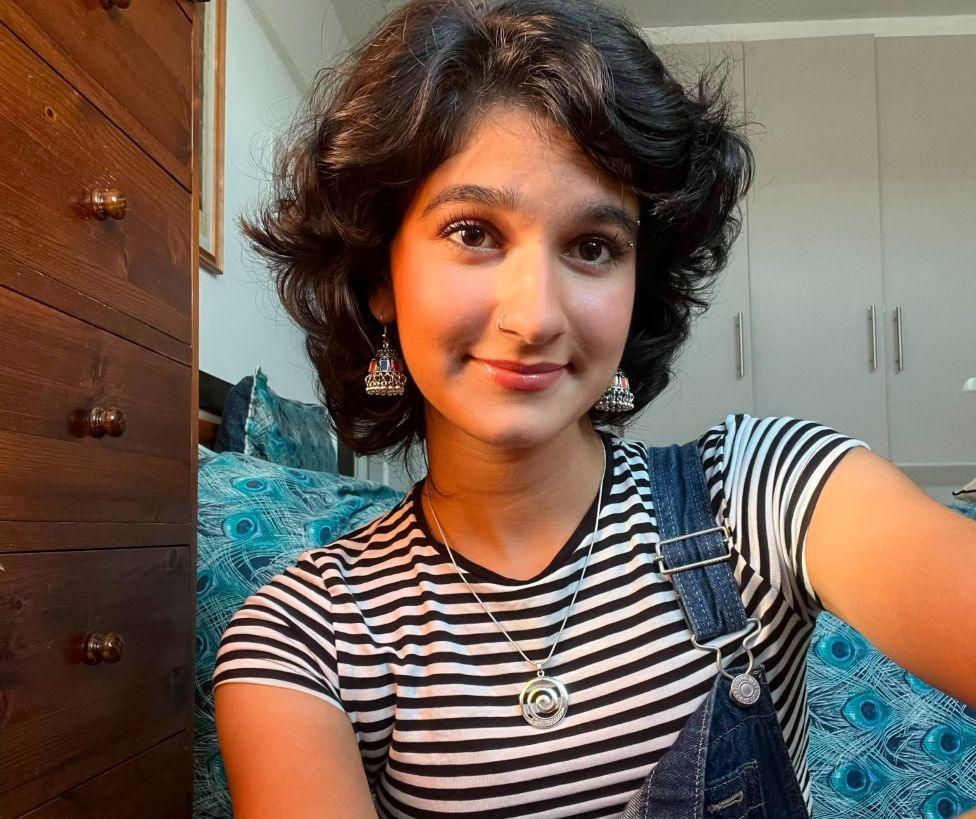 Image source, Fatima Qureshi
Fatima says taking a gap year was the right decision for her
You can also take a gap year, as Fatima Qureshi, 19, from London did – because she wasn’t sure which course she wanted to do or which career path she’d enjoy.
Fatima eventually decided to study law, but if she had chosen a course the year previously she’d likely have opted for biochemistry or pharmacy.
“It was the best thing I could have done,” she says.
It’s natural to feel anxious, according to Mel Kennedy, student wellbeing adviser at Ulster University, who says change “can be scary” and lots of people experience “fear of the unknown”.
“For many students, starting university is the first time that they’re stepping into a genuinely unknown environment,” agrees Lindsay While, assistant director for student wellbeing and welfare at Teesside University.
“Many students do experience anxiety and uncertainty because it is such a major transition, but everybody’s experience is completely different.”
Universities offer a range of practical and wellbeing services, including budgeting advice, financial support, counselling and study support sessions. You can also reach out to the university if you need support before you start.
Some people told BBC News university had felt like the expected next step after sixth form or college. But Aashi Soni, 20, from Leicester, knew it wasn’t right for her.
“Your college and sixth form don’t really push you down that path [of apprenticeships] like they do with university and I found it really difficult,” Aashi says. She turned down her university offers and took a gap year to find a suitable apprenticeship.
In the end, Aashi started a Level 6 degree apprenticeship in sales at Coca-Cola Europacific Partners. She says it has helped her grow in confidence, gain real-life experience while studying, and get mentoring.
 Image source, Aashi Soni and Meenu Hettigama
Aashi and Meenu say university is often presented as the default option – but it wasn’t right for them
Meenu Hettigama, 21, from Walsall began a creative media course after leaving school, but soon dropped out and applied for apprenticeships instead. She is now two years into a management degree apprenticeship at Amazon.
“University is not the only pathway,” Meenu says, “even if maybe you think it’s the most conventional or it is what your family want you to do.”
You can search for apprenticeships on the UK government, Welsh government, Northern Ireland government and apprenticeships.scot websites. You can also find apprenticeships on sites like LinkedIn and Indeed and at apprenticeship recruitment events.
What information do we collect from this quiz?