



AdvertisementFostering future innovatorsBusiness
EQT offers clients diversified wealth strategies to meet demand for new opportunities
In partnership with:EQT4-MIN READ4-MIN Listen

Morning Studio editorsPublished: 4:00pm, 14 Aug 2026
EQT – one of the world’s largest private markets firms – is taking steps to extend its expertise and institutional-quality access to a wider range of eligible clients.
In practice, this means working with wealth industry partners to give sophisticated individual investors similar opportunities to those available to pension funds, endowments and sovereign wealth funds, with the same rules and standards applying for governance, underwriting, operational rigour and investment oversight.
The move is a response to clear demand over the past years from high-net-worth individuals in Asia and elsewhere who want the chance to generate stable returns while also tapping into the exciting possibilities offered by advances in deep tech, biotechnology and climate science.
For EQT – which has held the EQT Impact Challenge in Japan, South Korea, Singapore and Hong Kong – that demand is structural rather than cyclical as increasingly sophisticated private wealth investors are seeking access to private markets opportunities that were previously available mainly to institutions.
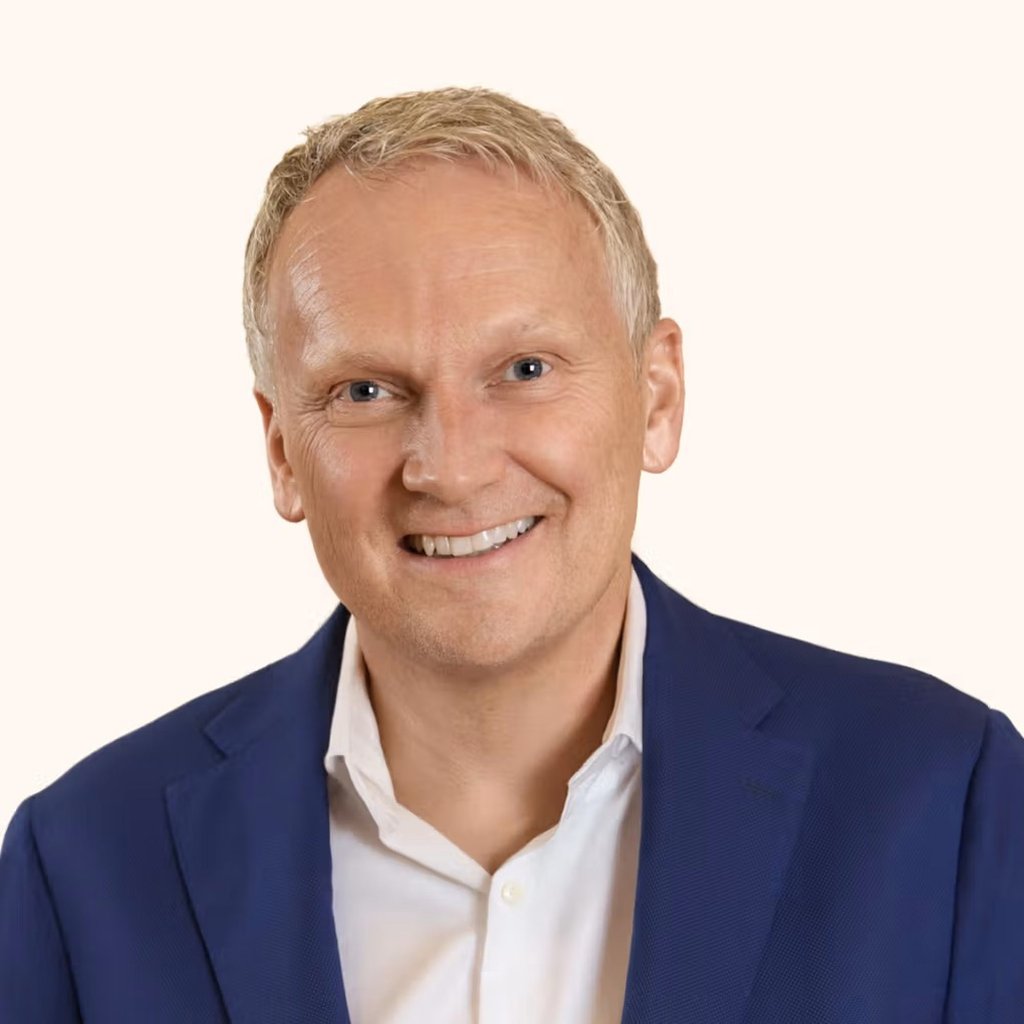
“Opening the door is only half the job, though,” said Peter Beske Nielsen, head of global wealth solutions for EQT, who is leading its strategic initiative to make private markets more accessible for those who are not part of the traditional client base.
“We also design options that serve eligible individual investor needs globally. And we identify trusted intermediaries, such as private banks and local distributors, and educate their advisers on the benefits and constraints of private markets, so that they can offer suitable strategies to investors in a transparent and responsible way.”
In this respect, one of EQT’s particular strengths is the breadth of its platform. Another is the willingness and ability to invest at various phases of the company life cycle, from early-stage and growth businesses through to large-cap enterprises, as well as in real estate, private equity and infrastructure assets that can form evergreen strategies designed for eligible private wealth investors.
As a result, individual investors are given access to all these different sectors, each with its own distinct sources of innovation and value creation.
“However, the biggest change we are trying to drive is not simply greater access,” Beske Nielsen said. “It is in helping investors to understand the asset classes within private markets and to allocate appropriately, within a diversified long-term portfolio.”
Here, wealth managers have a critical role to play by helping EQT to understand how individual clients in key markets including Hong Kong, Japan, Singapore, Australia actually think.
That matters because the profile of private wealth in Asia is changing. Capital today comes not only from established family businesses, but also from first-generation founders, senior professionals and a next generation that is taking a more active role in investment decisions.
An increasing number of these investors are successful entrepreneurs who have built their fortunes but whose thoughts are now turning to plans for the decades ahead.

However, capital can just as easily come from long-standing businesses – family-controlled or otherwise – and while the precise needs and focus will differ, the broad themes remain fairly consistent.
These generally come down to a desire for continuity, steady and sustainable appreciation of existing assets, a smooth transfer of wealth to succeeding generations, and the chance to reconsider or diversify when it makes sense to do so.
Meeting these requirements often entails taking into account changing expectations about liquidity, longer hold periods and a reporting cadence tailored to patient capital.
“We focus on ensuring transparency,” Beske Nielsen said. “As an example, during the volatility spike in early 2024, we published detailed valuations explaining how we had marked our positions. That is because we believe opacity is the enemy of trust, and you can’t build a wealth business on anything less than trust.”
In his view, when it comes to matters of private wealth investment and distribution, good alignment is the starting point. Therefore, EQT looks for local partners with strong client relationships, rigorous standards and a genuine commitment to educating advisers and investors.
Nowadays, these partners must also be capable of supporting operations in private markets over a long period and, naturally, have the expertise to speak about their own regulatory framework.

“We never see any one region, particularly Asia, as a single investor market,” Beske Nielsen said. “Each country has a different regulatory environment and advisory ecosystem, and within those markets there is both entrepreneurial and multigenerational wealth – and often both within the same family.”
On a related note, he said that in recent years the EQT Impact Challenge has become one of the best ways of identifying ambitious start-ups with bright prospects that are worthy of further investment.
The annual competition, currently taking place in Hong Kong for the second consecutive year, attracts high-quality entries from early-stage companies with breakthrough innovations in areas ranging from biotechnology and climate science to health and well-being.
Five finalists, from an original total of about 220 applications, have been selected by a panel of distinguished judges to go forward to the grand finale, which will take place at the M+ Museum in Kowloon in early September.
The winner will receive €500,000 (US$570,000) from the EQT Foundation, the group’s philanthropic arm, to support business growth. Other runner-up finalists will also receive funding from Central Cove Group, the family office of Jean Eric Salata, chair of the EQT Group.
“What excites me most is that the competition is a showcase for strong founders using technology and entrepreneurship to address real challenges in areas such as climate and health,” Beske Nielsen said. “It brings the earliest stage of the innovation journey to life, while also giving start-ups better access to a supportive ecosystem and a broader international network. That combination of local innovation and global connectivity is particularly powerful.”
SCMP is the media and events partner of the EQT Impact Challenge in Hong Kong.
Further details can be found at eqtimpactchallenge2026.scmp.com.AdvertisementAdvertisementSelect VoiceSelect Speed00:0000:001.00x