


NADF graduates 250 agricultural mechanisation service providers
August 13, 2026 8:22 pm

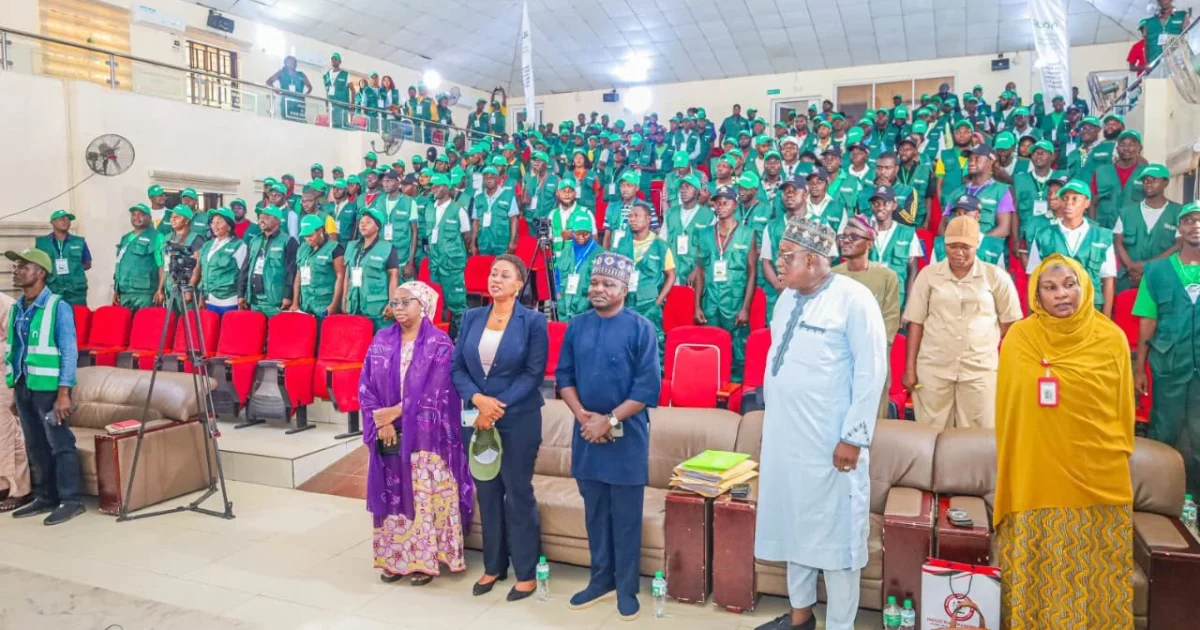
Cross section of the the trainees at CSS Integrated farms Gora, Nasarawa State
The National Agricultural Development Fund has graduated the first cohort of about 250 participants trained under the National Agricultural Mechanisation Service Providers Training Programme, aimed at strengthening technical capacity and improving the sustainability of agricultural machinery deployment across the country.
The programme targets the training of 4,000 tractor drivers and mechanics, with 250 participants drawn from across the six geopolitical zones trained in the first phase.
Speaking in a statement issued by NADF on Thursday, the Executive Secretary and Chief Executive Officer of the fund, Mohammed Ibrahim, said the graduation marked an important milestone in the Federal Government’s drive to modernise agriculture through mechanisation, innovation and human capital development.
Ibrahim said the programme was designed not only to train machinery operators and service providers but also to build the skills, systems and maintenance culture required to sustain agricultural productivity and strengthen Nigeria’s food and nutrition security.
According to the statement, the participants underwent intensive training in agricultural mechanisation service delivery, machinery and equipment management, occupational safety, enterprise development, sustainable maintenance, environmental conservation and environmental sustainability.
“Beyond technical skills, the programme has strengthened professionalism, enterprise mindset and operational discipline required to sustain an efficient mechanisation ecosystem,” Ibrahim said.
The NADF boss said the pilot cohort consisted of about 232 trainees, adding that their certification by the Industrial Training Fund would qualify them for inclusion in a national database of proficient mechanisation service providers being developed by NADF.
He said the database would support long-term public and private-sector investments in agricultural machinery and implements and potentially enable certified service providers to be entrusted with multimillion-naira agricultural assets.
Ibrahim, however, stressed that sustainable mechanisation should not be measured by the number of tractors and other machines acquired but by the ability to keep them operational, productive and economically viable.
He noted that previous investments in agricultural mechanisation had sometimes failed to deliver their full value because of inadequate technical capacity, maintenance systems and accountability.
“The future of agricultural mechanisation in Nigeria depends not only on acquiring machines, but on sustaining them through technical competence, accountability, and responsible asset and environmental stewardship,” he said.
He said the NAMSP training was part of NADF’s broader interventions to address constraints across agricultural value chains, alongside the Farm Input Support Programme, which he said supports 109,000 smallholder farmers, and the Grassroots Digital Extension Corps initiative, which has trained 1,884 extension agents and food security specialists nationwide.
The statement added that NADF was also strengthening agricultural research institutions through investments in modern laboratories, digital extension infrastructure, biotechnology facilities, renewable energy systems, irrigation infrastructure and innovation platforms.
The NADF chief executive said the graduates represented a new generation of skilled practitioners capable of improving machinery utilisation, reducing downtime, expanding access to mechanisation and protecting public and private investments in agricultural assets.
The National President of the Tractor Owners and Hiring Facilities Association of Nigeria, Abdullahi Mohammed, also commended NADF for bringing together participants from different parts of the country for the training.
He said while machinery vendors and manufacturers often provided initial training, their presence could not be guaranteed in every location where tractors operated.
“We need much of this training. The service provider wants training; the operator and the mechanic also need this type of training,” he said.
He appealed for continued collaboration between NADF, machinery manufacturers, vendors and service providers, as well as government support to make agricultural machinery more affordable.
Princess Etuk is a journalist at Punch Newspapers with over five years of experience covering national development and the economy. She focuses on public policy, infrastructure, agriculture, and related sectors, producing insightful features and exclusive reports. Princess’s work reflects a strong commitment to accountability journalism, sectoral development reporting, and informed public dialogue.
All rights reserved. This material, and other digital content on this website, may not be reproduced, published, broadcast, rewritten or redistributed in whole or in part without prior express written permission from PUNCH.
Contact: [email protected]